Another exciting week in Milan. From Portaluppi to Terragni to Castiglioni to Boccioni to a small glimpse into Aldo Rossi’s design process. Here are my takeaways from all these designers.
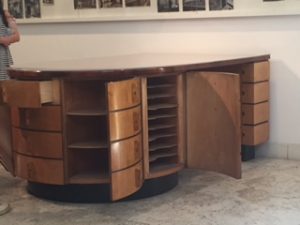
Portaluppi – an explorer, experimenter and visionary. He marbled at patterns, form and function. He loved to throw something old into a contemporary object and vice versa. He designed furniture that was ahead of its time. The black couch in his studio, for example, that particular form is still in use today. He shared his vision for the future and many designers were inspired by that spirit.
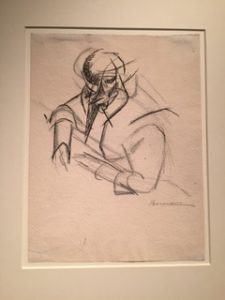
Boccioni – artist, painter and activist. Amazing attention to detail. I was drawn to his pencil studies and portrait work. Especially, the emphasis placed on the human nose—each stroke on the nose added a different quality to each portrait. He truly captured the essence of each person. A shift in his work occurred when he started to deconstruct the image. By placing equal focus on both the object and subject with movement and color, he reversed the importance of the image. He was inspired and drew from his environment. He went from representative to abstract. Or to better describe this shift, he became a futurist, which was similar to cubism, but more powerful, in my opinion, as they were also making political statements. His shift in philosophy also separated him from the Divisionists.
Terragni – an architect that designed for the fascist regime. He loved to design utilitarian buildings with uniformity and symmetry. He represented uniformity, but designed for very specific needs. He was mindful of every object and its use. The attention to project’s needs was incredible. He designed an elementary school that completely captured my interest. Although, a bit off putting for me, it was amazing to see that he designed every single element of the building was designed to fit a child’s body. The chairs, the tables, the bathrooms, the sinks and even the stairs. The stairs in the back of the building were situated exactly to the Roman tower on top of the mountain (maybe, placed for a historical lesson for the children.) Every aspect of a building had to have a purpose.
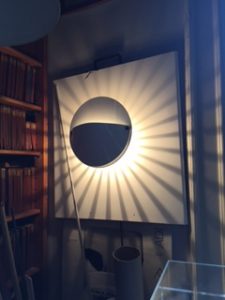
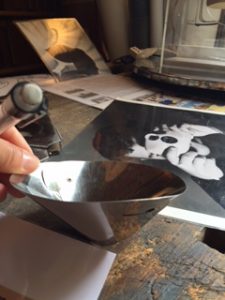
Castiglioni – an amazing collector, observer and a very creative man with a sense of humor. He was a problem solver that truly believed in the term form follows function. He was known to say … “if you are not aware, you are not a designer.” His inspiration for his designed objects were actually anonymous objects. For example, he was inspired by a fisherman’s cup to design a lamp. He was also inspired to design a 3 point balance system by a milking chair/stool. His studio was filled trinkets and anonymous object.