Arengario
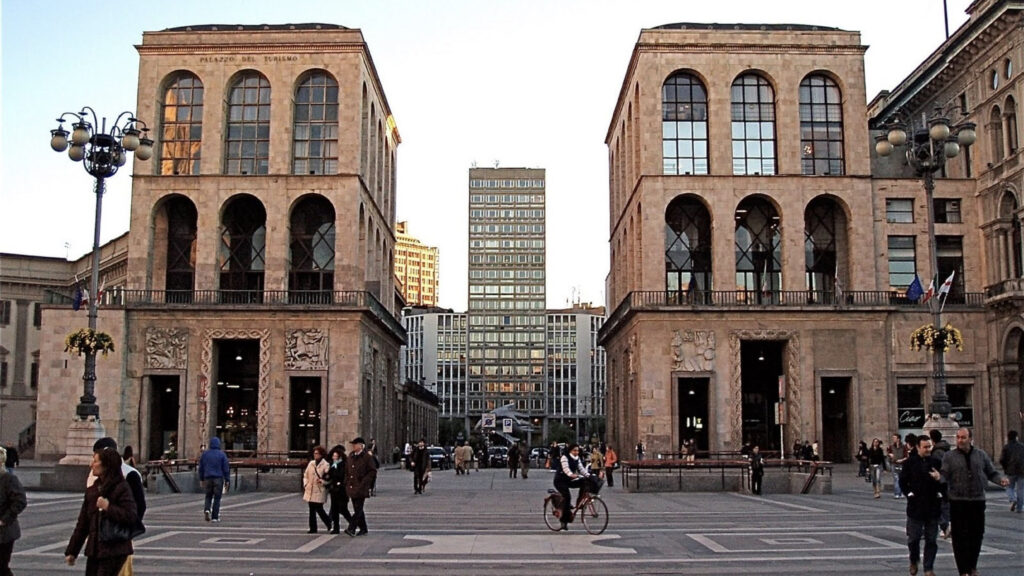
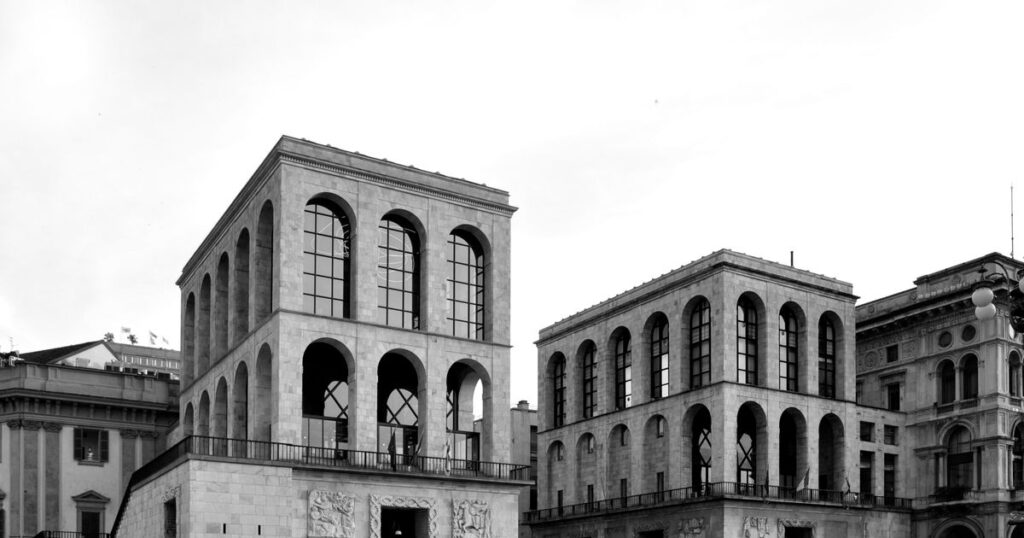
The Arengario Palace (Piazza del Duomo, 1936–1956) was designed by Rationalist architects Piero Portaluppi, Giovanni Muzio, Pier Giulio Magistretti, and Enrico Griffini. Construction began in 1936 during World War II, but experienced several delays because of the war calamities, which caused construction to be finished in 1956. The word “Arengario” is derived from the word “arringare”, which is Italian for “to address”, a reference to its original purpose, which was to be a platform for public addresses during Mussolini’s Fascist regime. With its cold stone façade, symmetrical arches, and a dramatic loggia overlooking the Duomo, it embodied the monumental language of authoritarian architecture. The structure’s minimalist massing and geometric rigor reflect Rationalist ideals, while its urban positioning in Milan’s main civic square underscores its intended role in state propaganda and collective spectacle.
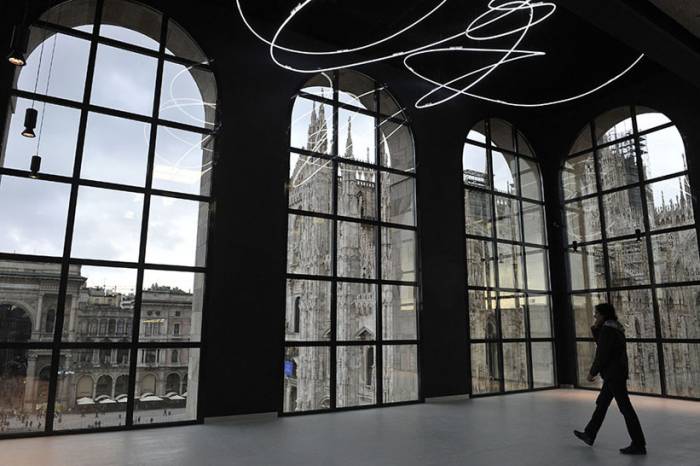
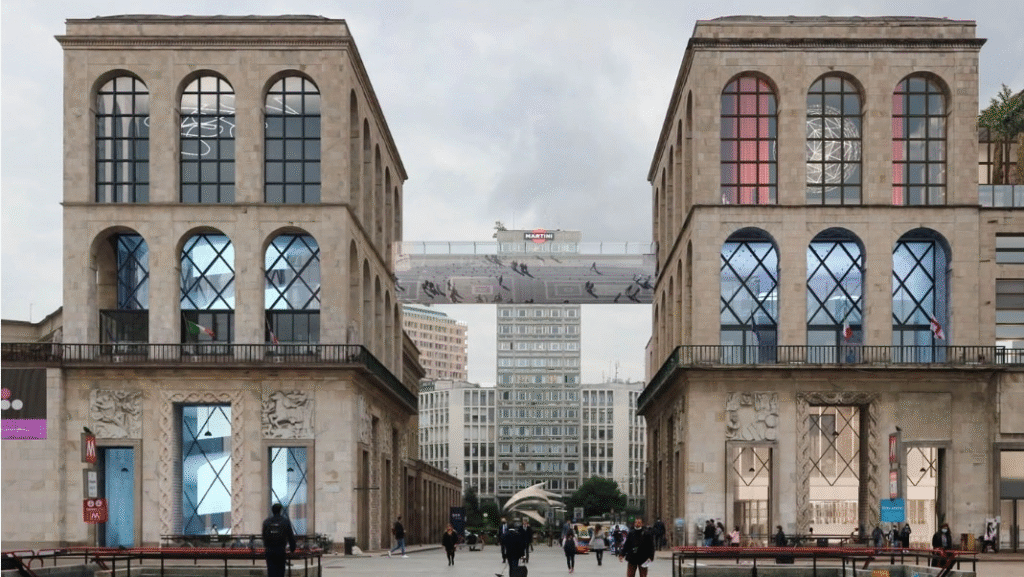
In 2010, the building was transformed into the Museo del Novecento, a museum dedicated to 20th-century Italian art. The redesign, by Italo Rota and Fabio Fornasari, introduced a futuristic change and a spiraling interior ramp and panoramic views of the city, subtly reimagining the structure’s civic engagement while preserving its imposing formal language. The Arengario stands today as both a relic of Fascist urbanism and a successful case of adaptive reuse, serving as a powerful example of how built form can be recontextualized across eras (Portaluppi).
Casa Rustici

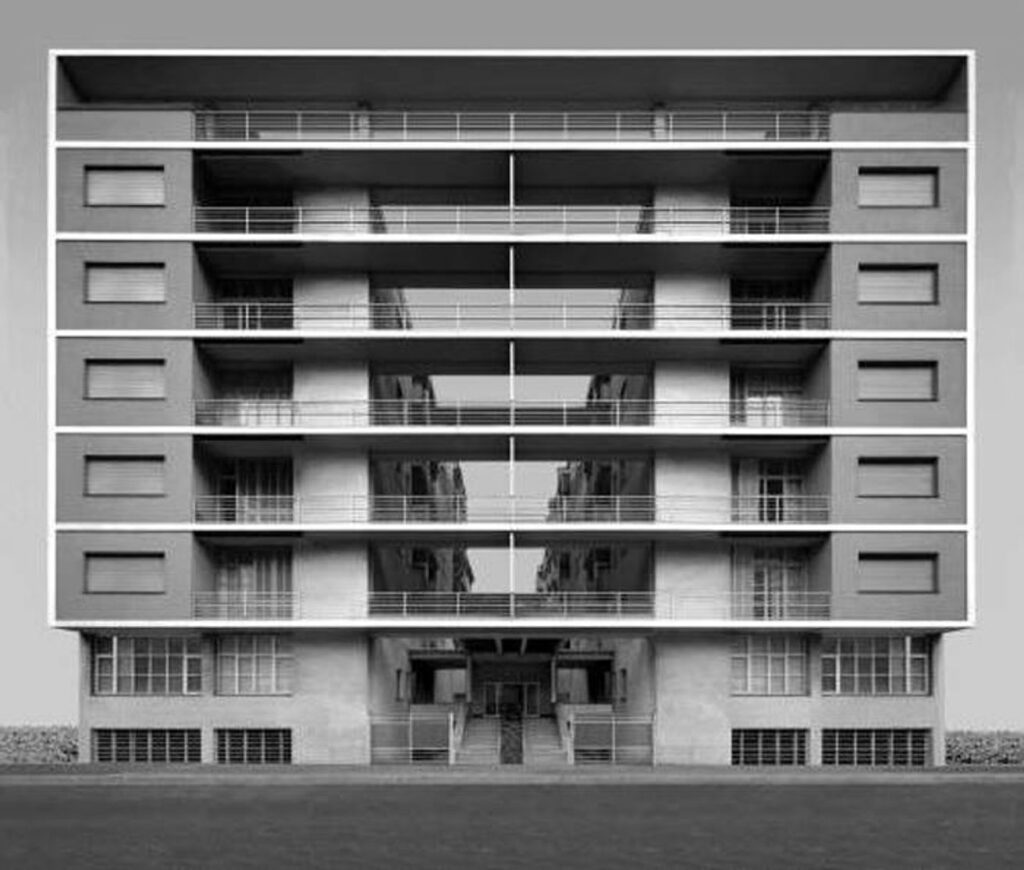
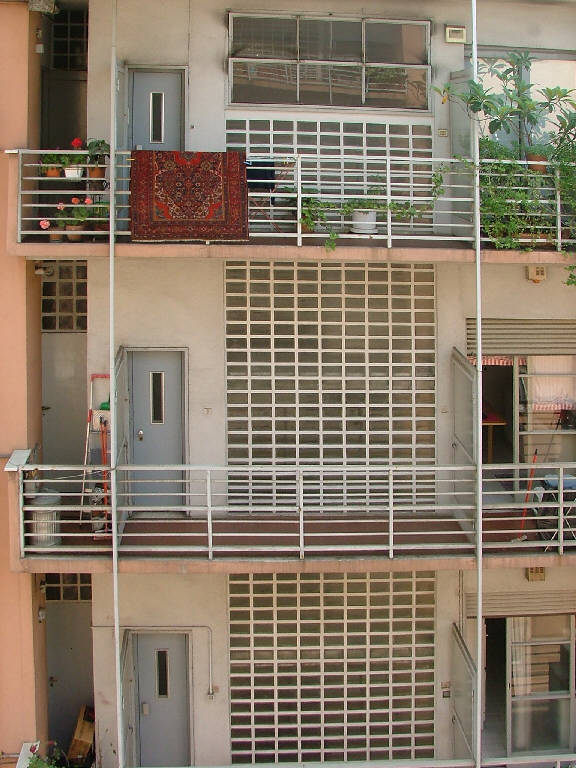
In contrast, Casa Rustici (Corso Sempione, 1935–1936), designed by Giuseppe Terragni and Pietro Lingeri, represents a more humanistic approach to Rationalist architecture. Conceived as a modern apartment block for Milan’s growing middle class, the building combines functional design with refined detailing. Its façade features alternating bands of concrete and ribbon windows, and carefully proportioned balconies. Casa Rustici’s position along Corso Sempione, a grand radial boulevard leading to the city’s Arco della Pace, situates it within a modern urban plan. However, unlike the authoritarian symbolism of the Arengario, Casa Rustici prioritizes light and openness. It reflects an innovative vision of city life where domestic architecture contributes to civic modernity without political spectacle (Terragni and Lingeri).
In addition, the construction of Casa Rustici coincided with the rise of a modern, upper middle class during the 1930s. Terragni and Lingeri alone received commissions for several apartment buildings, and Casa Rustici was the first of those buildings, originally designed for Victor Rustici to live in (Castex 15).

Works Cited
Castex, Jean. Architecture of Italy / Jean Castex. Westport, Conn: Greenwood Press, 2008. Print.
“Palazzo Dell’arengario.” MuseoCity, museocity.it/luoghi/palazzo-dellarengario. Accessed 11 May 2025.
Portaluppi, Piero. “Arengario Palace.” Architectuul, 16 June 2017, https://architectuul.com/architecture/arengario-palace. Accessed on June 7, 2025.
Terragni, Giuseppe and Pietro Lingeri. “Casa Rustici.” 1 April, 2012, https://architectuul.com/architecture/casa-rustici. Accessed on June 7, 2025.
Wikipedia contributors. “Rationalism (architecture).” Wikipedia, The Free Encyclopedia. Wikipedia, The Free Encyclopedia, 18 Mar. 2025. Web. 10 May. 2025.