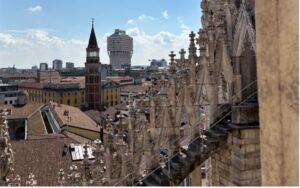
Among Milan’s myriad masterpieces of architecture, two towers stand as meditations on the ever-present tension between modernity and tradition. The first of these, Milanese firm BBPR’s Torre Velasca, was opened in 1958, during Milan’s post-war cultural and economic expansion. Its most iconic feature and primary source of identity is its cantilevered upper third protruding outward while the base maintains a constant width, creating a mushroom-like shape. Notwithstanding its simplicity, this design has profound meaning. Resembling a medieval Italian watchtower, this modern building is intentionally connecting itself to its cultural heritage rather than extricating itself and asserting its own identity. Though the Torre Velasca explicitly acknowledges that our present does not exist in a vacuum but instead is a direct product of everything coming before us, it begs an interesting question to be explored when taking in the fullness of its magnificence in person. Does the Torre Velasca represent modernity defending itself against the superficially constraining bonds of tradition, or is it communicating modernity’s desire to preserve the best of history?
By contrast, the Torre Branca was commissioned in 1933 by Bentio Mussolini and designed by Gio Ponti under the original name Torre Littoria. Constructed from steel pipes and standing at a height of 108.6 meters, a meter below a statue of the Virgin Mary atop the Duomo, the transparent and slender Torre Branca overlooks Milan’s entirety. These formal elements reflect Mussolini’s vision of a modern, centralized government, while deference to the Duomo tacitly admits the limitations of secular power. Directly beneath it is the Triennale di Milano, built in the same period—1931-1933—and designed by Giovanni Muzio. Functional in purpose, the Triennale was created for exhibitions demonstrating the relationship between art, industry, and society. Historical context is indispensable to design, and we must not forget that the Torre Branca was constructed on the eve of calamitous change, and the Torre Velasca represents the attempt to rise from these ashes. Together, these buildings compel us to ask how to approach the potential of the future while simultaneously holding history’s hand to prevent us from our predecessors’ pitfalls.
Citations:
https://www.domusweb.it/en/buildings/torre-velasca.html
https://www.archdaily.com/155121/ad-classics-torre-velasca-bbpr
https://www.re-thinkingthefuture.com/case-studies/a10955-torre-velasca-by
https://www.yesmilano.it/en/see-and-do/venues/torre-branca
https://www.lombardiabeniculturali.it/architetture/schede/3m080-00060/
https://triennale.org/en/about/history-and-mission?utm
https://www.inexhibit.com/mymuseum/triennale-design-museum/?utm
https://mediolan.pl/en/park-tower/
Figure 1: Torre Branca overlooking Milan and the Alps

Figure 2: View from top of Torre Branca
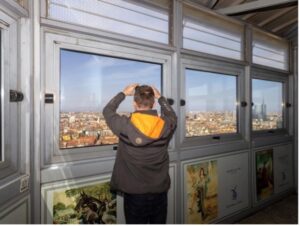
Figure 3: A closer look at Branca’s sleek metal tubes
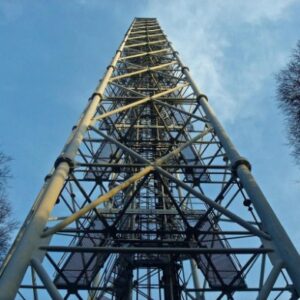
Figure 4: Torre Branca’s brutalist entrance
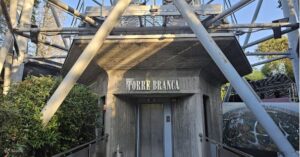
Figure 5: A closer look at Velasca’s cantilevering
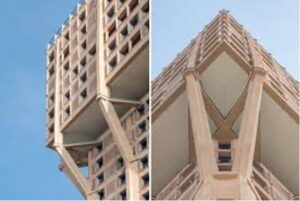
Figure 6: This figure shows how the skinnier core of Velasca
creates a functional, open space for gatherings
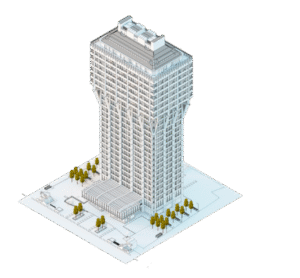
Figure 7: The interior of Velasca is designed in a modern
style while the exterior remains traditional
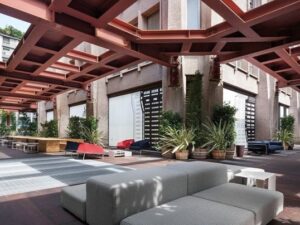
Figure 8: A photo I took from atop the Duomo