In Review – Assignment E – Isabelle Cloeter

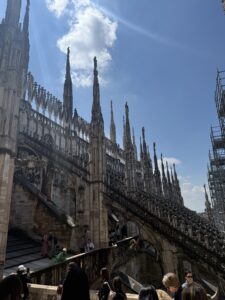
The first week of our program began with an unforgettable tour of the Duomo in Milan. Seeing this breathtaking structure for the first time reshaped how I think about scale, detail, emotion, and color in architecture and design. The cathedral’s towering spires and intricate Gothic facade created an overwhelming sense of harmony and craftsmanship. As light filtered through the stained-glass windows, the sacred atmosphere of the space. This experience made me reflect on how architecture can go beyond function to create lasting emotional resonance. Standing atop the roof that day, looking out across the city I’d be calling home for the next month, was a perfect way to begin this journey.

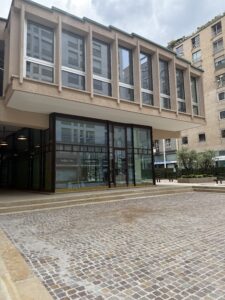
Early in the program, our group began our “Mapping the City” assignment, which allowed us to explore Milan in a more analytical and collaborative way. Visiting our sites was a great opportunity to connect with classmates while diving deeper into the urban fabric of the city. One building that stood out was the Torre Velasca. Though it is a well-known architectural landmark, we were struck by how empty and quiet the surrounding space was. Despite thoughtful design elements, benches, walkways, and greenery, the area lacked activity. During our presentation, Professor Kate mentioned that it’s consistently quiet there. It made me wonder whether this was intentional or a missed opportunity to activate public space through design.

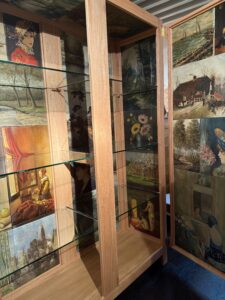
Visiting Rossana Orlandi was another highlight for me, especially from an interior design perspective. Walking through the gallery felt like stepping into a series of curated experiences. One piece that especially stood out was the painted canvas armoire, a simple wooden exterior that opened to reveal a vibrant collection of canvases, each telling a different story. This deceptive simplicity, paired with the narrative richness inside, was deeply inspiring. It brilliantly merged classical and modern aesthetics, sparking new ideas in my own approach to design.

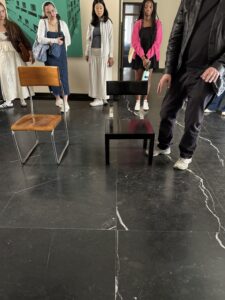
Our day trip to Lake Como was another incredible experience. Touring the Novocomum with an architect gave us insight into its unique design. The chairs highlighted during the tour especially fascinated me. One had a curved back with only two legs and could be worn like a backpack, making it lighter and more portable. The chair next to it had a wider seat and four legs, offering a very different design approach, yet both were user-friendly and functional in their own ways. It reminded me how multiple solutions can exist within the same design problem.

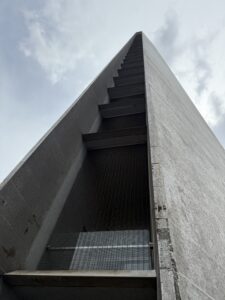
The Pirelli Tower was another structure I passed several times without ever truly seeing it, until our visit. Learning about its engineering and the thoughtful placement of the underground conference area gave me a new appreciation for the building. Its slender yet powerful silhouette has since stood out to me every time I passed the train station.

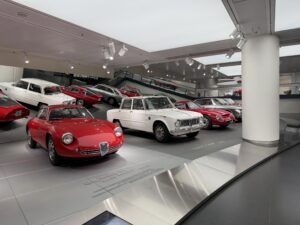
One of my favorite visits of the program was the Alfa Romeo Museum. Beyond the beauty of the cars, the design history was fascinating. I especially appreciated learning about a pastel-colored model from the early 1900s that was designed specifically for women. It had a slimmer profile and less width, details I hadn’t considered before but made so much sense once pointed out. We also learned about design failures, like a model with the engine inside the cabin, which led to toxic fumes when the windows were closed. It was a strong reminder of how critical functionality is in design.

In conclusion, it’s hard to capture everything I’ve learned in just one word or phrase. My time in Milan taught me to see design from a broader perspective, to understand how interior architecture connects with the greater world of design, and to embrace challenges, both in my work and in being far from home. I grew not only as a designer, but also as a person. I pushed myself to explore new places, connect with new people, and reflect deeply on the built environment around me.

This month will remain one of the most meaningful experiences of my life. While it came with long days and sore feet, it also gave me invaluable knowledge, inspiration, and memories. I now know that I want to continue studying and working in new environments that push me creatively and personally. Thank you, Milan, for being a home away from home. I’ll be back, hopefully sooner rather than later.
Week 3 – Reflections from Milan – Isabelle Cloeter


My experience in Milan has helped me grow immensely, as both a designer and a student. I’ve explored places I never imagined visiting and now feel so eager to return one day, perhaps with family or friends, to share these unforgettable spots.

One of the most thought-provoking moments happened just yesterday at the Triennale. As I was walking through the exhibitions, a woman approached me and asked if I’d be interested in participating in a unique AI job interview experience. I agreed, not fully understanding what I was signing up for, and entered the interview space feeling a bit confused. What followed was even more unexpected, during the simulated interview, one of the AI-generated interviewers began steering the conversation in an uncomfortably sexual direction.

Although it was part of an experimental exhibit, it reflected a harsh reality: situations like this happen all too often in the professional world. This moment opened my eyes to a truth I hadn’t yet faced, how power dynamics can make job candidates feel vulnerable or unsafe. Coming from the more protected environment of high school and even college, it was a jarring but important realization. As I near the end of college and prepare for the real world, it made me pause and reflect on the kinds of situations I might face, and how I want to respond to them.

Despite the discomfort, I’m grateful for the experience. It challenged me to think deeply and critically about the world I’m stepping into, and that’s part of what study abroad is meant to do. Milan, thank you for being a home away from home. I’ve learned so much here, and I can’t wait to return one day and see how far I’ve come.

Week 2 – Spaces That Speak – Isabelle Cloeter

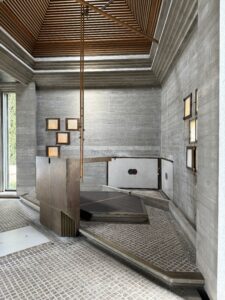
During my class trip to Treviso and Venice this week from Milan, I found myself unexpectedly pulled back to my first semester in college in the school of architecture. As I stepped into the Brion Cemetery in Treviso and the elegant store of Otivelli in Venice, I was struck by the memory of Professor Snyder’s lecture in my Design 1 studio, learning about Tadao Ando’s Azuma House. 

Back then, the Azuma House felt abstract: a stark concrete box in Osaka with a courtyard that was caved in the center. But the words that Professor Snyder lectured to my studio stuck with me, how Ando used materials and space not just for the safety and shelter of a home but to create a feeling. That conversation gave me a thought in my head, architecture has a purpose to make an emotional and sensory experience whether we realize it or not. Architects are store tellers for individuals that walk through space. 

Now a few years later, walking through the layered textures of Carlo Scarpa’s work from the craftsmanship of the Otivelli storefront to the spiritual geometry of the Brion Cemetery. I felt my ideas come full circle. Scarpa and Ando are from different cultures and time periods, but they slightly overlap. Both used architecture as a medium of silence, reflection, storytelling and material poetry. 

Each space is very different from a commercial store, cemetery and home all invite you to slow down and take a moment to enjoy the moment in the quiet space. The Olivelli store, while in one of the most fast paced areas in Venice, finds a way to make a retail space be intimate and slow paced. The Brio Cemetery has flowing water, thresholds that are gentle and areas to sit and reflect. The Azuma house, though I have never visited in person, during Professor Snyders lecture I could feel a sense like I was in space based on the way he talked about the calm and elevated space. All three of these spaces use light, texture, materiality and spatial rhythm to connect the body with the mind. You feel these spaces when you walk through them. 

Those two days in Venice and Treviso reminded me of why I fell in love with design and how many spaces, while from different times and areas of the country, can both tell a story. Architecture has the ability to hold memory, to speak across many time and spaces, and to shape how we see the world around us.


Week One in Italy – Isabelle Cloeter

This week, it finally hit me, I’m actually in Italy, studying abroad. It’s only been one week, but something about these past few days made it all feel real. There have already been so many highs and lows, moments of excitement and challenge, but I know this is a time in my life I’ll never forget.

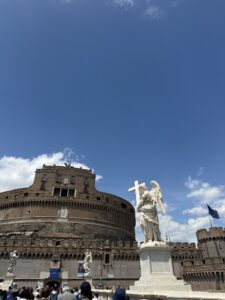
This weekend was especially unforgettable. I had the incredible privilege of being in Vatican City during the inauguration of the new Pope, a once-in-a-lifetime experience. What made it even more meaningful was that Pope Leo is the first Pope from the United States, and he’s from Chicago, my hometown. Even more amazing, he’s a graduate of Villanova, the university attended by half of my family, including my sister. It felt like history was unfolding in front of me, and somehow, I was part of it.

The atmosphere in Vatican City was electric. The streets were packed with people joyful, emotional, hopeful, and excited. Walking into St. Peter’s Basilica for the first time left me speechless. The beauty and significance of the space gave me a feeling I can’t quite describe, but one I’ll carry with me forever.

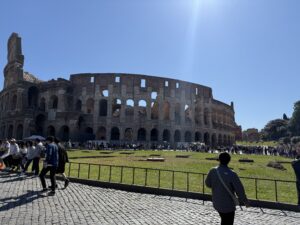
I also revisited the Colosseum, and this time, with a deeper understanding of its historical context. Seeing it again, with a new perspective, was incredibly powerful. And yes, after walking over 40,000 steps in one day to fit in all the sights, my legs are still recovering! But every step was worth it.

To share all of this with a close friend made it even more special. This first week has already left such a mark on me, and I can’t wait to see what the rest of this journey holds.

No Style Left Behind

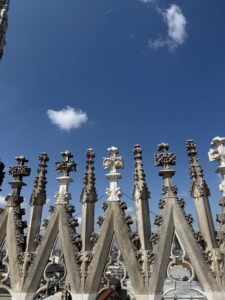
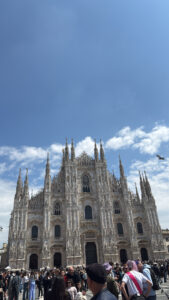
Stepping out of the Duomo metro station, I was immediately captivated by the Milan Cathedral’s Gothic beauty. Its intricate marble details and spires were breathtaking, each sculpture so finely crafted, so deliberate.

In the days prior to the start of the program, exploring Milan and Verona with my family, I noticed how Milan defies a singular architectural identity. The city blends styles effortlessly, Modern, Baroque, Renaissance, and Gothic all coexist, creating a vibrant dialogue across time. The Duomo, in particular, embodies this mix with remarkable grace.

On the rooftop, the artistry became even more personal. Pigeons, flowers, corn, and countless human figures, each different, were carved with precision. No two sculptures were alike, and the detail in hair, clothing, and expressions showed deep artistic intent.

As an architecture major, this experience left a lasting impression. It’s unlike anything I’ve seen in the States. The craftsmanship, history, and creativity on every surface reminded me why I’m passionate about design and why I am excited to keep learning as I study abroad.