Sandhya Iyer – In Review

In Review:

Industrial design has unfortunately been a discipline that I’ve put into a box before now, thinking of it as boring because it’s the design of random everyday objects. This trip completely transformed that idea for me- the design of everyday objects is such an integral part of shaping our society. The visits within this course taught me about so many facets of design, and I’ll cover 6 of these facets along with the main visit that showcased each one in this review: lighting, sound, shape, material, presentation, and cultural awareness.

Lighting: Pirelli Hangar
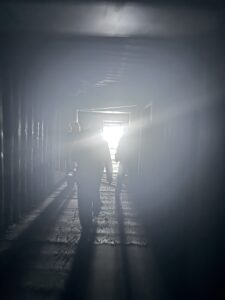
The experience of Pirelli Hangar on our very last day of class was transformative! The display about the bombing of Hiroshima relies entirely on light to tell its story- in particular, the walkthrough experience with mirrors relies on both artificial and natural light to guide users through the mirror maze. It showed me how light- or lack thereof- has an undeniable power to transform an audience emotionally and really captivate their attention.

Sound: The Brion Tomb
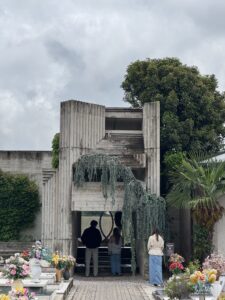
The tomb we visited in Treviso was one of the most peaceful places I’ve ever been, and not just because of the flowing abstract architecture of the space. As I stepped over certain tiles in the tomb, they shifted and created a deep, resonant tone that echoed throughout the space. These sounds mingled with environmental noises of running water and chirping birds, and created an auditory atmosphere that felt grounding and meditative. It was a prime example of architecture built with an end emotion in sight.

Shape: Vico Magistretti
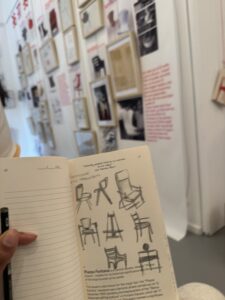
The chairs at the gallery of Vico Magistretti that we visit experimented copiously with shape- ranging from short and wide to lean and tall, and incorporating all sorts of straight edges and curves on their designs. I thought it was interesting to read about the different design intents for each one- some were comfort, others posture, and others aesthetics. The shapes of the chairs also influences how my classmates engaged with them- sinking in with a sigh, perching on the end, or simply studying the chair rather than sitting in it. It was a great experience to sketch the chairs as well and simplify them down to their core shapes.

Material: Artemide
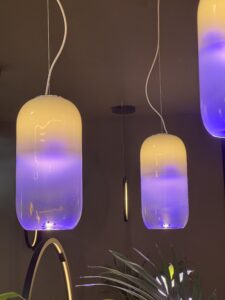
The Artemide lighting design visit was one of my favorite experiences of the trip. Not only did we get to see final design products in the showroom, but we had the amazing opportunity to tour the production factory and see how materials and lamps were tested before being added to the catalog. The extensive testing process behind Artemide’s lamps was a testament to their high quality as well as the company’s innovation in material selection, and it was a wonderful blend of art and science.

Presentation: Castiglioni
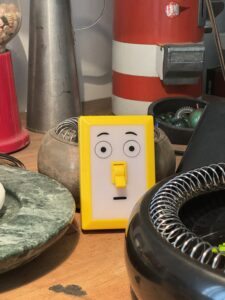
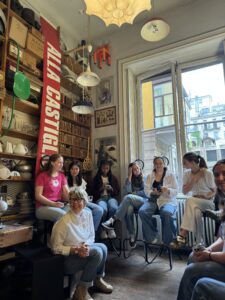
The visit to Castiglioni’s studio showed me the importance of personal presentation in addition to design- I don’t think we would have been as fascinated by all of the designs in the studio if they hadn’t been presented so enthusiastically by Giovanna, Castiglioni’s daughter. She constantly made us engage with learning about the functions of each product, as well as making us laugh along the way.

Cultural awareness: The Biennale
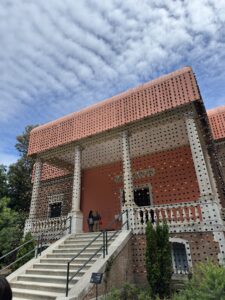
One of the things that surprised me in Europe was how often past inequalities are recognized and reflected upon. I think I had some preconceived notions about European countries having an ego about their histories, even when that history involves countless colonizations and unjust acquisition of resources.

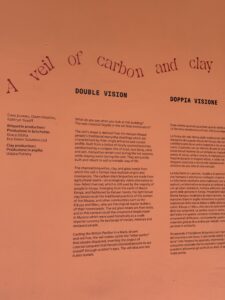
At the Biennale in Venice however, especially at Britain’s pavilion, I noticed that most of the exhibits focused on revisiting unjust moments of Britain’s past and reflecting on them. It was a very culturally-aware display that was memorable to me.

Overall, this course gave me many insights into how designers and architects can create impactful products and spaces. I’m so grateful for all the hands on learning that I had the opportunity to do as a part of this class- I’m really going to miss it. I know I can take all of the soft skills and design insights I gained with me throughout the rest of my academic journey and into my professional career, and I hope to return to Milan again sometime in the future!

Arrivederci,

Sandhya
Weeks 3 and 4

Weeks 3 and 4:

These last two weeks were packed but exciting! Week 3 was probably my favorite so far, featuring a multitude of museum and gallery visits, including the Alfa Romeo museum, Artemide lighting, and the Castiglioni gallery. My favorite was probably La Scala on Monday though, I never thought I would enjoy a vocalist/opera so much before!

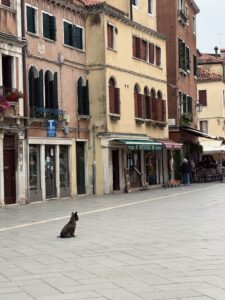
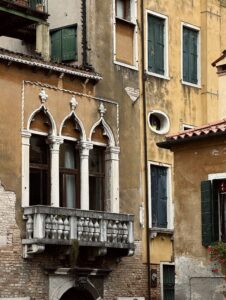
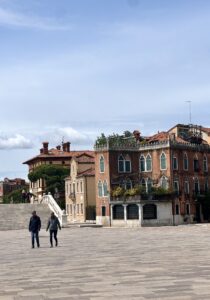
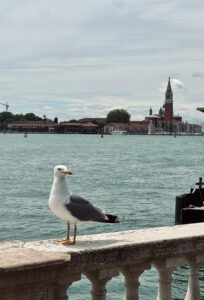
The latter part of week three was an overnight trip to Treviso and Venice. I had my favorite meal of the trip in Treviso at Le Corderie, where the appetizers were absolutely amazing. And then it was fascinating to finally see Venice, a city I’ve seen in movies and pictures for so long.

Over the weekend I visited Pisa and Monterosso, and went to an AC Milan game. Then we had our final week of the program, featuring the Armani Silos exhibit, the Triennale, and the trip to Alessi in Omegna.

I really feel like I’ve been settling in during these weeks, getting used to daily life in Milan, starting to use Italian more, and engaging with people outside of the program. It’s also been really nice to meet everyone from IES Abroad and learn about their lives in Milan.

Some photos from Venice I was proud of:


Joy in the little moments of Milan

My first full week in Milan was full to the brim: of learning, traveling, and being inspired.

We visited several museums, studios, and galleries, my favorites of which were Spazio Rossana Orlandi, FM Studio, and the ADI Design Museum. I was so inspired by some of them that it made me want to switch career paths! I also really enjoyed taking Italian language classes this past week as well- I’ve been trying to use Italian as much as possible while I’m here and have finally gotten through a few interactions successfully without English! I thought it was really interesting to learn about Italian hand gestures; I had no idea they had so many meanings! At the end of the week, I traveled to Monaco and Nice and had an adventurous time exploring two new countries for the first time on rapid day trips.

As much as I have enjoyed our planned events and classes, I have found so much joy in the random, spontaneous experiences I’ve had so far! Below are some pictures and sketches from casual day to day moments that I’ve been loving:

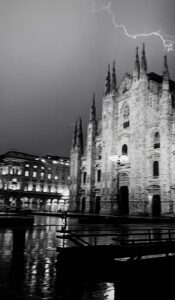
Getting caught in a thunderstorm at the Duomo and capturing this photo:

Lightning strikes over the Duomo. Photo by Sandhya Iyer

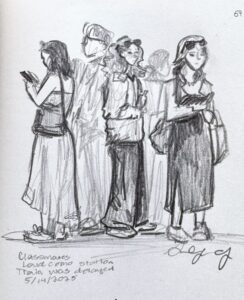
Train getting delayed from Lake Como and getting a delicious apple tart to enjoy while sketching some of my classmates:

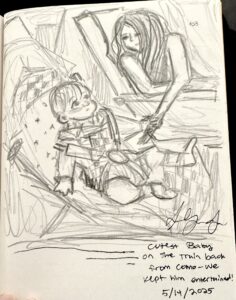
This little baby on our way back from Como:

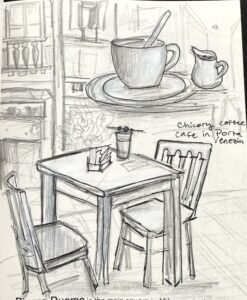
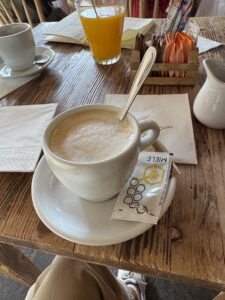
My favorite coffee so far at a spontaneous coffee stop on our Art Nouveau tour:

Here’s to more inspiring educational events this week as well as wonderful unplanned moments in between!

Week 1- first few days in Milan

These past few days marked my first time in Milan, and Europe in general. It has been really wonderful to experience the daily life that I have previously only read about or seen on tv- morning meals of coffee and croissants, cobblestone roads intertwining through beautifully detailed architecture, and an abundance of the world’s largest designer brands headquartered around me. I absolutely love getting immersed in a country where the main language isn’t English, and trying to slowly build Italian language into my daily interactions. It’s also great to be here with a group from UT because we can bond over similar experiences and we’re all figuring out the process of traveling/living here together.

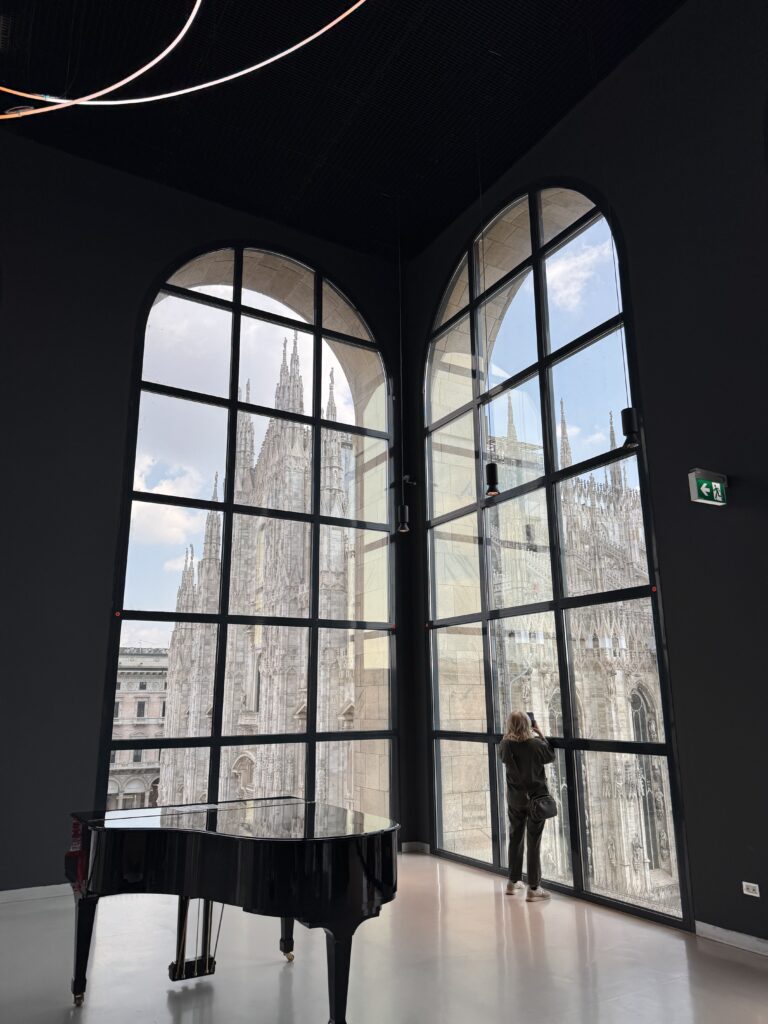
My first impression of Milan was that it was a city lying at the contrast of old and new- the two big sites we visited this past weekend were the Duomo and the Museo del Novecento, and I remember being shocked they were right next to each other; a Gothic medieval church from the 14th century and a modern museum dedicated to contemporary art. After that experience, I’ve started seeing this juxtaposition all around the city: Milan celebrates Italy’s vibrant history while pushing forward into the future of design. I’m excited for everything we’re going to see this upcoming week!

Museo del Novecento windows looking out into the Duomo

Citylife Apartments to Cimitero Monumentale

MAPPING THE CITY

Citylife Apartments – Via Senofonte, 2, 20145 Milano MI, Italy

By Zaha Hadid Architects in 2013

The Citylife Apartments, designed by Zaha Hadid, an architect known as the “Queen of the Curves,” reflect her style for her innovative and dynamic designs. 

The project is part of a larger CityLife development, originally in Fiera Milano. When Fiera was later relocated in 2005, the city launched an international competition in 2004 to create a district that explored Milan’s unique connection with modernization and urban living.

The project is divided into two main components. The first involves three skyscrapers by architects like Daniel Libeskind, Arata Isozaki, and Zaha Hadid. This area includes spaces like offices, restaurants, and other services that together create the central Piazza Tre Torri (Three tower plaza). The second component involves a luxury residential area made out of seven buildings with all different heights ranging from 5 to 13 stories. These residences include terraces, curving designs, and flowing design.This district is the largest car-free area in Milan, offering green spaces, bike routes, and walking paths, making this one of the focal points of the city with a focus on sustainability and innovative architecture.


The large balconies curve outward from the building and are one of the most distinctive aspects of the design. They emphasize the indoor-outdoor connection with their panoramic views.

The buildings are shaped like tapering waves, rising and falling in height along their length rooflines are irregular and sloped, and the shape overall gives an organic impression rather than something more orderly.


The curved structure of the building can be seen in this floorplan, where straight-line geometry is combined with an organic curve that is both functional and artistically expressive.


Monument to the Victims of Nazi Concentration Camps – Piazzale Cimitero Monumentale,

20154 Milano

By the Milan architecture group BBPR in 1945

The Cimitero Monumentale is a mixed-media historical expression of grief, unity, and religion located in the Northern region of Milan. Designed by Carlo Maciachini and inaugurated in 1866, it was built to consolidate Milan’s smaller burial grounds into a more unified space. The Cimitero Monumentale’s role is both a burial ground and a civic space for celebrating identity and memory in 19th-century Italy. The cemetery blends religious, secular, and artistic elements. Known for its electric architecture, the space celebrates inclusivity as it dedicates sections for Jews and Non-Catholics and houses one of Europe’s first public crematoriums. This was a strong progressive shift in Catholic Milan as it pioneered this way of crematory practices. Something interesting about this cemetery is that both its cultural impact and its physical expression represent chaos, eclectic statements, and diversity. The physical landscape of the space is unique on its own, which impacts its cultural relevance. The architectural style also represents Milan’s diverse design influences, which highlights the progressive nature of the city in terms of artistic and architectural influences. The Famedio, or Temple of Fame, was constructed to honor the citizens of Milan. This structure is a neo-medieval horizontal brick and marble form that includes many details. The Crematorium Temple, supported by industrialist Alberto Keller, represents a significant shift towards secularism and science in funerary practices. This was very radical in its time as it challenged the Catholic traditions in Milan. This movement embodied Milan’s embrace of modernity. 


The entrance to the cemetery and the Famedio attract over 100,000 visitors per year. They are located near Gae Aulenti Square in the Northwest part of the city. 

The inclusion of a Jewish section of the cemetery reflected the liberal and modern values of post-unification Italy.

This is known as the “Temple of Fame”, a grand entrance in neomidevil style which is meant to overlook the square in the front, guiding visitors.  

The interior of the Famedia, which became a secular site of civic memory, showcases frescoes, sculptures, and inscriptions dedicated to artists, scientists, and patriots.


Citations: 

  1. Falco, Alfredo. “Milan’s Monumental Cemetery: A Case Study of the City of the Dead.” The Journal of Architecture, vol. 20, no. 6, 2015, pp. 920–946. Gale Academic OneFile, https://go.gale.com/ps/i.do?id=GALE%7CA412783732&sid=googleScholar&v=2.1&it=r&linkaccess=abs&issn=03071766&p=AONE&sw=w&userGroupName=anon%7E5ac463ec&aty=open-web-entry. 
  2. “CityLife Apartments / Zaha Hadid Architects.” ArchDaily, 12 Jan. 2016, https://www.archdaily.com/785120/citylife-apartments-zaha-hadid-architects. 
  3. “Zaha Hadid’s Style and Design Philosophy.” Engel & Völkers, https://www.engelvoelkers.com/de/en/resources/zaha-hadids-style-and-design-philosophy. Accessed 11 May 2025. 
  4. “The Monumental Cemetery of Milan: A Place for the Arts and for Celebrating Civic Identity.” Art & Object, https://www.artandobject.com/news/monumental-cemetery-milan. Accessed 11 May 2025.