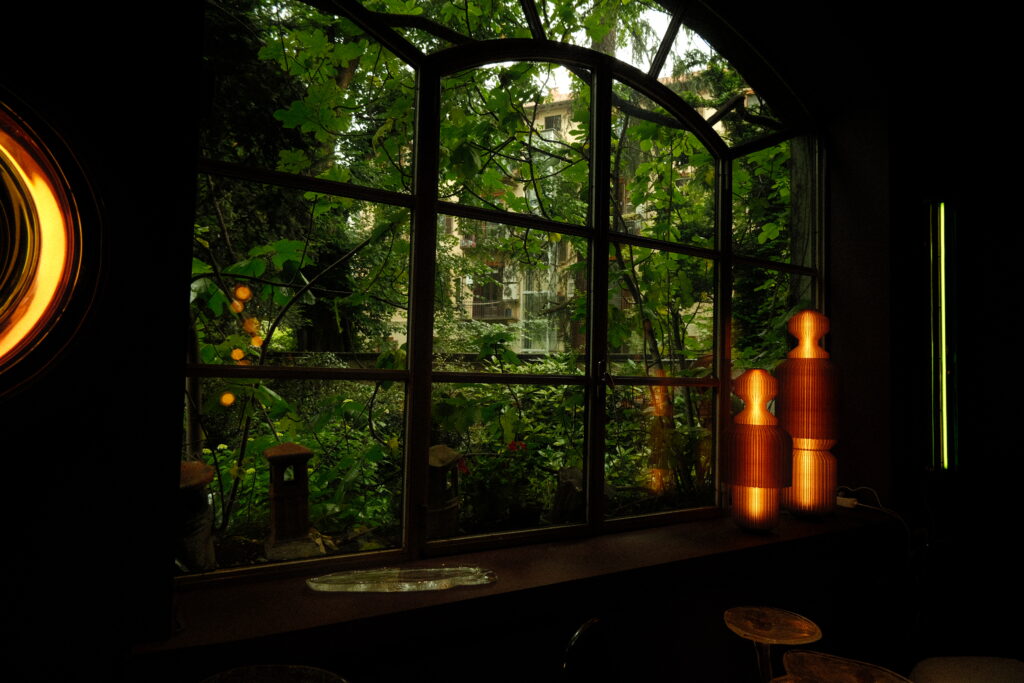
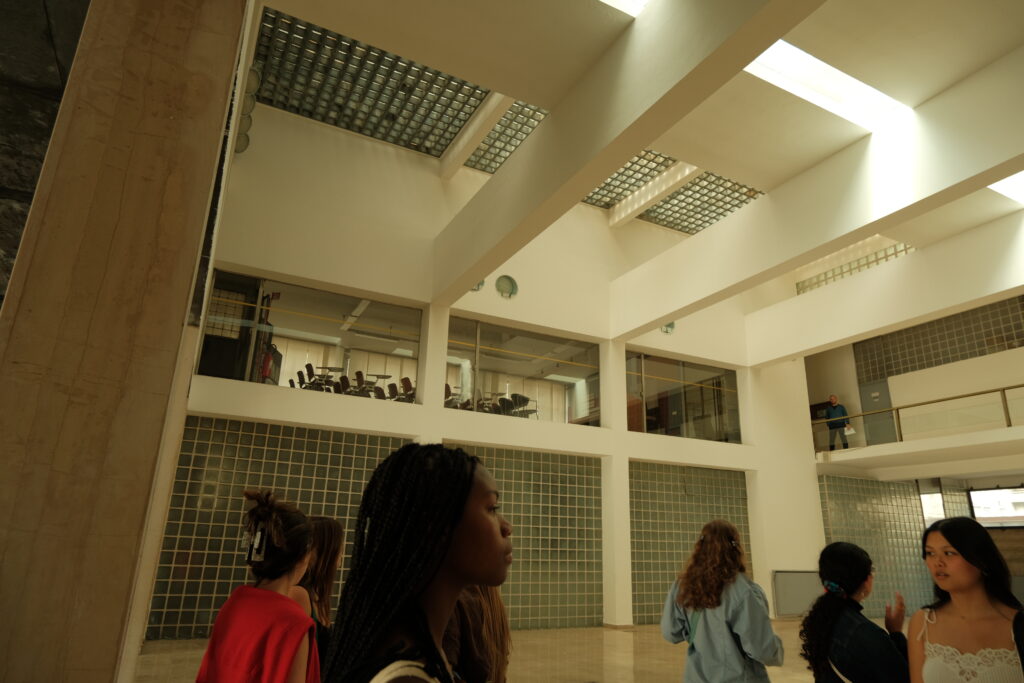
Week 3: The Tales of Traveling | Ava Shea Feinstein 2025

This week was so busy and so much fun. Going from the outskirts of Milan to Treviso then Venice; I’ve never felt more worldly. And while the sights were amazing, what really stood out to me this week was the human connection.


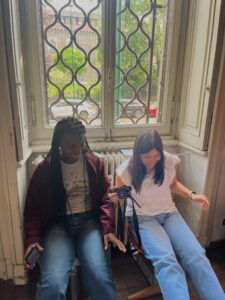
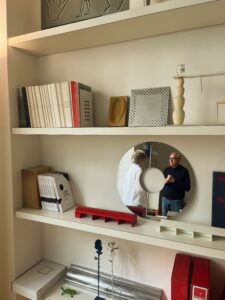
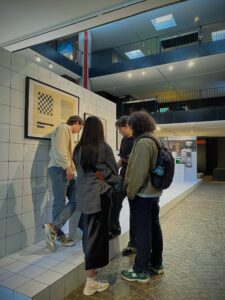
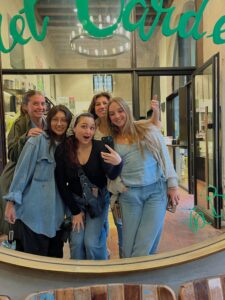
The fact that we were able to see so many amazing places and meet so many wonderful people is a true testament to the power of connection. The majority of this trip so far has been made possible because Kate has made such wonderful friends throughout her career. Seeing this group become friends has been so heart warming. Our group has blossomed, and every stop was so exciting and full of playful banter. 

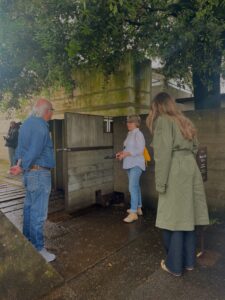
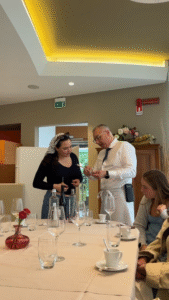
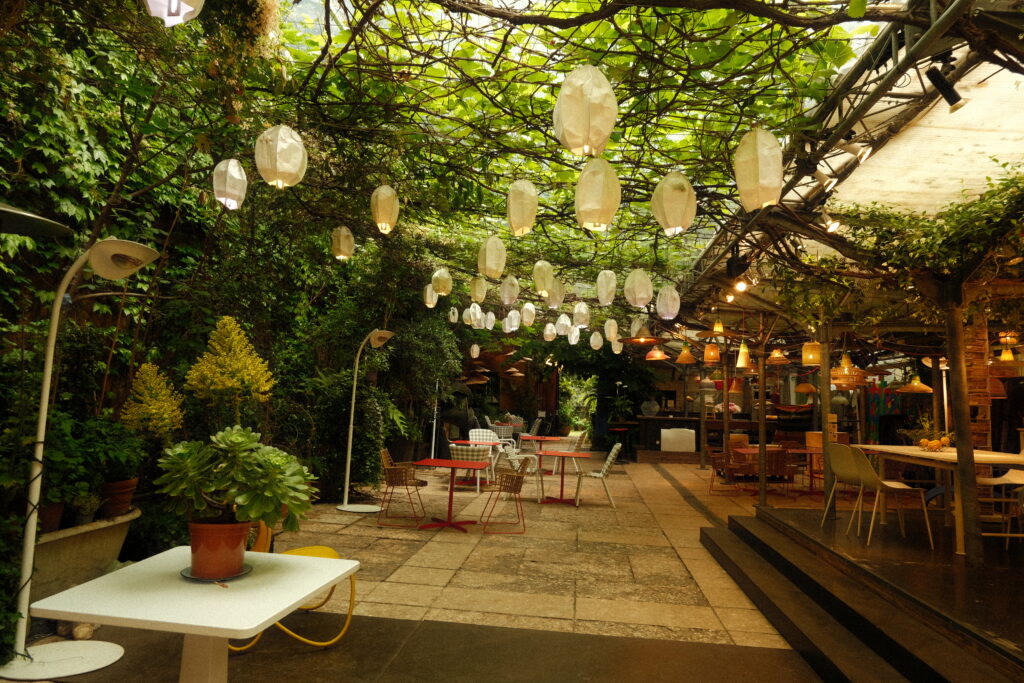
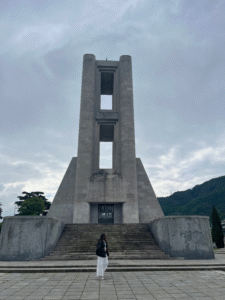
Not only that, but there were so many connections with random strangers along the way. There were the lovely tourists at the grave site that took time to chit chat with Kate Cate. The magic waiter from our lunch, showing all of his lovely tricks. Even the owner of the restaurant in Treviso gave us a little tour of her closed bakery. I even met a lovely older couple from Oxford, England at the Biennale who I am going to go visit next month. Watching everyone connect has been so heart warming.

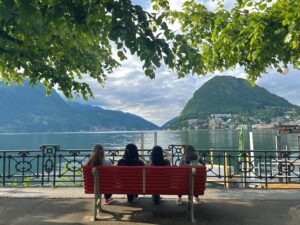
To finish off that week of travel, a couple of us made our way over to Lugano, Switzerland for a day trip. It was absolutely gorgeous (and absolutely expensive). While there, we actually met an American woman who had moved to Lugano 40 some years ago. It was so fun to see her excitement being able to talk about her life’s journey. People just want to connect and I think that has been one of the best parts of this trip so far.

Carla Garcia Leija – Week 2 | A new layer of Milan

I already knew Milan was a wonderful place, but it becomes so much better once you get past the jetlag!

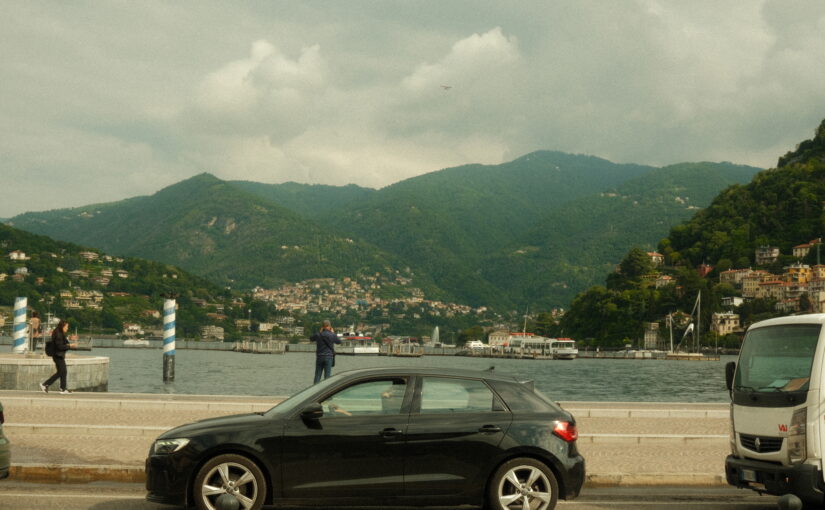
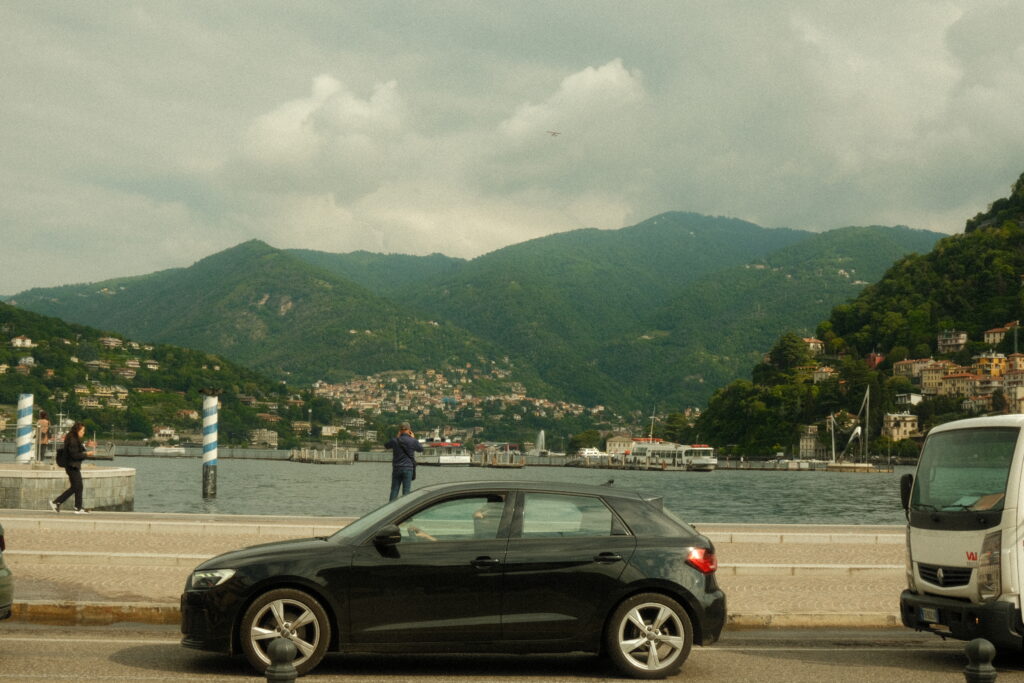
This past week, I genuinely had a chance to experience the city through all the tours, outings, and gelatos. Some of the highlights, for me, were Lake Como and our tour to Studio FM Milan. Meeting with Cristiano Bottino was perhaps my favorite thing so far. I LOVED the way he told stories about his work. I was able to dissect the framework – I will be using it to update my portfolio soon.

Recently, an employee at a shop asked me what my favorite part of Milan was. I said the public transit. She smiled wide; I think this was the correct answer. I’m so grateful by how easy it is to get around, either by walking, metro, or tram. It’s inconvenient to have a car. I wish Austin had this level of accessibility to public transport!

It’s a gift to be surrounded by design, and in the company of such good people. It’s helped me breathe new life into my craft and discipline. I can’t wait to see how it reshapes my work.


Week 2: Forty-Two Miles in Five Days | Ava Shea Feinstein 2025

So it turns out that when you are in walkable cities you WALK. I have loved being able to get places without needing a car and I think I have been much more observant because of it. There is so much visual diversity within every street that we walk down, both in color and style.

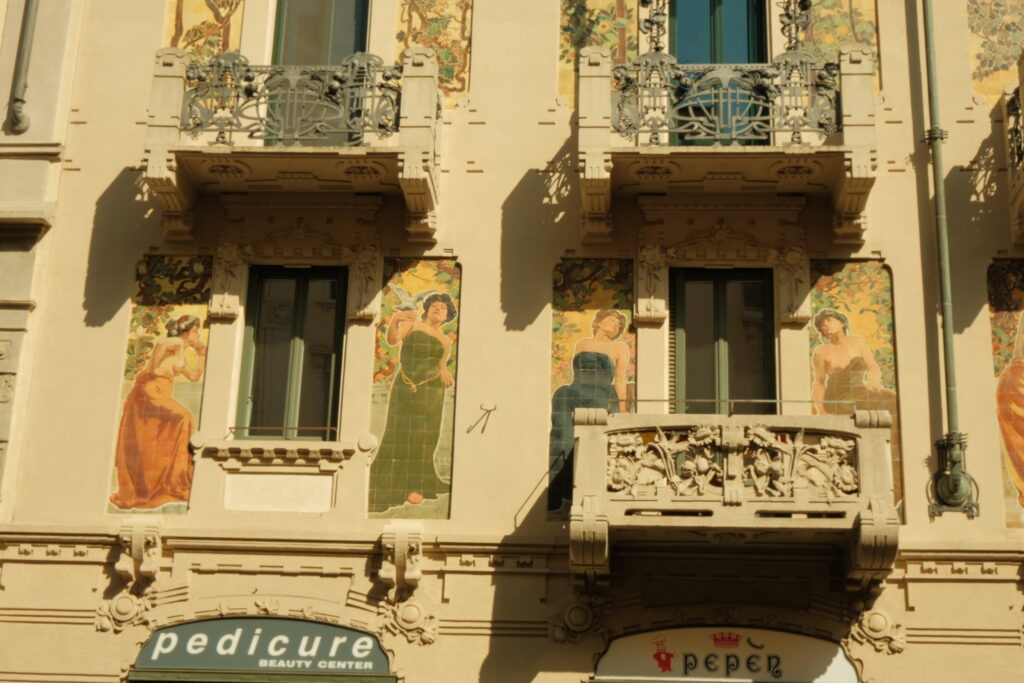
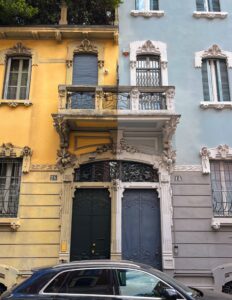
 I don’t know if this is because I am walking everywhere and I just don’t as much in Austin, but the streets feel like they are meant to be experienced by people. In Austin (around campus), the buildings have very little embellishment. Most visual excitement can be found inside the buildings, but the outsides are bare bones. In Italy, every single facade has some level of artistry. Each building feels like it is competing with the one next to it while your eyes pull you down the street looking for the next contestant.

Week One: The Beauty is Everywhere

When preparing for this trip I had preconceived notions of Milan but didn’t really know what to expect. I certainly didn’t expect to be bombarded with beauty everywhere I turned. What has stood out to me over the past couple of days is that there is no lack of beautiful things in this city. What I mean to say is once you step outside your door and breathe in the air of a fresh new day, you are bound to encounter something beautiful.

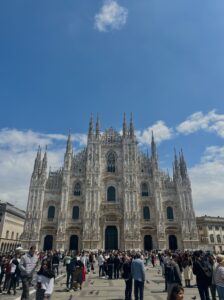
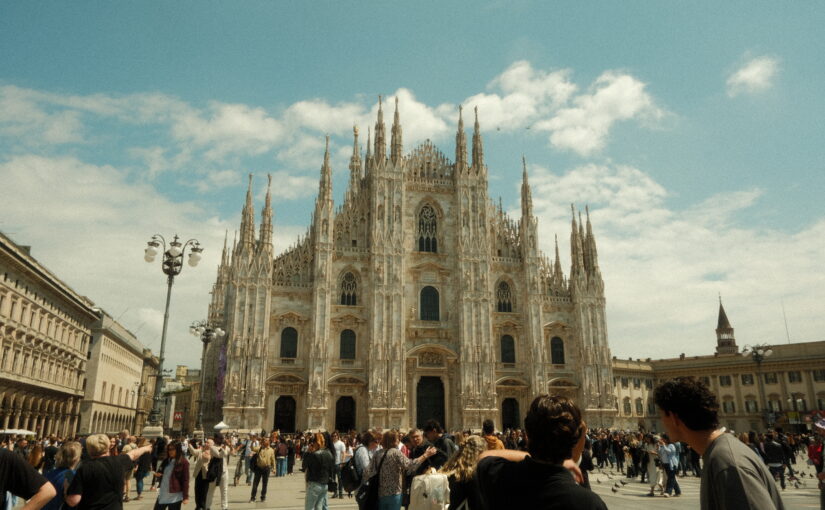
It’s the trees that tower over you, almost reaching out to give a hug or greenery and foliage spilling over balconies on corners and sides of buildings. It could be walking up the stairs coming out of the metro and seeing the duomo stare at you jarringly or a person wearing a blazer that is the perfect oversize fit intentionally styled with unique accessories.

Whether I look up, down, to my left, or to my right there is something to see, something worth seeing and wow what a privilege it is to wake up and be able to see beautiful things without having to do too much. Maybe some of the people here might be used to the beauty. Maybe it’s too familiar to them. Maybe having 24/7 access to beautiful things makes it difficult to be grateful for said things. But to me, there is wonder everywhere in this city; To see it, you just need to look up and around.

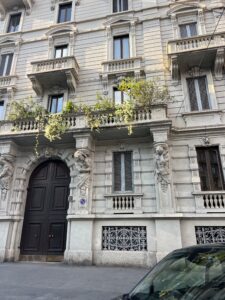
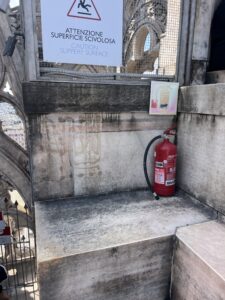
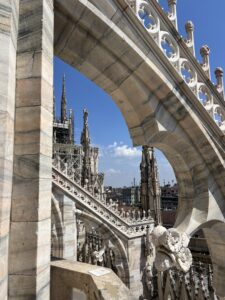
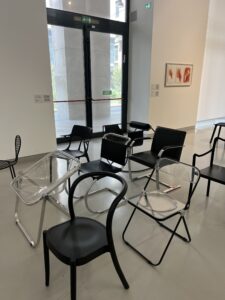
Here are my favorite random sightings of beautiful things so far: 

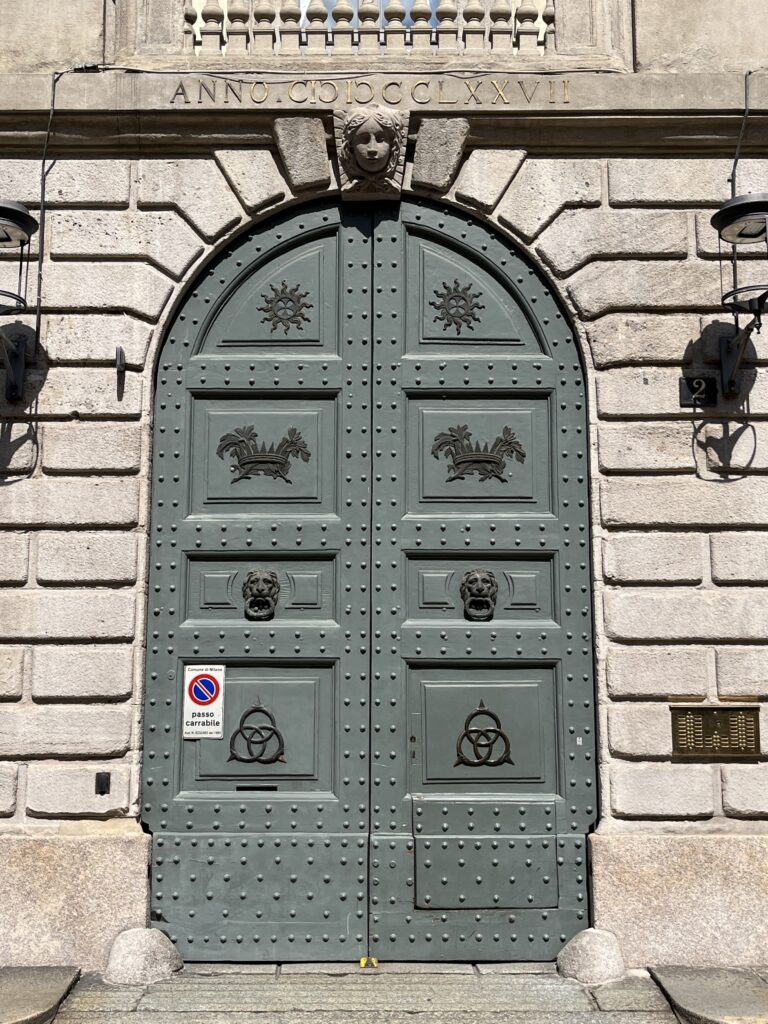
A beautiful ornate building we saw while walking
What might be a screen print of the fire hydrant below it
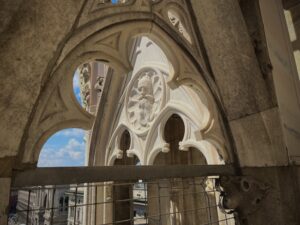
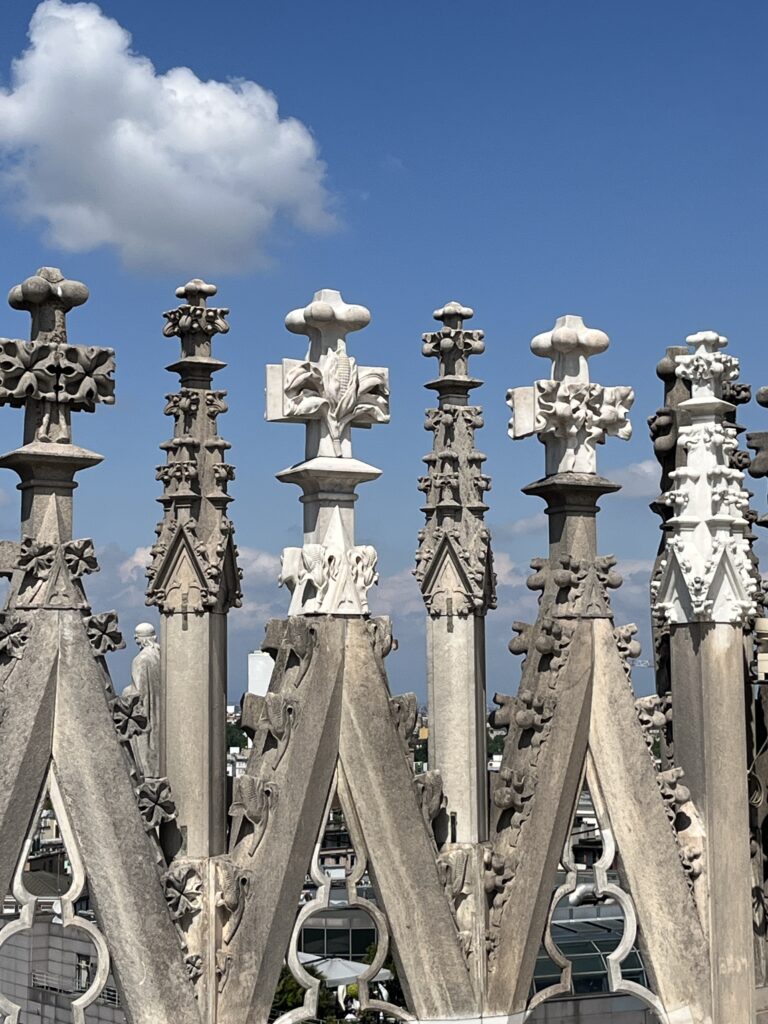
A frame of a section of the top of the duomo
Unique chairs in the Museo del Novecento
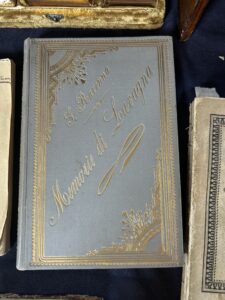
Beautiful vintage book cover found at the market across the Museo del Novecento

Week 1: Grandiose First Impressions | Ava Shea Feinstein 2025

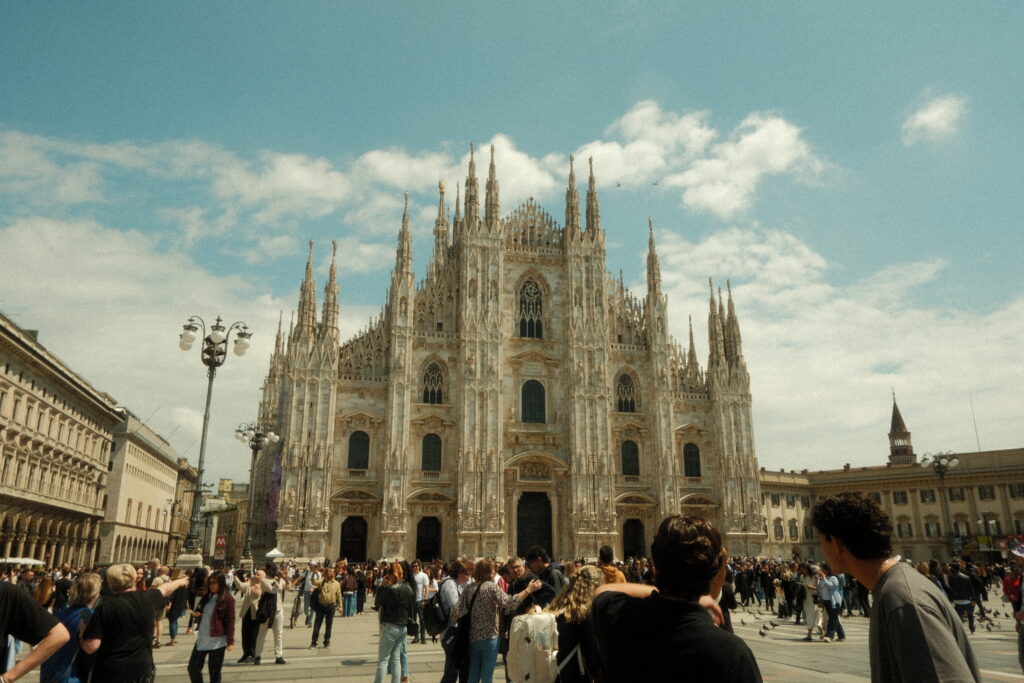
Milan is BEAUTIFUL! As soon as we got off the train from the airport my jaw dropped: the grandiose architecture, the greenery on every building, the COLORS. I think the vibrancy and architectural diversity is what truly blew me away. I can confidently say that I was not ready for the Duomo. Walking up those stairs from the metro with the light beaming in, and seeing that massive, incredibly intricate building; I don’t think I will ever forget that. The closer you got, the more astounding it became. The level of detail wasn’t (and still isn’t) comprehensible. Even as we are just beginning to explore the city, I can tell there are going to be so many amazing things to see and learn. I am beyond excited to explore!

Mapping the City: Bosco Verticale to Federazione del Fasci Milanesi

By: Ava Feinstein, Sophie Leung-Lieu, Samantha de Lemos, and Camila Mascorro

Preliminary Research

BUILDING 1: Bosco Verticale
By: Boeri Studios

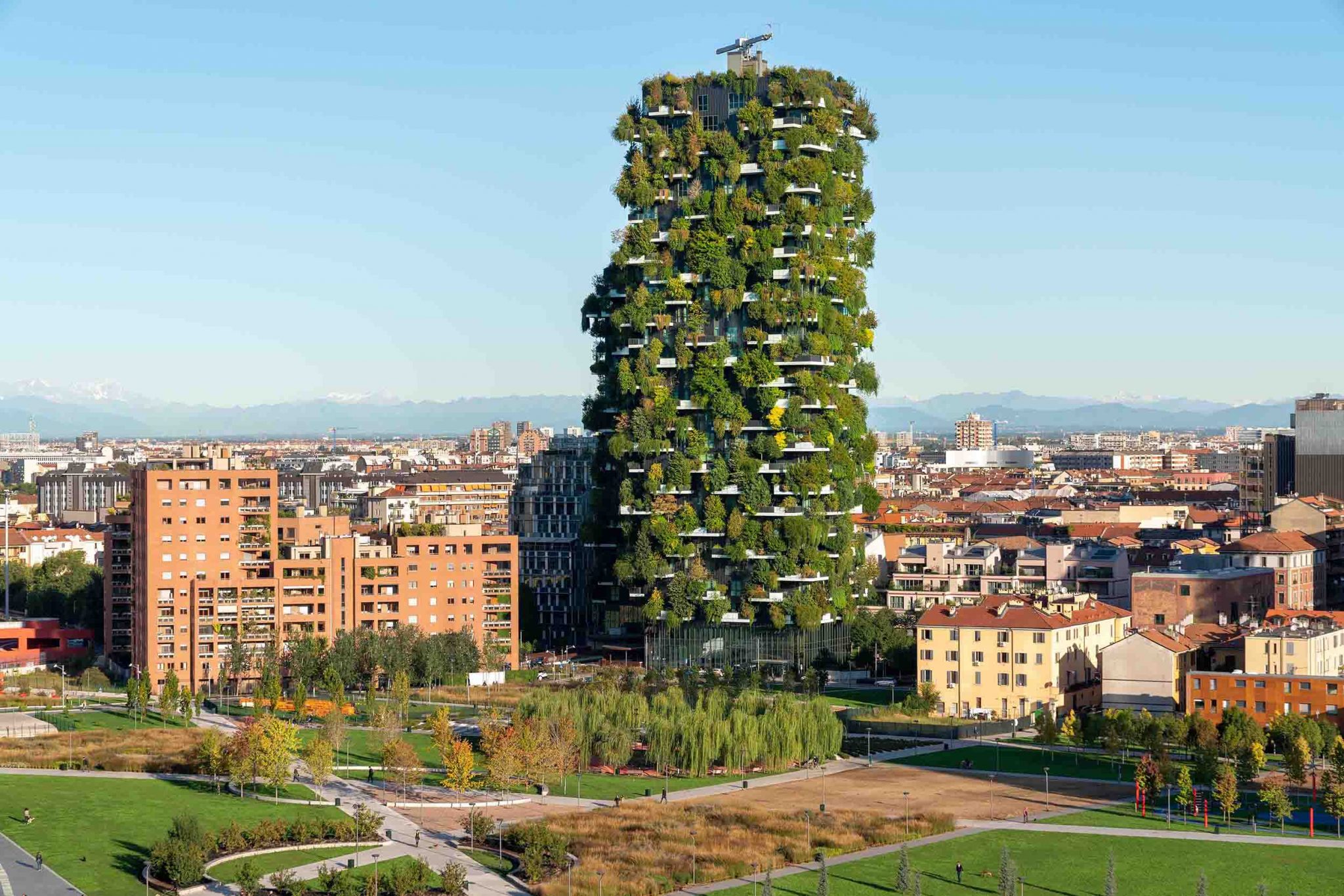
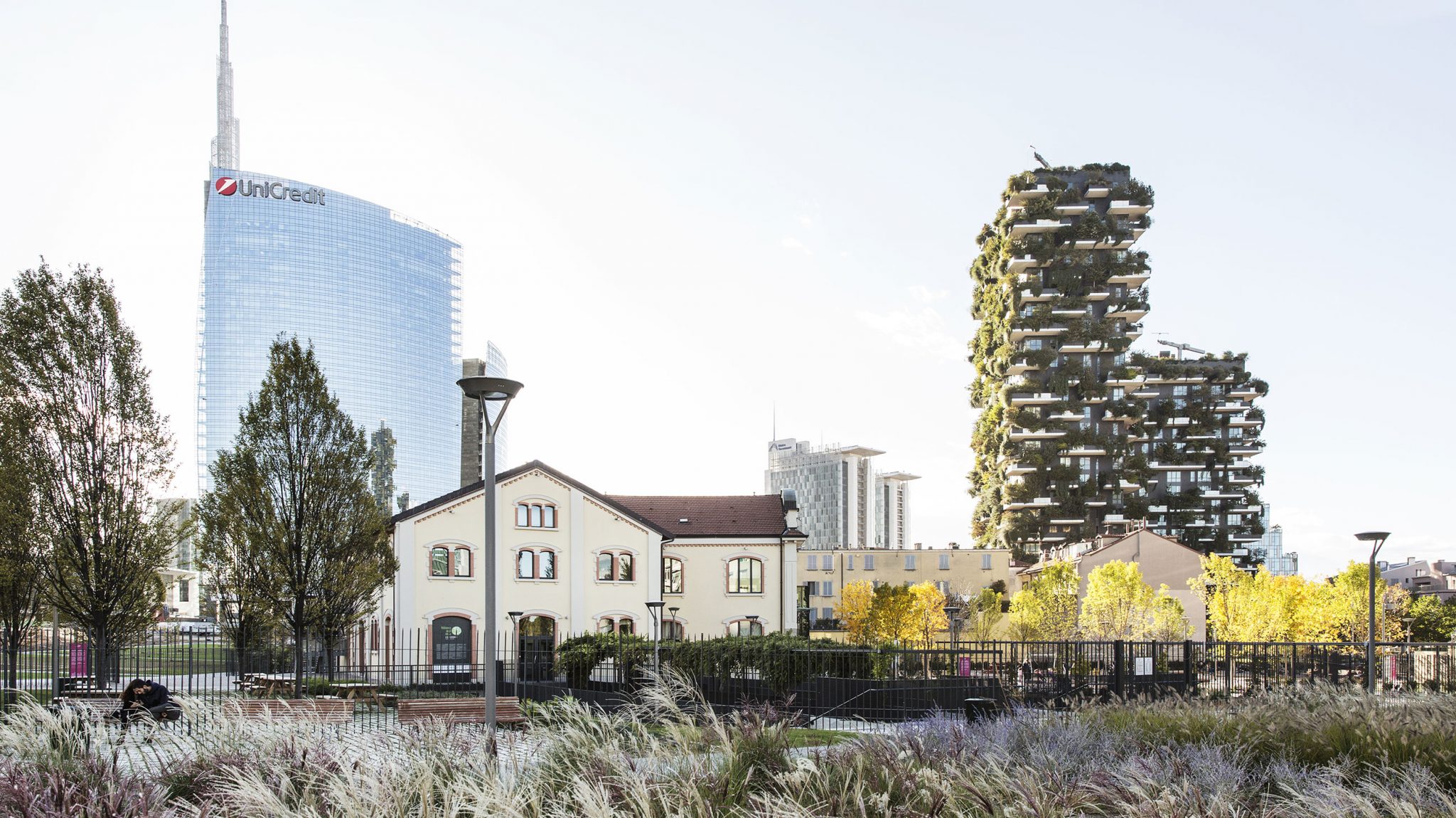
Pictured are the two towers that are Bosco Verticale in the Porta Nuova district of Milano.  This image faces the south side of the tower which is primarily planted with evergreen species to withstand the exposure to the south sun.

By: Boeri Studios

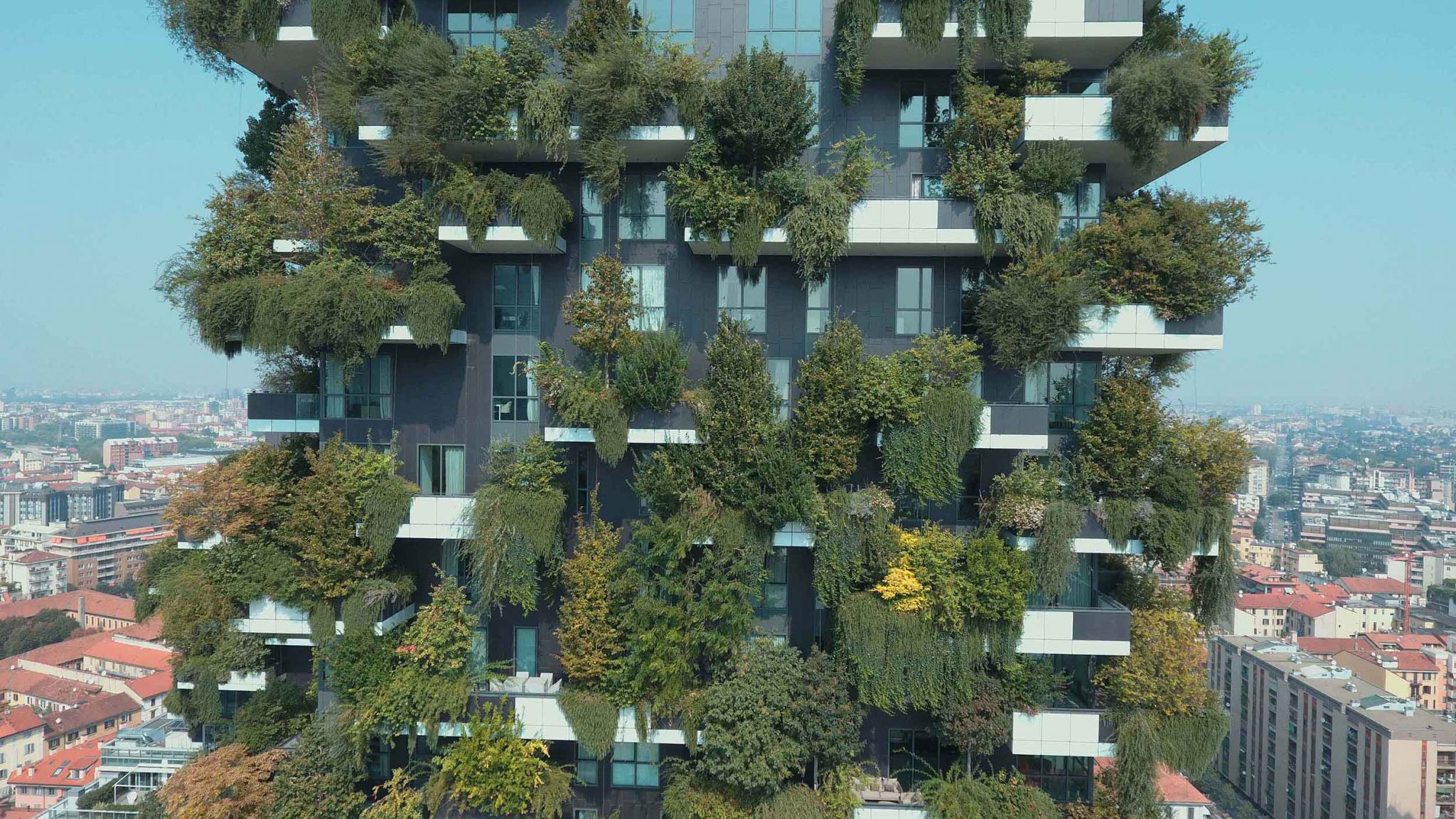
Depicted above is a close up picture, highlighting the staggered formation of the balconies. You are able to see the varying degrees of space necessary for each species of tree to grow into its full canopy.

By: Boeri Studios

Depicted above is a close up picture, highlighting the staggered formation of the balconies. You are able to see the varying degrees of space necessary for each species of tree to grow into its full canopy.

By: Boeri Studios

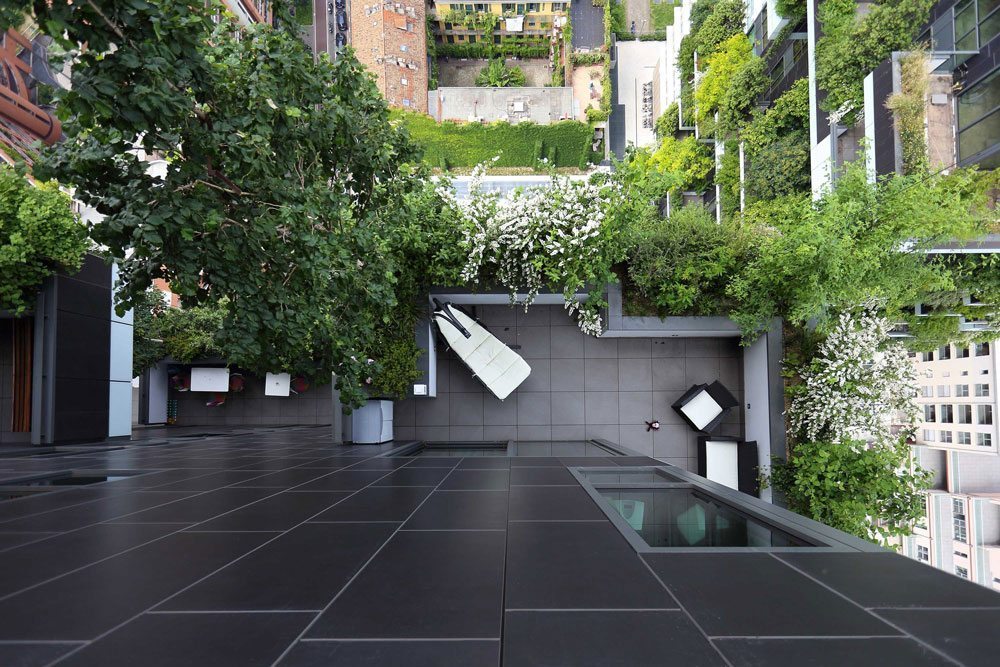
This top view of one of the balconies demonstrates both the height allowed for full canopy development, as well as the bespoke nature of each of the balconies. 

Observations

The Bosco Verticale, otherwise known as the ‘vertical forest’, is a residential tower in Milan’s central Porta Nuova district. The structure consists of two towers, 110 and 76 meters high, and hosts over 20,000 trees and shrubs on its walls. Of this greenery are hundreds of different plant species, distributed according to the sun exposure on the facade.

The vertical forest was designed by Boeri Studio, with architects Stefano Boeri, Gianandrea Barreca, and Giovanni La Varra. The purpose of the building was to contribute to Milan’s efforts of environmental regeneration to densify nature within the city. The vegetation covering the surface of the structure is equivalent to 75,000 square meters of greenery. Because of this, the Bosco Verticale minimizes the city’s carbon footprint, optimizes water management, and contributes to the improvement of the overall quality of life in Milan. The ecosystem allows sunlight to be ‘filtered’ through the building and helps regulate the humidity level and surface temperatures by up to 30 degrees on the Bosco Veticale. This also reduces the energy requirement for air-conditioning inside the residence.

The building walls include overhanging balconies that are staggered, jutting out by about three meters. This design choice was defined to allow for the growth of tree canopies up to three stories high, as the building was created to better condition the predicted plant structures. Apartment complexes on the inside of the building are created with flexible floor plans to accommodate the plants surrounding them. Additionally, the elevators and stairs were placed on the perimeter of the building, as opposed to a traditional placement in the center of the tower.

While the plants are considered a common asset to all tenants in the building, a team of professional gardeners maintains the greenery by climbing the towers with ropes twice a year. It would be interesting to learn more about how residents experience this green space in daily life and whether the concept has influenced other cities to build similar towers. It would also be interesting to explore how sustainable and cost-effective it has proven over time, especially in terms of maintenance and long-term environmental impact.

BUILDING 2: Federazione del Fasci Milanesi

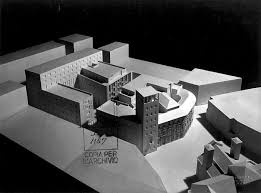
Casa del Fascio della Federazione Provinciale in piazza San Sepolcro, Piero Portaluppi, Milan, 1935-40
By: Adam Nathanial Furman design

Post-war image of the Federazione del Fasci Milanesi, now repurposed as a State Police Commissioner Center, preserving its layered architectural legacy.

By: www.artefascista.it

Looking up at the towering façade of Palazzo Castani, the stark verticality and rigid symmetry reflects the authoritarian power structures of the fascist era.

Sede della federazione dei fasci milanesi
By: www.artefascista.it

Historic image of Palazzo Castani at Piazza San Sepolcro, the birthplace of the Fasci di Combattimento, where Mussolini launched the fascist movement in 1919.

By: Fondazione Piero Portaluppi

A view of the Bramante courtyard’s loggias, reopened and reconfigured by Portaluppi with classical columns to emphasize order and heritage.

Observations

The Federazione del Fasci Milanesi, also known as Palazzo Castani, is a historical landmark that represents a history with the fascist regime. Located at State Police | Commissioner Center, Piazza S. Sepolcro, 9, 20123 MI, Italy, this building has lived through many different phases of historical lives. Through the work of architect Piero Portaluppi, who designed many of Milan’s most coveted architectural masterpieces, the Federazione del Fasci Milanesi was a display of the history that went on within its walls.Portaluppi was a more abstract architect than most absolutists but maintained elements of the fascist style through his use of symmetry, grand proportions, and monumental forms.

The structure originally dated back to the 15th century under the original ownership of the Castani family, which gave it the name “Palazzo Castani.” It underwent significant transformations throughout the centuries, including an extensive Baroque renovation in the 17th century that added dramatic spatial elements while retaining its Renaissance roots. In the 20th century, Palazzo Castani became a landmark after housing the National Fascist Party led by Benito Mussolini. He used what is now known as the Federazione del Fasci Milanesi as a base for early political activities.

On March 23, 1919, Mussolini gathered around 120 supporters in a hall at Piazza San Sepolcro, this exact location, to officially launch the Fasci di Combattimento, marking the beginning of the fascist movement. The most impactful speech for the Italian fascio was delivered at a building adjacent to Palazzo Castani, linking the address to the origins of Italian Fascism. This era became known as Sansepolcrismo. Between 1935 and 1940, Portaluppi remodeled the building, adding a monumental façade and making architectural interventions that emphasized order and power. One of his key contributions was reopening the loggias on the first floor of the Bramante courtyard, previously walled up, and reconfiguring them with classical columns and spatial symmetry. After World War II, the Federazione del Fasci Milanesi was reimagined and repurposed as the State Police | Commissioner Center, transforming its identity while preserving the telling history of its architectural past.


Citations

Bosco Verticale

“Vertical Forest: Milan.” Stefano Boeri Architetti, 30 Apr. 2025, www.stefanoboeriarchitetti.net/en/project/vertical-forest/.

Visser, M. “The Geography of Vertical Forests: Exploring the Green City.” Utrecht University Student Theses Repository Home, 1 Jan. 1970, studenttheses.uu.nl/handle/20.500.12932/35208.


Federazione del Fasci Milanesi

Studio. (2023, February 1). Piero Portaluppi, dall’italia del ventennio alla milano di instagram. Rivista Studio. https://www.rivistastudio.com/piero-portaluppi-milano/ https://www.rivistastudio.com/piero-portaluppi-milano/ 

Wikimedia Foundation. (2023, December 28). Palazzo castani. Wikipedia. https://en.wikipedia.org/wiki/Palazzo_Castani https://it.wikipedia.org/wiki/Palazzo_Castani 

Wikimedia Foundation. (2024, December 27). Piero Portaluppi. Wikipedia. https://it.wikipedia.org/wiki/Piero_Portaluppi https://en.wikipedia.org/wiki/Piero_Portaluppi 

Arte  Italiana  Del, www.artefascista.it/milano__CdF__primigenia__arte__italiana__del.htm. Accessed 12 May 2025 https://www.artefascista.it/milano__CdF__primigenia__arte__italiana__del.htm

Week 1: Studying the New and the Old

Ciao! This first week in Milano has been nothing short of eventful, exhausting, exciting, rewarding, scary, and fascinating all at once. It was definitely very nerve-racking at first the thought of living in a different country for a few weeks, especially as I have never lived anywhere outside of Austin, having been born and raised there and then going on to attend UT. This has been a very big jump for me so far, but little by little I’ve gotten accustomed to the city while finding things that both it and Austin share, as well as new things that are different from back home and have surprised me. It’s definitely stood out to me how the new and old are blended together throughout the city, something so evident that it was pointed out to us during our tour of the Duomo. Back home in Austin I’ve definitely studied juxtaposition of older buildings or architectural styles with new, modern buildings in areas downtown or even on/close to campus, but here even in one building the new and old can come together to create something entirely new. This especially stood out to me with the different shades of marble in sections that have been replaced with replicas of the original carvings and sculptures and how despite their visual differences, they work in harmony to portray the history of this building while adding new stories at the same time.

Carla Garcia Leija – Week 1 | A warm welcome to Milan

Even though we have only been in Milan for less than three full days, I am continuously wowed by everything I have seen. Going on a guided tour of the Duomo, Galleria, and surrounding areas was so interesting; I enjoyed learning about the nuances of Milan’s history, from the fact that marble can get sick to the context of the Biscione (snake eating a child), Milan’s symbol.

It’s challenging (in the best way) to wrap my head around the fact that such beautiful architecture, design, and life are outside my window, and that I can witness revolutionary art just a metro ride away. This trip has come at a point in my education and career: my practice is new and malleable enough for the takeaways of this trip to influence the rest of my work, but developed enough that I can approach this work from a comparative and analytical perspective.


View of the Duomo on Saturday, May 10, 2025. Photo by Carla Garcia Leija
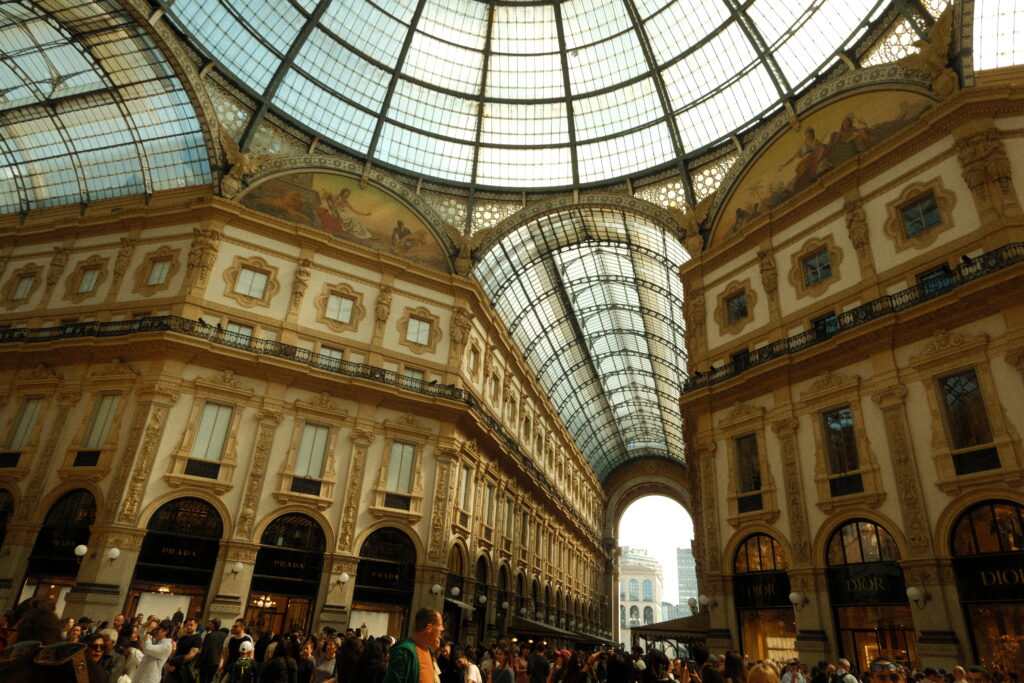
The inside of Galleria Vittorio Emanuele II on Saturday, May 10, 2025. Photo by Carla Garcia Leija.
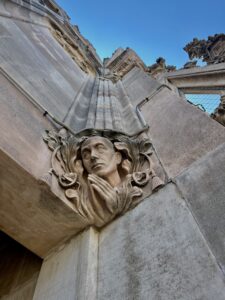
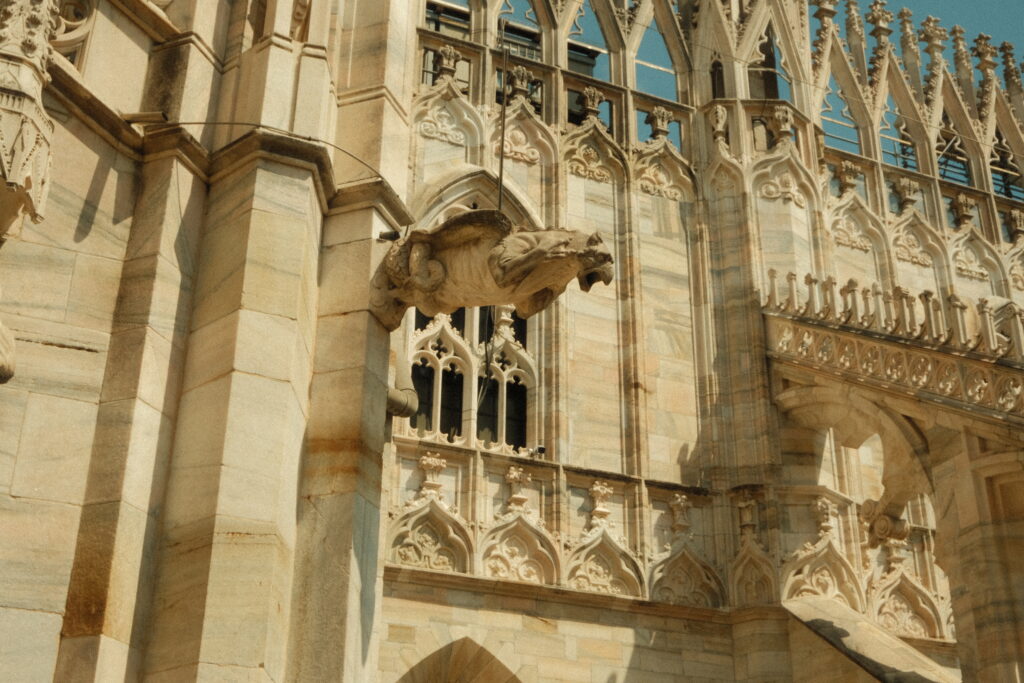
A grgoyle adorning the Duomo. Per Roberto, it serves as a rain gutter as well; when it rains, water shoots from its mouth. Photo by Carla Garcia Leija.
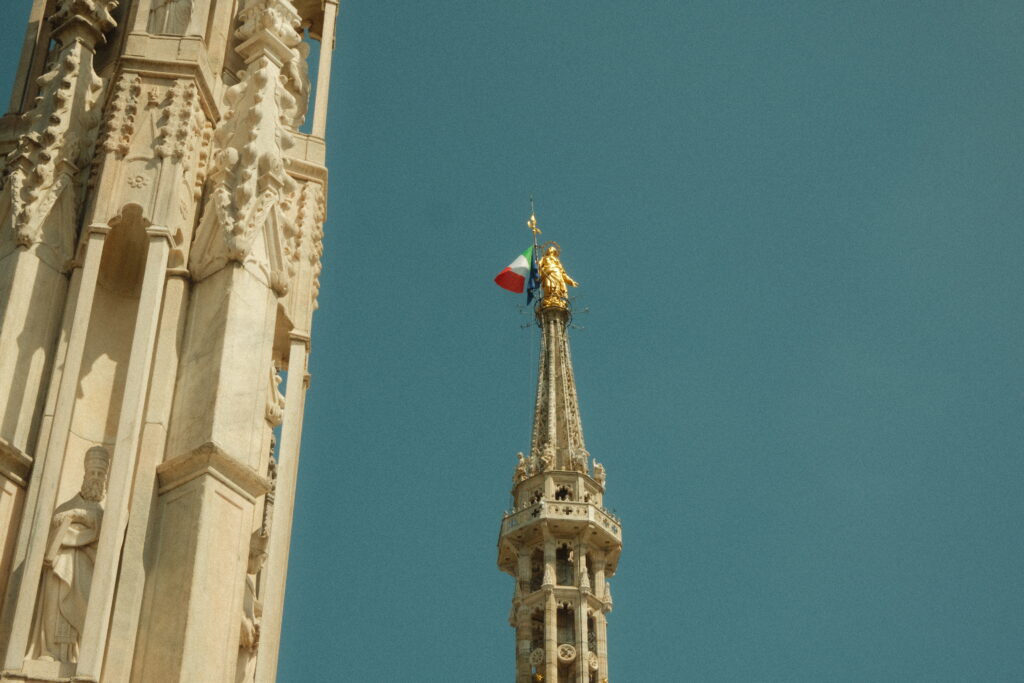
The Madonnina, a statue of the Virgin Mary that sits atop the Duomo. By tradition, no building can be taller than her, so, when skyscrapers or other high buildings are constructed, a miniature version of the Madonnina is placed atop them. Photo by Carla Garcia Leija
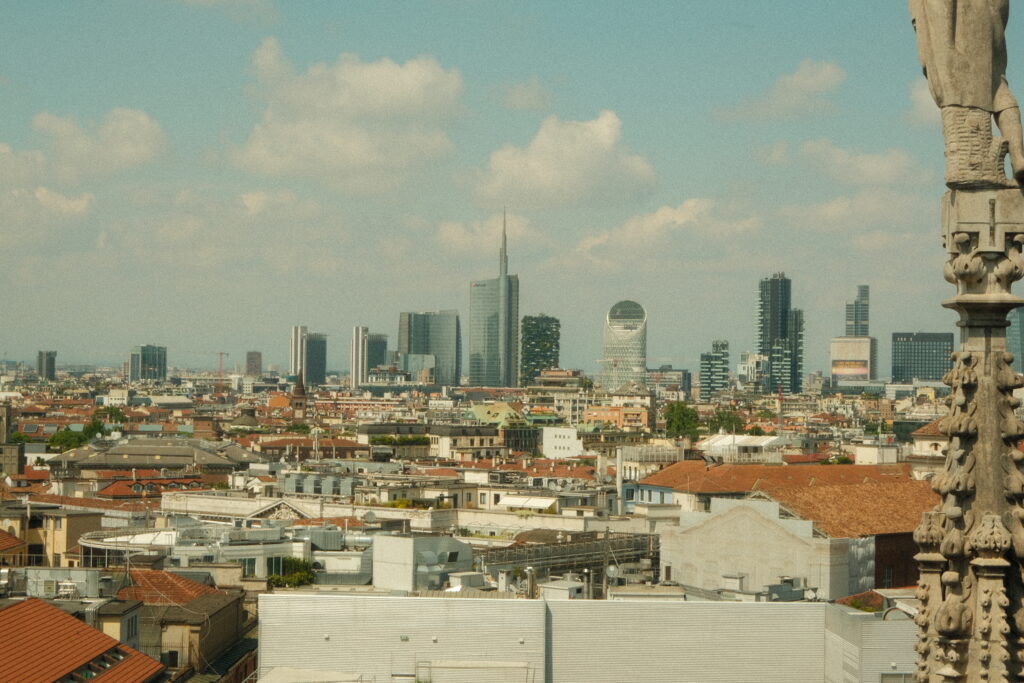
The view of Milan from the Duomo’s rooftop. Photo by Carla Garcia Leija.  
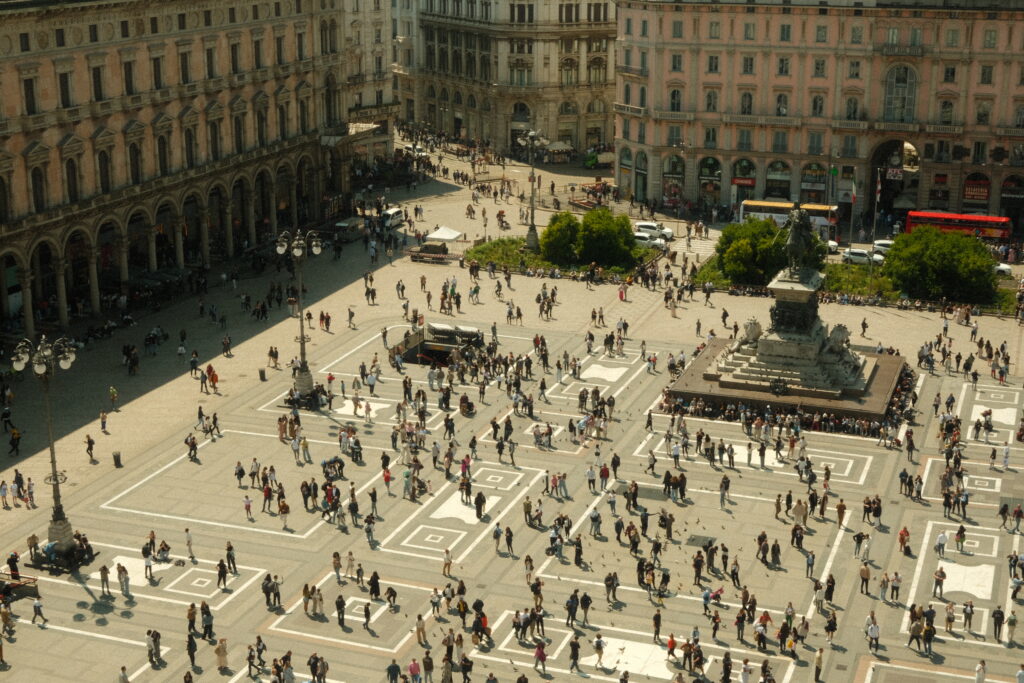
The view of the Piazza del Duomo from the Duomo’s rooftop. Photo by Carla Garcia Leija
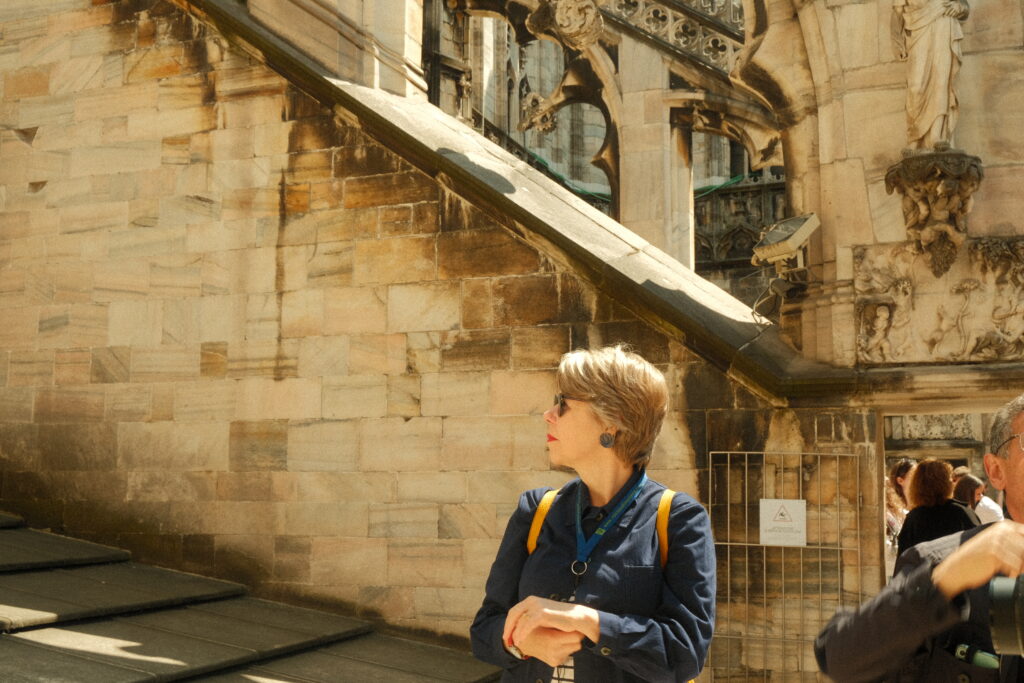
Prof. Kate Catterall observes the Duomo on a guided tour of its rooftop, led by Roberto Andreoni. Photo by Carla Garcia Leija.
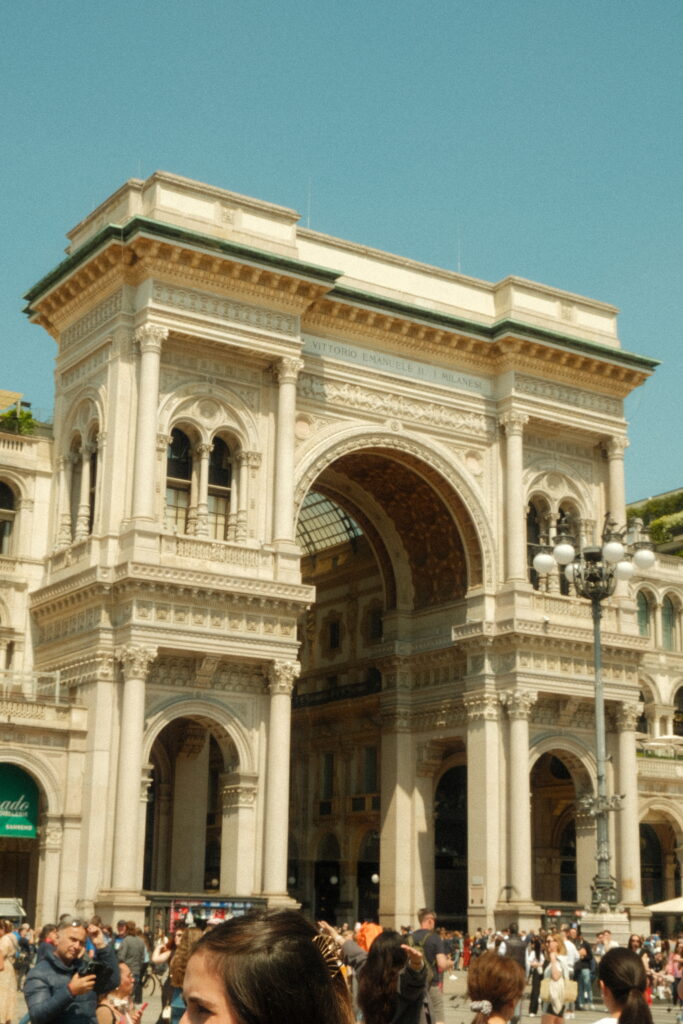
A view of the entrance to Galleria Vittorio Emanuele II on Saturday, May 10, 2025. Photo by Carla Garcia Leija