Interior of Brion Cemetery, spacious and calming
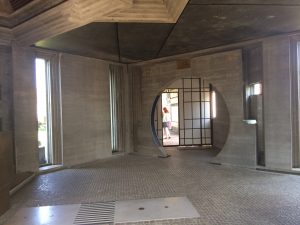
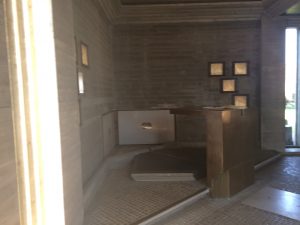
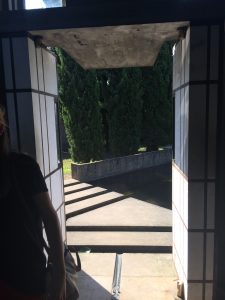
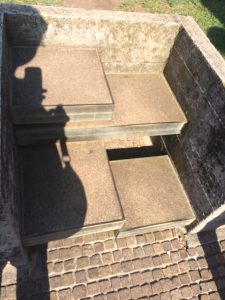
In the preface of sort for the reading about Carlo Scarpa, an excerpt from an Italian philosopher was paraphrased. Gianni Vattimo discussed the commonalities of philosophy and architecture, establishing that at the core of both fields is edification. He then mentioned how the term is defined by “two principal meanings – to build and to be morally uplifting.” In context to Carlo Scarpa, specifically the Brion Cemetery, this seems ideal for approaching an architectural job for a cemetery. I found one thing I thought interesting and worth mentioning. While watching a lecture given by Scottish architect (Richard Murphy) about Carlo Scarpa, I learned that not only was Carlo Scarpa a well known exhibition designer, but was not technically an architect as defined by one who went to school with a focus on architecture. All these three things explain well the context of the Brion Cemetery. I learned that at the time Carlo Scarpa was working as an exhibition designer, Italy was changing its focus from presenting the exhibition, and its content, as a worldwind show and more so on creating this one-on-one connection or dialog between the viewer and the work. This, plus Carlo Scarpa’s interest in Japanese styles, heightened the moral uplifting part of edification as described by Vattimo in respect to the cemetery. There was a calmness created by the Japanese style that fit well with the surround area of the cemetery. I believe that the high contrast between the individual styles within and outside the cemetery mimics meditation in the sense of escaping the body and surrounding area to reflect and reach a more spiritual place. Scarpa’s understanding of how to design in a way that creates a close and individual connection is what, I think, makes this cemetery so successful in providing a beautiful design that does not take away from the objective of the project. Speaking personally, I think that one of my favorite things about the cemetery is there covered infrastructure. With something like a cemetery in the sun, there is a good possibility that visitors will get emotionally drained and physically drained. The open space, that is also darker and cooler than any other place within the cemetery was brilliant structural layout that gives the visitor a place to reflect and regain that balance. Having to walk back through an area that has live vegetation and fish swimming before exiting is a wonderful way to create that balance of living and dead that I think many cemeteries are missing. Although when we went upkeep of the ponds and lakes was not prevalent, I looked up pictures of the area when it was kept up and it confirmed everything I imagined it to be. It looked like an ideal place to visit and connect with loved ones who have passed.
 The logo of TIF using ligatures.
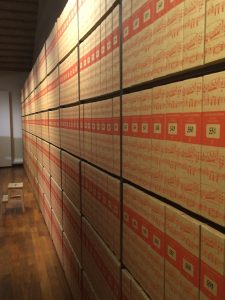 The printed sheet music cataloged.
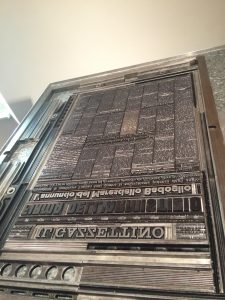 Example printing layout for mono and line type.