 Walking into my freshman year at UT I had mixed emotions about beginning my involvement with a research lab. I had been wanting to conduct scientific research ever since high school and now that I was the allotted the opportunity to be a contributing factor I was extremely excited yet terrified. Not having much lab experience, I was afraid that I would feel inferior and completely lost in this new and challenging setting. Picking DIY Diagnostics and being chosen by the stream was the best choice I could have ever made. The lab mentors were integral to my success in the first semester and made me feel at ease when working through the increasingly complex weekly Skill Developments. To this day our lab mentors have consistently provided us with academic support and given us clarity and direction when overwhelmed with schoolwork and assignments.
One of the reasons I chose DIY Diagnostics was because it offered me the ability to learn not only crucial Biology and Chemistry Lab skills but also the opportunity to venture into new scientific and mathematical fields like Computer Science. Although sometimes I wanted to throw my computer at a wall, learning preliminary coding skills was both a challenging and extremely rewarding experience. Being able to learn a new skill set and working towards improvement continues to be gratifying and keeps me wanting to learn more. Being a part of the DIY Diagnostics community has opened my eyes to the potential of interdisciplinary research ventures. Not only has this stream made me feel more confident in my ability to learn and conduct research but also to interact with the scientific community with less fear and intimidation.
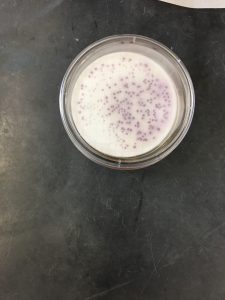
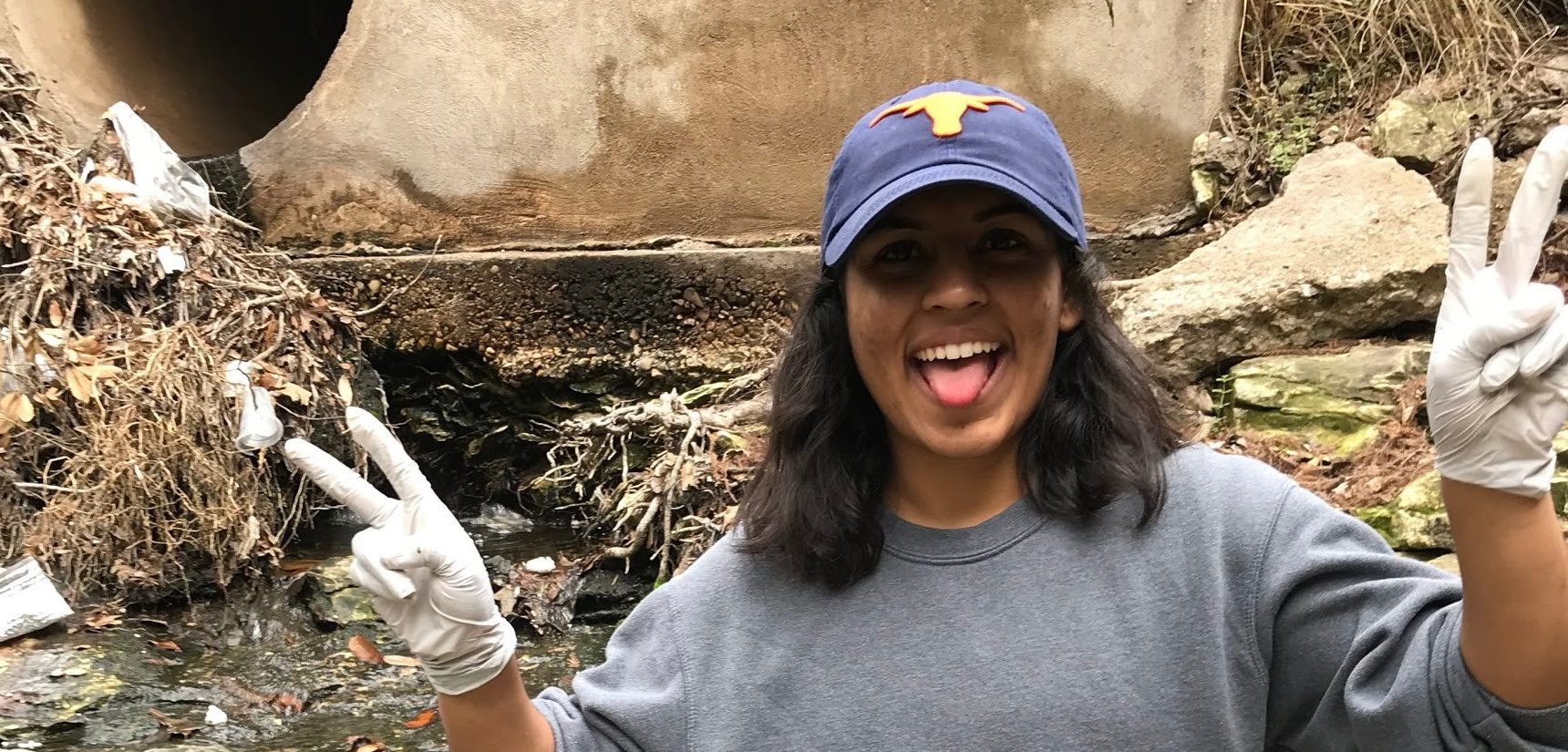
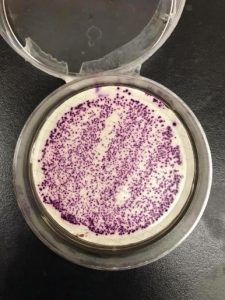
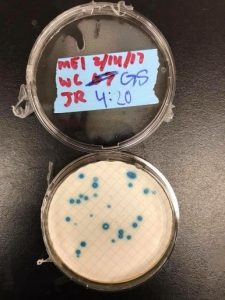
My current goal in DIY Diagnostics is to create a biosensor that functions as a quick diagnostic for detecting levels of the parasite Cryptosporidium in water sources. Our goal is to create a diagnostic that can be utilized in a variety of situations, for example an avid hiker wondering if it is safe to drink water from a nearby stream or a traveler going abroad looking to determine if it is safe to swim in a natural body of water. This diagnostic would function for both consumption and recreational usage. My interest in water testing came from my experiences travelling abroad as well as my involvement with DIY Diagnostics. Last semester my fellow cohort members and I conducted extensive studies on a variety of bacterial counts found in the different locations of Waller Creek, which happens to run through the campus of UT Austin.
It was but only a week ago when I experienced another one of many “AHA” moments in the DIY Diagnostics stream as I caught myself in a moment of concern regarding my current research project. As I was doing preliminary research for my project and realizing the extremely complex characteristics of Cryptosporidium, I heard Tim’s voice from his office say “Remember we’re only trying to diagnose! We aren’t trying to cure the disease.” Often times there is a great pressure put on our generation to solve a large part of the world’s problems spanning from complex environmental issues to maladies galore. Tim’s words helped ease my worries, reminding me that the purpose of our lab is to produce reliable diagnostics for current world issues as the first step in identifying their presence and the dangers they pose to humans. The first step to recovery and a solution to such issues is a reliable diagnostic and I am so incredibly proud and excited about where the efforts of our lab cohort will take us this year.
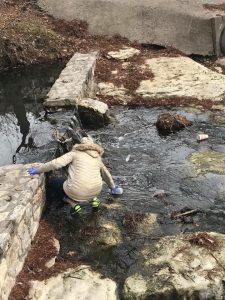
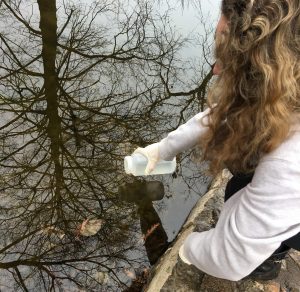
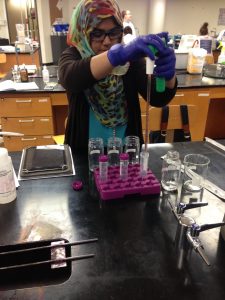 The DIY Diagnostics stream is a conglomeration of hands on science, chemistry, computer science, and engineering. So basically, any project that came to mind could’ve been made possible. I am most excited about the electronic projects because they use science concepts as backgrounds for their projects, but they’re using more computer science and engineering to develop it. They will essentially be the coolest diagnostics. This semester, I am embarking on a research journey to develop a diagnostic that would overcome the adversity of Alzheimer’s Disease. By researching the effects and its causes I will be using a biomarker (a measurable substance in an organism whose presence is indicative of some phenomenon such as disease, infection, or environmental exposure) and compare it to negative (no response is expected) and positive controls (receives a treatment with a known response) to compare it to the sample. The design will utilize a lateral flow assay designed by our group. Being in a group and with like-minded peers has helped me grow as a person and a student. By combining our ideas, we are enhancing our projects to an unfathomable extent. For example, when we were in the process of designing mobile apps, the skills each one of shared with each other helped us excel in the project overall. That was a time I realized that I should treat Java and HTML as language (even though it is) and learn each command and what it does so I can work on programs more efficiently. Apart from that, collecting samples for Waller Creek was fun and we had an adventurous time going out and sampling. Overall, I have learned that research can be tedious, but it is definitely fun especially when we start collecting data and seeing results. From being in DIY I learned that making a diagnostic for anything is possible if you are passionate about it and if I need anything Dr. Riedel will help me to the best of his ability.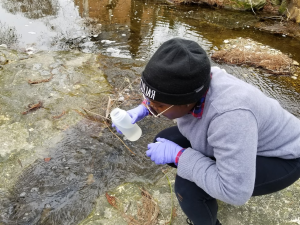
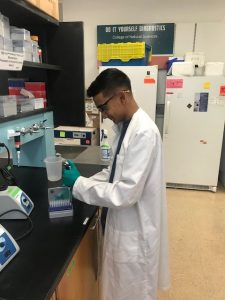 As a pre-medical student, when choosing a Freshman Research Initiative stream, I was looking for a new experience where I could pursue personal growth but also partake in research related to medicine. After reading extensively about the streams available through the program, I decided on DIY Diagnostics because it seemed like a natural fit. As I was relatively new to coding, I was looking forward to seeing its application to the diagnostic-related goals of the stream. Throughout my first semester in the lab, I was able to learn about wet-lab techniques along with coding. On one of the assignments, we had the chance to create mobile applications using JavaScript. After I completed this assignment, it was exciting to see the unique finished product. The great part of these coding assignments was that with the resources provided, you do not need to have any coding background to be successful. This process was very enlightening and the environment of the DIY Diagnostics lab was conducive to learning. Furthermore, the undergraduate mentors were excellent resources to approach for insight and guidance.
 If you are looking for a stream that will help you gain knowledge and grow your independence, DIY Diagnostics is the stream for you! Although being in a lab and doing research can be intimidating, everyone that is a part of the DIY Diagnostics team is very helpful in giving you guidance as you go along with the FRI program.
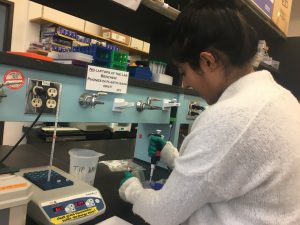 I chose DIY Diagnostics because I fell in love with how comfortable it felt. DIY is honestly just a family of researchers helping each other out. I also was passionate about what research we conducted—we were relevant to the real world and in changing lives on a day to day basis. This concept was really important to me because I am a public health major and wanted research that dealt with populations and diagnostic practices. The main idea of DIY is to make lives easier for both the patients and medical professionals. I absolutely loved the relevance and day-to-day application of our lab’s research and projects. I particularly was entranced by the idea of having a ongoing human subject research pertaining to patients that have been diagnosed
  Parkinson’s Disease and analyzing their keystroke patterns. Currently, for my independent project this semester I am learning to use LAMP (a DNA amplification method similar to PCR but is more accurate, easier and newer) as a diagnostic to detect Rocky Mountain Spotted Fever, a deadly and usually asymptomatic disease. I am collaborating with 2 other researchers (one of them guiding/mentoring us through the process). Last semester I learned the importance of collaborating with others and their different skill sets. If someone told me a year ago about the skills I have learned and continue to learn through the Freshmen Research Initiative I would’ve laughed because I didn’t think I had what it took to be an undergrad researcher in an actual college research lab. Some of these skills include coding using different languages, Nanophotometer, PCR, 3D printing, Qbit, sampling Waller Creek and so much more that I am still learning to understand. Through FRI I have learned persistence, asking for help, and how to make a mean graph with my data. Not only am I involved in my own research stream I am also a mentor for freshman in Scientific Inquiry Across Disciplines—the UGS class of FRI. It is through mentoring that class of incoming freshmen do I realize just how far I have come. 🙂
 Hey freshman!
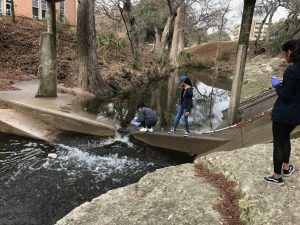
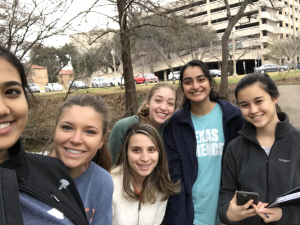 When I chose to sign up for DIY Diagnostics, the reason that I chose it over other FRI streams was because I was really interested in being able to develop my own diagnostic tool. As a premed student, I was really interested in the applications of diagnostics for my future in the health professions. One thing that really interested me about DIY was the work that past years in the stream had done on Waller Creek–I thought it was really cool that we as students could go out and do work on the creek that would actually help to determine the levels of contamination in the creek.
 As a freshman, I could not wait to get to Austin- I would leave my small East Coast town to make new friends and study at one of the nation’s best universities. Even though I looked forward to new faces and studies, I still felt uneasy about the high school- college transition, and this started before stepping foot on campus. I was worried about the workload and the rigorous coursework I would face the next four years and wondered how I would do it. This is when I decided to sign up for FRI. I wanted to take initiative in my learning and get involved with an organization that would make the big university environment feel smaller.