Category: DIY Blog

  • How DIY Diagnostics Shaped My College Experience—and My Future

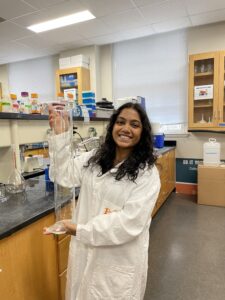
    I vividly remember the day I got into DIY diagnostics. It was sometime in late April and me and my choir friends had just landed in Florida for our senior trip to Disney World. As we filed into the bus to go to our hotels, I heard the satisfying ding of a mail notification. When I checked, the email said “Congratulations! You have been placed in the ‘DIY Diagnostics’ FRI Stream for Spring 2023.” And the rest was history.


    The reason I chose DIY diagnostics over all the other streams was because of its noble cause. The goal of the DIY diagnostics stream is to create simple diagnostics that anyone can use, including people with little to no medical or scientific expertise. In particular, the DIY research initiatives have a strong emphasis on developing affordable diagnostic goods in the aim of reducing the racial, social, and economic gaps in the diagnostic health sector caused by access and cost difficulties.


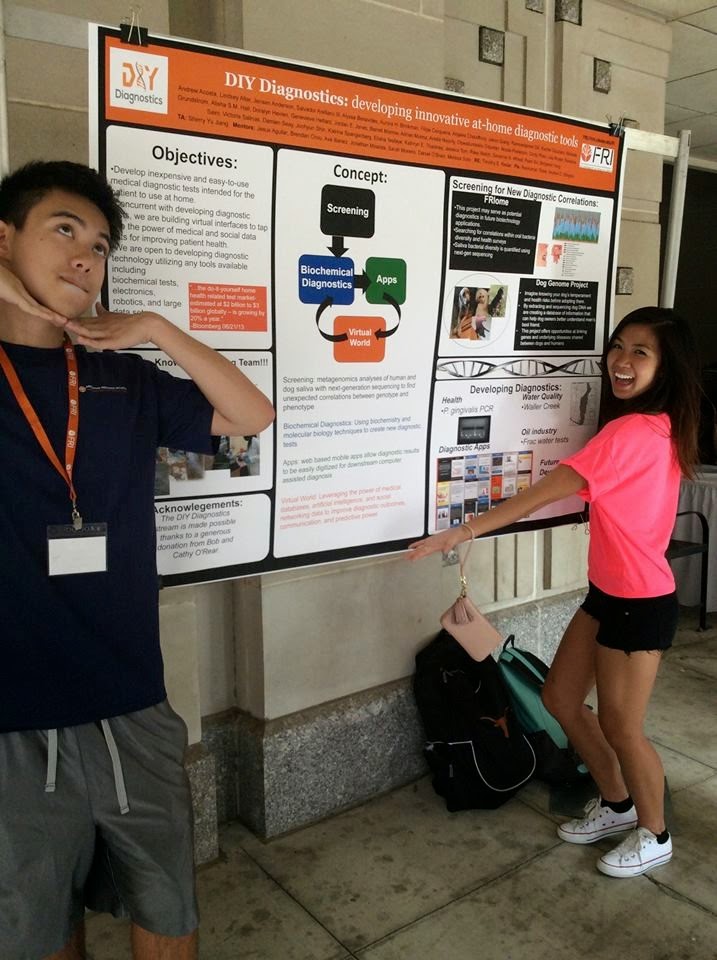
    Being a part of the DIY diagnostics stream has provided me with so many learning experiences and I truly believe that it has helped me succeed at UT. For example, being a part of this vast research community has allowed me to get a head start on gaining hands-on experience and developing practical skills that can be valuable when conducting research in the future. Also, DIY diagnostics provides students with opportunities for professional development, such as presenting research findings at conferences like the Undergraduate Research Forum or publishing papers in academic journals. These experiences can be valuable additions to students’ resumes and help them stand out in the job market. 


    I also wanted to mention that of all the streams, DIY Diagnostics has one of the best professors, Dr. Riedel. He understood that as students, we have lives outside of school and lab and that we’re all human and it’s natural for us to mistakes. He genuinely paid attention to feedback from his students and made changes or modifications to our work accordingly and even gave us extensions on assignments if something went wrong.


    When I first started the school year, I was so worried about whether I would be able to do well in this course, but with the help of Dr.Riedel, the peer mentors, and my other lab mates, I was able to take things at my own pace, make mistakes, learn from them, and eventually succeed. In terms of technical concepts, I’ve learned so many cool things like qPCR, DNA isolation, LAMP, and using javascript to make apps, but more importantly, I’ve developed skills like teamwork, documentation, communication, time management, critical thinking, and more. In the end, I realized that lab wasn’t as hard as I thought it was going to be and that research can actually be fun once you know what you’re doing. Sure, having to redo experiments isn’t fun, but getting the right results after previous failed attempts is so satisfying and it made me realize why I wanted to go down the pre-med path in the first place.


    My time in DIY diagnostics was one of the most challenging and also one of the most rewarding experiences of this year, and it will be a college experience that I’ll never forget.
  • DIY research featured by KVUE!

    DIY research featured by KVUE!

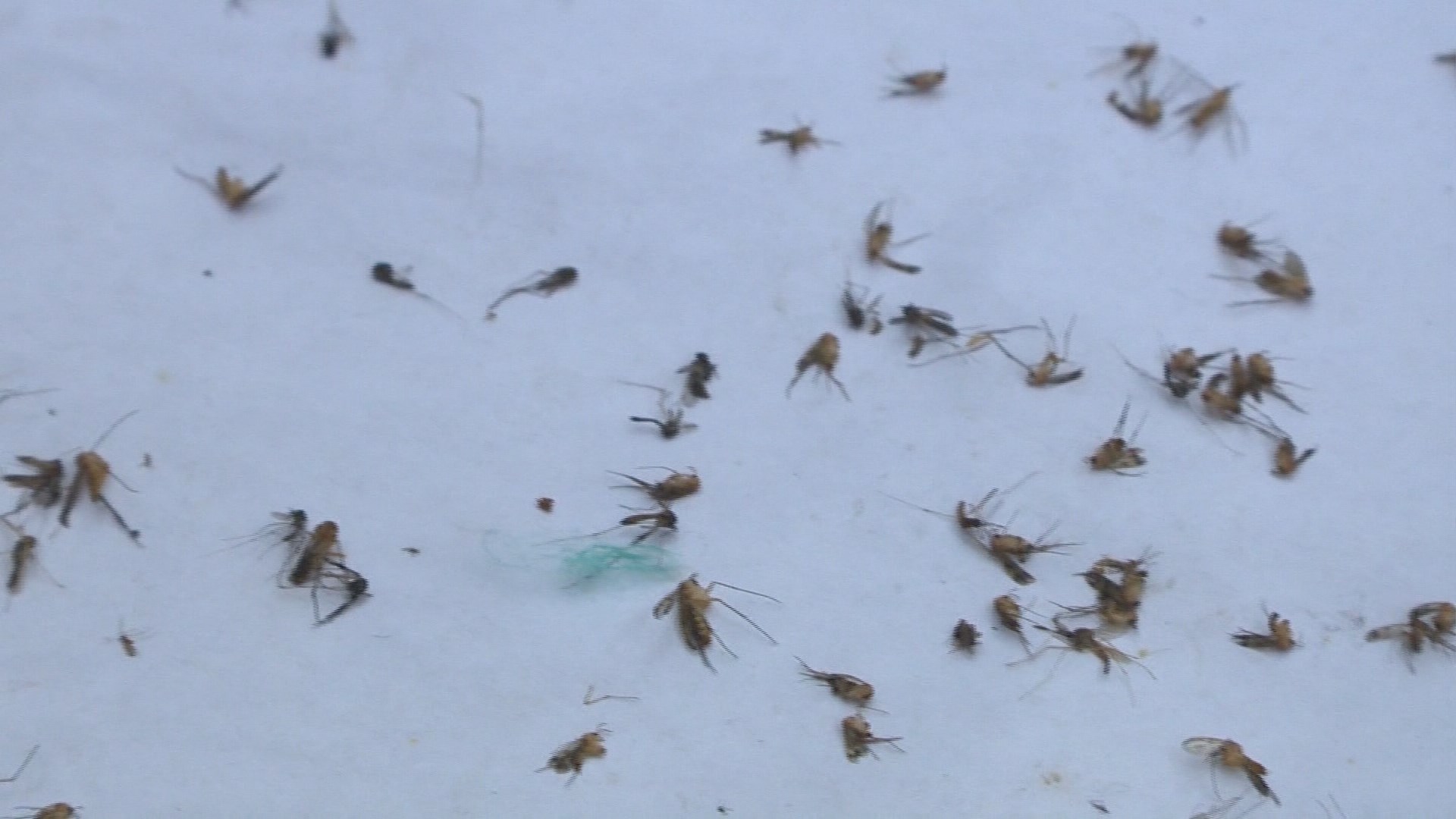
    DIY was featured last night by Austin’s Channel 24, KVUE! Read about it here. If you want to help DIY further their research initiatives, feel free to donate any amount here.

  • DIY in Austin Monthly!

    DIY in Austin Monthly!

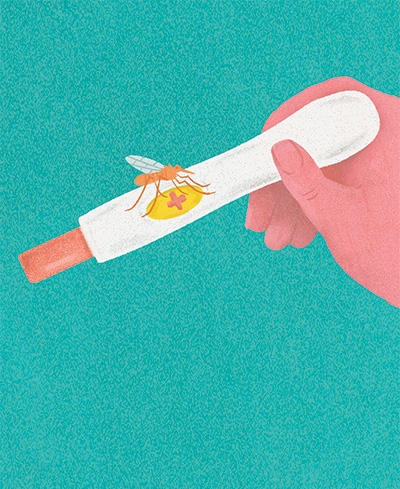
    The DIY mosquito project was written up in the September issue of Austin Monthly!

    http://www.austinmonthly.com/AM/September-2015/Getting-Schooled/

  • Meet Our Student Researchers!

    Meet Our Student Researchers!

    Going to open houses can have an affect similar to that of an approaching avalanche. But don’t panic! Despite the wealth of streams available and all of the information to be absorbed, it’s completely possible to fall in love with a few research topics.

    To help first semester freshmen here at UT with their FRI stream decisions, we’ve asked our Fall 2014 student researchers to write about their time with the DIY Diagnostics stream. Most of our researchers are sophomores, but we have several upperclassmen too, as well as mentors who have already finished their FRI coursework.

    Our researchers have worked to extract bacterial RNA from saliva samples, find sulfur-producing microbes in fracking water, and search out chemical signatures in olive oil using TLC plates. By working to place diagnostic power in the hands of the consumer, we hope to help create more personal and safe health care and industrial diagnostic systems.

    If you like what you read, make sure to stop by the DIY open houses.

  • Rachel Grubbard

    Rachel Grubbard

    When I was deciding which stream to join as the first semester of college was wrapping up, I attended several open houses for different streams, but none captured my attention quite like DIY Diagnostics with Dr. Riedel waving around a pregnancy test and telling us about the million dollar industry that is at-home, or “DIY” tests. I was very interested in the idea of creating tests, normally requiring a trip to the doctor, that could save people countless amounts of time and money. Immediately, I thought of creating a test that could be used to diagnose skin cancer since I have known several people that have panicked at the sight of a mole. Throughout the first semester of DIY, we have started working on the FRIome project, in which we hope to be able to find a correlation between certain physical or psychological traits and the bacteria found in one’s mouth by collecting saliva samples. In addition, I learned how to program mobile apps. I’m definitely no Steve Jobs yet, but this summer, I was given the opportunity to start making my skin cancer diagnostic test a reality by creating an app. I still have a lot of work to do because I still have a lot to learn about programming, but I hope to have an app that will allow the user to take a picture of the suspicious area and find out if it could possibly be cancerous and warrant a trip to the doctor before going for a spot that turned out to be nothing.

    I have learned a great deal by not only working on the computer science part of this stream, but also by working in the lab. I have been trained to use many machines in our laboratory and work on my favorite part: the biological sciences. I love science because no one expects you to be perfect. In fact, it is encouraged to experiment and fail miserably, because important discoveries are made in doing so–you know what doesn’t work! Not all my experiments worked out perfectly each time, but it was a learning experience. I always had the chance to redo labs, fix my mistakes, and get the results I needed. Science isn’t like English, where there are millions of grammar rules that need to be perfected; science gives you the chance to make your own rules and your own discoveries (while following the safety rules, of course!)

    During one experiment, I went down to Waller Creek with two friends in the stream in order to collect a water sample. As I was trying to close my wet container of murky water, it slipped from my hands, and the lid began to float away with the current. I watched it slip away until it was finally caught between the bank and a rock. I climbed across vines, under branches, and dodged poison ivy in order to carefully reach across to retrieve it and avoid falling in. The whole time, my friends and I couldn’t stop laughing. That was definitely my favorite, yet scariest, moment I had last year. I’m looking forward to making more clumsy memories with all the great people I have made by being a member of this stream. This semester, I am hoping to continue working on my app and finally see the culmination of my efforts and research. I can see the work that we have done in the lab and on our computers really helping people in the future, and it’s a great feeling to have!

  • Doralyn Havien

    Doralyn Havien

    When it came down to applying for a stream at the end of my fall semester, the only stream that stuck out to me was the DIY diagnostic stream. To be honest, after visiting all the open houses and looking at background information, I was completely overwhelmed. I didn’t know half the words the research educators were saying, which raised some red and white flags immediately in my head. However, when stumbling across the “do it yourself” stream, I felt better knowing what the words in the name actually meant. DIY was a word I was extremely familiar with due to my excessive obsession with arts and crafts, but don’t get me wrong, our stream isn’t about gluing and pasting macaroni onto a paper plate (but if you can think of a diagnostic that involves gluing and pasting macaroni onto a paper plate, then be my guest).

    You may not be familiar with what a DIY diagnostic is, but chances are you’ve seen one. A pregnancy test is a well-known example. You urinate on the stick, and the display screen will alert you if you’re pregnant or not pregnant.You just diagnosed yourself as pregnant or not pregnant by using this test! That, in my opinion, is what I believe makes DIY unique from the others streams because if you come across a problem in real life, you can head back to the lab and make a diagnostic for it. If you’re allergic to nuts, but you don’t want the waiter/waitress to name every ingredient in your dish, you could potentially make a diagnostic that can detect the trace of nuts. How the diagnostic will be work and what it’ll look like is totally up to you. And that’s what I like about this stream, the research you do can be very personal to you, but end up being very helpful to hundreds of people.

    A project I worked on this summer involved collecting water at 9 AM for a month, filtering the water, then checking how much E. coli and enterococcus is in the water. To be honest, I woke up every morning wanting to skip lab, but the prospect of being that much closer to creating a working diagnostic motivated me. Whenever people asked me what I did in lab, I always simplified it by saying: “I got water from a creek and checked to see if there was poop in it”. As informal and useless as that sounds, I’m hoping that the research I participated in will help the people in developing countries be certain that they’re drinking clean water.


    The stream isn’t always about sitting in a lab and doing experiments to create physical diagnostics. DIY is in the process of making mobile apps that can be accessed on smart phones and laptops! Even though I’m not the most tech savvy person in the world, the coding that I’ve learned in this stream has helped me understand some components of apps and webpages. However, asides from that, working in a lab is a very social and self-developing experience. You learn how to present your work clearly and proudly, you form a bond with your lab mates through the countless hours of struggling, and you learn how to communicate ideas to others. Working in a lab is a very humbling and gratifying experience that I believe is important to experience at least once in your life.