
Category: Mosquito

  • I Hate Mosquitoes

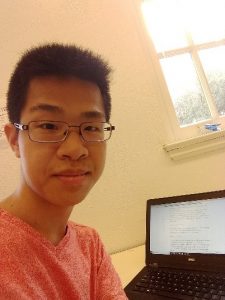
    Me reading up on neural networks to build the algorithm to distinguish the difference between mosquitoes and other insects noises

    DIY Diagnostics is a great FRI for a hands-on experience in creating and building your own experiment as well as making new friends. The stream is exciting and very self-driven, you are given freedom and the independence to conduct research at your own pace, with mentors and Dr. Riedel available to help if needed. You will definitely learn many things, both about research and cooperating with others. Some students have their works published, and many students enjoy it so much that they continue to work on their projects throughout their years at UT or become a mentor to help incoming freshman.

    The diagnostic I am working on is identifying mosquitoes through their wingbeat frequency and using this to build a device that can count the density of mosquitoes in an area. I’m from Houston, where there are a humongous number of mosquitoes in the humid summers, so the project resonated with me since I hate mosquitoes. The end goal of the project will be to be + Add New Category able to build these devices cheaply and identify the places with large concentrations of mosquitoes and stop them from breeding. Many of the diagnostics have real-world applications, and the satisfaction from completing your project and creating something useful is a feeling that all DIY Diagnostics students understand.

    If you are on the fence about being in DIY Diagnostics, you should give it a try! It’s a stream that requires a lot of work because you are conducting real research and gathering useful data, but it’s so much fun and everybody enjoys it. In addition, the stream opens many doors for students professionally, with visits to research centers and contacts with professionals, so I would highly recommend it.
  • Surge of Confidence

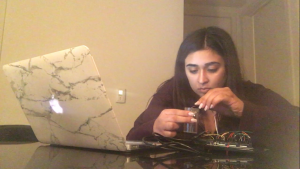
    My DIY Diagnostics experience was a little different than most. I was introduced to the DIY stream in the early summer of 2017 through the ARI (Advanced Research Initiative). I chose this stream, as I felt it would give me the freedom to learn how to solve real-world issues in my own way.It was a bit intimidating to be immediately thrown into a well-established lab and even more so when I was given my very own research project. However, Timothy E. Riedel helped tremendously in guiding me through this experience.

    The project I began working on was designing a mosquito listening device that could identify mosquitoes by species and. count, which would ultimately help determine if mosquitoes in a given area were a threat to public health and comfort. Through the DIY stream and the help of mentors and Dr. Riedel, I was able to learn a new coding software and design a component to perform as such. Half way through my summer, I met my partner in this project, Viren, who perfected and ultimately designed the best working device.

    Going into the fall semester, I was able to use Viren’s device to gather data with individually caught mosquitoes as well as mosquitoes in a particular environment. I later analyzed spectrograms of these recordings, created sound profiles for individual runs, and noted specific characteristics of the spectrogram trends. This would help identify specific species in the future.

    Ultimately, the DIY Diagnostics stream gave me the surge of confidence I needed in research. I am more confident and capable of designing experiments, troubleshooting, and finding solutions. I feel that I am more equipped in solving problems and grasping onto abstract ideas for future improvement. Not only did I see improvement in myself, but I was also able to be inspired, motivated, and supported by my peers designing their own experiments in the DIY stream.


  • DIY funded by Gates GCE Grant for Mosquito Diagnostics

    DIY funded by Gates GCE Grant for Mosquito Diagnostics

    Undergraduate researchers at the University of Texas at Austin are creating diagnostics to test mosquitos for blood-borne pathogens. These diagnostics will combine a simple mosquito-processing device by Paratus Diagnostics with molecular technology to transduce the presence/absence of pathogens into a chemical signal for reading on a common pregnancy test strip.

    Freshman Researchers Receive Grand Challenges Explorations Grant