Category: UV

  • Self-Discovery

    When I was originally looking at the different FRI streams as a freshman, I didn’t really have a particular area of research that I felt very passionately about, but I did have some interest in the areas of biological and medical research. Coming into FRI, I also didn’t have any prior research experience, so I was looking for a FRI stream that would be a good fit for my academic interests while also allowing to me gain a broad range of skills and experiences. When I first heard about the DIY Diagnostics stream, it seemed to have many of the qualities I was looking for in a FRI stream. The main reason I chose the DIY Diagnostics stream was that it seemed to offer a very holistic experience in research. It allows students to learn not only wet lab techniques but also coding skills as well, and this was a skill I really wanted to get some exposure to. Also, the people I met who were already part of the stream all seemed like really nice people, and they reassured me that prior research and coding experience was not required to do well in the stream. The structure of the lab also seemed a little more relaxed and flexible than some other streams, which I liked.

    Through my time in the DIY Diagnostics stream, I have gained some useful skills and experiences. Learning how to code was quite a struggle for me, and I still have a lot to learn. However, I definitely know more than I did when I started, and I feel that I have the foundation I need to keep learning on my own. I have also learned how to use many different types of laboratory equipment and proper laboratory techniques. In addition to the personal skills I have developed, I have also had the opportunity to be exposed to some really cool projects in the DIY Diagnostics Lab. One that I have personally worked on is the UV Wearable Project, where we have been creating a UV Wearable that can calculate total UV exposure that a person receives over time. Another really interesting current project is the Parkinson’s Keystroke Analysis Project, which is using analytics of typing to diagnose the progression of Parkinson’s Disease.

    Besides just gaining research experience, I feel that being a part of the DIY Diagnostics stream has been very beneficial to my overall success so far at UT. Mostly, this has been because of the awesome team of people I have met through DIY. From the very beginning, group work was encouraged, and since a lot of time is spent in lab, there was a lot of bonding time. Working together with my peers in the DIY Diagnostics lab made me understand how much of a collaborative effort science and research truly is. This lesson extended past just working in the lab. It also made me realize how beneficial collaboration can be in studying for other classes as well.  I have made many good friendships through my participation in the DIY Diagnostics stream. It has provided a good network of people for things such as studying, scheduling advise, and general moral support!

    While I have learned a lot of useful skills in the DIY Diagnostics stream, I also learned one really important thing about myself: research is not something that I want to do with my life. I went into FRI not really expecting to love research, but I did go in with an open mind. I have learned a lot and had some really great experiences, but I personally do not like doing research that much. It can be an incredibly frustrating and long process, and more often than not, things don’t work out the way you expect them to. Although I have found that research is not really my “thing”, I am very glad that I had the opportunity to participate in the DIY Diagnostics Stream. I learned a lot not only about science and research but about myself as well.

    -Meghana
  • This Lab is at the Forefront of the DIY revolution

    Many students perceive research as an interesting yet frustrating task that has little relevance to their life in the future. Although very frustrating at times, research in any scenario teaches valuable skills that are useful in one’s future aspirations regardless of the chosen career path. I had experience with some wet lab research in high school, but I wanted to get more research experience before deciding whether or not research was a path I wanted to pursue. While many students take large introductory lab courses their first year of college, I was able to delve into research at the DIY Diagnostics lab as a part of the Freshman Research Initiative.

    When picking streams, DIY Diagnostics appealed the most to me. This lab is at the forefront of the do-it-yourself health and environmental diagnostics revolution. Before this stream, I never really thought about non-treatment targeted research. However, I really enjoyed learning about the diagnostic side of science and the variety of options it opens up. I also appreciated the variety of projects and the independence that DIY Diagnostics allowed: there are projects ranging from identifying the contaminant species in Waller Creek and creating Zika diagnostics to creating electronic wearables to detect UV and air quality. With this variety, I figured there was something for everyone and I was not disappointed.

    I thoroughly enjoyed my spring semester in this lab as I learned not only many wet lab techniques such as extracting DNA, counting bacterial colonies, performing a qPCR and a pH-LAMP procedure just to name a few, but also other skills like basic programming, how to think like a researcher, and communicating scientific ideas effectively. Going in, I thought I would not like the coding aspect of the lab very much but it ended up peaking my interest the most. As part of the FRI summer fellowship, I worked on creating a UV sentinel device that tracks UV exposure amount as one goes about their daily activities not only to prevent exposure to excessive UV radiation and the associated effects such as sunburns, melanomas, and cataracts, but also to provide a way of measurement so individuals do not risk vitamin D insufficiency from not enough sunlight. Throughout this process, I was able to make meaningful connections both with professionals in the field and within the DIY community, learn invaluable wet lab technical skills and programming skills, and gained important critical thinking and presentation skills. I am so glad that I took a leap of faith and tried something completely different from the career path I saw myself on because it allowed me to develop skills that I never would have otherwise.


  • “The Research Conducted in this Lab is so Exciting”

    The DIY Diagnostics stream had a very appealing curriculum and hands-on interaction aspect. It was my second choice, but after having two semesters of experience under my belt, I can honestly say that it would hands down be my first choice if I had to do the selection over again. The friends you make, the amazing lab experiments that are preformed, and the knowledge that is gained from the experiences of this stream are truly one-of-a-kind. I remember coming into this stream feeling extremely nervous. I was incapable of doing a chemistry lab properly in high school and was constantly making my anatomy teacher ornery during dissections. Once I went through the PAI 2.10 doors, I knew it was a place for me to learn and where my mistakes would be accepted no matter how dim-witted they may have been. It was a feeling of comfort that only grew as the first semester progressed. One does a lot of growing up their first year of college and with a 6 hour a week lab requirement, I did a lot of mine in lab or outside on those half-doughnut tables learning how to log data and write stellar lab reports.

    In the second semester of DIY Diagnostics, projects were selected to work on, mine was a UV diagnostic. There were so many brilliant ideas floating around the DIY lab like a diagnostic for Rocky Mountain Fever, an app that could tell you what pill you have, a diagnostic for cancer, and so many more. The research conducted in this lab is so exciting and if I wasn’t a CNS major I would conclude basically impossible for any undergraduate, let alone any freshman could accomplish. The ideas concocted and pursued in this lab are truly inspiring. The coding people are capable of doing for apps, jaw-dropping, I could barely accomplish one line of code on my own during the coding assignments assigned last year. I was part of a group diagnostic, that was working on creating a component that could measure the total amount of UV radiation an individual was exposed to. I was constantly asking for help, but the great thing is, no matter how basic the question my classmates and mentors were there to help me and didn’t judge even a little bit, they may have been slightly annoyed by me at some points throughout the semester. I did deserve it though, one time we were staring at the computer screen for what felt like hours searching for what was wrong with my code and it turned out that I had omitted a coma from one of the sequences. DIY Diagnostics was the perfect stream for me and I could not have learned more about communication, thriving from your mistakes, and how-to perfectly aliquot from anywhere else other than this stream.

    Image 1:

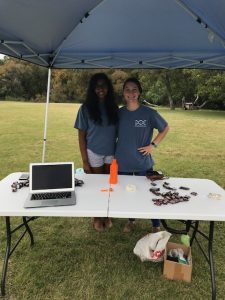
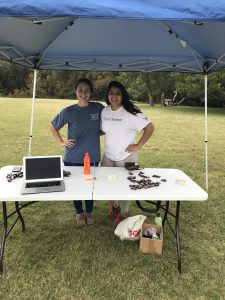
    Fishing For Shade Project: Event where we promoted our diagnostic and were able to get valuable feedback.


  • UV Sensor

    UV Sensor

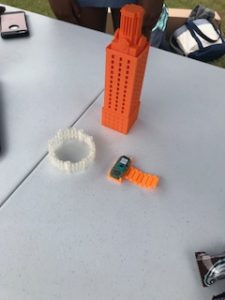
    DIY is designing and constructing a “wearable” UV sensor.  The goal of this sensor is to track your personal UV exposure amount as you go about your daily activities.  The sensor measures the UV index and relays it to the user’s smartphone via Bluetooth.

    We envision a lot of uses for this technology including prevention of sunburn and also allowing a user to “calibrate” their vitamin D levels based in real-world sun exposure amount.


    Researchers:

    Tim Riedel, Alykhan, Saef