Category: 2018

  • Awesome Experience with Research!

    Awesome Experience with Research!

    Hello prospective FRI members and UT students, my name is Chad and I am a
    sophomore in the DIY Diagnostics FRI stream. I’ve been a part of this stream for a semester and some change and have really enjoyed my time in the stream. This stream, like many other FRI streams, teaches you plenty of lab skills such as pipetting, analyzing your data, how to conduct proper research, etc. What sets our stream apart however is the community within the lab. Since starting my time here in DIY, I’ve made plenty of friends that I continue to talk to even outside of lab.

    One of the coolest parts of DIY to me is that our lab consists of a diverse amount of students. Yes, we have our pre-health students, our bio majors like many other labs; however, our lab has a large focus on computer science which allows you to interact with many peers who may have valuable experience to share and may teach you skills you may not have learned otherwise. I can proudly say I came into DIY with 0 coding knowledge and have since learned and expanded my repertoire of computer science knowledge. We also work with 3D printing which you don’t get exposure to in a normal everyday lab. I’m a pre-dental student and DIY fits really well into any pre-health schedule thanks to the nature of what we research in our lab. The lab is built upon easy diagnostics that you can try to do at home so we are always dealing with common illnesses and bacteria that you may end up working with in a pre-health profession.

    Another unsung skill that DIY helps you develop is time management. The lab is a
    on-your-own schedule attendance, so you come in when you can to work on your lab hours. This helped me out in my overall experience as a UT student as it helped me learn to organize my projects and prioritize my time spent on certain tasks. Time management is a skill that I feel like many people underestimate and DIY has helped me apply this skill to the rest of my life as well! It can be daunting to worry about lab hours on top of classes, but the flexible schedule allows you to work when you have time. Time-management in lab also teaches you to prioritize certain tasks and keeps you on track of your projects both in and out of lab.
    Remove featured image


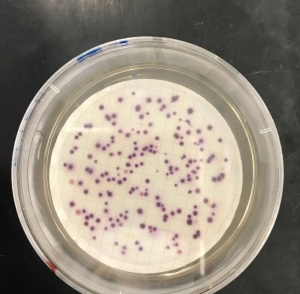
    While we do have your expected lab activities like culturing bacteria as seen below, we
    also do a lot of other cool things in lab like 3D printing and studying our environment here on the
    UT campus! DIY gives a good mix of traditional lab work with other cool opportunities to learn
    some skills that may be outside your comfort zone. I hope you all take a look through what DIY
    has to offer and consider our lab as your next community to join here on the 40 acres! I will
    confidently say that joining DIY will give you an awesome experience with research and checks
    off some lab credits you may be wanting anyways!
     

  • Using Computer Science to Impact People’s Lives

    Using Computer Science to Impact People’s Lives

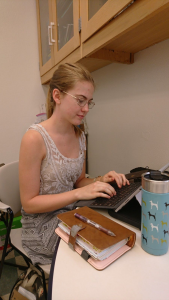
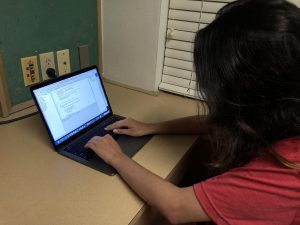
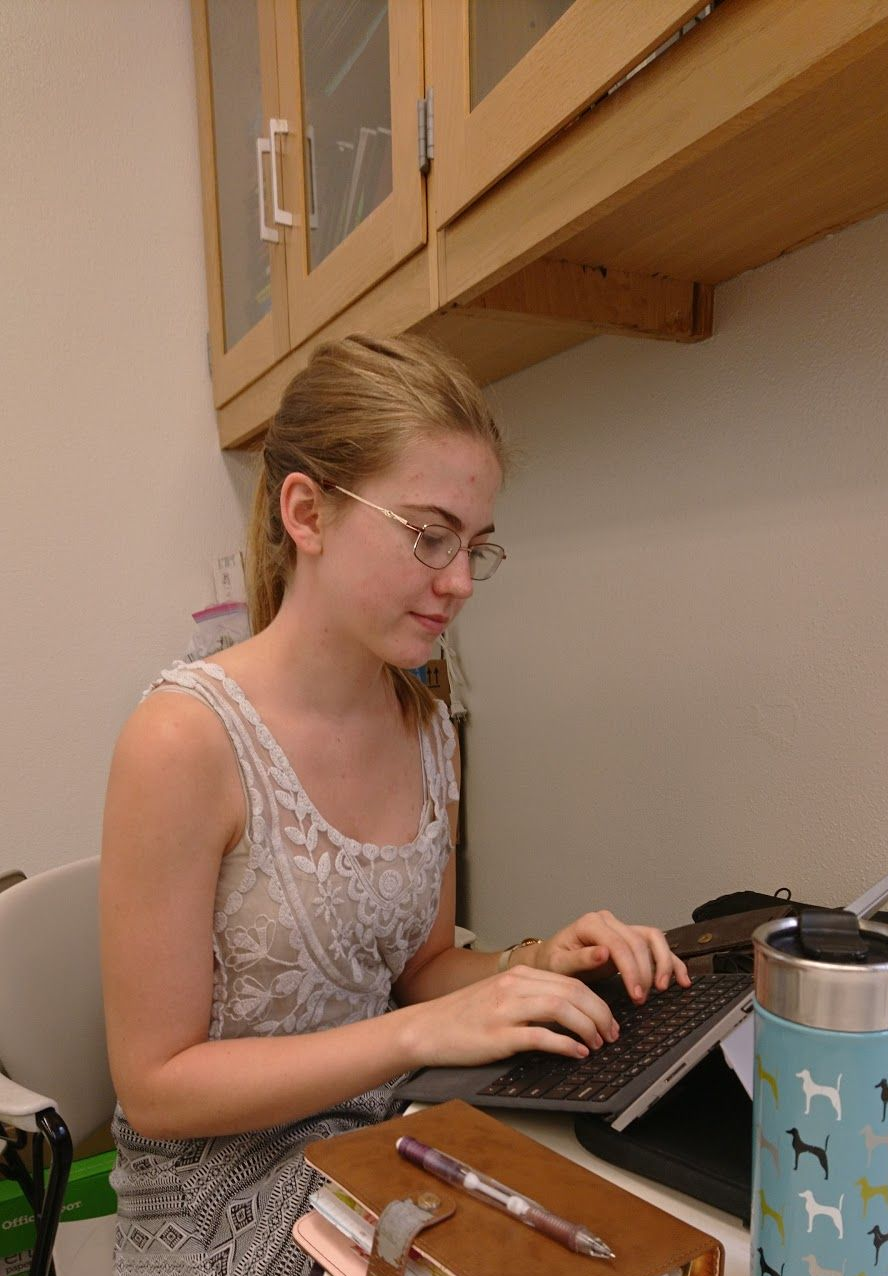
    me, working on an amazing project. Or possibly just pretending to type, there’d be no way of knowing

    As a computer science student, I have faced constant pressure to find my next internship or career opportunity. Almost every day there is a company tabling in the GDC lobby or hosting a recruitment event somewhere. Computer Science majors are often in a world of their own, away from the rest of CNS, where they are encouraged to pursue an internship at one of the “Big 4” and to focus their studies on perfecting their programming skills. We often lose sight of how computer science can be used alongside other natural sciences to directly impact the most basic parts of people’s lives, including their health. I started in FRI in the Computational Intelligence and Design stream. In my first semester, I met many interesting and passionate people. That class was almost entirely computer science majors, and I was excited to talk about hill-climbing algorithms, neural networks, and how these could be used to train computers to make decisions. We had a lot of knowledge and projects, and our mentors were kind and knowledgeable and helped us make it through. At the end of the semester, I teamed up with some friends I made in that class to create an algorithm that makes predictions about emergency response calls. Although our results were not great, I learned a lot doing that project, and I was excited to
    continue in FRI my sophomore year. When I found out the stream was discontinued, I knew immediately which stream I wanted to join: Quantum Computing, the cutting edge of computer science research! We were also told we could join DIY Diagnostics, but I blew that off. Biology was far from my favorite science, and the thought of it brought back memories of staying up all night trying to complete a Science Fair project. On one of the last days of the semester, Dr. Riedel came to speak to our class and tell us
    why we should transfer into DIY Diagnostics next semester. I sat in the front row and prepared to let my eyes glaze over
    while I smiled politely. Strangely, though, I found I was actually interested in what he was saying. His passion about
    diagnostics was obvious, and I realized that the machine learning skills I had learned could actually make a big difference
    in their research. There was also a certain appeal to being one of the most experienced programmers in the stream by
    default.
    After meeting with a DIY mentor, I decided to switch into DIY Diagnostics. It is definitely intimidating to be conducting
    research in a field I know so little about, but I know my peers will be able to help me with my weaknesses, and vice versa.
    This semester I hope I can contribute to the lab community and learn more about the fields of science that I have been less
    than enthusiastic about in the past. I am planning to work on a project that uses typing patterns, such as how fast someone
    types or how often they make mistakes, to detect Parkinson’s disease, a neurological condition that affects motor skills.
    I’m looking forward to the challenges ahead and the friends who will help me along the way.

  • New Experiences and Diverse Exposure

    New Experiences and Diverse Exposure

    I don’t know what I want to do with my life; I’ve always been that type of person. So when it came to picking a research stream for the Freshman Research Initiative, I was totally lost. What if I picked a stream and then ended up hating what I did? What if it was boring or too hard? There was everything from fish behavior to quantum computing, but those were too specific for me it felt like I could never truly find something I would want to do. That’s until I saw DIY Diagnostics. Intrigued by the name, I did further research on the internet and saw that DIY Diagnostics that was simply a stream based around creating cheap, at-home tests for anything from the environment to diseases. It was the only stream that I saw that focused on chemistry, biology, and computer science at the same time. Intrigued, I decided to go to the FRI Open House event and check out the DIY Diagnostics booth, and oh man was I impressed. There’s something unexplainably charismatic about Dr. Riedel, the stream research educator, waving a pregnancy test around and talking about it being an end goal for the stream that just gets me hooked on the idea of self-diagnostics. From that day on, I knew that DIY Diagnostics was where I wanted to be. I really thought I would be doing something biology related when I joined FRI. Instead, my project is entirely electronics and coding based, and I LOVE IT! I had never coding or put electronics together before I came to DIY Diagnostics, but being exposed to so many different things in such a diverse stream helps you really figure out what you want to do. I’ve done everything from water quality analysis, to web app coding in this stream, and I’ve loved every moment of it.

  • Research is About the Process

    Hi Future DIYers!

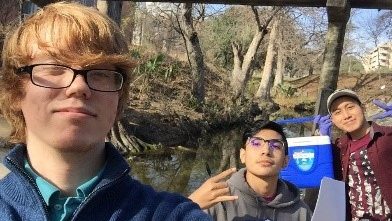
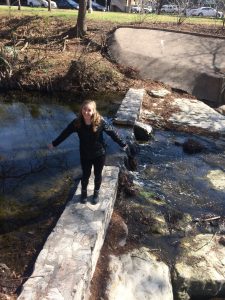
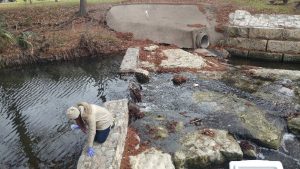
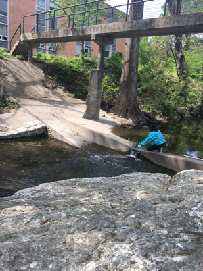
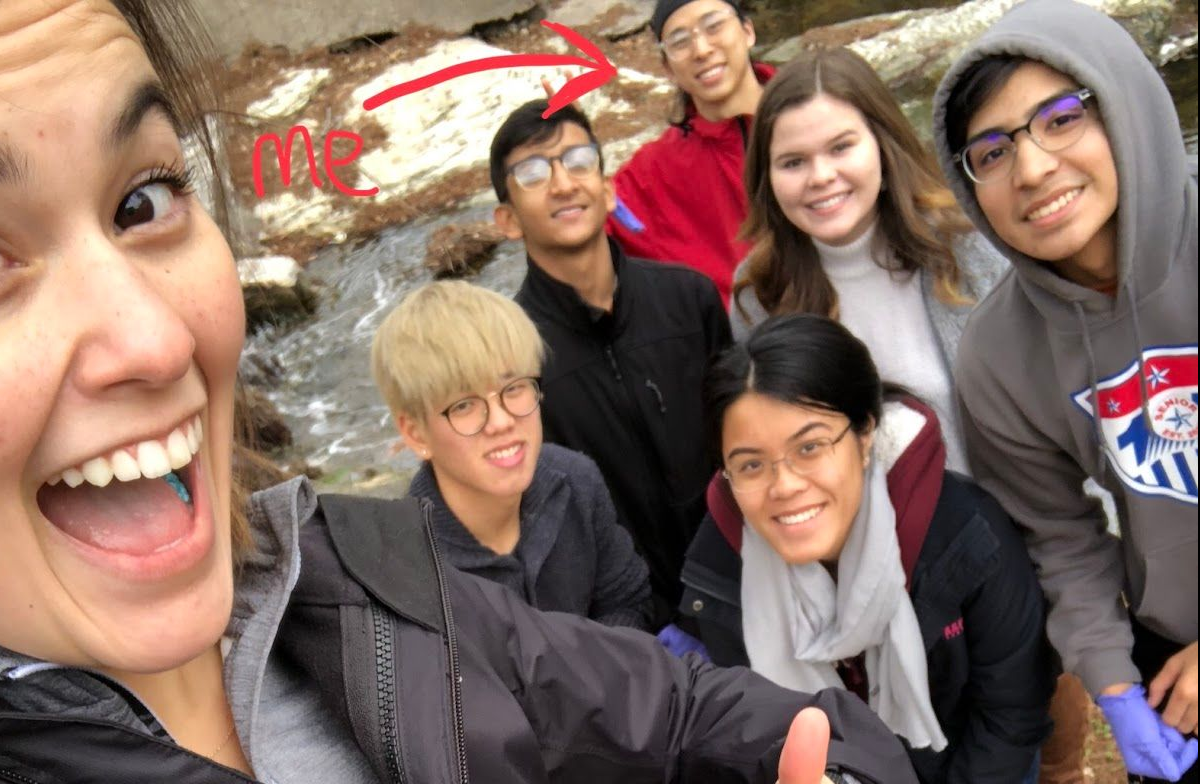
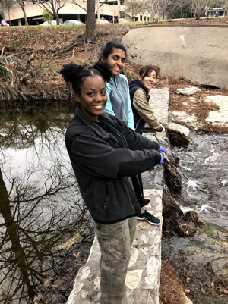
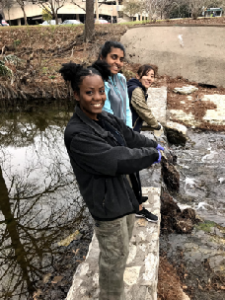
    My name is Julia Kramer, and I joined DIY Diagnostics in the spring of 2018. As an aspiring medical professional, I thought it would be useful and fascinating to get a behind the scenes view of what goes into making useful diagnostics. I went in with the expectation that I would perform and maybe create some simple diagnostic tests, and get experiences that were required for the chemistry lab credit. What I wasn’t expecting was the opportunity to contribute to relevant scientific research, such as analyzing of the microbes in Waller Creek (see the picture of me at the creek!), become a coder, learn to 3D print, and gain a new mindset on what diagnostics are and how they can be improved.

    Because of these experiences, I have been able to understand science in a way that I never have before. While I have practiced the scientific method time and time again, in the past I was always given the procedures of a well-designed study with known outcomes. In FRI, the outcomes were often unknown, so we had to adapt the procedures as more information emerged and were able to actually contribute to the research.

    By practicing science this way, I learned a valuable lesson: the end goal of the research is important, but the process of getting there is even more valuable. Throughout the course of the semester I tried everything from using a NanoPhotometer to coding an app, and realized that I learned just as much, and maybe even more, from the trials that failed as the trials that were successful. As opposed to a normal classroom environment where you have to get the right answer, FRI was a safe place fail and learn until you finally reach your goals.

    Being a part of FRI helped me become a part of science rather than just learn about it, and I am so happy to be a part of this research community.

  • Favorite College Memories!

    Working at Waller Creek!

    Hey there, and welcome to FRI! If you are wondering which research stream to choose from (there’s so many intriguing ones, for sure), then you’ve come to the right place. Let me explain why DIY Diagnostics is, arguably, the best research lab!

    Coming into DIY second semester of freshman year, I really only knew the basics of performing research. I didn’t have thorough knowledge of techniques like pipetting, plating, and using specialized lab equipment. Quite honestly, working in a college lab intimidated me. But with the help of the kindest, most enthusiastic mentors and a very supportive RE (Dr. Riedel or Tim), I started to feel more confident about conducting research. The Skill Developments that we worked on help review and hone the necessary scientific skills for success. I am so glad that I joined DIY – one of the best decisions I have made so far in college.

    One of the great things about the DIY stream is the breadth of research assignments that we work on. From collecting and measuring bacteria levels in water samples from Waller Creek to coding image analysis apps to 3D printing novel objects, we learn so many relevant skills. We are not simply a scientific lab, but a computer science one as well.

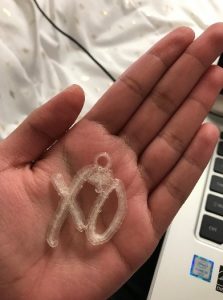
    My 3D printed charm!

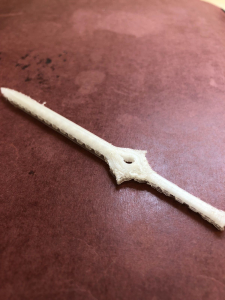
    Some of my favorite college memories come from lab, simply because you get so close with each of your fellow lab partners after spending numerous hours every week together. A few memories that especially stand out to me include trekking down to Waller Creek the day after heavy rains (very messy, to say the least), or when we were using the 3D printer to print whatever plastic object we desired (I printed the XO charm seen below).

    Overall, being in DIY Diagnostics has taught me so much about research, preparing me not only for future labs but for success in all my courses (especially in terms of time management). No matter what stream you choose, you will greatly benefit, but DIY is honestly the best. DIY – it’s do or die!


  • Learning 3-D Printing!

    While I had absolutely no idea what I wanted to do in college during my senior year of high school, I received an email one day inviting me to join the FRI program. Interested in the idea of learning more about research, I applied. I previously had very little experience with working in a lab and was nervous as I looked for a stream that I would hopefully enjoy. As I attended multiple lab tours, DIY stuck out to me the most because it not only combined biology and computer science (which I was trying to learn more about), but it also provided an opportunity to make a difference by diagnosing different problems through different means.

    As I started going to lab and learned more about different lab techniques, I began to feel comfortable due to the large amount of help offered from my peers and mentors. I felt comforted by the small community that existed in the lab and felt glad that I chose to apply to the FRI program, despite my doubts. My interest in the stream grew even more when we began to learn more about coding in HTML and JavaScript. I was very enthusiastic about coding and would show my work to my friends, who were very excited that I was starting to code. Through the stream, my interest in coding grew, and I even added it to be a part of my degree.

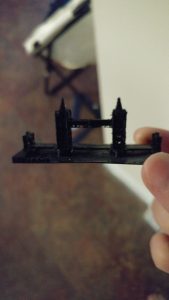
    Learning how to print in 3D was also a highlight of the year, as I learned how to use different objects to create a large shape that I could use. Watching my object print was fascinating, and I was very excited when I retrieved it after it was done printing.

    Overall, the DIY Diagnostic stream has provided a close-knit community that I can always turn to for help and helped me learn more about my interests. I learned to face challenges head on, and I am truly glad that I am a part of this stream.

  • Responsive Mentors and Research Educator

    Hello Future prospective DIY Diagnostics stream researchers! I hope that reading my experience, along with some others’ will give you an insight into what kinds of research and projects we focus on and hopefully get you excited to join us!
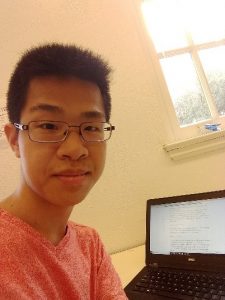
    So, what was my experience at this stream been like so far? Initially, I started by learning the basics of lab techniques such as learning how to pipette correctly (note: it is very easy to mess up pipetting so this is critical to learn!!). As someone who had no prior exposure to working in any type of lab, these types of beginning assignments helped me set a solid foundation for future research. So do not worry! This stream will prepare you well with basics even if you don’t have any experience working in a lab.

    During my first semester in this stream, I was exposed to several specific skills that I believe are critical to learn if you are interested in pursuing a career in the scientific field. Some of these include but are not limited to: culturing bacteria, qPCR, DNA extraction, app programming, and 3D printing. You may notice that I mentioned app programming and 3D printing and be thinking to yourself that those two skills doesn’t seem to fit very well among the other skills I mentioned such as DNA extraction! That’s right! Our lab not only focuses on generic lab skills like DNA sequencing and DNA extraction but we are also given the opportunity to dive into assignments totally unrelated to wet lab activities. This is one thing I really love about this stream. As someone who is into research but also looking into gaining computer experience, I believed that this stream would be the perfect fit for me and it was. Here’s why.

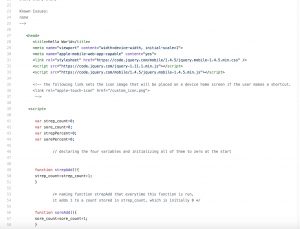
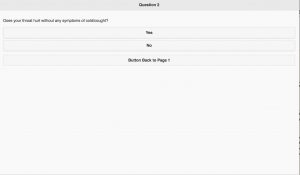
    Although I learned a ton of skills doing wet lab activities such as running qPCR, DNA extraction and quantifying bacteria from the Waller Creek project, (you can read more about the WC project in the DIY website), I want to talk more about the app and 3D assignment. For the app assignment, we used a website called github, a web-based hosting service where people can develop software online. Through this platform, the DIY researchers, including myself, could develop online mobile apps through learning some of the basics of HTML5 and javascript coding.  As someone who didn’t have much background in coding either, there were lots of learning to do. But in this lab, if you are willing to learn and ask for help, you will always be successful thanks to the responsive mentors and research educator, Dr. Riedel. Your mentors and Dr. Riedel, along with your peers are always there for you to help. This was what I loved about being part of the stream and especially realized during my app assignment activity. So yeah, it took a lot of help, effort and time, but the end result always delighted me.

    The feeling of able to create something was exciting!  Below is an example of part of the coding I did and the end result for some of my app assignments.

    Image 1: Example of Coding for App Assignments
    Image 2: Example of a Web-Based App Developed


  • I Hate Mosquitoes

    Me reading up on neural networks to build the algorithm to distinguish the difference between mosquitoes and other insects noises

    DIY Diagnostics is a great FRI for a hands-on experience in creating and building your own experiment as well as making new friends. The stream is exciting and very self-driven, you are given freedom and the independence to conduct research at your own pace, with mentors and Dr. Riedel available to help if needed. You will definitely learn many things, both about research and cooperating with others. Some students have their works published, and many students enjoy it so much that they continue to work on their projects throughout their years at UT or become a mentor to help incoming freshman.

    The diagnostic I am working on is identifying mosquitoes through their wingbeat frequency and using this to build a device that can count the density of mosquitoes in an area. I’m from Houston, where there are a humongous number of mosquitoes in the humid summers, so the project resonated with me since I hate mosquitoes. The end goal of the project will be to be + Add New Category able to build these devices cheaply and identify the places with large concentrations of mosquitoes and stop them from breeding. Many of the diagnostics have real-world applications, and the satisfaction from completing your project and creating something useful is a feeling that all DIY Diagnostics students understand.

    If you are on the fence about being in DIY Diagnostics, you should give it a try! It’s a stream that requires a lot of work because you are conducting real research and gathering useful data, but it’s so much fun and everybody enjoys it. In addition, the stream opens many doors for students professionally, with visits to research centers and contacts with professionals, so I would highly recommend it.

  • Switched to DIY, No Regrets!

    Hi and welcome to UT! I hope that you’ve been enjoying your freshman year so far! It’s definitely both an exciting and stressful time; finding activities and organizations that help you navigate the college process is critical, and FRI is a great start.
    I initially started with the Freshman Research Initiative with placement in the Artificial Intelligence and 3D Printing stream. As a computer science major, I felt obligated to place the aforementioned and Autonomous Robotics streams as my first choices, without really considering or looking at much else. While I learned quite a bit about AI, from neural network organization to genetic algorithms, I didn’t spend much time doing the assignments outside of my dorm or the PCL. There wasn’t necessarily a requirement to physically be in lab when everything could be done individually from a computer.

    Thus, when the stream shut down at the end of last spring, I began looking for other FRI streams that had more of a “wet lab” approach but still let me improve upon my programming skills. DIY Diagnostics felt like a good fit. Since I’ve begun this semester, I’ve already met plenty of other students who are all actively working on such unique projects. I’ve heard of ideas that range from collecting and categorizing water samples at Waller Creek to creating sensors that detect bends in order to better diagnose disorders like scoliosis. The project I was particularly drawn to was one the lab has been building upon-mapping the typing patterns of Parkinson’s patients.

    Over the past few years, different members of the lab have mapped the typing patterns of patients with Parkinson’s from varying periods in their diagnosis. Using this data, they’ve been able to derive that patients change their typing patterns and reaction times when they begin to develop symptoms of the disorder, such as a tremor. By collecting more data, an algorithm that utilizes reaction times from mapped typing can be created to diagnose Parkinson’s effectively and early on. Additionally, mapping one’s typing can be done to find other trends as well. Past projects done in the lab with type mapping have been able to determine trends in sleep deprivation, caffeine usage, and if someone is coding or not. Although I am definitely leaning towards studying Parkinson’s patients, the diversity of projects that all hinge on keyboard mapping was something that got me incredibly excited and drew me into the project.

    Additionally, one of my favorite parts about the DIY Diagnostics stream is the community fostered. Having transferred in, I felt a little lost at first. However, everyone-the professor, students, and mentors-are eager to help and make sure everyone is able to find footing when it comes to joining a project. There’s always plenty of support, whether it be having small group meetings, having huddle meetings, or having student mentors always available during lab hours. Even the Parkinson’s project I recently joined has group meetings every week just to ensure that everyone stays on track and is working progressively.

    Ultimately, FRI has been an incredibly rewarding experience for me. Research can be tough; sometimes, it might feel like you’re stuck in repetition or not going anywhere, but it’s important to persist and seek help or mentorship. It definitely takes a moment to get acclimated to the lab environment; FRI has always been a course that differs so greatly from everything else that I’ve taken during my time here at UT Austin. But, as long as you put in the effort, DIY Diagnostics is most definitely a stream that will give you the tools you need to succeed.

  • Variety of Opportunities

    Variety of Opportunities

    Hello!! My name is Devika Godbole and I am a math major from Dallas, Texas. I decided to
    partake in research through FRI because I wasn’t exactly sure what I wanted to do, career wise,
    and wanted to explore a variety of opportunities. I chose the DIY Diagnostics stream because it
    seemed interdisciplinary in that it had projects that involved computer science and data analysis
    in addition to the usual wet lab bio/chem projects. During the first semester, you will be building
    basic skills through both wet lab and coding skill developments. Although I enjoyed both, I found
    myself gravitating towards the coding related app assignments. I am the most excited by
    computer science involving diagnostics because I think that it would be stupid if we as a society
    did not take full advantage of the technological world we live in.

    The project that I have been
    working on, keystroke analytics for Parkinson’s detection, combines many of technology and
    data elements. The project involves collecting the keystroke log from the typing of patients with
    Parkinson’s disease, and then analyzing, visualizing, and understanding the data. This project
    has allowed me to learn how to ask questions about data, how to use R Studio, how to interact
    with human subjects, and how to effectively work in a team (just to name a few things!). This
    summer, I was able to work on this project thanks to a summer research fellowship and it was
    then that I really grew and understood the nature of research. Some of my favorite parts of lab
    include having to redo an entire experiment because we did not check the incubator
    temperature (was not pleased at the time), Wacky Wednesday huddle meetings, sitting on the
    leathery blue rolly chair, and doing the DNA extraction lab.