Category: 2019

  • “Some things that I have learned from being in DIY is the importance of making a resource accessible, affordable, and simple for people to use.”

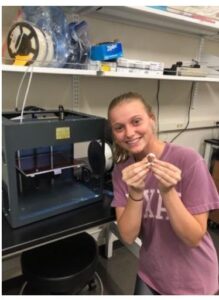
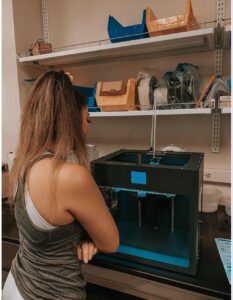
    When I was deciding which stream I wanted to join, I considered whether the lab was well-rounded in the type of skills taught and the kind of work done. I wanted a lab that was fun and would teach me skills people would find interesting. As a stream that focuses on creating inexpensive and simple diagnostic tools, we looked towards mobile apps and websites as many people use cell phones and can easily access such information. We also looked at 3D printing for quick and easy prototyping because 3D printing has so much potential in designing and manufacturing ideas. When I heard about DIY Diagnostics, I was so impressed and excited about potentially becoming apart of it. It was my first choice out of all of the other FRI streams and was so happy I was sorted into it. 

    One of the things we are known for is developing a diagnostic tool that could detect the Zika virus in mosquitoes. Our stream was so cool because we were on the news! This got me excited about being able to study diseases and illnesses such as Malaria and Alzheimer’s Disease and then potentially creating a tool that could detect and diagnose them. 

    I found learning how to code in web-based languages to program mobile apps one of the most interesting and exciting assignments during the first semester. I was so confused and clueless on what I was doing half the time and got very frustrated when my code didn’t work. Our first task was the simple and easy “Hello World” introductory assignment. I spent an hour writing random comments, submitting useless commits, and sending my link to my older siblings because I was so proud I got “Hello World! This is Maria Nguyen! DIY Diagnostics rocks!” to pop up on my screen. Looking back, I now understand why my brother laughed when he opened my link to find my “Hello World” assignment because it was so basic! Anyways, getting your code to work is SO satisfying. 

    Some things that I have learned from being in DIY is the importance of making a resource accessible, affordable, and simple for people to use. I love the idea of using technological advances (e.g. 3D printing) to further future scientific discoveries. Being in DIY has been such an amazing experience as I have also met many of my friends. Oh also, we get to play with LEGOS, and who doesn’t want to do that?!
  • “DIY is a family!!”

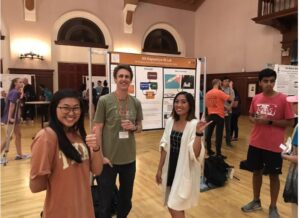
    There are hundreds of different programs and organizations within the University of Texas. FRI falls within those, but out of the 42 research streams, there is only DIY Diagnostics. As a first year, I was afraid of making a mistake. I was afraid I was going to choose the wrong stream, but honestly, the FRI streams are all substantial and special. There was no wrong choice to be made. I chose DIY because it caught my eye, and I was so intrigued about the DIY pregnancy test that they had created. I walked around the rest of FRI stream fair, but no matter where I was standing, I caught myself looking over at the DIY booth. 

    When I was accepted into the DIY stream, it was a feeling of relief and extreme happiness. Not only was I a part of the nation’s largest undergraduate research program, I was at the stream that my heart wanted. The beginning of my DIY journey was extremely rocky. It was new territory for me for sure. I thought I was going to be completely lost and fall behind, but DIY is a family. We were allowed to work together which made assignments less stressful and allowed us to grow strong bonds with one another. 

    Along with doing assignments that taught us lab skills, we also learned how to code mobile apps. Honestly, most of us had little to no experience in coding, so we were all in it together. We struggled a lot, but it made the success of coding an app feel like the biggest sense of accomplishment. Throughout the spring semester, we got better at coding with all of our resources. We were given access to CodeAcademy and a mentor who was a computer science major which helped a lot. I think one of the funniest moments when coding was sitting for an hour with one of my peers trying to find a mistake in my code. It sounds awful, and it definitely was. As frustrating as it was, we just couldn’t stop cracking up about how the code was perfectly written, but we didn’t notice it was in the wrong coding section. Although I felt like a big idiot, I could breathe again because I finished the app. 

    There are many things that I have learned in DIY. The most valuable thing I learned was how to prioritize and time management. The best thing was how understanding Dr. Reidel was. He understood that we would need extensions or that assignments could go completely wrong. Also, he understood how we have lives outside of the lab such as other classes and exams on top of the hours we spent a week within the lab. I am thankful for that. When I look back at my college memories, I will remember my time with DIY Diagnostics. 

  • “DIY provides a great opportunity to build your lab repertoire, which makes you more qualified to go into a variety of research in future labs and enhances your resume!”

    When I started DIY Diagnostics, I was really worried I would be the only clueless person in the room and that I would fall behind or never see progress. Thankfully, I can say that my actual experience was the exact opposite. DIY is full of mentors and peers that are willing to help you with anything and work to ensure that you actually know what you are doing in lab rather than follow meaningless words. Dr. Riedel is extremely understanding, fun, and really works with you to make sure you are getting the most out of your research experience! 

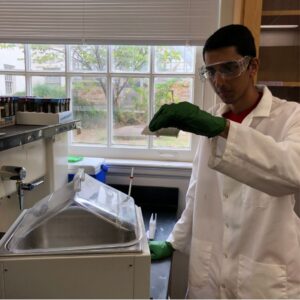
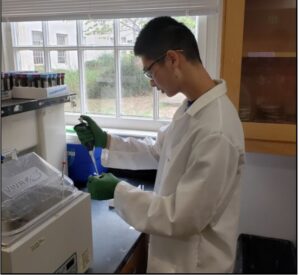
    One thing that makes the DIY experience unique is the variety of skills and techniques you learn. I do not think there is another stream where you learn to field sample, extract DNA, conduct PCR, code and make apps, and 3D print. The ability to learn so many different things allowed me to find what I was specifically interested in and base my independent project on that. This also means that DIY provides a great opportunity to build your lab repertoire, which makes you more qualified to go into a variety of research in future labs and enhances your resume!

    Another unique thing about DIY that really sets it apart from all the other streams is that it allows you to pursue an independent project of interest in the second semester. Instead of an RE assigning you to a group and project, you, as the researcher, are able to choose your own topic for your project. From the perspective of a freshman wanting to pursue a stream that will bring them closer to their post-graduation goals, DIY and the structure of the independent research project provides a greater opportunity for being published, which I believe stems from being able to work on a project chosen not by your RE but by you. 

    The research and projects that DIY focuses on are also distinct compared to other streams. In DIY, research and projects has the ability to have a global impact and change people’s lives for the better through the creation of diagnostic tests. Being able to understand that your individual research can be used so directly for the greater good of the global community is something so special to DIY and cannot be found anywhere else in FRI. 

  • “Whether you are a computer science major, a pre-med student or anything in between, you have a place in this lab.”

    Dear FRI student, 

    First off, I would like to say congratulations on your acceptance into UT and the FRI program! I know it may seem intimidating now (trust me, I was in your shoes exactly a year ago), but these four years will turn into some of the best years of your life. As a second semester DIY Diagnostic student, I can confidently say that FRI has improved my time here at UT. At the very beginning of the DIY Diagnostic process, I was nervous to say the least. I had barely any experience in the lab, and the independence of the lab intimidated me. However, after a couple short weeks, I was already so much more comfortable. I can now walk into lab and know what to do when given a protocol, and I am now even working on conducting my own independent research. While I often work in groups when conducting labs, DIY Diagnostics has given me the independence to work at the pace that I choose and to analyze data independently. In high school, I felt as though lab was a structured event where I was supposed to come to a specific conclusion. DIY could not be more different. While the lab is structured in its own way, it is flexible in terms of timing, and it is not so result oriented. DIY also caters to many different interests. For the independent research aspect, you are able to design physical medical diagnostics with DNA amplification, but there are also many groups who chose to code and create a diagnostic app. Whether you are a computer science major, a pre-med student or anything in between, you have a place in this lab. The lab is an inclusive space where questions and curiosity are encouraged. Labs are not focused on the results that you gain, but the analysis of why those results may have occurred, and what your next steps will be. Overall, DIY Diagnostics has given me so much more confidence in the lab. I was able to create my own unique research idea, and I can say with full honesty that I am so genuinely excited about the research that I will be conducting. Even if you are nervous about joining an FRI lab like I was, I strongly encourage you to consider the DIY Diagnostic stream. Our stream is one big team made up of so many different people and interests:)

    Best of luck, 

    Maggie Miller

  • “For me, DIY is a place to challenge yourself in all the areas and rewards you for hard work!”

    I am not a man of grace. I applied to the Freshman Research Initiative the day of the deadline on a whim after officially deciding to attend UT. I walked in on the last available orientation session and completely guessed what classes to take for the first semester. I make a lot of really hasty, last-minute decisions and generally stink at short-term planning, and I regret almost everything I’ve done regarding college applications and my first semester at UT. Choosing the DIY Diagnostics stream is not one of those regrets.

    This lab in particular is incredible because it offers you skills that never lose relevance, and it exposes you to scientific disciplines you might not have explored. While we definitely focus on the microbiological aspect of lab work, we also learned coding and 3D printing. As someone with parents who couldn’t figure out how to work a TV remote, dealing with coding has been a growing experience for me. In the second semester, things only get better. You get a frightening amount of freedom with your individual project, and you can immerse yourself in whatever your heart desires!

    More than practical skills, the lab offers a home. Although it sounds super cheesy, it’s true. I come from rural East Texas and often struggle to make friends, but DIY has given me the opportunity to form a group of friends that I wouldn’t otherwise have. Dr. Riedel very often conveys how much he cares about our success as well as our safety, and he is one of the extremely few professors/teachers I’ve had that sees us as actual people as opposed to students.

    Ultimately, I found that lab is what you make it. It can easily be a room full of boring people pipetting weird things into other weird things and recording any seemingly insignificant changes. For me, it’s a place to laugh when using the bead beater (a very loud lab instrument) in the middle of a serious conversation in the lab. For me, it’s a place to challenge yourself in all the areas and ways you’d like to. For me, it’s a place that rewards you for hard work regardless of whether you hit it big or hit a wall. I hope you’ll take a chance on the DIY Diagnostics lab and make it whatever place you need it to be, as well!

  • “I was learning useful skills, like how to accurately use a micro-pipette, and how to perform a LAMP (loop-mediated isothermal amplification)!”

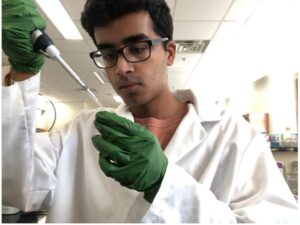
    During my final year of high school, I gave into “senioritis” a little bit too much. So much, in fact, that Iforgot to start my application to UT’s Freshman Research Initiative until three hours before the deadline. Not the smartest move, especially considering how nearly a month later, choosing a college became such a difficult decision to make that I ended up basing it on whether or not I got accepted into the FRI program. Needless to say, I ended up making the cut, and now I am entering my second year at UT (Hook ‘Em, Horns). Looking back, those tense few hours of anxiety while struggling to get my application in before the deadline have had one of the highest payoffs of any decision I’ve made in my education career. At first, I was very apprehensive about the size and scale of UT, and how this would affect my research experience. Seeing a five hundred person general chemistry class for the first time was quite the culture shock. It didn’t help that I had absolutely no idea what I was doing with regards to FRI. I had selected DIY Diagnostics as my top stream choice with the thought that “I’m a pre-med student, and ‘diagnostic’ seems like something medicine related, that could be pretty cool”. My first active week in the stream was a mess. All I had to do was complete a simple introductory assignment and do lab work for six hours. I didn’t know if I was doing anything as intended, and six hours in the lab per week seemed an impossible feat with all the other classwork that needed to be done. Luckily, it quickly became apparent that I was not alone in this situation, and both the mentors and Dr. Riedel were always ready to help out. A few weeks later, I finally found myself getting into a rhythm with the lab work and having fun along the way. Many, many mistakes were made, absolutely, but DIY Diagnostics taught me that mistakes are another part of the process; you just need to keep looking for the next step forward. I was learning useful skills, like how to accurately use a micropipette, and how to perform a LAMP (loop-mediated isothermal amplification) reaction.
    Most of the lab assignments built off each other, so I found myself applying previously acquired skills very often. Now, I am working on a diagnostic device to detect meningitis-causing bacteria in saliva, using LAMP as the primary tool. I also had a chance to get a head start on this project during the summer, which turned out to be an absolutely worthwhile experience. All in all, choosing this stream was one of the best decisions I’ve made in a while. For anyone looking for a comfortable, productive, and very beginner-friendly undergraduate research
    experience, look no further than DIY Diagnostics.

  • “D-I-Why Not?”

    When it came time for lab tours for the FRI stream program, I was looking for two things in specific that would help me decide. The first specific, was a lab that directly merged the culture of science with the laymen, and the second was a focus on making the research sustainable and effective for the masses. Choosing DIY was the answer for me and much more.

    Coming from a previous background of lab and research experience, I wasn’t sure I would fit well with others who were just starting off. However, contrary to my early doubts, I was proven wrong because serving as a guide to lab partners has helped me hone my own lab practice and the skills of those around me. As Dr. Riedel put it in the first lab meeting, “lab is a team effort”. Being in this stream has helped me understand the bonds between research and practical application to a much greater degree.

    DIY Diagnostics also continues to offer me a way to vertically integrate my approach towards my independent project through 3D printed models and program aided designs. Most importantly for me at DIY, is the atmosphere of a supportive mindset, which is instrumental for effective research.

  • “The memories and hardships you will face in our lab will be worth it and you won’t ever feel alone.”

    Hi future researchers,

    I welcome you all to your first year here at the University of Texas at Austin. Our campus has various facilities that you will be able to explore, however the university is known for various research breakthroughs. I would like to congratulate everyone for being accepted into the FRI program and taking advantage of this opportunity to experience what it’s like to work in a laboratory. I want to introduce to you a stream where our goal is to develop conventional methods to improve healthcare by making it accessible to every household. We are DIY Diagnostics and we are here to make a difference for the community and developing diagnostics by utilizing tools that are available/accessible to undergraduate researchers.   

    When I visited the DIY Diagnostics lab during the last few weeks of being in my FRI class, it was interesting to see the various independent projects that students were working on. An example of this was during the tour of the lab as Dr. Riedel was discussing how one of his students was working with artificial intelligence. The students that were with him were also able to explain the flexibility that they have with the student’s schedule such as how many hours you need to come into lab per week and the kind of work to expect when you join. The overall tour of the facility had influenced me to make this research as one of my top choices to conduct research and learn more about the stream.

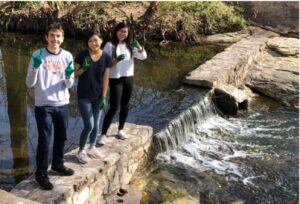
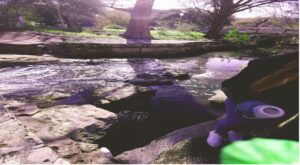
    Some projects that I had enjoyed doing throughout the year was learning how to code, and field sampling. When Dr. Reidel first introduced an assignment where we would need to code, my initial reaction was, “Do we need to have any previous knowledge to code? I have never done this before…” I was in panic as I had no experience in coding, however he was able to guide us by using different programs such as Codecademy, GitHub, etc. Not only I learned how to code but I was able to learn how to collect samples from Waller Creek. The objective of collecting the creek water was to extract DNA and observe the type of organisms residing there. 

     I hope that by sharing my experience with DIY Diagnostics will encourage you to join our stream. The memories and hardships you will face in our lab will be worth it and you won’t ever be working alone. There will always be someone there for you to help and guide you, therefore never hesitate to ask for assistance.

  • “From both a biochemical and engineering design perspective, DIY Diagnostics offers a wide variety of potential projects to choose from.”

    As a freshman, I honestly had no idea which stream I wanted to join after getting into FRI. Ironically, DIY Diagnostics was the first stream I researched and ended up being my first choice. I picked the DIY Diagnostics stream because I saw it as the stream with the largest potential to work on a project that would align with my interests. From both a biochemical and engineering design perspective, DIY Diagnostics offers a wide variety of potential projects to choose from. Additionally, the stream gives you a lot of freedom in pursuing your own projects, and the lab mentors and professor are extremely helpful in guiding you along the research process. Their guidance makes a big difference in being able to hit the ground running when it comes to research, and it was honestly this guidance that changed my opinion on research as a whole. It was through the help of others involved in FRI that research became something that was approachable. It went from a daunting and unachievable process to something with an end goal in sight. I came into FRI with the intention of getting my lab credits and leaving, but after working with everyone else here and making progress on my own project, I can see myself continuing research in one form or another for all my 4 years here at UT. FRI was one of the first sources of exposure to real research that I received, and it was the DIY stream that made it something I want to continue doing. 

  • “A New Perspective on Scientific Research”

    DIY Diagnostics: A New Perspective on Scientific Research

    Adjusting to college is tough. A new city, a new home, new classmates, and tougher classes can definitely be a shock. Attending a college like the University of Texas, where a large number of students are involved in research, it is easy to feel like you are falling behind if you are not working in a lab yourself. That being said, you have made an excellent choice by becoming a part of the Freshman Research Initiative!

    Before even coming to UT I had heard a lot about FRI, and I knew that I wanted to get involved in research. However, I knew that I wasn’t very interested in the traditional “wet lab” research that most CNS students seemed to get involved in. Rather, I had an interest in the broader, public health aspects of scientific research. For this reason, I committed to the DIY Diagnostics Lab.

    The beauty of DIY Diagnostics (or at least, what primarily appealed to me) was that the lab provided an excellent middle ground between wet lab research and what I saw myself doing. Our lab teaches students various wet lab techniques that can later be applied to design affordable, point of care diagnostic tools for various diseases, which have important impacts outside of the laboratory setting. Therefore, DIY Diagnostics offered me the best of both worlds – I have learned a lot about conducting wet lab research, and I am also in the process of applying what I learned at the lab bench to a broader public health setting.

    Though I do not see myself working in a wet lab in the future, DIY Diagnostics has been an amazing learning opportunity. It has exposed me to a side of lab research that I had not really experienced before. I have learned how to run PCR and LAMP reactions, how to 3D print, and how to code. Perhaps most importantly, however, this lab has taught me how to think creatively, how to properly conduct original research that contributes to the scientific community, and overall, how to be a better scientist.