
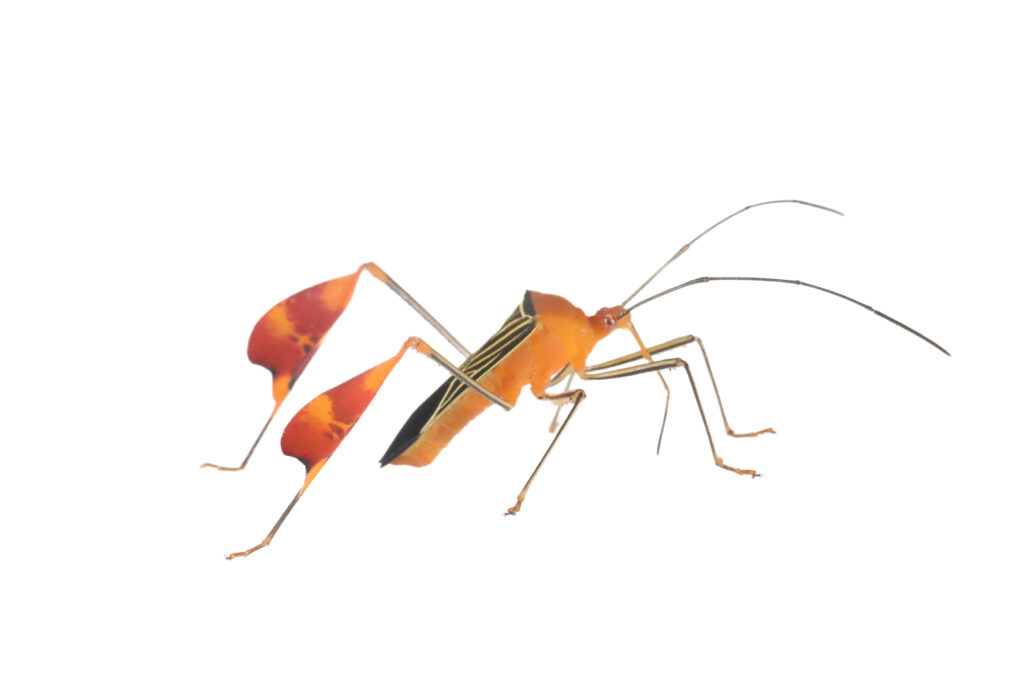
We just published an article in J. Chemical Ecology investigating toxic cyanide accumulation in the colorful matador bug (pictured above) and less colorful coreids. Led by Colin Morrison and involving lots of collaboration across the department, we asked whether the matador bug’s colorful leg flags that act as anti-predator signals might be backed-up by a toxic punch.
Former postdoc in the lab Ummat Somjee (just starting his lab at Cornell) used bugs in the family Coreidae as models to look at the evolution of sexually-selected signals. However, unlike most bugs in the family, the matador bug doesn’t use its back legs for sexual displays – Ummat showed previously they are used in stereotypical anti-predator displays. Because matador bugs feed on toxic Passiflora plants, we thought they might use sequestered cyanogenic compounds to also deter predators.
Although we confirmed this hypothesis, the non-colorful coreids we included as negative controls turned out to also have high, potentially toxic levels of cyanogenic compounds. So it turns out that toxic sequestration to prevent predation might be more common than coloration would suggest, which has been suggested for toxic frogs and other taxa.
Stay tuned for more upcoming work involving matador bugs, sexual selection, and transitions to anti-predator signaling!