Insurgent Planning for climate adaptation via promoting community ownership in the Philippines
By Ji Sun Lee
Introduction
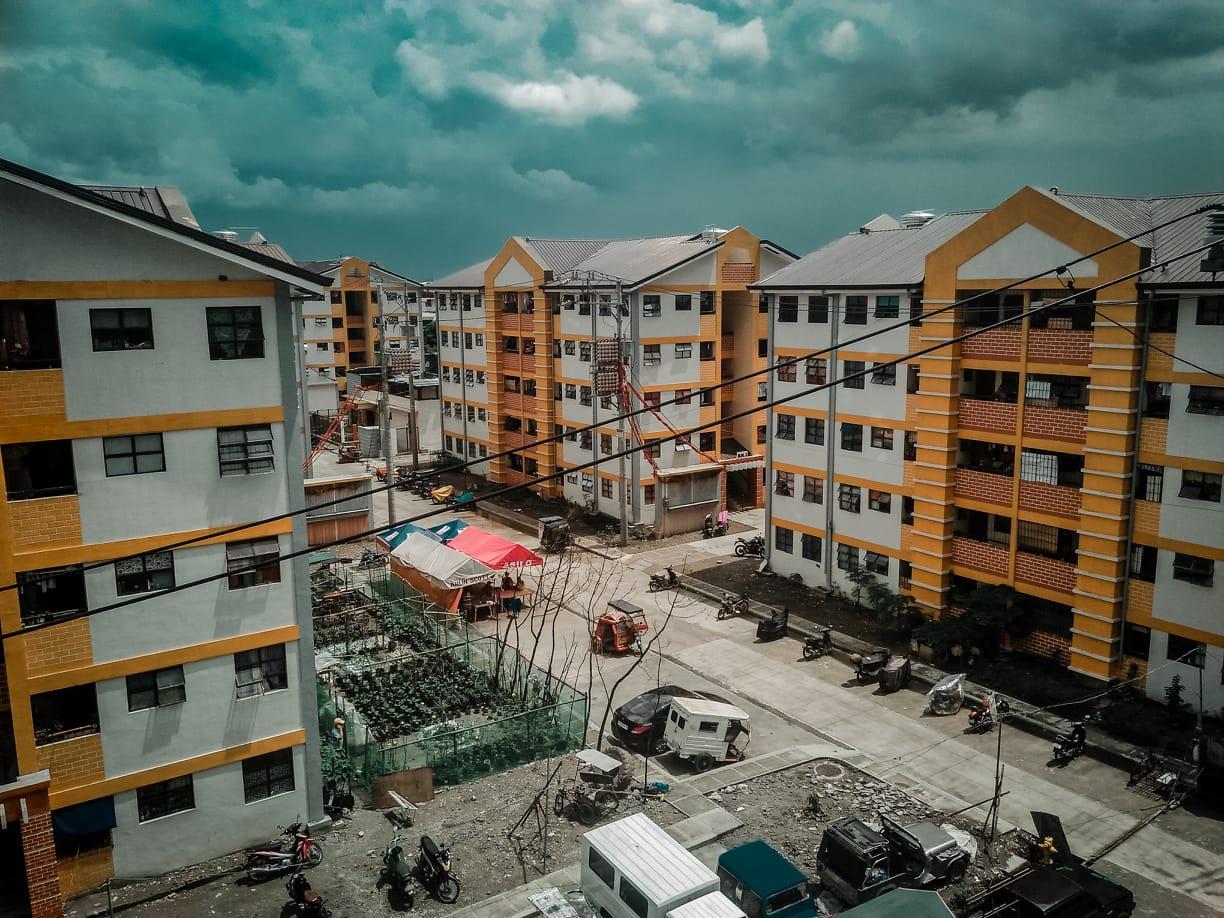
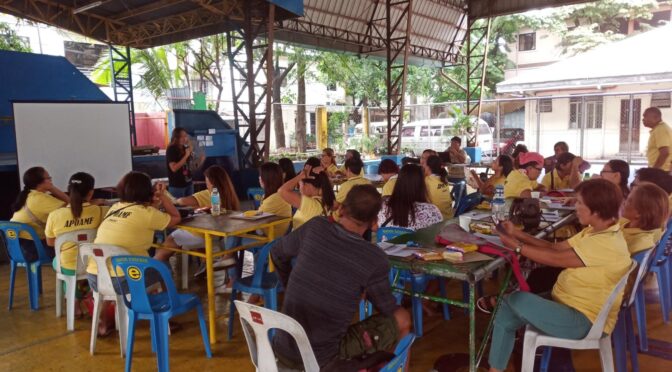
In Manila, informal settlements have formed near the Manggahan Floodway, a waterway built in 1986 to mitigate flooding impacts. However, after Hurricane Ondoy destroyed the settlements in 2009, the government blamed the residents for blocking the waterway and decided to forcibly relocate people to areas far outside Manila Metro. In response, Alliance of People’s Organizations Along Manggahan Floodway (APOAMF) was formed in 2010 by 11 community organizations in the flood-affected settlements to produce an alternative solution called “People’s Plan.” APOAMF coordinated a multi-step iterative process of imagining a future community and exploring near-site, in-city relocation. Eventually, a final agreement was reached with the National Housing Agency (NHA) to construct the Low-Rise Building Project (LRBP), a safe in-city housing initiative for flood- and typhoon-resilient buildings. The design included elevated building structures and water tanks, strategic placement of structural beams, and stronger materials like reinforced steel.
Analysis
APOAMF’s community-based, participatory process illustrates an alternative approach to conventional top-down methods for climate adaptation. By actively involving community members, APOAMF ensured that marginalized voices were heard to create a strong sense of ownership of the People’s Plan among residents. As noted by Dovey et al. (2019), the agency of residents to negotiate with complex institutional actors is key to the success of insurgent planning. Instead of only fighting the authorities, APOAMF grew its power through community alliances and engagement with government stakeholders via transparent, democratic processes (Dovey et al., 2019). It is an interesting counterexample of Koch (2015)’s discussion on how a private company used its financial and political power to infiltrate formal city plans in Columbia. The work of the APOAMF involved changing relationships between the government and citizens from command and control towards self-governance (Nunbogu et al., 2018), thus serving as an example of Miraftab’s (2009) concept of insurgent planning to disrupt the attempts of neoliberal governance through “sanctioned’ and exclusionary participatory planning.
The determination of residents to remain along the Manggahan Floodway also sheds light on dynamics of placemaking. As Hernandez (2019) demonstrates in the case of Esmeraldas, residents in informal settlements often desire to stay in their neighborhood where they have established roots and feel a sense of stability and belonging. For such communities, their lived experiences are far more complex and resilient than being determined by disasters. As Friedmann (2010) argues, displacement deconstructs placemaking and carries immense human costs. Communities confronting dispossession of space develop strategies to build voice, to foster a sense of common benefit, and to grow confidence, just as the communities and APOAMF aimed to do in Manila.
Ultimately, forced evictions without an option to stay are an example of planning strategies that fail to acknowledge the heterogeneity of lived experiences. Instead of considering residents’ ways of living and attachment to place, the government tries to enforce relocation following imperatives of normalization and regularization, thus failing “to create conditions of livelihoods that are safe, secure, and sustainable” (Kamate, 2012). Without an option to stay, relocation as an adaptation strategy cannot be fully empowering.
Implications
Although this case is a success story of participation and inclusion, NHA regulations limited community input during the construction process. For example, in some of the first buildings, residents were not allowed to select their own contractors or to evaluate the quality of buildings, showing how the struggle for community-led planning is an ongoing process. Decolonizing approaches to planning should question whose decisions influence the design of residential communities, not only in the initial planning stages but also during implementation and management after the construction.
Nevertheless, APOAMF is a powerful example of how communities can organize themselves under a common goal to create their own spaces. The main takeaway is the importance of the sense of community ownership and agency in such alternative planning processes. The people should have the power to construct their own futures. This raises an important question about the role of urban planners: to what extent should planners be allowed to determine people’s lived experiences? Perhaps the government’s decision to force eviction did not stem entirely out of oppressive intentions; as planners, we are inclined to say that it is better to not live in environmentally hazardous areas. However, for the inhabitants, disasters are not the full picture of their lives nor the singular influencing factor of their decisions. People are resilient and powerful. Ultimately, the starting point of decolonial planning is understanding that residents are the best experts of their own realities and the places they’ve grown to call home.
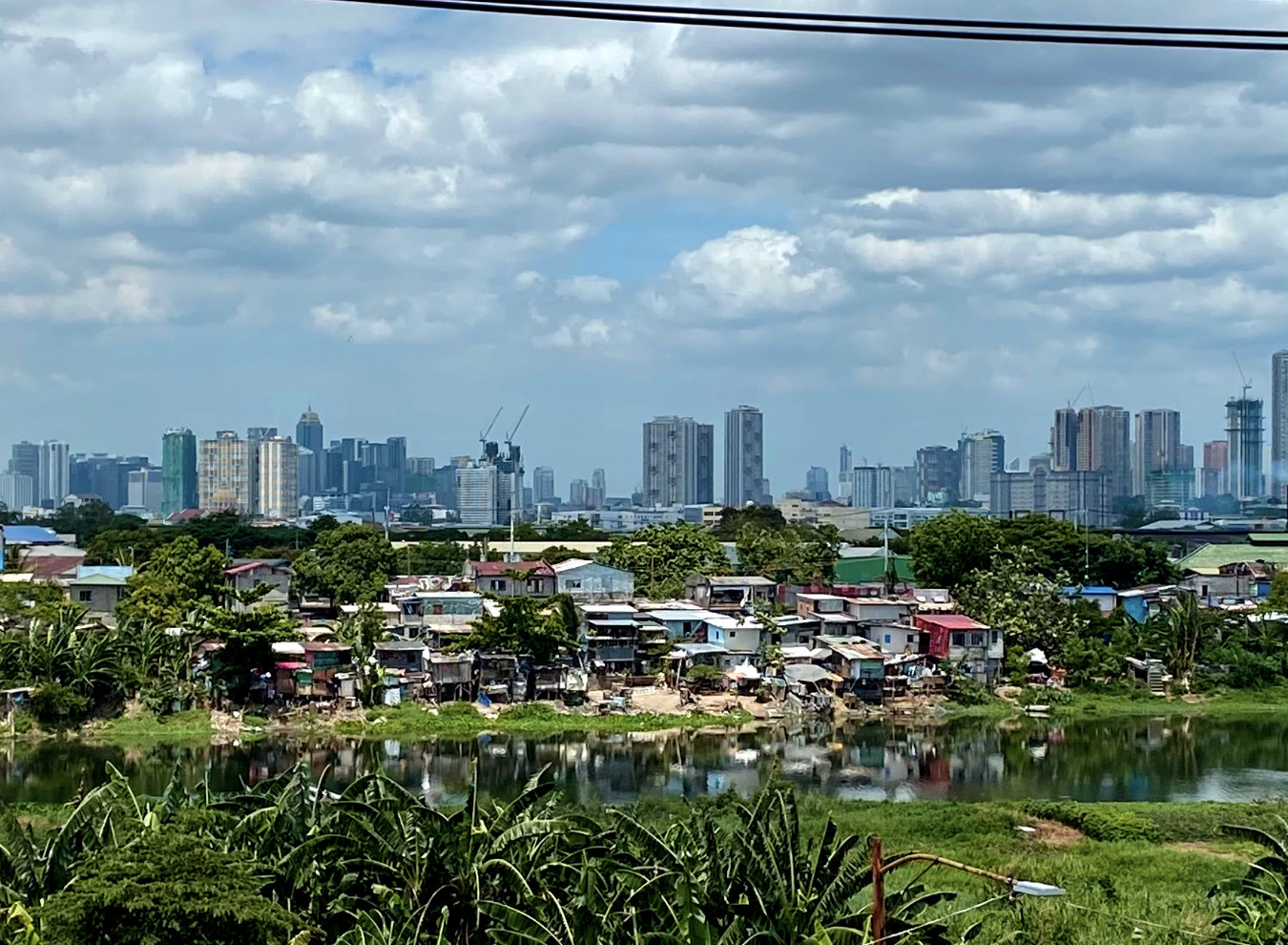
Source: Informal settlements along Manggahan Floodway