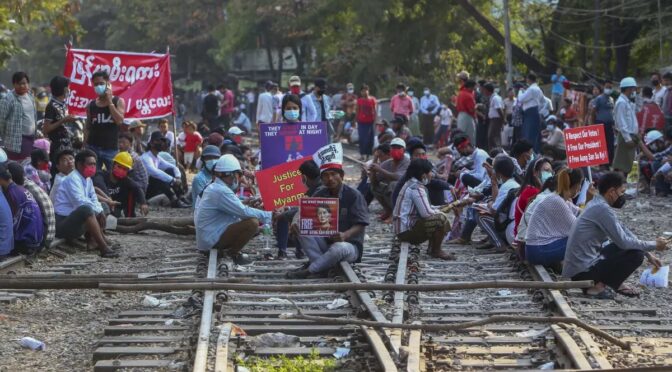
Railways constitute contested infrastructures of power and resistance in Myanmar
By Hyukjoong Kim
Introduction
Railways in Myanmar have long been political infrastructures. Built during British colonial rule for military control and resource extraction, the system was later expanded by successive military regimes to consolidate territorial authority over ethnic regions. At the same time, for generations of employees, railway compounds—staff housing, depots, tracks, and surrounding markets—functioned as living infrastructure: an integrated space of home, work, kinship, and community. The Myanmar railways thus demonstrate that infrastructure is a lived space where ruling power and democratic aspirations are physically negotiated, in this case between railway workers and their families, the military junta, and international development actors through the Chinese Belt and Road Initiative (BRI) and the China–Myanmar Economic Corridor (CMEC).
This dual character as a lived yet political space made the railways one of the first sites where resistance and state repression collided after the military coup in 2021. At the time, I was in Myanmar for an Official Development Assistance (ODA) railway project, representing Korean development agencies. Following the coup, railway workers were among the earliest and best organized groups to join the Civil Disobedience Movement (CDM). Railway staff I met expressed a clear political agency, saying “we cannot carry weapons, but we can stop the trains.” Their resistance met with ferocious violence. The newspaper Frontier Myanmar reported that more than 1,000 workers and family members were forcibly evicted from railway housing as soldiers and police surrounded compounds and cut off water and food supplies. Rail infrastructure in Myanmar encompassed intimate spaces of daily life—homes, relationships, and livelihoods. By dismantling these intimate infrastructures that constituted emotional attachments to place, the junta sought to break the everyday social networks that sustained political resistance.
Analysis
Place attachment emerges from the interplay between physical setting, daily routines, and the meanings residents develop through long-term inhabitation (Shamsuddin et al., 2008). These emotional bonds with place and sense of belonging help clarify why railway compounds constituted “infrastructures of intimacy” (Wilson, 2016) and carried such profound significance for workers and their families. Hernandez (2019) shows that even communities living in precarious or hazardous environments often persist in place because their homes are constructed through shared histories of struggle, relational meaning, and everyday placemaking. The junta’s forced evictions targeted not only physical shelter but the social and emotional worlds that sustained resistance. Violence against infrastructure thus became violence against life itself.
Vanessa Watson’s (2003) concept of “conflicting rationalities” captures the clashing logics shaping this case. The junta invoked “order” and “national stability”; Chinese and international development actors prioritized “investment security” and project continuity; workers and citizens valued “safety, dignity, and democracy.” From Escobar’s (1996) post-development perspective, the railway workers’ strike can thus be understood as an alternative planning practice. Their refusal to operate trains disrupted not only state functions but also the developmentalist narrative that positions infrastructure as inherently progressive. This act reclaimed infrastructure from state-led development agendas and reoriented it toward democratic collective action.
Moatasim’s (2019) analysis of “entitled urbanism” offers a more precise lens for understanding the selective deployment of legality in post-coup Myanmar. She demonstrates how elite actors mobilize political influence and bureaucratic mimicry to legalize their own projects while criminalizing the everyday practices of the poor. This framework clarifies how the junta rendered long-standing railway workers’ housing “illegal” overnight, even as Chinese-backed BRI and CMEC megaprojects received expedited approvals and state protection. The uneven distribution of legality was thus not incidental but a deliberate political strategy to consolidate elite alliances and reinforce authoritarian control. As Roy (2006) suggests, development often operates through the languages of reconstruction and growth, yet functions as a contemporary imperial formation that reorganizes power. In Myanmar, BRI/CMEC projects remained active even after the coup, reinforcing the junta’s legitimacy and revealing development’s imperial rationalities beneath its technocratic veneer.
Implications
This case reveals that infrastructure planning is never merely technical. Through my work in railway ODA projects across different countries, I often encountered planning documents emphasizing speed, capacity, and efficiency. However, Myanmar made visible the limits of this technocratic framing, calling for planners to recognize the political capacities embedded in infrastructure and understand that development is not neutral. Myanmar’s railways emerge as infrastructures undergoing paradoxical transformations: from colonial extraction to state-building, and from authoritarian control to democratic resistance. As Roy (2006) and Koch (2015) note, development initiatives can reinforce authoritarian rule and consolidate elite interests. The continuation of BRI/CMEC after the coup illustrates how international development can operate independently of democratic accountability. For planners, this raises ethical questions about complicity and responsibility (Roy, 2006): Whose futures do our projects enable, and whose lives do they endanger or erase?
As Wilson (2016) highlights, infrastructure is fundamentally relational and intimate. Railway workers’ resistance is intertwined with their homes, families, and everyday routines. Their struggle was not only political but existential: it was an effort to defend their living infrastructure. This underscores the need for planners to approach infrastructure as a social world rather than a technical asset. Ultimately, the Myanmar railway case challenges international planners to rethink development beyond investment and engineering. It calls for an ethical, critical, and decolonial planning practice attentive to how infrastructure shapes, and is shaped by, everyday life, authority, and collective resistance.
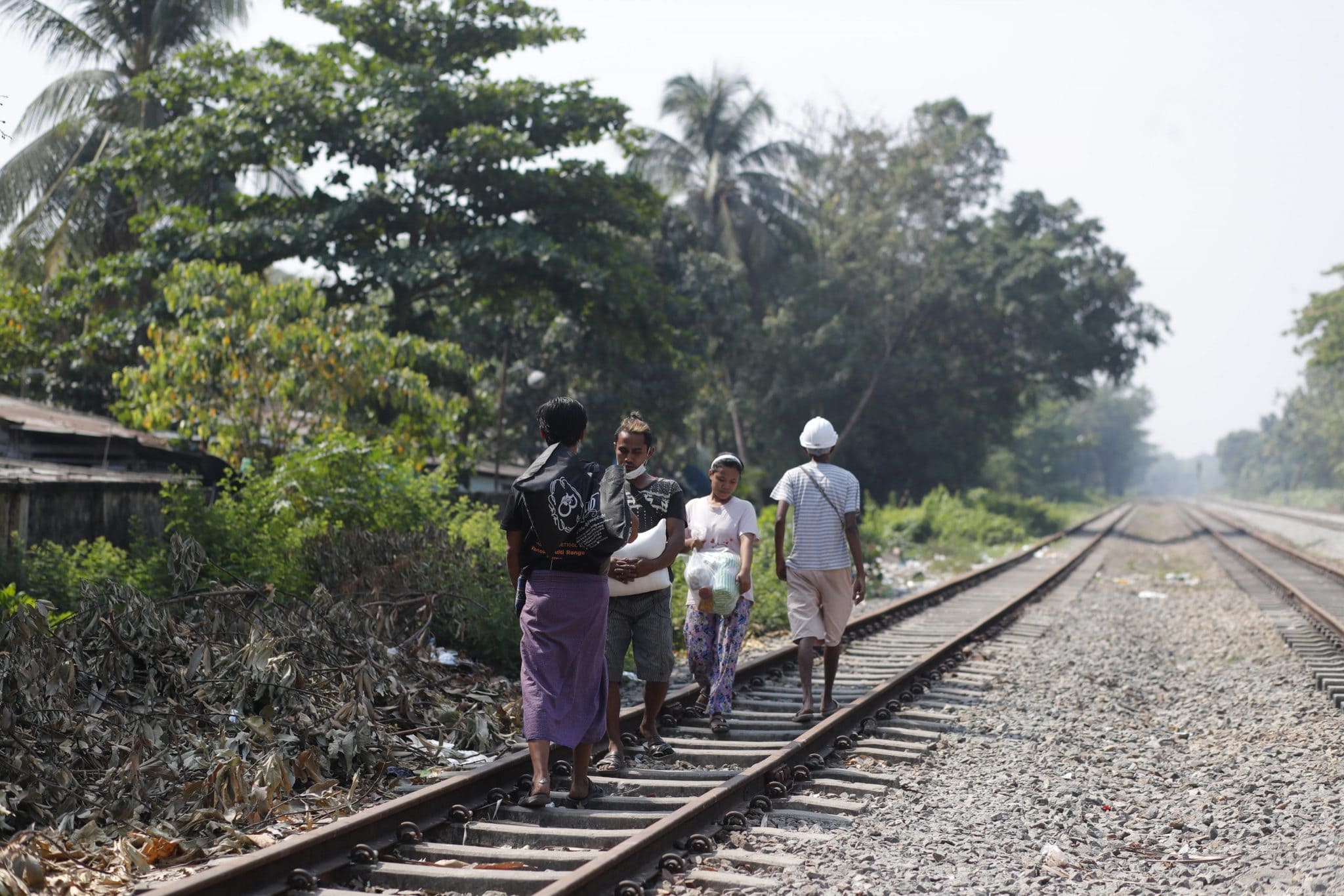
Source: Displaced railway workers and their families forced to leave railway housing compounds amid post-coup repression
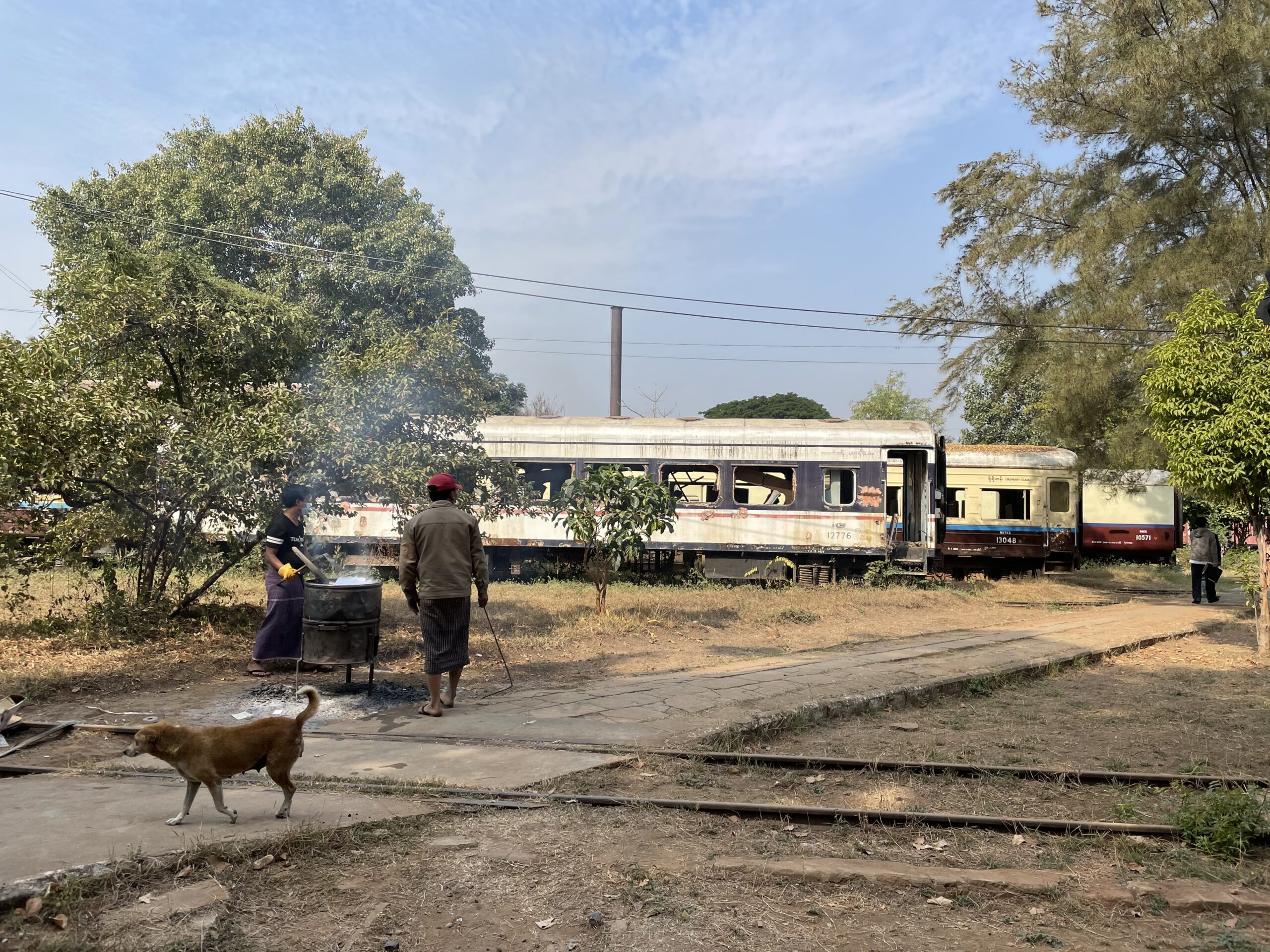
The Myanmar Railway Depot: A Site of Both Labor and Livelihood for Railway Workers | Author: Hyukjoong Kim
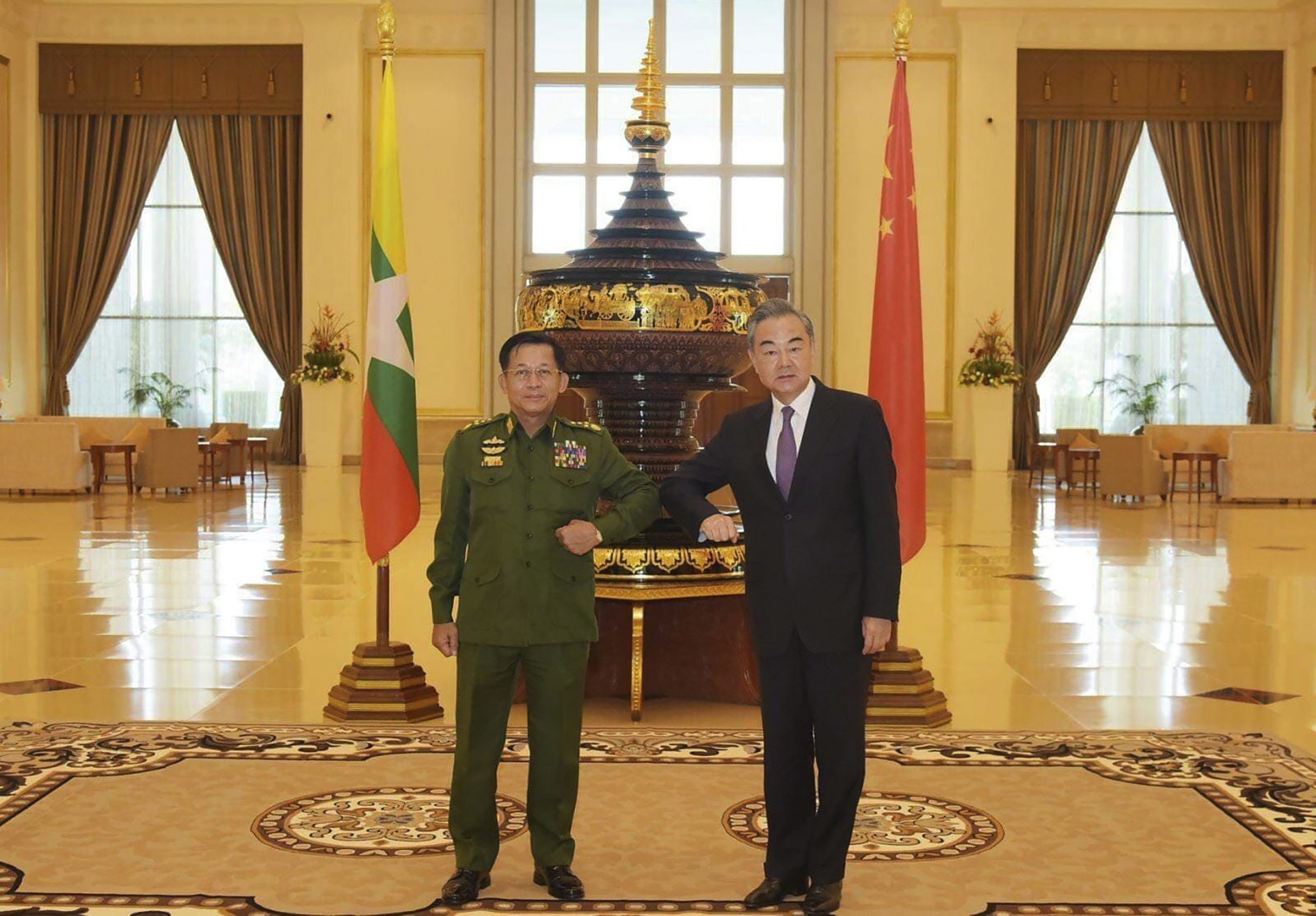
Source: China–Myanmar cooperation through railway development under the China–Myanmar Economic Corridor (CMEC)