
Place-making via cooperative subversion in Rio de Janeiro, Brazil
By Tiago Li
Introduction
Established in 2013, the Manguinhos Community Garden is Latin America’s largest urban vegetable garden, occupying an area equivalent to four soccer fields in Manguinhos, a low-income favela in Rio de Janeiro. This initiative is part of the municipal program “Hortas Cariocas”, which provides a small stipend to residents who cultivate urban lands. Rio de Janeiro, like many megacities in the Global South, has experienced rapid and unequal growth, pushing marginalized populations into favelas often lacking basic services. This spatial exclusion creates significant challenges for food security, making urban agriculture a critical community strategy. The garden occupies a space that was previously a cracolândia (crack cocaine market), a symbol of state neglect and social decay. Today, the garden produces approximately two tons of organic vegetables monthly, half of which is sold at low prices, with the income reinvested into the project, creating a self-sustaining model. The remaining produce is given for free to hundreds of local families and institutions in need.
Analysis
From the perspective of technocratic planning, the former cracolândia constituted a ‘pathological’ space (Kamete 2012) to be normalized. By pathologizing informality, authorities draw on a discourse of technical rationality (Harrison 2006; Watson 2003) that serves to depoliticize the drug trade. Instead, as Bayat & Biekart (2009) suggest, the cracolândia was a product of the neoliberal ‘city of extremes.’ It was a space that was considered without value, resulting in state neglect, social exclusion, and policing aimed at purifying the space.
For most Manguinhos residents, the cracolândia was also space defined by fear and decay, representing what Friedmann (152) refers to as “horror of placelessness”. Instead of attempting to erase the problem with a violent intervention, however, the community responded through healing the land, creating a meaningful place through a profound example of placemaking. Through their collective “reiterative social practice” (Friedmann 2010: 154) of growing, sharing and selling food, residents turned a fearful space into a place which is now full of life. As Hernandez (2019) shows through her research in the informal settlements of Esmeraldas, Ecuador, residents in a toxic neighborhood refused to move even knowing the danger because of their “collective history of struggle” (711) to turn the toxic space into their home. Similarly, Manguinhos residents’ collective action of healing a stigmatized space reclaims the right to define their own environment, in this case against the neoliberal logic that only sees land as a commodity.
The community thus acts as an organized grassroots group using co-production as a political strategy, working both “with and beyond the state” to “secure political influence and access resources” (Mitlin 2008: 339). This project is not simply an example of the state (via the Hortas Cariocas municipal program) providing assistance, or of people simply acting against the state. The project was facilitated by a state planning initiative that supports community-based forms of governance, with planners acting as facilitators (Nunbogu et al. 2018). However, contrary to the state’s goal of just growing vegetables and creating a positive image of Rio de Janeiro, residents use the program to achieve food sovereignty, safety and employment while negotiating for greater benefits. While the Hortas Cariocas program constitutes an “invited” space for “dominance through inclusion” (Miraftab 2009: 32-33), the community has “invented” its own practices: the autonomous self-management, the half-half distribution model, and the use of the garden for social healing. The insurgency here is not an open conflict but a cooperative subversion: the community skillfully infiltrates the state’s program to subvert its role, forcing it to fund a community-empowerment project for greater social benefits.
Implications
The community’s seemingly paradoxical strategy of cooperative subversion is also seen in other movements. In Zambia’s Kanyama settlement, for example, residents engaged in co-production to improve services while simultaneously using these invited spaces to assert their own counter-rationalities and resist displacement (Siame et al. 2025). Similarly, in the Crossroads settlement in Cape Town, South Africa, women’s groups utilized complex networks of support that blurred the distinction between state and civil society, deploying conflicting rationalities to challenge top-down housing upgrades (Watson 2003). In Limpopo, South Africa, Luckett (2022) shows how youth activists use both invited and invented spaces to achieve their goals, balancing cooperation with subversion.
Ultimately, the case suggests that insurgent planning should also consider socio-material relations as well as abstract, dialogical spaces. The Manguinhos Garden is powerful because it is about physical things: soil, plants, and collective work. Sletto (2020) argues that insurgent planning gets its power from “performative relationships that constitute socio-material landscapes”, which means resistance is found in the “performance of actual bodies in actual landscapes” (157-158). The daily performative moments, such as planting and caring for the soil, are sources of insurgent knowledge and action. In Manguinhos, the community’s physical work should thus be understood as a planning practice. Their material relationship with the garden serves to heal the land and build community power. This “social materiality” is a practical form of resistance that abstract top-down planning often misses.
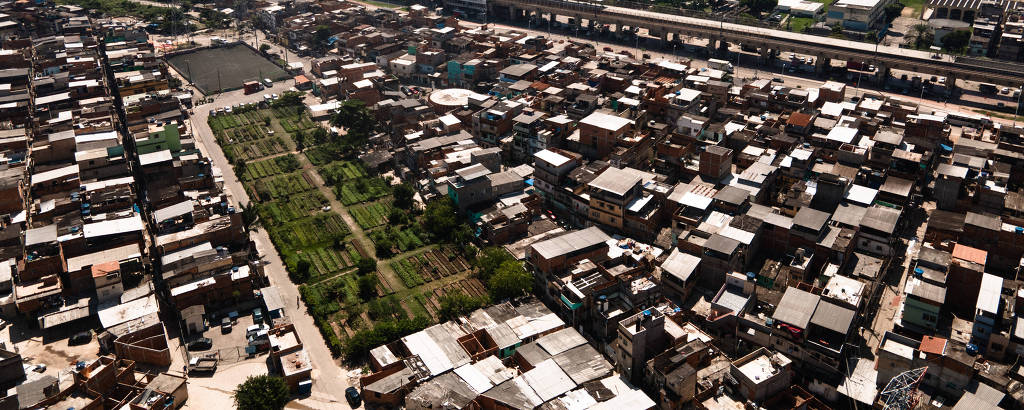
Source: Aerial view of the Manguinhos Community Garden
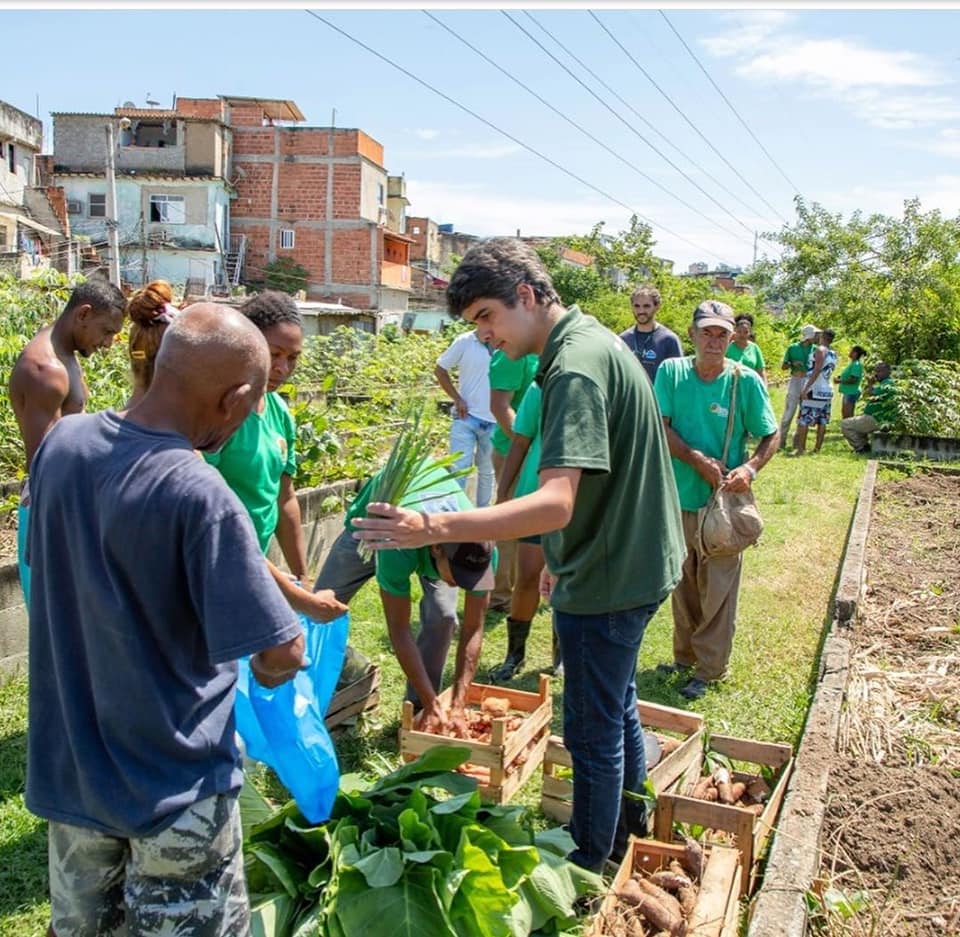
Source: Harvesting and packing vegetables
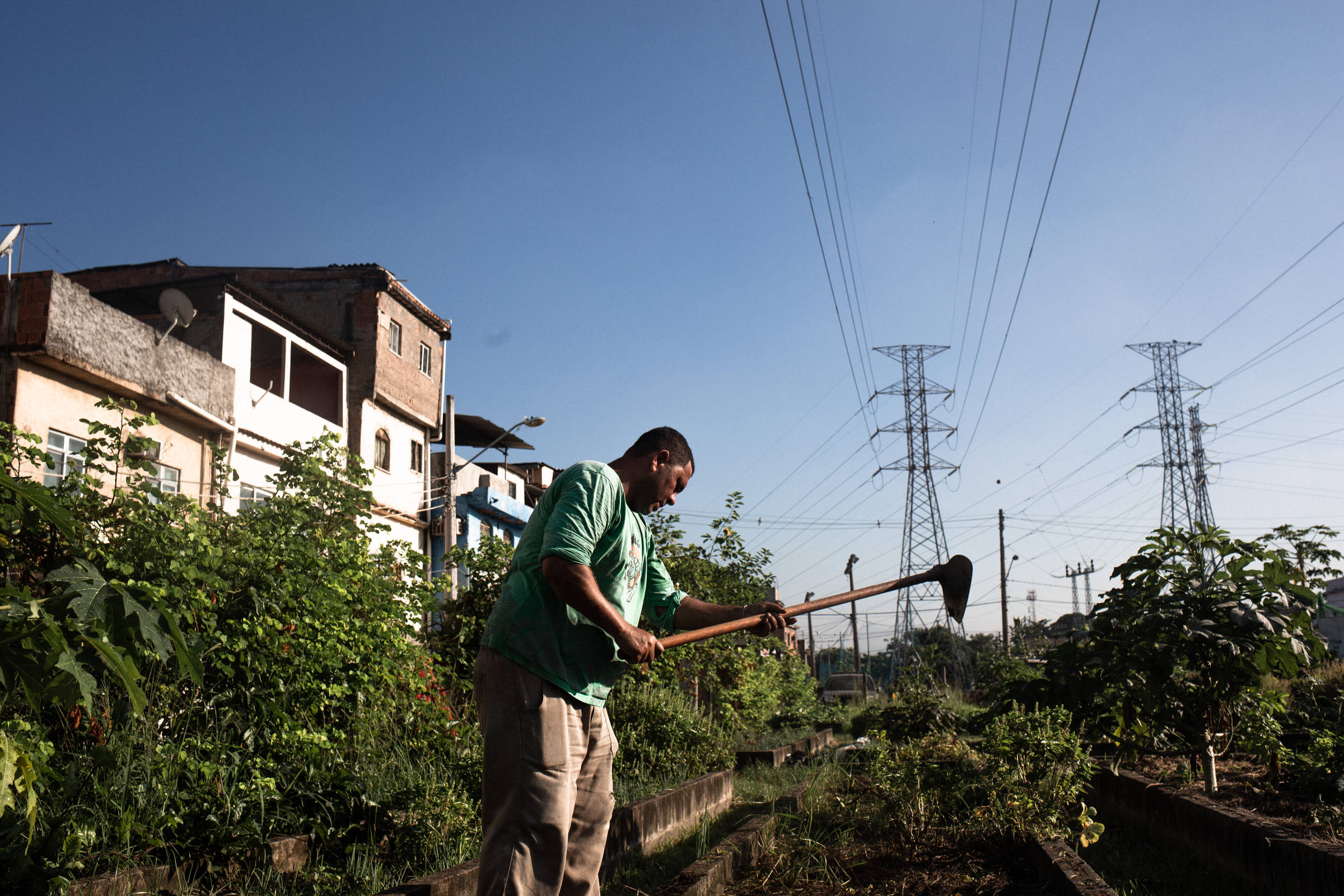
Source: Resident working in the garden