In celebration of Open Education Week 2026, the Senate of College Councils and UT Libraries partnered to ask students to nominate instructors who have positively impacted their educational experience through their use of free or low-cost materials. We’ll be recognizing a few of our nominees this week as Affordable Education Champions! More information about this program can be found on our LibGuides page, as well as in our overview post about our 2026 Champions.
Today, we congratulate and thank Dr. Ann Thijs, who was nominated by her students in BIO 311D in the Biology Instructional Office.
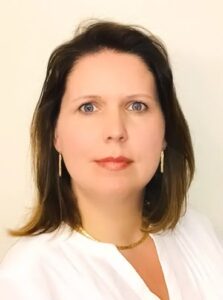
Dr. Ann Thijs is an interdisciplinary scientist with a passion for undergraduate education. Ann earned a dual undergraduate degree in Biology and Engineering from the Katholieke Universiteit Leuven (1998), in her home country of Belgium. After this, she completed a Masters in Environmental Engineering, also at KULeuven in Belgium (2000). As a postgraduate, she worked in the Department of Earth and Environmental Sciences on several national and international biogeochemistry projects. In 2004, Ann started as an international student in the Ecology, Evolution and Behavior graduate program at the University of Texas at Austin, where her work shifted from nitrogen and phosphorus to carbon cycling, coupled to the climate system.
Since earning her PhD, Ann has taught at St. Edwards University in Austin, Texas, and came back to UT Austin in 2017 as an Assistant Professor of Instruction. Ann teaches Introductory Biology II and Ecology. She delights in teaching her students the elegance and interconnectedness of the natural world, in evolutionary and ecological time, and to help students in becoming critical and quantitative thinkers.
We asked Dr. Thijs what led her to select free and low-cost materials for her courses. She told us:
I first created free course materials during the pandemic, when the sudden shift to online instruction required me to redesign my courses using a flipped model. Creating my own instructional videos ensured that every student could access the content asynchronously and learn at their own pace. This flexibility allowed me to devote our synchronous class time to meaningful, active‑learning activities rather than traditional lecturing.
As I saw how effective this format was for student engagement, I later updated those early home‑recorded videos into high‑quality, fully engaging instructional modules. This transformation was possible only because of the generous support of several outstanding UT colleagues—Anne Braseby (CTL), Michael Heindenreich (LAITS), Quinn Stewart (then iSchool), and Karyn Kondoff (UT Canvas)—whose expertise helped turn the materials into professional, accessible, and student‑centered resources.
Additionally, because UT’s Introductory Biology courses serve up to 3,000 students per year across many instructors, maintaining consistency is essential. Our course coordinators work with the publisher, the Co‑op, and Longhorn Textbook Access to secure a fair, reduced‑cost textbook option for all students. While I did not play a major role in negotiating these materials, I am deeply grateful for their efforts to keep course resources affordable and widely accessible.
When asked if she noticed a change in student response when shifting from more expensive course materials to free and low-cost materials, Dr. Thijs responded:
When using my own no-cost materials, I’ve noticed a meaningful shift in student engagement and learning. Students can be hesitant at first, especially with the flipped‑classroom model. However, as the semester progresses, most develop a strong appreciation for it. Having the ability to watch recordings on their own time allows them to come to class prepared, and our in‑class time is fully dedicated to active learning—something that consistently deepens their understanding and leads to more durable learning gains.
With the LTA, all materials are available to students from day one, which reduces stress and ensures everyone begins on equal footing. This benefits both students and instructors: students have access to everything from the start, and instructors can build activities and assessments knowing that every student has full access to every resource throughout the semester.
Finally, Dr. Thijs provided the following advice to any instructors considering changing their courses to free and low-cost materials:
When creating your own instructional videos, start small. Don’t aim for perfection – it will slow you down and delay getting useful resources into your students’ hands. I’ve refined my videos and materials over several iterations, and they may need another update soon. Treat the process as ongoing improvement rather than a one-and-done production.
Regarding LTA: At first, introductory biology instructors were hesitant to adopt LTA because students could find the textbook elsewhere for a lower cost. After discussions and negotiation, however, the textbook price was significantly reduced from what it had been previously. I recommend looking into LTA—it can make course materials far more affordable and accessible for students.
Guest post by: Audrey Waite, OER GRA