
by Gunjan Malhotra
On Friday, November 7th, 2025, the Department of Religious Studies hosted Professor Nicholas Harkness, the Modern Korean Economy and Society Professor of Anthropology at Harvard University, for a stimulating colloquium session of its Fall 2025 Departmental Colloquium series. His research interests encompass the study of language, music, semiotics, and the anthropology of religion in South Korea. Professor Harkness, a leading scholar of the ethnographic study of communication and sociocultural semiosis, has published extensively on sound, language, and religious practice in South Korea.
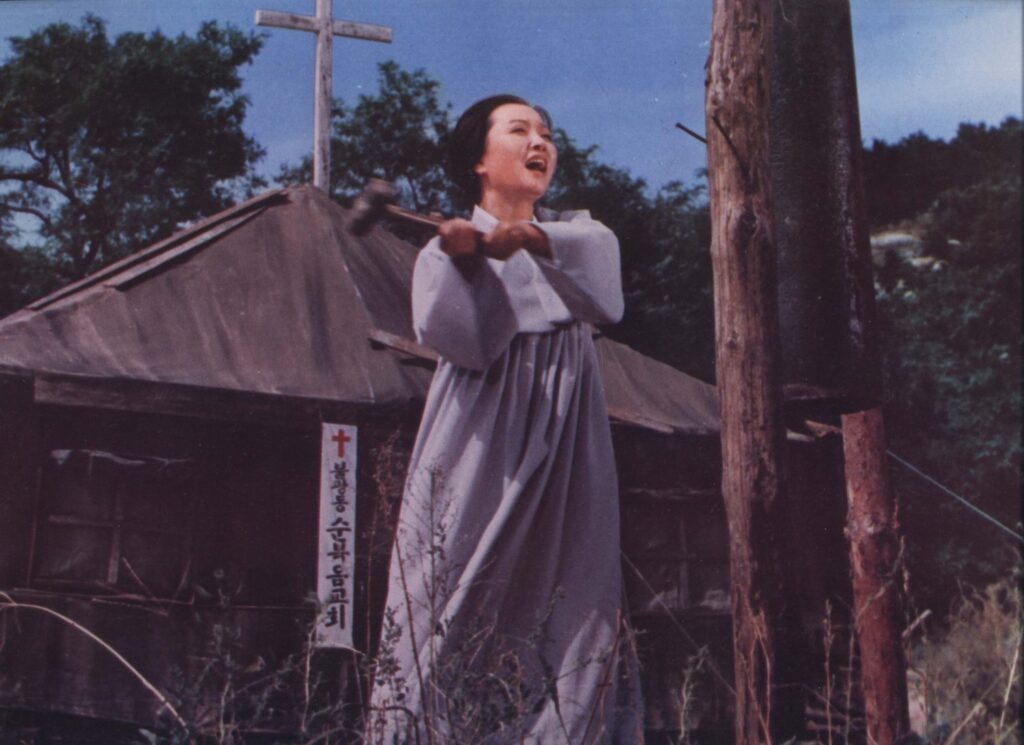
The colloquium was led by the third-year students of the doctoral seminar in the Religious Studies PhD Program, who actively engaged with his work and presentation. In preparation, the seminar students read both his article “Sound” (2025) and his recent monograph on glossolalia, Glossolalia (2024), which provided theoretical and ethnographic foundations for the discussion. Professor Harkness’s colloquium presentation drew upon this article as well as fresh historical and ethnographic research on the sonic worlds of Korean Pentecostals, presenting an excerpt from his forthcoming publication, “The trans Pacific Matter of Sound; Or, Choi Jashil and the Religious Media of Korean War Debris” (forthcoming in Trans Pacific East Asia). Beginning with the foundational question — “What is the relationship between sound and religion?”— Harkness urged attendees to reconsider sound not just as music or speech but as a rich sensory and historical medium that is “born agnostic and everywhere made religious.” He recounted the story of the Yoido Full Gospel Church’s origins, from a humble house and tent in war-scarred Seoul, and described how the transformation of everyday objects, including a church bell constructed from a salvaged military oxygen tank, became deeply symbolic for believers.
In his article “Sound,” Harkness develops a diagnostic framework for understanding sound’s relationship to religious studies by proposing a nested structure of markedness: “the sonic,” “the phonic,” and “the interdiscursively voiced.” He argues that sound becomes least agnostic about religion precisely at these pressure points where agency, animacy, and personification intersect. As Harkness writes, the human voice serves as a “generative phonosonic nexus” that anchors how communities participate in and shape “sonic systems of value.” This framework allows scholars to move beyond cataloguing sonic diversity and instead identify how sound practices encode fundamental religious distinctions about who can speak, what can be uttered, and how believers navigate a dynamic semiotics of animate agency. Thereby, Harkness firmly establishes the relationship between sound and the formation of religious authority.
Central to Harkness’s presentation was the figure of Choi Jashil, co-founder of the Yoido Full Gospel Church, whose memoir, “Hallelujah Ajumma” (literally translating to English as “the Hallelujah Aunty”), documents the early decades of Korean Pentecostalism in the post-war period. Harkness traced how Choi’s evangelistic practices, such as ringing the church bell fashioned from a salvaged U.S. military oxygen tank, engaging in glossolalia (“speaking in tongues”), and conducting house-to-house missionary work among Seoul’s displaced populations, exemplified the creative transformation of war debris into “instruments of spiritual conversion.” Yet, as Harkness poignantly demonstrated, despite Choi’s foundational role in building the church and her intimate association with its sonic signature, she has been progressively erased from official institutional memory, a troubling reminder of how gender, authority, and historical narration shape religious commemoration. Through this systematic erasure, Harkness argued how sound and voice function not only within religious gatherings but also within struggles over memory, authority, and communal identity.
In the talk, Harkness showed how Choi Jashil remembered the Church’s first bell as a “gospel bell”. It became a ritual object that both called neighbours to prayer at dawn and dusk, while also condensing post-war medical debris, longer Korean histories of Buddhist and Confucian bells, and comparative work on village bells into a single sonic node where military violence, life-saving missions, political authority, and charismatic female agency were audibly fused.
Harkness’s talk focused on the complex interplay between material culture, sound, and agency. He highlighted how evangelistic work and memoir emphasized both the spiritual and political dimensions of sonic practices, such as bell-ringing and glossolalia. Harkness argued that sonic artefacts like bells and ritual vocal acts bore not only aesthetic and religious significance but also encoded histories of violence, conversion, and gendered marginalization. He highlighted that the instruments like bells and drums, along with the voice of singing, only become significant in the spatial contexts where they are played. The presentation explored how agricultural and shamanic traditions, post-war trauma, and gender politics shaped the development of Korean Protestant soundscapes.
Interweaving theory and vivid local narrative, Harkness’s intervention offered new “pressure points” for religious studies, identifying moments when sound escapes its general agnosticism to become palpably religious and socially consequential. He concluded by inviting scholars to examine the ways in which sonic phenomena mark agency, animacy, and personification both within texts and lived religious spaces. For Harkness, studying sound in religion requires not simply cataloguing sonic diversity, but tracing dynamic histories of meaning, conversion, and representation through the voices and artefacts that endure, fade, or are erased.
This talk holds particular value for graduate students in Religious Studies because it demonstrates how questions of sound, voice, and media cut across the study of ritual, ethics, and lived religion. Harkness’s presentation shows how attention to sound can reframe classic questions about ritual, conversion, gender, and memory, some of the central questions that surround the study of religion.
The Department expresses sincere gratitude to Professor Harkness for sharing his insights and for joining us in a rich discussion at the intersection of anthropology, sound, and religious life.
Gunjan Malhotra is a PhD student in the Department of Religious Studies at UT Austin. Her research focuses on the interface between music and religion in early Modern South Asia.
References
Harkness, Nicholas C. Glossolalia. University of Chicago Press, 2024.
—. “Sound.” In Critical Terms for Religious Studies, 2nd ed., edited by Sarah Hammerschlag, (378-401). University of Chicago Press, 2025.
—. “The trans Pacific Matter of Sound; Or, Choi Jashil and the Religious Media of Korean War Debris.” In Trans Pacific East Asia: Trajectories and Transformations in Music and Sound, edited by Hyun Kyong Chang, Hedy Law, and Nancy Rao. Palgrave, forthcoming.