
by Molly Keesling
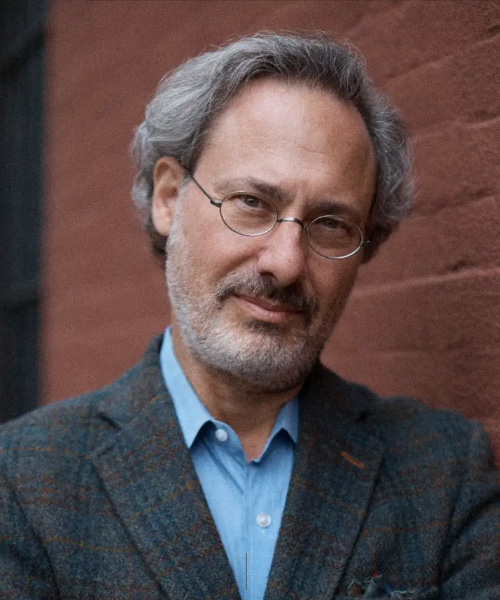
The Department of Religious Studies hosted Dr. Jerome Copulsky for a spring area colloquium on March 6, 2026. The colloquium was primarily for those in the concentrations Religions in History and Religion and Society, but was open to all students and faculty. Dr. Copulsky is a research fellow at the Berkley Center for Religion, Peace & World Affairs (Georgetown University), and is a Scholar in Residence in the Department of Philosophy and Religion at American University in Washington, DC. He has written extensively on topics concerning modern western religious thought, political theory, and church/state issues. The colloquium centered around his recent book, American Heretics: Religious Adversaries of Liberal Order, which was published by Yale University Press in 2024. The introduction as well as the seventh chapter of the book were circulated to students and faculty prior to the colloquium with Dr. Copulsky. PhD candidate D. Sergio Glajar helped organize the colloquium and acted as a correspondent, responding to Dr. Copulsky’s talk with prepared questions.
At the heart of Copulsky’s book are what he calls “American heretics.” These are Christians who regard “the Founding…deeply flawed, even faithless” (p. 4) when held up against their Christian orthodox views. These “heretics” were “hostile to the modern principles of liberty and equality that they feared would sow confusion and chaos. They rejected the ‘self-evident’ truths of natural equality and unalienable rights and the political theory that emerged from them (namely that legitimate government was established by social contract, based on and maintained by the consent of the governed to preserve those rights” (p. 4). Thus, the American heretics of Copulsky’s book are those who believe that the liberalism upon which America was founded is incompatible with their Christian faith.
Copulsky argues that there are generally three main camps regarding beliefs about the nature of the founding of America. In the first camp are those who believe America was founded as a Christian nation (but has fallen away from its origins), and that Christianity should be publicly promoted. Copulsky calls those in this group “religionists.” In the second camp, the “separationists,” are those that believe in the separation between government and religion. They claim that the deity mentioned in the founding documents was intentionally described in a way that would be acceptable to multiple religious groups. The third camp encompasses “American heretics” – those that believe the founding was inherently faulty and that the solution is to make America a Christian nation. Copulsky admits that when analyzing specific thinkers and movements, the lines between these camps can blur; nonetheless, the categories help the reader sort through the varying approaches to the fundamental problem: differing perspectives on the legitimacy of the founding.
In the seventh chapter of American Heretics (“A Mistake with Lasting Consequences: Postliberals and National Conservatives”), Copulsky mainly focuses on the thought of Rod Dreher, Patrick Deenan, Adrian Vermeule, Yoram Hazony, and the National Conservative movement. He shows where all these figures have overlapped throughout time and where they also diverge. Towards the end of the chapter, he highlights a manifesto put forth by the National Conservatives called “National Conservatism: A Statement of Principles,” that was signed by Hazony, Dreher, Charlie Kirk, Peter Thiel, and others. In the document, the signatories “identified themselves as ‘citizens of Western nations,’ Protestants, Catholics, and Jews” (p. 278). Copulsky notes that the statement of principles departs from “American tradition” and “the ‘liberal’ principles of the Declaration of Independence” (p. 279). In this way, the National Conservatives are American heretics, calling for a kind of re-founding of America, based on an ephemeral idea of shared western religious values.
For scholars of religion, Copulsky’s engagement with the history of Christianity and its relation to governance is extremely relevant. Pointing to the question many Christians were forced to grapple with as they considered their faith’s role in the world, Copulsky writes, “What did this new covenant established by the advent, crucifixion, and resurrection of Christ—this inbreaking of the kingdom of God, a universal communion that transcended the human loyalties of family, tribe, and nation—entail for life here and now in this world prior to its fulfillment?” (p. 6). Here, Copulsky identifies a phenomenon similar to that which Alan Strathern calls “transcendentalism” (see the introduction of Unearthly Powers; Copulsky does not cite Strathern here). Simply put, religious traditions that emphasize eternal salvation, a transcendent God, and a higher kingdom must wrestle with how such a faith impacts every-day life in the material world. For Copulsky’s context, this question fueled Christian thought regarding political governance throughout history. Different answers lead to drastically different outcomes and beliefs about what the United States government should look like.
Jerome Copulsky offers an analytical perspective of the history of Christianity in American politics that proves insightful for the present moment. By calling those who claim religious orthodoxy “heretics,” Copulsky points out their desire to, in a way, re-write history. In doing so, Copulsky seriously engages with their conceptions of the role of religion in political governance. American Heretics, while certainly relevant to historians of American religious and political history, could benefit the scholar of religion more broadly.
Molly Keesling is a PhD student in the Department of Religious Studies at UT. Her research focuses on medieval Islamic philosophy.