
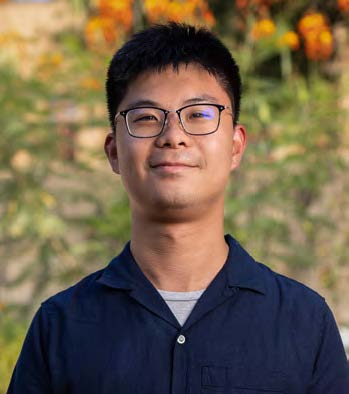
 There aren’t many social work researchers who think about transportation as much as Pei-Chiang Lee does.
For Lee, a doctoral student at UT Social Work, transportation like a bus isn’t just a vehicle; it’s a critical lens for examining disability, health, and justice.
Lee’s research centers on disabled young people as they transition out of school and into adulthood. He is especially interested in what happens when the school bus goes away.
“When people are in school, they have a school bus that takes them from home to where they experience life,” he said. “However, universities often do not, and jobs for adults often do not either. How we view transportation and mobility affects how humans live.”
That gap in mobility, he argues, ripples outward and shapes health, housing, employment, and family life. A pillar of his work is health and healthcare access, a concern he calls an “epic issue” in disability research.
The work is personal for Lee, who lives with cerebral palsy and has navigated many of the same transportation barriers in Austin that he studies. Growing up in Taipei, he relied on what he describes as “phenomenal” public transit. In Austin, he encountered delays, safety concerns, limited operating hours, and a long, complicated path to securing a Texas driver’s license because of his disability and international status. It took him 18 months and intervention from the Texas Workforce Commission to secure the right to drive.
These kinds of barriers, he says, are not just personal frustrations. They mirror what many disabled people face when trying to get to work, school, medical appointments or social activities.
“Transportation affects quality of life and employment opportunities,” Lee notes. “If the system isn’t sufficient, families have to drive. Work hours are reduced, earnings decline, and outcomes worsen. It’s not just a quality-of-life issue. It becomes a caregiving and family well-being issue as well.”
Research & Clinical Work
At UT Social Work, Lee has found opportunities to grow as both a scholar and practitioner. As an ACT LEND Fellow in a federally funded leadership program on neurodevelopmental and related disabilities, he is building clinical skills in developmental screening and interdisciplinary practice. That clinical training, he says, directly strengthens his research.
He was drawn to faculty whose work centers disability and to the school’s strong disability research infrastructure. His supervisor, Professor Sandy Magaña, leads a research center focused on community services for disabled people and their families.
Lee’s dissertation focuses on caregivers’ needs, which he believes are too often taken for granted. When transportation falls short, families and partners step in, absorbing the hidden costs of time, stress and lost income. He is also extending his work into housing, examining how access to reliable transit drives up housing prices and shapes where disabled people and their families can afford to live.
“When I’m looking at how young people navigate urban settings, clinical integration makes my research better,” Lee said. “That’s exactly why I chose UT, because they’re the school that offered practice through clinical work. As a researcher, I’m a vehicle for the community. I help express their voice and experience, and help make their needs known.”
Looking ahead, Lee imagines a future where disabled people can move through their communities with dignity, self-worth, and real choices. He wants his work to support interventions that strengthen communities and ease caregiving burdens as people age.
“We’re better than we were 50 years ago,” he reflects. “But the future means we’re even further along.”