
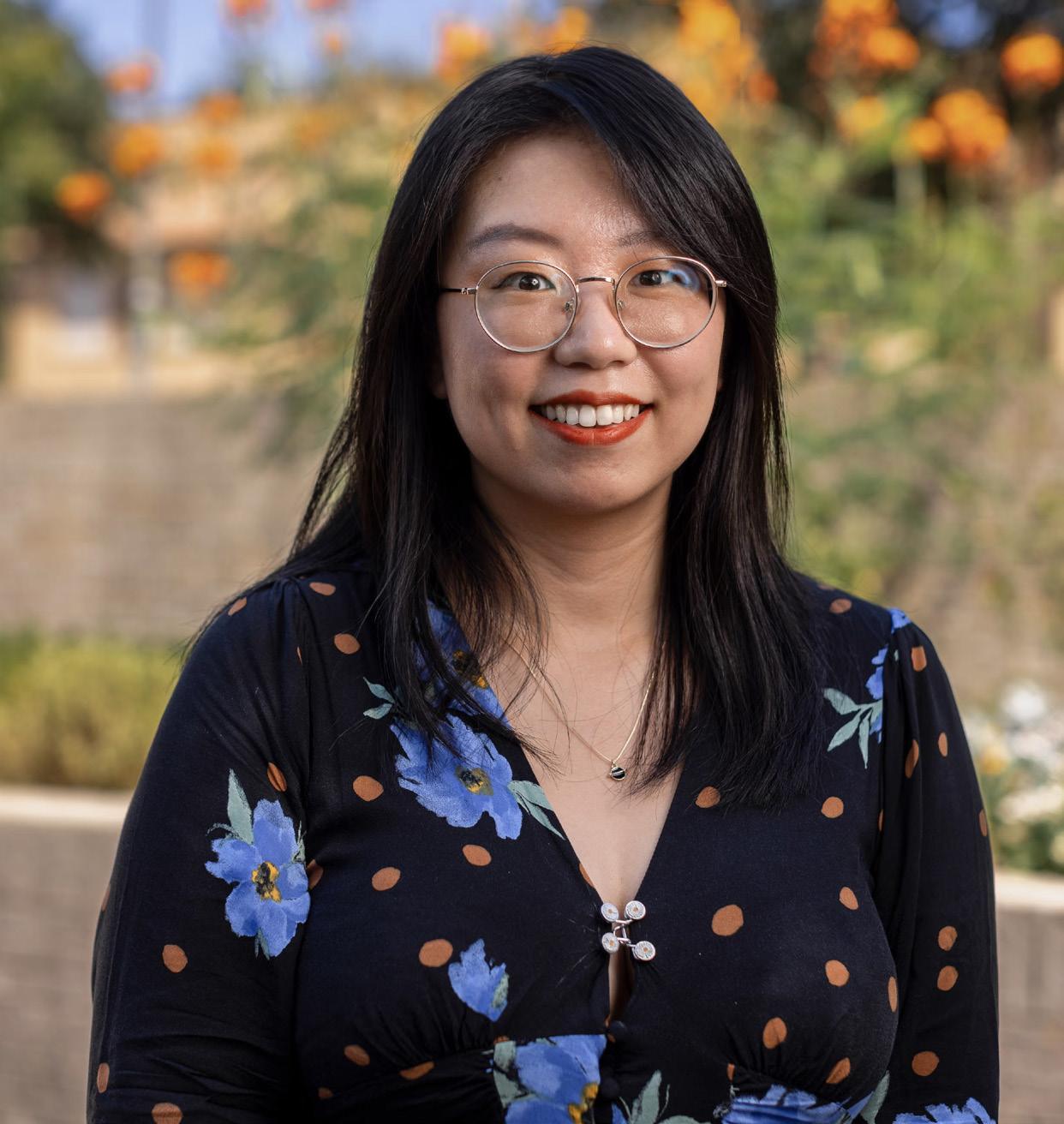
From clinic to community, third-year doctoral student Xiaoyi Zeng connects older adults, caregivers and neighbors.
Doctoral student Xiaoyi Zeng still remembers the heartbreaking moments inside the exam rooms at Mount Sinai Hospital in New York — when older adults and their families first learned of a dementia diagnosis. As a social worker at the Alzheimer’s Disease Research Center, she sat beside Chinese-American older adults during clinical interviews and memory evaluations, and, when the results were clear, delivered the words no one is prepared to hear: “I’m sorry … you have dementia.”
Outside the exam rooms, her work in community senior centers and immigrant neighborhoods revealed another part of the story. Many older adults told her they felt lonely, excluded, and unsure of their purpose. “It broke my heart,” she said. “Aging shouldn’t feel hopeless. It should feel positive, supported, and valued.”
Those experiences and conversations reshaped her path. Zeng realized that supporting older adults requires more than clinical efforts; it also requires strengthening the neighborhoods and communities they depend on every day.
This realization propelled her into her doctoral studies at UT Austin, where her work now focuses on developing neighborhood interventions and community initiatives that support the well-being of people living with dementia and the care partners who stand beside them.
Mentorship and Momentum
At UT Social Work, Zeng’s primary mentor is Dr. Yuanjin Zhou, a scholar in geriatric social work. Their collaborative projects, including fall-risk management interventions for people with dementia, aligns with Zeng’s broader pursuit of improving physical, mental and cognitive well-being across aging populations.
Throughout her doctoral training, Zeng plans to continue building a research agenda rooted in community-based participatory methods and centered on populations historically underrepresented in dementia research. By bringing their voices, experiences, and needs into study design and implementation, she hopes to promote agingin-place and reduce disparities.
“UT Social Work has been the ideal place to build this work, and the support I’ve received has been tremendous.” Zeng recalls, “Here, doctoral students are treated like junior faculty. People are eager to learn about you and learn about your research. They want to celebrate all your little milestones in life and do everything to support you to succeed.”