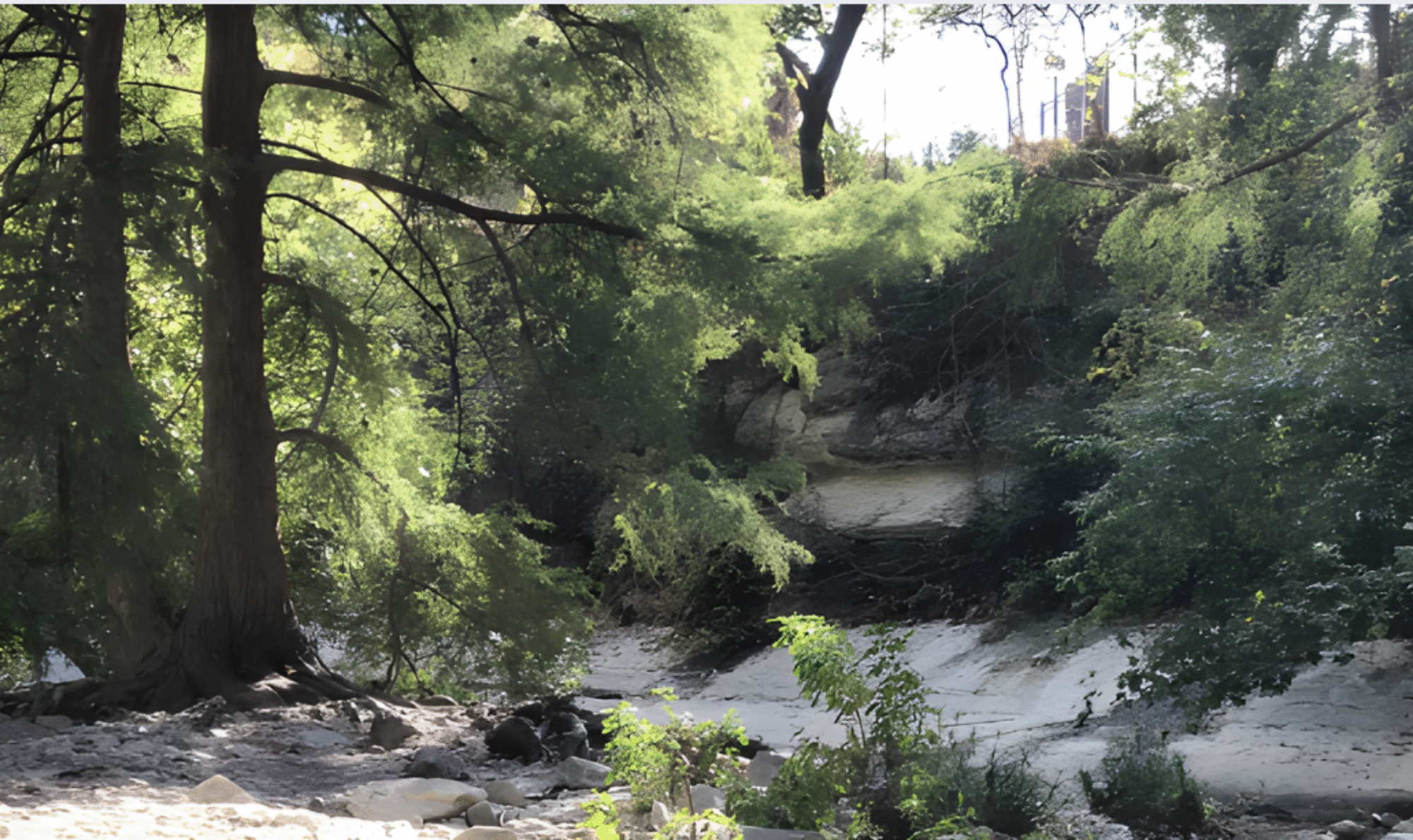
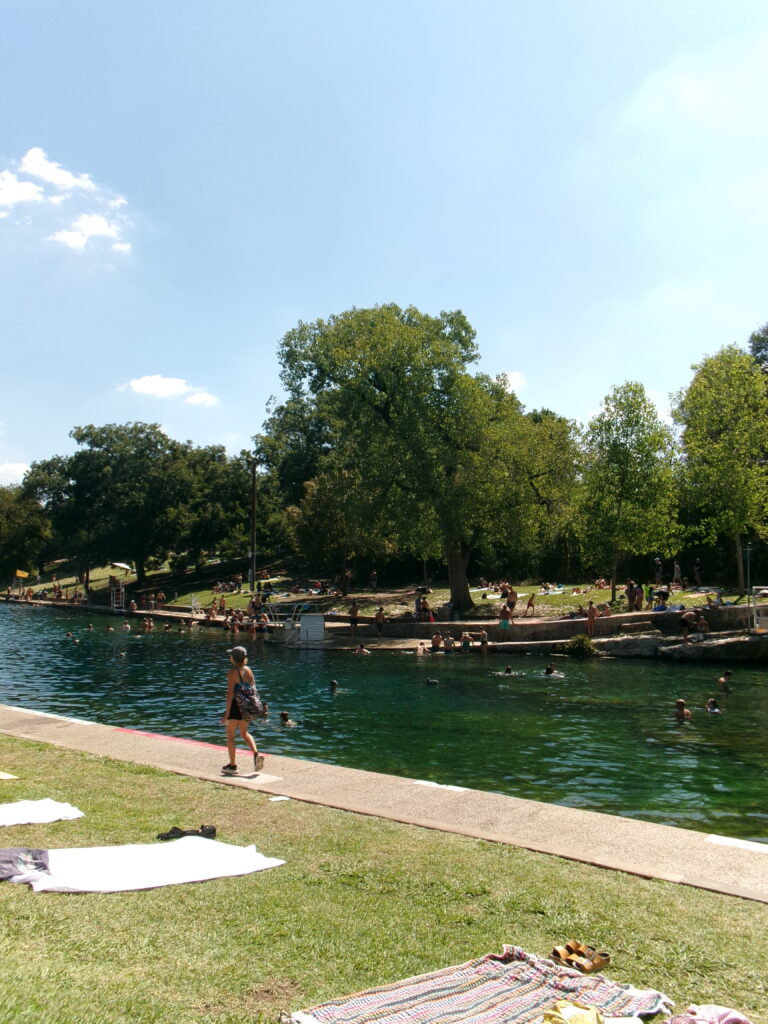
Hi, everyone! We are back with more blogs! A few weeks ago, our Urban Ecosystems stream hosted a social event at Barton Springs, providing the perfect break from our usual routine. We spent the afternoon swimming, relaxing on the grass, and just hanging out outside the lab and classroom. The best part? Even while we were having fun, it still felt connected to what we study.

Barton Springs is a living example of how urbanization and natural ecosystems interact, and how humans both benefit from and impact those spaces. Barton Springs is a natural spring-fed pool and one of Austin’s greatest landmarks and attractions. It is the perfect escape to refresh and relax during the summer and fall, considering the Texas heat.
Most of us dived in the water and had a fun time, although it’s undeniable that the water was freezing at first. This is because the pool is filled with water from the Edwards Aquifer, keeping the water cool all year round!
While we were there, I noticed how much life exists within and around the pool. Patches of algae clung to the rocks, floated around, and coated most of the floor – making it slippery. Even with all the swimmers and activity, the natural beauty still stood out. Most of the pool consists of natural limestone, and its surrounding area is man-made. From sidewalks and steps to landscaping. It was a reminder of how humans and ecosystems share this space — for better or for worse.
Like many locals, we wondered if the entrance fee benefited Barton Springs in some way or if it all went towards the city’s general revenue. But, according to the city’s website, a portion of the fee actually helps fund the pool’s upkeep and preservation—crucial for maintaining not just a popular community spot, but also an important site for environmental conservation and local biodiversity. The pool and surrounding area are protected through advocacy efforts to maintain the Edwards Aquifer’s health and support the unique ecosystem it sustains.
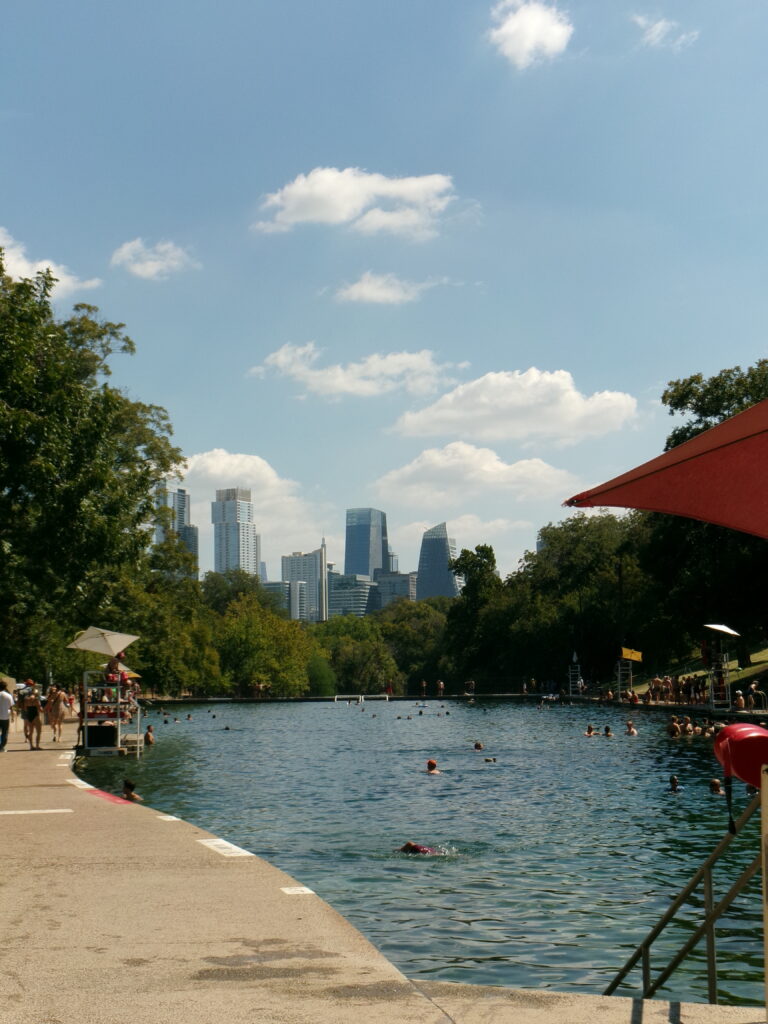
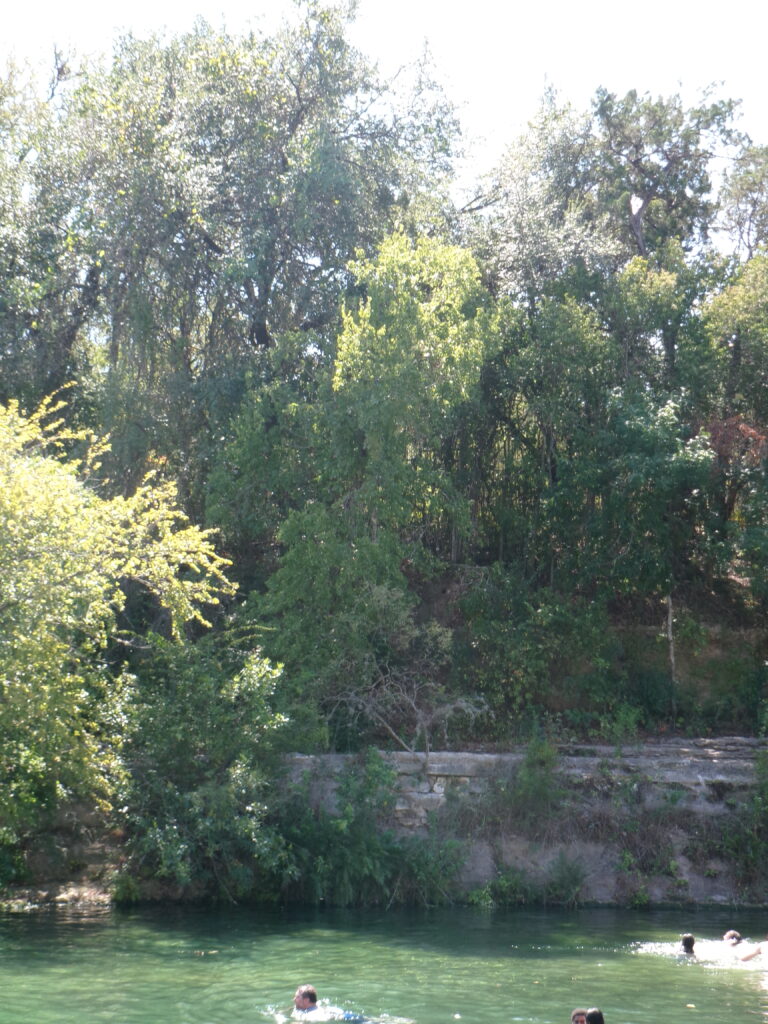
Overall, our visit was a reminder that not all interactions between urban and natural ecosystems are bad. When we learn to compromise with nature, both our cities and natural landmarks can thrive together.
-Ximena Munoz