Summer in the Urban Ecosystems Lab: Research, Discovery, and Hands-On Experience

Each summer, the Urban Ecosystems Research Stream offers students a range of opportunities to grow as researchers and contribute to ongoing projects in the stream. From data mining—where Dr. Ruth introduces students to coding in R for analyzing environmental datasets—to volunteering in the lab and paid fellowships, our program helps students build skills, contribute to ongoing projects, and get a head start on their research for the coming semester.

This summer, students worked on various projects within the lab, including ongoing efforts to trace sources of urban water contamination. Our FIB-MST (Fecal Indicator Bacteria – Molecular Source Tracking) researchers use DNA tracers to detect sewage leaks—an eco-friendlier alternative to traditional dye tracing. This technique identifies the origins of bacterial contamination in water using host-specific genetic markers, helping us better understand how human activity affects local water systems and communicate it to the public.

Students begin the summer by learning key skills like pipetting, setting up positive and negative controls, and running qPCR (quantitative polymerase chain reaction), a technique used to amplify and measure DNA sequences. These early weeks focus on building precision, consistency, and confidence in the lab. As students’ progress, they apply these techniques to environmental DNA (eDNA) samples, learning how to detect and quantify genetic markers that indicate the presence of contaminants or biological tracers in water.

In addition to technical skills, students also develop skills in experimental design, data interpretation, and troubleshooting, encountering real-world challenges such as unexpected results.

One of our summer fellows, Bhavya Sinha, shared her experience and reflections on working with the DNA tracer project.

“This summer gave me a good grasp of important concepts, and now I feel confident teaching my peers some of the skills I spent the summer learning,” Bhavya reflected. “I’m really grateful that I got real research experience so early in college and got to work with mentors and research educators from across the stream.”

Bhavya explained that the process wasn’t always straightforward, but that it allowed the team to learn much more and take redirection on the project.

“After many unsuccessful runs and attempts to stop the negatives from amplifying, we decided to put qPCR on hold so as not to waste materials,” she shared. “We began doing extensive research on other directions to take this project and even tried testing a fluorometer.”

Bhavya credits her mentor, as well as her teammate, Emory, for guiding her and making the process enjoyable.

“I had the opportunity to communicate with my team, learn new skills, and overcome problems with innovative solutions,” she said. “I really enjoyed this preview into my fall research, especially learning biology skills like qPCR.”

For Bhavya and many of our students, the Urban Ecosystems summer experience offers an invaluable introduction to research—combining technical training with mentorship, teamwork, and real-world impact. Whether coding data models, analyzing environmental samples, or testing innovative tracing techniques, our students leave the summer with new skills, confidence, and a deeper appreciation for the role of science in shaping sustainable cities.
Introducing the Austin Area Urban Nature Roundtable: Building Connections for a Greener Austin

We’re back with more exciting projects here at the Urban Ecosystems Research Stream, and this time we’re thrilled to introduce the Austin Area Urban Nature Roundtable! The idea began in the summer with a simple question: how can we create stronger connections between people who care about Austin’s environment? Our city is home to a growing network of researchers, students, and community members dedicated to understanding and protecting urban ecosystems. However, these groups often work independently. To bridge that gap, Dr. Stuart Reichler and the Urban Ecosystems stream organized the first-ever Austin Area Urban Nature Roundtable—a space designed to foster communication, collaboration, and creativity across Austin’s environmental community.

Our inaugural meeting took place on October 1, 2025, hosted both in person at the University of Texas at Austin and online via Zoom. The goal was to create an open, discussion-based environment where participants could share experiences and introduce each other. We also had our guest speaker Miriam Toro Rosario, who joined us from Alianza por la Cuenca del Río Piedras in San Juan, Puerto Rico. Miriam shared her experience working with diverse community groups to protect the Río Piedras watershed.

“The first meeting also brought together representatives from several local organizations, including Waterloo Greenway, A Rocha USA, Austin Youth River Watch, Keep Austin Beautiful, Austin Water Center for Environmental Research, Great Springs Project, and the Native Plant Society of Texas,” stated student researcher, Marcela Dreesen.  

Preparing for the event took detailed planning and teamwork. Student researcher Marcela Dreesen spent much of her summer reaching out to more than 100 organizations and individuals involved in environmental work across Austin. The strong response highlighted how many groups were eager to connect, and from those replies, the roundtable now includes roughly 20 unique organizations.

Working alongside Dr. Reichler, Marcela helped coordinate key aspects of the event—from scheduling and developing discussion topics to managing the hybrid meeting format. Reflecting on the project, Marcela shared her perspective:

“The roundtable’s goal is to bring together Austin’s environmental organizations to share events, research, and current projects. We hope to connect groups working toward similar goals so they can collaborate and foster an environment where multiple organizations come together to work on a shared mission.”

The next Austin Area Urban Nature Roundtable will be December 10, 2025, from 9:30-11am at the University of Texas at Austin, with a Zoom option available. The theme of the meeting is to discuss opportunities and challenges for the year 2026, as well as presentations from a few organizations. 

This is just the beginning for the Austin Area Urban Nature Roundtable. By continuing these conversations, we hope to strengthen the network of people and organizations working toward a more connected and sustainable Austin. Bringing together scientists, students, and community members is a big step towards improving the future of Austin’s urban ecosystems – and we are excited to see where this growing community will go next.

Visit their page: https://sites.utexas.edu/austinurbannature/

Habitat Scouts: Turning Urban Research Into a Hands-On Science Book

This semester, the Urban Ecosystems research stream is taking science communication to a whole new level. We are writing a book! Our students aren’t just studying urban ecosystems; they’re sharing their discoveries in a way that anyone with a love for science can follow, learn from, and even recreate. The project combines creativity, collaboration, and research into something that brings scientific outreach directly to readers.

In a recent interview, student researcher Sienna Springate shared insights into the project’s development.

“Habitat Scouts began during the pandemic as a creative way for students to explore urban ecosystem science from home. What started as a collection of virtual lesson plans, videos, and online experiments is now evolving into a hands-on, interactive workbook — written, designed, and organized entirely by students,” she explained.

Together, the team is compiling class materials from different platforms – from documents and videos – into a follow-along workbook format for others to use. The book will feature urban ecosystem concepts, interactive exercises, visuals, and simple at-home experiments designed to make science accessible and fun. Sienna shared that her current role focuses on compiling and organizing the chapters, while her teammates are busy preparing the book’s prospectus and reaching out to publishers. She described the process as both challenging and rewarding, emphasizing how much the group has learned through collaboration.

“We’re constantly learning new things, but we’re figuring it out together,” Sienna said. “Stuart – RE in the lab – has been incredibly supportive throughout, and I’m excited to keep making progress on the Habitat Scouts project!”

The Urban Ecosystems students are managing every part of the publication process — from early preparation and chapter development to pitching to publishers. This project is not just about writing; it’s about learning how to communicate science clearly, engagingly, and accessibly. The project reflects the goal of our Outreach team — sharing science with all audiences. By compiling the methods and discoveries into this book, the students aim to make their work replicable and approachable for others — whether they’re students, educators, or anyone curious about urban ecosystems and sustainability.

Through Habitat Scouts, the team aims to encourage others to conduct their own experiments, observe their local habitats, and form a deeper connection with the ecosystems around them. It’s a project that is interactive, educational, and student-driven. Every page represents collaboration, curiosity, and a commitment to making science accessible for everyone to participate in. Stay tuned for updates on the Habitat Scouts publication process and for more exciting stories from the students of Urban Ecosystems!

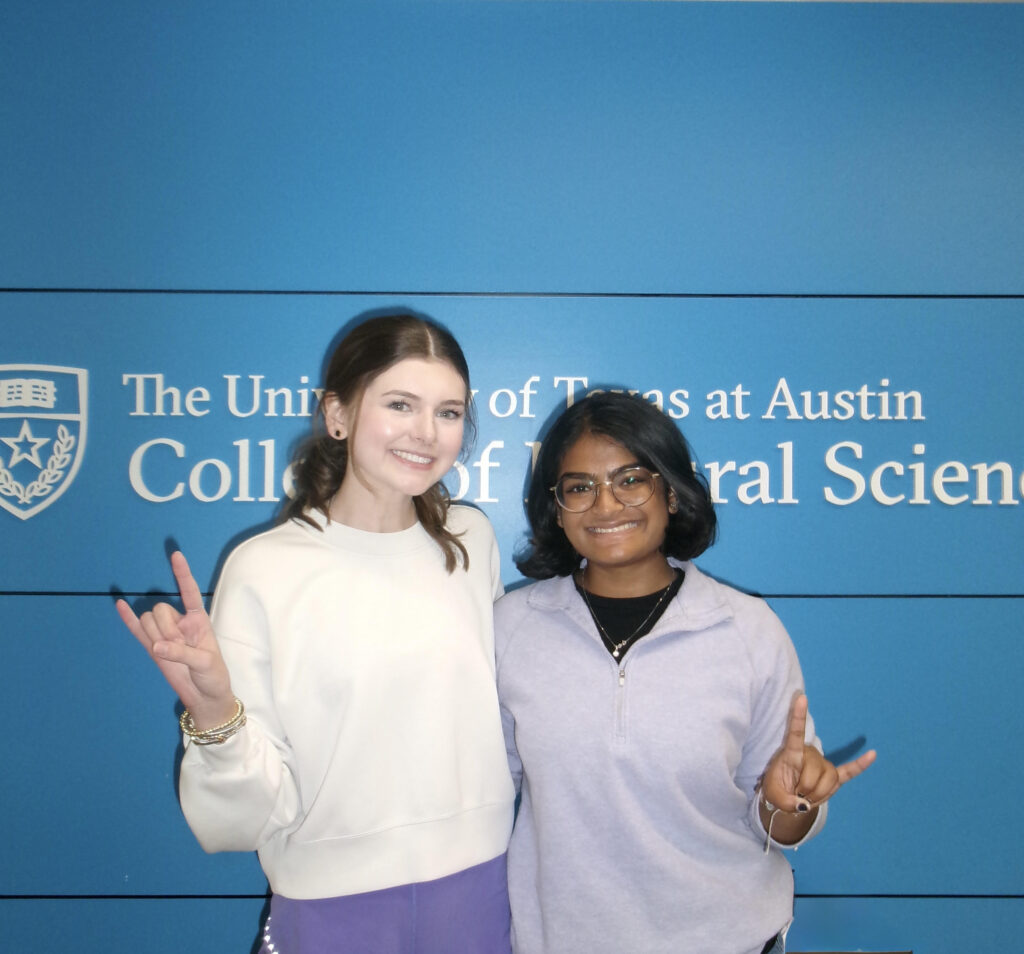
Our second-year students working on the “Habitat Scouts” book.
Left to Right: Sienna Springate, Hasita Karthikeyan