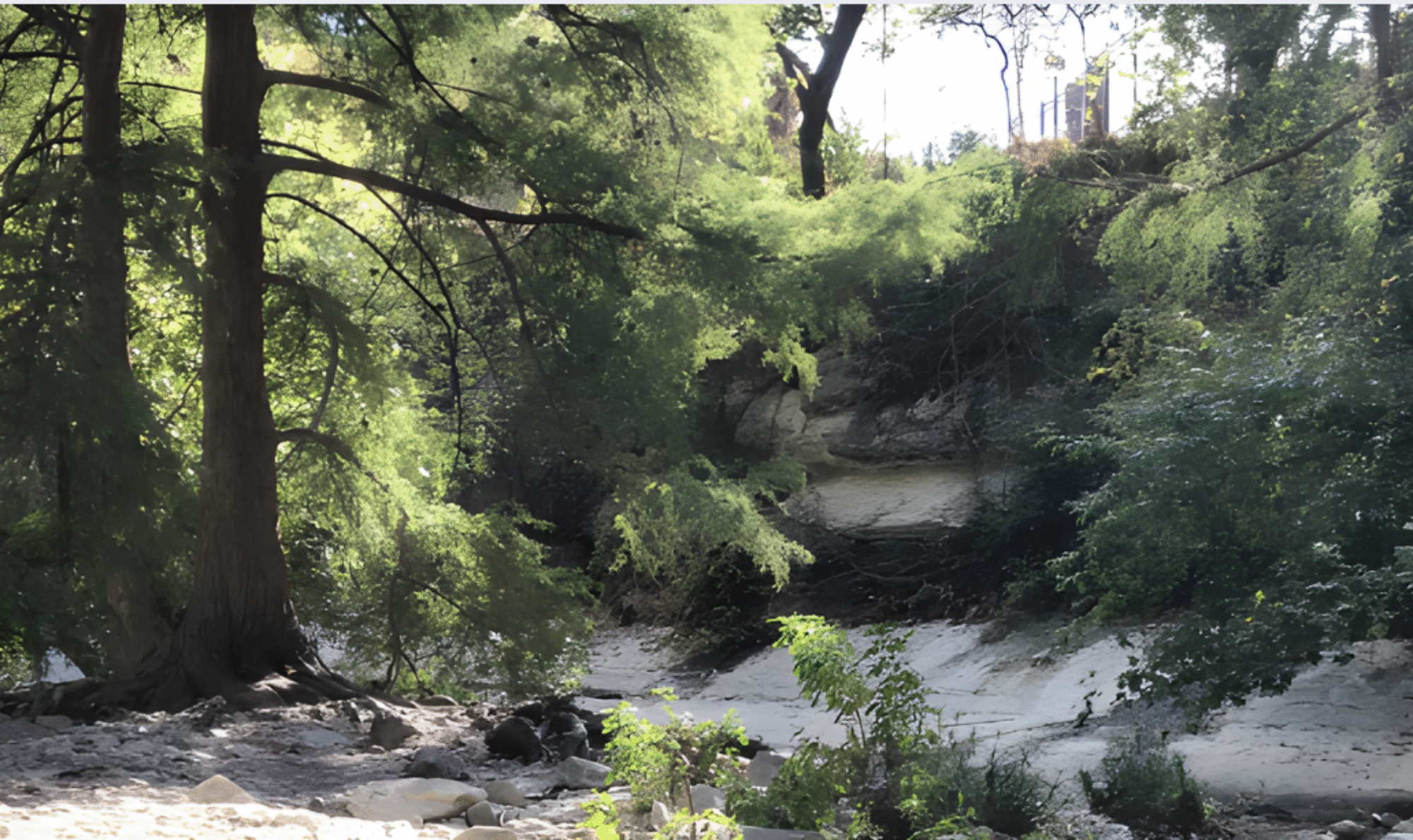
UrbE Adventures #1: Barton Springs

Hi, everyone! We are back with more blogs! A few weeks ago, our Urban Ecosystems stream hosted a social event at Barton Springs, providing the perfect break from our usual routine. We spent the afternoon swimming, relaxing on the grass, and just hanging out outside the lab and classroom. The best part? Even while we were having fun, it still felt connected to what we study.

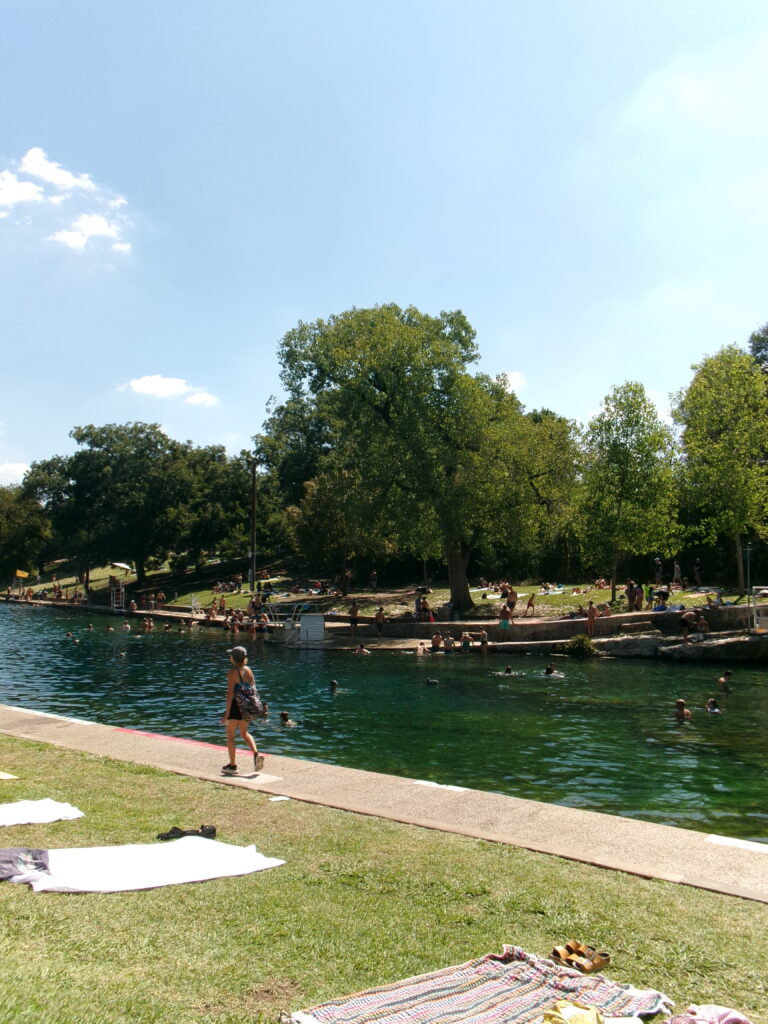
Barton Springs is a living example of how urbanization and natural ecosystems interact, and how humans both benefit from and impact those spaces. Barton Springs is a natural spring-fed pool and one of Austin’s greatest landmarks and attractions. It is the perfect escape to refresh and relax during the summer and fall, considering the Texas heat.

Most of us dived in the water and had a fun time, although it’s undeniable that the water was freezing at first. This is because the pool is filled with water from the Edwards Aquifer, keeping the water cool all year round!

While we were there, I noticed how much life exists within and around the pool. Patches of algae clung to the rocks, floated around, and coated most of the floor – making it slippery. Even with all the swimmers and activity, the natural beauty still stood out. Most of the pool consists of natural limestone, and its surrounding area is man-made. From sidewalks and steps to landscaping. It was a reminder of how humans and ecosystems share this space — for better or for worse.
Like many locals, we wondered if the entrance fee benefited Barton Springs in some way or if it all went towards the city’s general revenue. But, according to the city’s website, a portion of the fee actually helps fund the pool’s upkeep and preservation—crucial for maintaining not just a popular community spot, but also an important site for environmental conservation and local biodiversity. The pool and surrounding area are protected through advocacy efforts to maintain the Edwards Aquifer’s health and support the unique ecosystem it sustains.
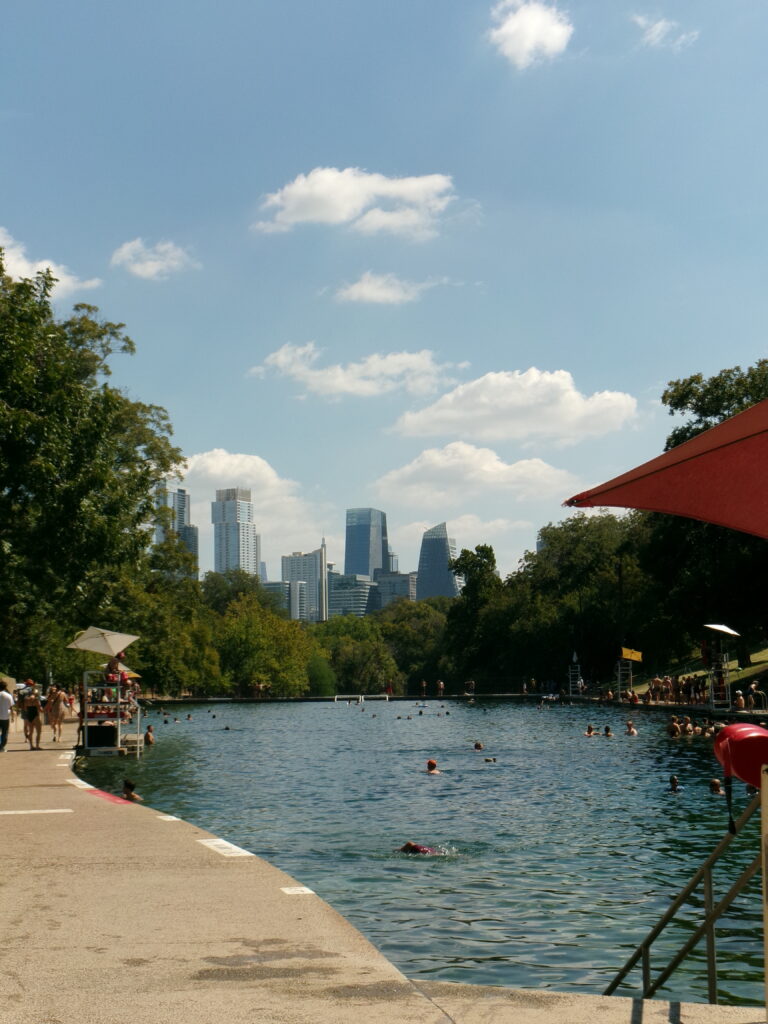
Downtown view from Barton Springs. 9/27/25
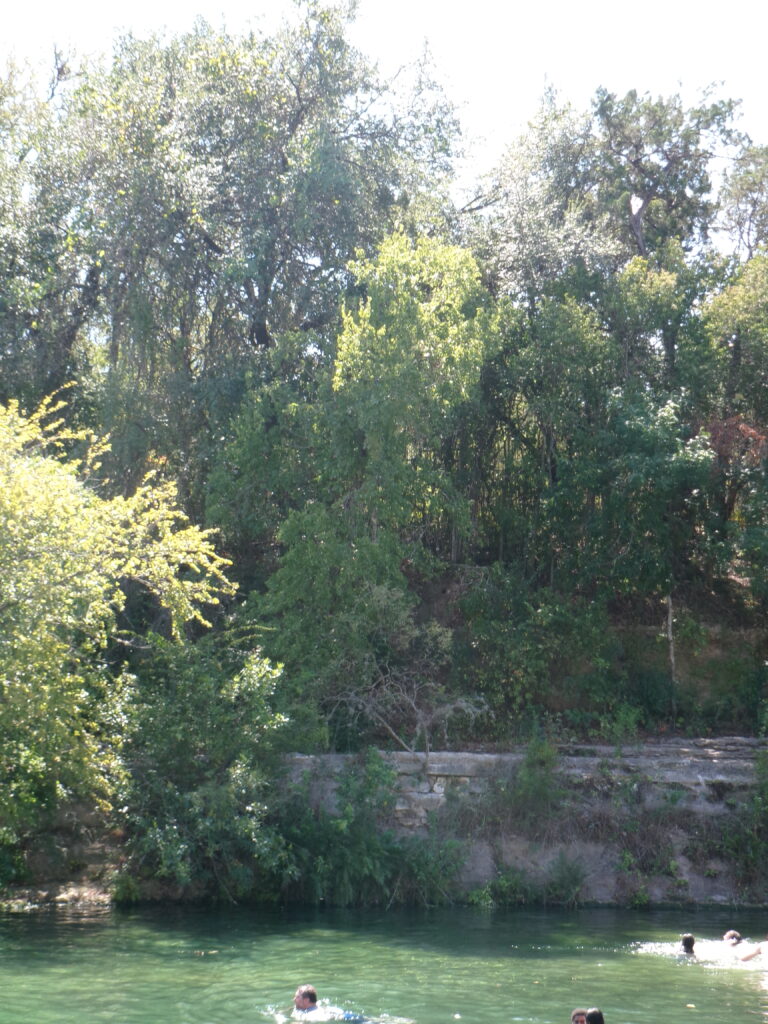
Riparian area: vegetation and limestone surrounding Barton Springs. 9/27/25

Overall, our visit was a reminder that not all interactions between urban and natural ecosystems are bad. When we learn to compromise with nature, both our cities and natural landmarks can thrive together.

-Ximena Munoz

Urban Ecosystems Insider #3: Toxic Algae

Hello everyone! Today we will be exploring an exciting research project we have going on called Toxic Algae. Here to explain a bit about this fascinating and important research is sophomore biology major, Lucky Le, and his mentors Ani, Sahar, and Kevin. Together, they spend long days out in the field, traveling across Austin to collect water and algae samples from various creeks. Their goal is to detect cyanobacteria, a type of blue-green algae that has the potential to produce toxins dangerous to local animals. While the City of Austin monitors the larger lakes for toxins, many of the smaller creeks are left unchecked.  

Before heading back to the lab, Lucky breaks out a YSI system, a valuable tool that tests the water’s pH, conductivity, dissolved oxygen, and temperature. These chemical readings offer hints about potential cyanobacteria presence and are often used by other research projects. Back in the lab, the team dives into three main analyses. First up is the V2000 test, which looks for phosphate and nitrate levels. Elevated readings signal that algae might be lurking. Then comes microscopy,  where they examine algae samples under the microscope. Cyanobacteria often show up as blue-green rectangles with dots inside, although their visual patterns can vary quite a bit.

If they spot cyanobacteria, they use a process called Solid Phase Extraction, or SPE, to isolate any toxins the algae might be producing. Cyanobacteria don’t always create toxins, they usually wait for the right conditions, which is why sampling is focused during warmer months, from April to September. SPE involves filtering the water through specially packed cloth, then running methanol through to collect the toxins. Once that’s done, the methanol is evaporated in a chemical hood, leaving behind a purified toxin sample. This sample is then suspended in 5% methanol and sent to the HPLC-MS machine along with a caffeine control for analysis.

The HPLC-MS identifies compounds within any liquid and returns visual graphs and unique codes, which the team then compares to known compounds to determine if any toxins are present. If they do detect a toxin, Lucky and his team compile a report and send it to the City of Austin, who then decide how to respond and clean things up. It’s an amazing blend of fieldwork, chemistry, and environmental protection, and Lucky and the Toxic Algae crew are a vital part of keeping Austin’s waters safe and swim-worthy. 

Growing Adventures #3: Struggling Snow Rose…?

Hello everyone! Welcome back from Thanksgiving Break! I hope everyone had a wonderful time and (hopefully) lots of rest! If this is your first time reading, my name is Wesley and I am a second-year Pre-Med Biochemistry major and a student researcher under the Freshman Research Initiative (FRI) at UT Austin. In my previous post, I talked about my happy and thriving Ming Fern! This time, however, I am going to be discussing one plant that constantly keeps me on my toes…

Continue reading “Growing Adventures #3: Struggling Snow Rose…?”