The Road to Texas: Provenance of a Maya Carved Panel
Madeline Cannings
Advisor: Dr. Julia Guernsey
Abstract
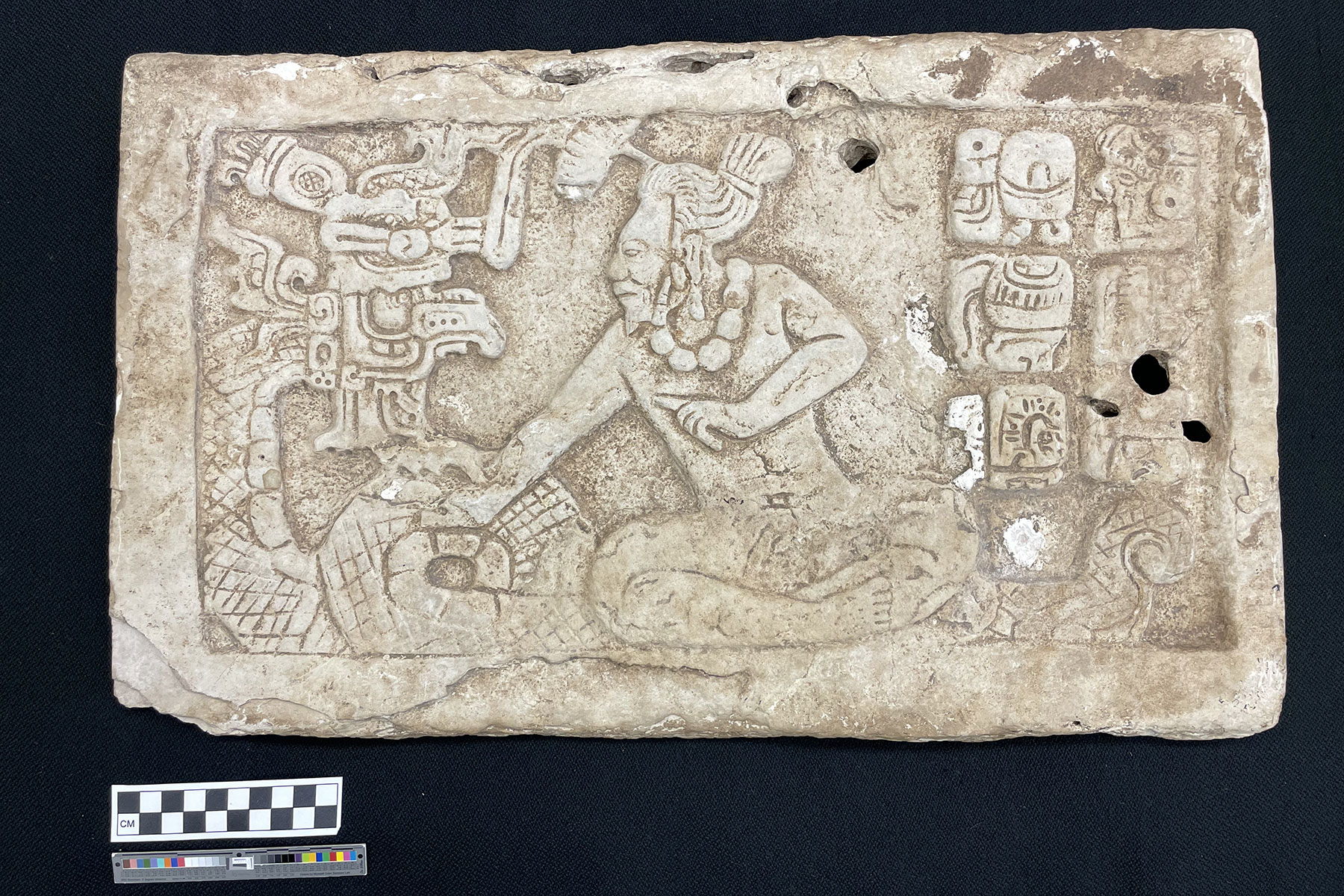
The provenance of pre-Columbian objects in art museums and collections is currently an understudied field, though it is greatly important to keep track of the locations objects visit and the people who care for them. The history of collecting pre-Columbian art has intertwined with colonialism for centuries, resulting in the illicit trafficking of some objects, their entry into art markets through auctions and private deals, and their decontextualized exhibition in some institutions. Art institutions have the cultural authority to influence how visitors perceive objects and the cultures they come from in exhibitions, and by providing transparent access to provenance history, they show commitment to preserving and thinking critically about material and social pasts. In this thesis, I explore the provenance of a Maya carved panel in the Art and Art History Collection at the University of Texas at Austin and place it within the broader history of collecting pre-Columbian objects. I first describe the piece’s imagery and textual glyphs and introduce the history of collecting pre-Columbian art as informed by leading scholars in the discipline today. Next, through archival records from the Art and Art History Collection (AAHC), Texas Memorial Museum, and the Denver Art Museum, I trace the provenance of the panel from around 1955 to its present location in the AAHC in 2025. Lastly, I explore the larger context of the people and institutions that stewarded the piece and place the panel within the history of collecting pre-Columbian objects.