Italian art is never so simple as to be solely for the aesthetic; Italian artists have set trends, sparked movements, undermined governmental control, and allowed the oppressed to seek redemption. The avant-garde movement of Futurism allowed Italian artists to celebrate and publish works that elaborated the notions of urban modernity and technology. Artists wanted to rid themselves of the old (old style, old works, old ideals and culture), and they wanted to embrace the beauty of modern light.
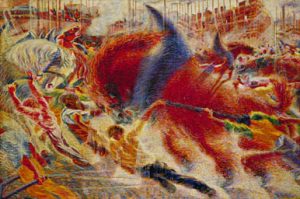
One of the greatest artists to have accomplished such advances in art is Umberto Boccioni. Not only were his paintings renowned but his sculptures paved the way for modern design and art. As a principle contributor to the revolutionary aesthetic of the Futurist movement, Boccioni created significant pieces that sparked the fire he needed to progress. This ideal behind the Futurist movement is evident especially in his “The City Rises” piece (depicted below).
Another incredibly influential piece at the time was another work done by Boccioni; however, it is 3-dimensional rather than the 2-dimensional pieces of his canvas work. Boccioni was frustrated by the lack of movement in his canvas pieces, so he wanted to create a work in motion. Thus, he created a more effective way of expression in his famous work “Unique Forms of Continuity in Space (1913)” (depicted below).
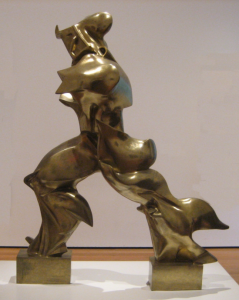
These two works of art were key components in the advancement of Futurism. Despite his short time working in Futurism, Boccioni made grand strides with his works, and they helped shape the “future of Futurism”. The ideas of embracing and romanticizing labor and movement are evident in modern pieces that were influenced by previous works such as these.