Tipoteca and Treviso

Our final days of our trip were not spent crying in our rooms or walking the streets of Milan with melancholy; instead we boarded a bus bright and early on Tuesday morning at promptly 6:30am.

Our first stop of the day was a 3 hour drive to a letter press factory, “Tipoteca”. We were given a tour of the museum and factory, where our guide told us about the history and importance of letter pressing.

13533070_1721436868109445_9127050870070881157_n
Tipoteca

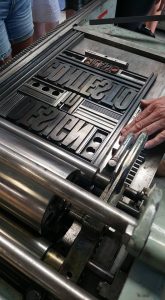
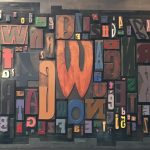
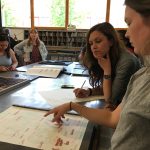
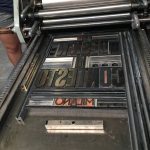
Then we were given the chance to make our own poster; we collaborated to create a single poster we’d all get a copy of. We finally agreed on the poster pictured below:

Afterwards, we had lunch just across the street where they served us so much food. We were served about 2-3 different appetizers, a first and second course, and finally dessert with coffee.

Then we boarded the bus yet again for our last stop of the day: Scarpa’s cemetery.

13439014_1721436931442772_4276371165485958487_n
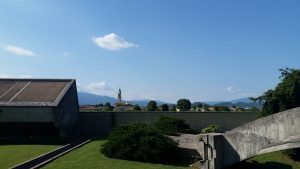
View of the city beyond from inside the cemetery

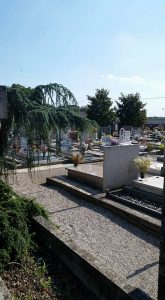
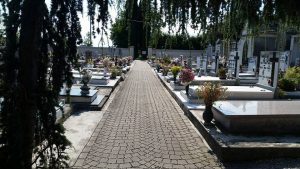
We saw beautiful pieces of architectural beauty, and the quiet solace that is a cemetery. We didn’t stay very long, but it was pleasant to just wander through the graves, read the names, and imagine the lives of the people who had once been.

13521835_1721436944776104_7196662946006687086_n
Scarpa’s Cemetary

Some graves were of children, many of old couples, and families comprised the lot of Scarpa’s cemetery. The beautiful layout made it less creepy and more poetic; it didn’t feel like a cemetery where loved ones were simply laid to rest, this was a place to honour those who had so grievously passed.

13537549_1721437014776097_7145349787810217500_n

After we wandered for a little while, we boarded the bus for the last time that day to head to the hotel. Broken into rooms of two people each, we had a chance to freshen up before attempting to find our way around Treviso.

A small group of us ate dinner in an alley at a quaint pizzeria before wandering off to find gelato – one of the last times we would be able to eat gelato in Italy, actually.

As we walked and talked, we were all acutely aware that our time was running out fast, but no one wanted to acknowledge it. Instead we focused on each other and the few things we had left to do.

The next morning we rose early to eat breakfast downstairs before heading out to our last stop of our trip: Fabrica.

Fabrica is a communication research centre based in Treviso, Italy. It is an integral part of the Benetton Group established in 1994 from a vision of Luciano Benetton; Fabrica offers young people from around the world a one-year scholarship, accommodation, and a round-trip ticket to Italy for aspiring students under the age of 25.

We were given a detailed tour of the studios and all of the works they have produced recently. As we neared the end of our tour, we thanked our guide, leaving once again to head home to Milan.

The two day trip was exhilarating and exhausting both mentally and physically, but it was a terrific way to end our visit.

In Reflection

Spending a month in Milan, Italy gave me a new perspective on my life, especially my life here in the States.

Transportation was a large portion of the culture, since it got you to work or to the grocery store, many Milanese (including ourselves) relied heavily on properly working transportation systems. After only living in Italy for a week, the metro quickly become one of our favorite modes of transport. It was easy to use thanks to our metro cards, convenient due to the many stops and stations, and fast moving. Not to mention, it is a fairly inexpensive way to travel the city much like the bus and tram.

Cadorna Station: hub of traffic


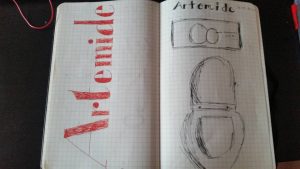
Not only was the transportation a major part of this trip, but our restroom experience was important to note since they varied so frequently from location to location. My focus for my journaling, for instance, was the toilet handles, because they were all so drastically different in Italy, and they were even more unique than the ones we see in the States. In Italy, there are button flushers both on the toilet itself or on the wall above it, handles that you manually turn in order to start and stop a flush, and floor flushing mechanisms just to name a few.

13435585_1716198285299970_4502388786072671196_n
Page from sketchbook; focus: toilet flushing mechanisms

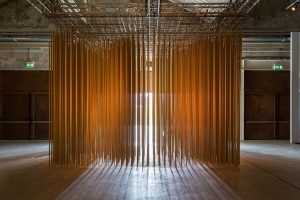
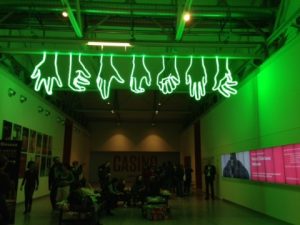
We went to a few Triennale events, which allowed us to experience the works of Italian artists up close and personal.

Exhibition #2
Exhibition #2

Each event was a different expression, a different voice of Italy. It was incredible being able to experience such impressive works, while also being able to live in the city these artists were describing or at least attempting to convey through their works.

"Welcome"
“Welcome”

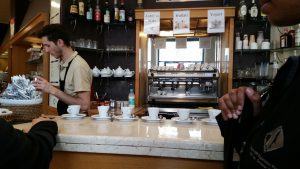
Also, their coffee (caffé) is, simply put, espresso and it cost a mere 1 euro, whereas in the States, we pay $5 for a cup of watered down coffee. Not only was their food and coffee better, fresher, and more rich, but it was cheaper. Albeit not everyone, especially in areas of high tourist traffic, but the wholesome foods we ate were usually cheaper than their American counterparts.

First cup of coffee in Milan

During the week, we would visit a multitude of studios, museums, and exhibitions; throughout our time in Milan, we saw dozens of them, and a few of my favorites consisted of those that portrayed the mood and culture of Italy such as the fashion and appliance museums/studios/factories.

For instance, one of the best exhibits we visited was the Armani/Silos museum about 15-20 minutes away from our apartments.

Armani/Silos Entrance

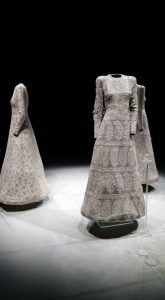
The works we saw there were delicate, intricate, and stunning; we were able to walk through the progression of works from the birth of Armani to his most recent works. The character of each style was absolutely unique and told the story of Italians and their worldly counterparts (including but not limited to Asian and Indian influenced pieces).

Intricate dresses showcased in Armani


Although our time in Milan has come to an end, I will always carry the things I have learned with me. Not only has it given me a new perspective on life in general, but it has made me acutely aware of my surroundings and home culture; Italy, however, will always be considered my second home.

Growing with the Course

13529034_10155056579239126_487358182537719046_n

As this maymester was going on, I wasn’t sure about myself in terms of either my blog posts or my sketchbook. I honestly felt that my content for blog posts and my content for sketchbook just wouldn’t meet the cut, but as I take a minute to look at both my blog and my sketchbook I realize how much I have grown. I realize that I’ve seen and experienced many things while in Milan. I’ve gone to places I never thought I would and really tried my best to improve not only my sketching skills, but also my ability to write and capture an audience. I genuinely feel that my blog post and my sketchbook aren’t something to me ashamed of, but a sneak peek into my adventure throughout Milan and how I’ve grown as an individual. I’ve felt each part of this course was amazing and as I said farewell during our farewell dinner, I felt sad that the people I had grown close to were no longer going to be there during my day-to-day adventures. So, honestly, from the bottom of my heart, this course was something magical and the experiences I have written down and the sketches I have detailing all that I’ve learned and seen are something that can never be replaced.

Arrivederci, Milano

13537501_10155056358859126_5446966109911783156_n

It’s been a fun and interesting ride. I’ve met amazing people on the journey and seen amazing sites. This week was the start of a new side adventure as we made our way into a small town outside of Verona. It was nice to see a town with its bustling community and wonderful scenery, but the best part was the beginning of the evening. We were actually able to see the workings of typography. This showed the process of printing, which hadn’t been achieved for quite some time. This was mainly done before printers at home and with the use of a computer. Back then, it was Gutenberg’s bible that was the main part of history showing the first printing press at work. This bible, which is also present at UT, was a show of how history has changed and how difficult it was to create and invent during that time. An interesting video we watched was the actual creation of sheet music. It was quite a feat. Not only did they have to slowly use a pin to push out patterns on a sheet of metal, but then they needed to fill it with ink and make sure that ink was in every piece of the music. This was a hard and long process that didn’t allow any mistakes. A person could literally create the whole music sheet, but if they messed up the last page, then they needed to start over. Another interesting part was how it was all done by hand. Each of these sheets of music didn’t require a robot and instead required a skilled worker to shape and work with the metal. It was amazing to see a video of this long and tedious process and wonder how they could accomplish such a feat for long works of music.

Then afterwards, we were able to see the printing process in action. This was crazy as we picked out each individual letter and had to make sure that it lined up exactly. Then, in order to get the right color of ink, ink needed to be mixed together and placed directly on a metal cylinder. This process took quite a bit of time as they laid layers on the metal and slowly wheeled it across the letter’s surface. I had never seen this process and finally being able to see a master at their craft gave me a greater appreciation for older books that were printed in the masses through this process of lining up letters. It was even difficult to work with a typewriter during this time. Laying the letters down and working with the material was a hard matter. I really felt this experience was worthwhile and can’t wait to show my family the canvas that was created right in front of me.

Experience in Context

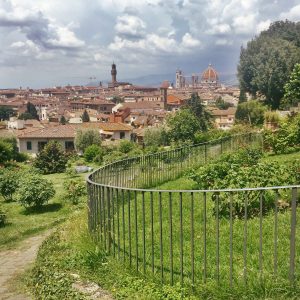
A day in Florence.
A day in Florence.
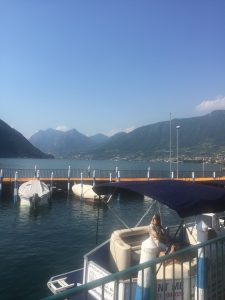
Floating Piers.
Floating Piers.
IMG_8814

Being able to study abroad in an incredible city like Milan has been such a dream come true. Going into this program, I had no prior knowledge about the design or fashion industry and possessed the stereotypical ideas about what these industries as comprised of. For me, being able to see the work and amount of effort that goes into producing such incredible pieces of craftsmanship was the most important thing I have taken away from this trip. In fact, through my sketch notebook, I was able to detail and see the minute but incredibly important details that go into producing simple objects such as lighting. Even the process of simply copying a sketch was a bit challenging at times! Honestly, I was definitely one of those people that simply thought chairs are just chairs and aren’t quiet capable of being anything more than what they appear to be. However, visits to major chains like Kartell opened my eyes into the world of product design. And being able to see the creation and hard work that goes into producing such beautiful pieces like the plastic chairs Kartell is infamous for was just a wonderful opportunity.

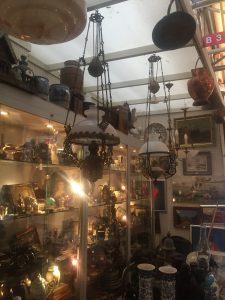
Millions of Lamps in Amsterdam.
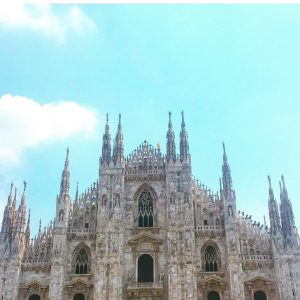
The stunning Duomo.
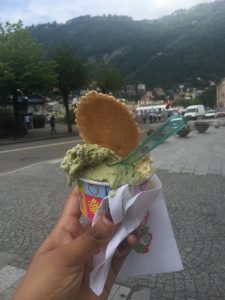
Gelatto in Como.
Gelatto in Como.

Besides the learning experience, Milan has also opened my eyes into a new culture. I’ve never lived within a European city for this period of time before, and being able to do so has taught me so much about being adaptable and understanding to be less critical and more observatory. It’s just extraordinary to reflect on how booming cities like Milan can surpass or be completely different from what you initially expected. I remember the week before I came here I just had this vivid fixation that Milan would be this place that is just a Mecca for clothing. And while this is true in some sense (Milan is a fashion capital after all), Milan also is a city that is vibrant with art, history, and a multitude of educational resources that deviate from the fashion and design scene. Even the people that live here are more diverse than what I had initially conjured. I’m still slightly shocked at the sheer amount of Indian restaurants the other girls and I were capable of finding. For me, Milan has served not only as a wonderful place to receive an education of the identity of design, but it also has become a place that serves as beacon of incredible experiences and memories. Being able to partake on this study abroad experience has been life changing in so many ways, and Im so grateful to Kate, Jessica and IES for making my time here so lovely!

Reflection

image

A moment of reflection, a bird’s eye-view of the city. A last review of Design in Milan. Milano, such a wonderful city, full of bravado, energy and kindness. This has been a whirlwind of an experience (a once in a lifetime opportunity that has changed my view on design) — where the past met the present and juxtaposed the future to create new forms of designing. Each element gave me a completely different perspective on Design … and life. Not only did we see graphic design, but we saw total design, which has fascinated me for wuite some time. Now I understand total design and comprehend the different modes of design. With the right foundation, not one way is right or wrong, but just different modes of making. It wasn’t just about thinking, but the act of making and creating your own practice. We were exposed to different modes of making. It wasn’t about what the designers learned and how they did the work, but it was that they did the work and discovered a variety of thoughts and execution of those ideas. It was how they interpreted complex ideas and turned them into simple, functionable objects and usable forms. Most designers believed in form follows function, but there were a couple of designers that created sculptures, as well and transformed those into functional objects. Overall, designers followed the”form follows function” concept. One designer that comes to mind that made beautiful objects that didn’t necessarily followed the form follows function concept was Phillippe Stark. Although, he’s not Italian, he did work for Alessi to create award winning objects. His juicer didn’t necessarily function all that well, but was a sculptural piece, which is still one of the most successful, selling artifact he designed for Alessi, which leads me to believe that Milan places design as a priority. Unlike, the United States, Milan respects and appreciates designers. Here, they allow for designers to take the time to conceptualize, to explore and to prototype. And then, prototype, again.

Alessi believes in the power of design to improve our lives. It is about how designers work and allowing them to explore their concepts at a reasonable pace. In Italy, they understand the importance of creativity. They understand that each designer has different modes of making and allow for those processes to evolve into something beautiful and functionable. Each designer had a practice and created each design in their own way without compromising their work. I noticed that each designer had a method of working, but they all  … practiced, practiced, practiced. They didn’t become great designers simply by observing and thinking. They all discovered their methods of making and continued to practice until they created their own process. It was about how each designer worked and generated processes for themselves. Whether it took one month or one year to design an object, they created the right environment for themselves. This was possible because Italy supports (and still believes) on the importance of design.

Our experience started from the day we set foot in the city … We were rained on, delayed and held back for about an hour because the rain blocked the railway. Nature, (A tree) decided to intervene to give us a different experience of Milan. What a fascinating way to begin a design program. I was scared, thrilled and nervous of the unknown. But the nervousness quickly dissipated the minute we saw Kate and the wonderful Jessica.
image

They made the most of the entire month; giving us a broad spread of work, styles and forms of design–from architecture, fashion, industrial and graphic design–to complete a full circle. All of the work we saw was inspiring. I can’t think of one designer that I didn’t like, but there were a few designers that stood out for me. They captivated and captured my spirit. They were Castiglioni (both father and daughter: Aquille and Monica), Vico, Sottsass, Lauda, Branzi and Carlo Scarpa. Although, I loved all the other other designers, these designers stood out to me because of their practice. Especially, Aquille Castiglioni, he was by far, in my opinion, the most eccentric designer followed by Vico. Neither one of them followed the typical design process. They discovered what they liked and continued exploring.

Castiglioni for example, played. He enjoyed the simplicity of life and observed anonymous objects to inspire his designs. Vico of the other hand, was a hard-working man. He didn’t follow the typical rules of design. He didn’t even draw most of his successful designs. He simply communicated his ideas and had others design them. He believed that if a designer could communicate his ideas over the phone, they were most successful … Because the idea was so strong, there was no need to over explain or draw. He was also an observer. His granddaughter shared a story of him going to a company, daily. To understand what they needed. It was unusual way of working for the company that hired him. They had never experienced such a designer. Most designers would just send ideas, drawings and sketches whereas Vico wanted to live in the space and communicate with others …  just to spend time there and later verbally communicated his designs.

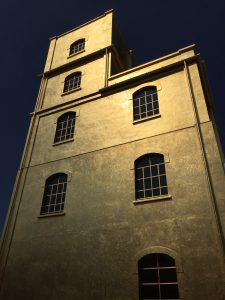
The next best things for me were the Carlo Scarpa cemetery, the print museum and workshop, the Fabrica and a nice surprise visiting Fondazione Prada and discovering that the old distillery was revived by none other than the OMA group lead by Rem Koolhass. One of my favorite architects. Again, although he’s not Italian, it was great seeing his work in Italy. Most of Koolhass designs are driven by connectivity and experience, in my opinion. He was able to combine the old with the new seamlessly, without disturbing the original structure of the distillery. He added such modern elements that it directed you to focus on the details. At first glance, the building looks completely modern, but when you look closer, you see the gaps bringing your attention to the old facade. Your eye is drawn by the modern, but it guides you to focus on the old. The intention was to highlight the beauty of the old forms.

image

image

image

image

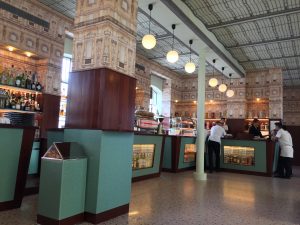
The interior design of the cafe “Bar Luce” was designed with Wes Anderson–to add a little cinema flare to the Fondazione.

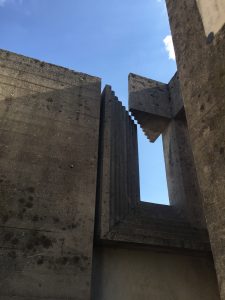
Another wonderful surprise was Carlo Scarpa’s structures. I had never been exposed to this architect, but I have found yet another inspiration. Scarpa definitely focuses on the gaps in between by allowing you some breathing room from wall to ceiling to door. Every little detail is completely thought of, including the gaps in between.
image

This image above is one of my favorite representation of Scarpa’s style. It is the untouched space (the gaps) that make his forms more spectacular.
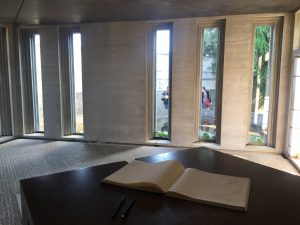
image

The image above represents the power of a meditative space through absence. We decided to sign the book and leave a bit of Texas happiness by signing the guest book.
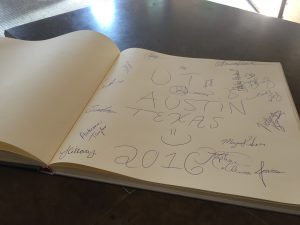
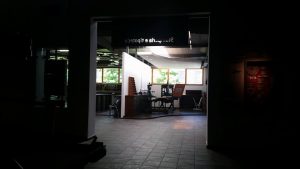
image

Last Night in Milano

I’m absolutely heartbroken that my trip in Milan has come to an end, but it came to a close in the most perfect way. I was slightly disappointed that a big chunk of our last day was spent on a bus, but I understand that was because it was the only time we were able to visit Fabrica (which was delightful). We got back later than expected so I rushed home to try and get ready for our farewell dinner. My roommate, Kameron, and I were able to find a little bit of time to run and find our Italian CA, Giulia, a gift before leaving. I wanted to give Giulia a token of my appreciation. She did so much for us and it was hard for me to believe she was my age because she seemed so much older since we relied on her for so many things. We headed to our farewell dinner at La Tradizionale. It was so bittersweet to see everyone there. The head of IES said we had one of the most smooth running groups ever and that made me feel so happy. It’s amazing that I’ve been able to be a part of something so special. Dinner was incredible, filled with lots of wine and gelato. Towards the end we received gifts from IES: pencils that you can plant after you’re done with them. I got a lavender pencil that I can’t wait to plant eventually. There were various moments throughout the dinner where I started to tear up, but I was able to hold it together somehow. Halfway though dinner I remembered there was one thing I meant to do in Milan that I hadn’t done yet: spin on the bull tile in the Galleria. Legend has it that if you spin around on the tile multiple times it means you’ll come back to Milan/get good luck (I’ve heard different variations). I mentioned to my roommates that I wanted to do that before I left and they all agreed that was something we had to do. Once dinner ended and we said our goodbyes to the other girls and split up, we headed towards the Galleria. We took turns spinning on the tile and taking pictures with each other. After that we walked around the Duomo area. I’ve never been there at night and it was a beautiful sight to see. It was special to walk around with these girls that just a month ago had been complete strangers to me, and now were my close friends. I came to Italy thinking maybe I’d find a cute Italian boyfriend à la the Lizzie McGuire Movie, but I got something SO much better. I developed friendships with girls that I otherwise would have never met. I love them so much and I love Italy so much. I’m so glad I got to spend my last night in Italy with my peers and now close friends.

unnamed-3

unnamed-2

Milan: In Review

The beginning

My journey through the incredible city of Milan and the country of Italy was marked by one thing: discomfort.

Let me explain. I experienced many things, many memories that I will carry with me for a lifetime. And none of them would have been possible if I had been comfortable during the trip.

13332750_10156963735165641_5434386754325110590_n
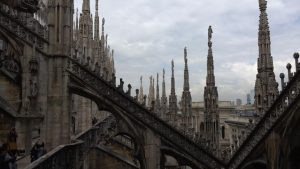
The top of the Duomo in Milan. The discomfort we all felt in our legs from climbing all of those steps was soon forgotten as we stood in awe of such a massive structure overlooking Milan.

At this beginning stage of the course- full of excitement, adrenaline, and a sense of adventure- the discomfort was definitely a positive one. Every façade we passed in the streets seemed novel and mysterious- what secrets and history could lie behind these buildings? The sensation of not having a clue where you were on the map was exciting and I relished the opportunity to venture into uncharted territory.

13321856_10156963743110641_9192486903472204270_n
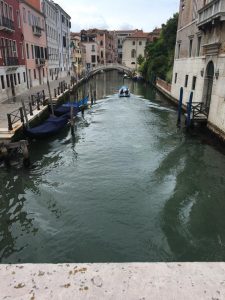
The beauty of the canals in Venice. We spent a relaxing weekend in Venice, where we wandered aimlessly through the streets, often happily stumbling upon a noteworthy landmark or quaint restaurant.

As a non-design major in this course- Design in Context- I found that design was something entirely different than what I had thought previously. Understanding the nuances found in the balance between aesthetic and function proved to be a thrilling challenge.

__

The middle

If the beginning of my trip was marked by discomfort found in novelty, then the middle was full of yearning for familiarity. The newness of everything had worn off, and while I was still filled with joy at every new location we visited, I occasionally found that joy tinged with sadness and a desire for something home.

13428378_10156999856365641_1150944006709637860_n
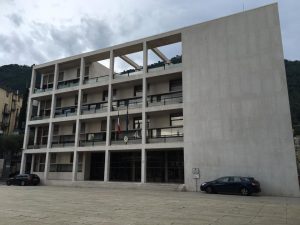
The Casa del Fascio of Como. A work of Giuseppe Terragni. One can’t help but think of the history behind the Rationalist piece of architecture. The sensation of being gripped while walking inside is unmistakeable, as is the urge to look upward once you’ve stepped into the main meeting area.

In this state of discomfort, I discovered patterns in my daily life in Italy. Through all of the differences, there was always something familiar. Taking knowledge from class a step further from my previous knowledge allowed me to deconstruct the world I was living in and find these similarities. Even where there were none, simply understanding the context behind the design, the architecture, and the people allowed me to connect the dots between my foreign surroundings.

13524357_10157045006275641_2229698669575123152_n
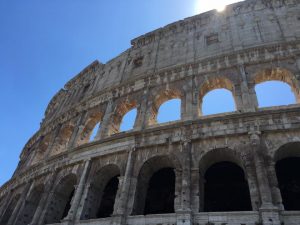
The coliseum in Rome. I truly had no words for the experience that was viewing this incredible ancient structure. You can only look up, full of wonder.

__

The end

As my journey in Italy neared its end, I fell myself falling into step with the pace and lifestyle of Milan and all of the lovely places that we visited. No longer was there any awkwardness as I walked the same path each morning to the metro, as I ordered a brioche and espresso.

13502777_10157045007760641_3049134491020156602_o
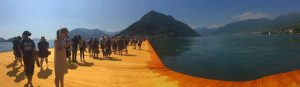
A panoramic view of a section of the Floating Piers. An installation by Christo and Jeanne-Claude. All of the discomfort found in an 8 hour wait across stations, trains, and lines was washed away by the cool breeze off the water. An incredible, literally once-in-a-lifetime experience.

Everything we learned in class came full circle as this feeling of a new normal overcame me. The little pieces of life that we take for granted- in the way we make our morning coffee, then sit on chairs in the kitchen pensively as we warm up in the morning- all have some design sensibility behind them. It all intersects in this marvelous way. Although the culture between Italy and the United States is different, I can see the threads of various context and how they run throughout everything, creating a marvelous tapestry of human culture.

13528938_10157073564380641_4431314899210508052_n
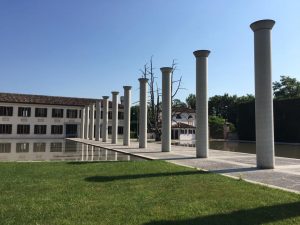
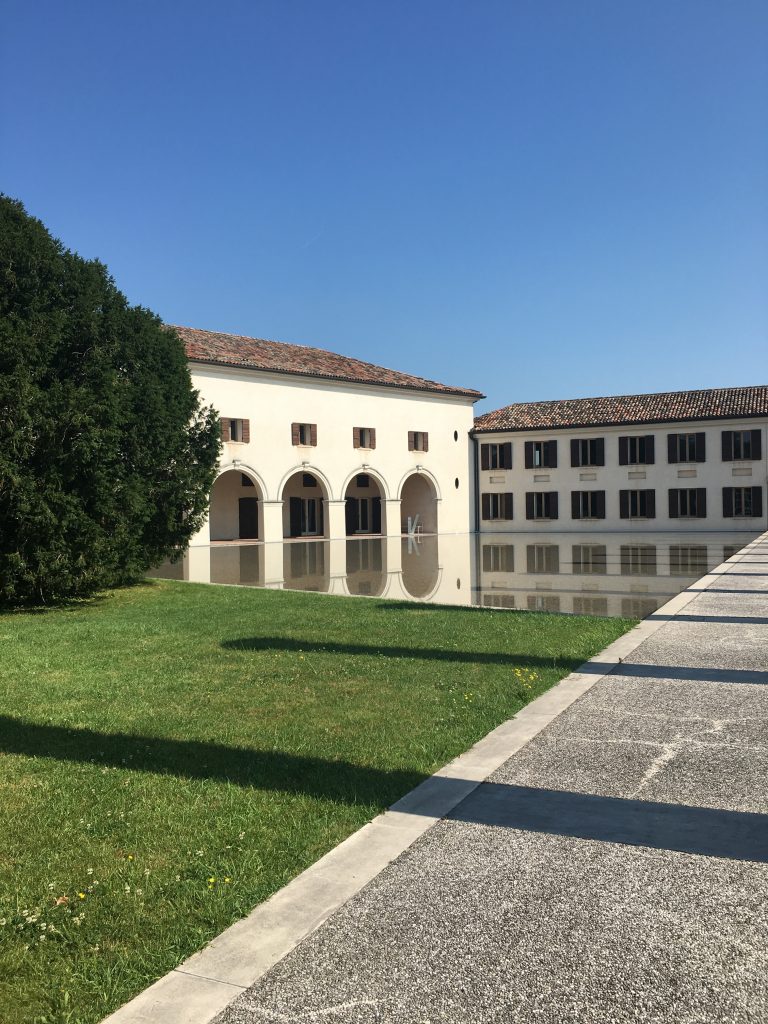
Columns in front of Fabrica research center. A villa restored and augmented by Tadao Ando. The separate columns leading toward the entrance gave me a sense of the various backgrounds all of the Fabrica residents hail from. Backgrounds scattered across the world, industries, and points of view.

As I take in the world around me in Austin- one I used to consider ‘normal’- I find it all rather uncomfortable. Things that were once familiar I now view through a lens I gained through my travels. Through learning about “Design in Context”. Truly, I do not think I will ever be ‘comfortable’ again.

And that’s not a bad thing.


Tipoteca

During our last week and short trip to Treviso, we stopped at type museum and workshop, Tipoteca. As a designer who loves good type, I was fangirling hardcore over all their letterpresses! At UT we have a few, but they had a monotype, linotype, and so many others I had never heard of before. We even got to make a poster collaboratively, commemorating our fantastic trip. We decided on a design that said the name of the course, “Design in Context,” but instead in Italian, which turns out to be Design in Contesto. Thank you, Jessica, for the translation!! Then we put names of all the designers that we saw while studying in Milano, in the background. I was really pleased with how it turned out!

We picked out the typefaces, and colors, which took a while. It was the first time that all of us worked on an actual design together. The wonderful typographers of Tipoteca were patient with our large group of 16! Tipoteca was an amazing experience and I think that Kevin and Carma from UT would have gone crazy there as much as all of us did!

Last Week // Treviso & Fabrica

Our last week in Milan was a short one, and we really weren’t in Milan for it. We took a bus to the city of Treviso, Italy. There we saw the wonderful Fabrica, a client work/research-based center of design. It’s kind of like a school, but not really a school, since they don’t teach you from the ground up, you have to have a good design foundation. They had a beautiful campus out in the middle of nowhere almost. They had just had their 22nd reunion and were very proud that over 400 past Fabrica students came back to celebrate.

Fabrica Campus
Fabrica Campus

Fabrica has three sections that a student can choose to focus on: editorial, design, and social campaigns. To come and research at Fabrica you must be under 25 years old, and apply online with a portfolio. If chosen, then you go and work for 2 weeks for a trial period and then if they want to keep you on, you stay for a year and everything is paid for, housing, tuition, and a stipend. Sounds like a good deal to me!

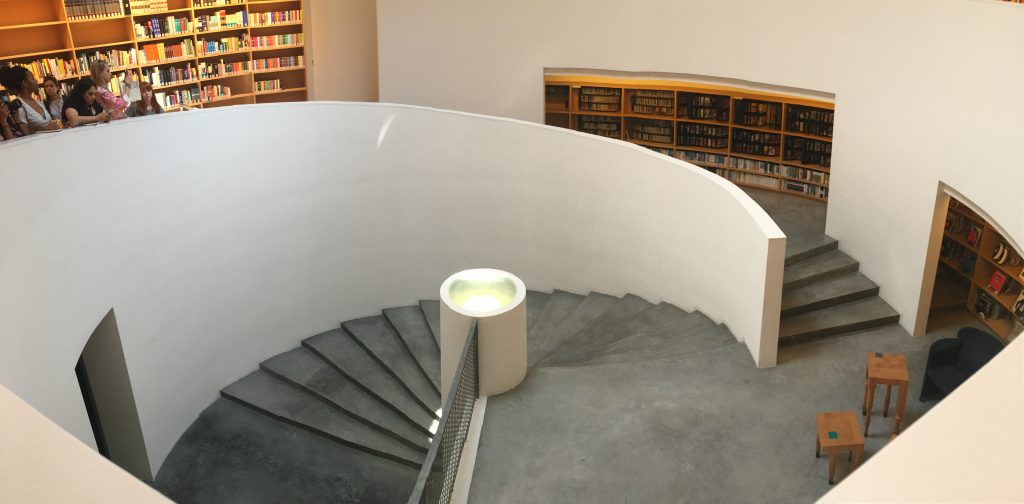
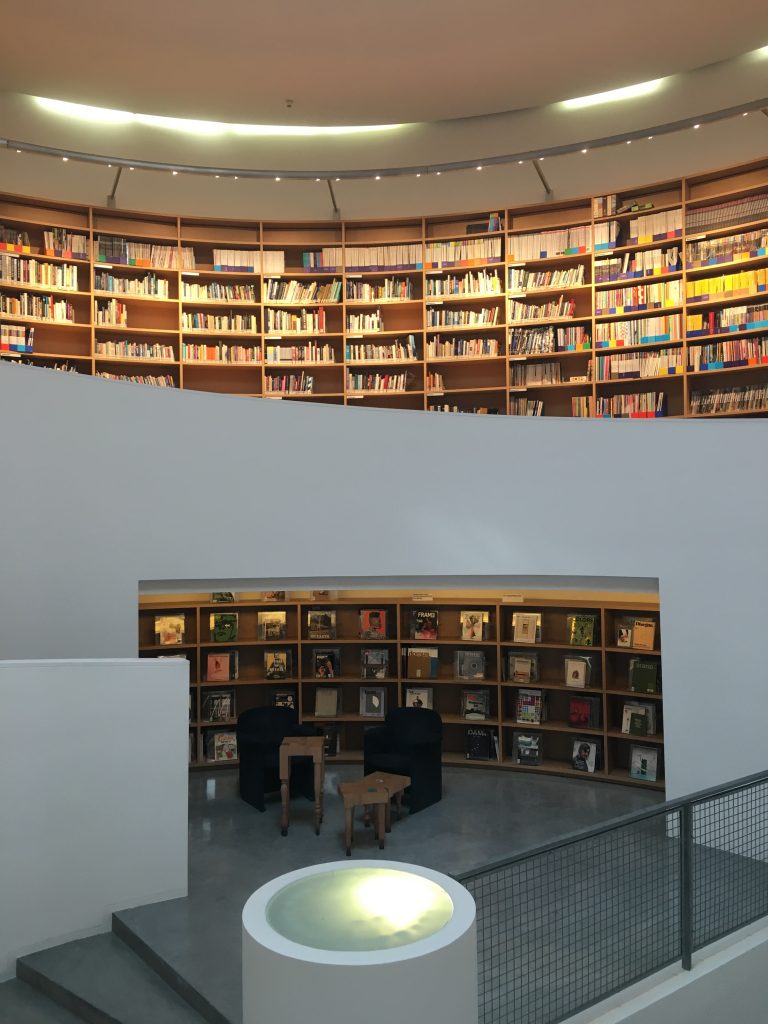
When we walked into Fabrica, we noticed how many students were buzzing about the halls, discussing their projects. There were a group of American students that were there working with Fabrica students in collaboration on a project. They had post-it notes all over the wall and were discussing ideas for a campaign. Fabrica has so many resources available to students. They have a beautiful spiral library, full of design books, my dream come true. She called it a “small” library but it was plenty big for me! I could have spent days in that library. Our guide also led us around the three different sections of Fabrica. We saw groups at work and past projects. They seemed pretty proud of their social campaign department. They work with the UN on several projects, including one against violence on women. I thought their work was well-designed and powerful.

Library at Fabrica with all of us checking out the spiral
Library at Fabrica
Library at Fabrica

Treviso was a great little town that we stayed in during our visit. It was fun for all of us to be in a hotel together for a night. A small group of us ventured out for some food and happened upon a little pizzeria. It was good and cheap! My wallet was thanking me, after all the spending I have been doing on this trip!