Civil engineers are traditionally trained to prioritize structural soundness, functionality, and cost-efficiency. These are essential elements in the field, forming the backbone of infrastructure and development. However, civil engineers often overlook the experiential and aesthetic qualities of the spaces they help create. Unlike designers, who focus on form, emotion, and user experience, engineers tend to reduce structures to technical necessities. Yet, buildings are more than beams and columns, they are spaces where people live, work, and connect. This gap between engineering practicality and design sensibility is one I’ve come to deeply recognize and aim to bridge. My time in Milan studying design opened my eyes to how engineering and design can coexist, and how thoughtful aesthetics and cultural context can elevate a project from functional to transformative.
Taking this design course helped shift my perspective on the kind of engineer I want to become. I’ve always had an appreciation for design, but I was held back by the assumption that engineers weren’t supposed to think that way, that beauty and structure had to be separate. Through this course, I realized those assumptions weren’t true. I was exposed to the minds of brilliant designers and architects, especially under the guidance of Professor Kate Catterall. Visiting the studios of visionaries like Cristiano Bottino and Giovanni Lauda revealed how design can incorporate cultural values, history, and personal stories into architecture, creating something that is both meaningful and functional. A pivotal moment for me was speaking with our guide in Como, who had an inspiring perspective on space and light. He made me see how those two elements, when used intentionally, can transform how people feel inside a structure. His insight pushed me to reflect on how engineering can also be poetic, not just practical. Encouraged by this interaction, I’ve decided to begin taking design courses next semester to further develop my creative skills and integrate them into my engineering practice.
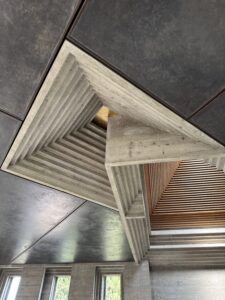
Throughout the program, I had the chance to explore a wide range of buildings that struck a perfect balance between structure and art. Works by Carlo Scarpa, like the Brion Tomb, Negozio Olivetti, and Fondazione Querini, showed how raw materials, geometric cuts, and strategic openings can evoke depth and elegance. Scarpa’s ability to craft multiple visual perspectives from a single vantage point made me realize how thoughtful design can change how we experience space.
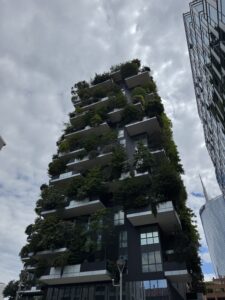
Bosco Verticale and the CityLife Center were also especially meaningful to me. Bosco Verticale’s integration of over 800 trees and thousands of plants into its structure is a bold example of sustainable, living architecture, a true fusion of nature and design. Meanwhile, the CityLife towers, with their sleek, leaning forms and futuristic aesthetics, challenged my previous notions of what structural design could be. Each project I encountered pushed me to think beyond my technical education and consider how structures can tell stories and inspire emotion.
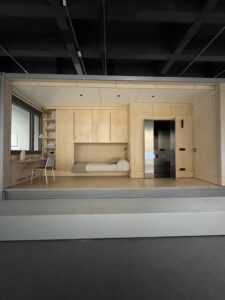
Lastly, one of the most memorable moments of the trip was the Triennale Milano International Exhibition and seeing the Essential Homes Research Project by the Norman Foster Foundation. Which presented full-scale prototypes of compact, one-bedroom homes designed for displaced communities as well as p[people in substandard living situations. These structures aim to provide dignified, affordable living spaces for individuals affected by substandard housing conditions, particularly in emergency contexts. Projects like this reminded me why I chose civil engineering in the first place: to serve people and make their lives better. They also showed me that design and functionality are not mutually exclusive; in fact, the most impactful projects are those that fuse the two.
This experience has completely reshaped how I see my career and my role as an engineer. I now understand that engineering is not just about solving problems, it’s about imagining possibilities. I want to be the kind of engineer who challenges traditional boundaries, who isn’t afraid to innovate, and who actively brings design into the conversation. Moving forward, I want to create work that is structurally sound, socially meaningful, and aesthetically inspiring. My goal is to be a forward-thinking engineer, one who builds with both precision and purpose.