Carlo Scarpa and the Cemetery

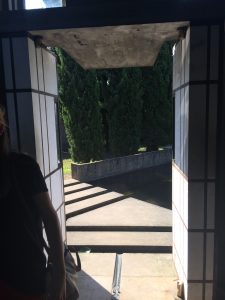
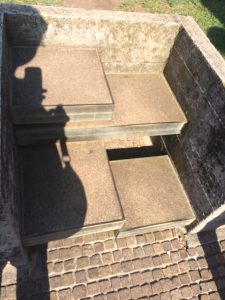
Interior of Brion Cemetery, spacious and calming
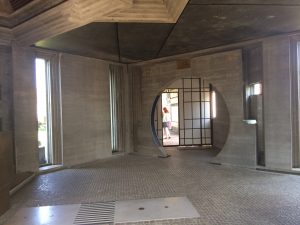
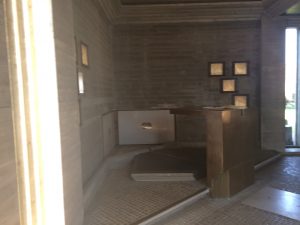
photo 1 (4)

photo 2 (5)

photo 3 (2)

photo 4 (1)

In the preface of sort for the reading about Carlo Scarpa, an excerpt from an Italian philosopher was paraphrased.  Gianni Vattimo discussed the commonalities of philosophy and architecture, establishing that at the core of both fields is edification. He then mentioned how the term is defined by “two principal meanings – to build and to be morally uplifting.” In context to Carlo Scarpa, specifically the Brion Cemetery, this seems ideal for approaching an architectural job for a cemetery. I found one thing I thought interesting and worth mentioning. While watching a lecture given by Scottish architect (Richard Murphy) about Carlo Scarpa, I learned that not only was Carlo Scarpa a well known exhibition designer, but was not technically an architect as defined by one who went to school with a focus on architecture. All these three things explain well the context of the Brion Cemetery. I learned that at the time Carlo Scarpa was working as an exhibition designer, Italy was changing its focus from presenting the exhibition, and its content, as a worldwind show and more so on creating this one-on-one connection or dialog between the viewer and the work. This, plus Carlo Scarpa’s interest in Japanese styles, heightened the moral uplifting part of edification as described by Vattimo in respect to the cemetery. There was a calmness created by the Japanese style that fit well with the surround area of the cemetery.  I believe that the high contrast between the individual styles within and outside the cemetery mimics meditation in the sense of escaping the body and surrounding area to reflect and reach a more spiritual place. Scarpa’s understanding of how to design in a way that creates a close and individual connection is what, I think, makes this cemetery so successful in providing a beautiful design that does not take away from the objective of the project. Speaking personally, I think that one of my favorite things about the cemetery is there covered infrastructure. With something like a cemetery in the sun, there is a good possibility that visitors will get emotionally drained and physically drained. The open space, that is also darker and cooler than any other place within the cemetery was brilliant structural layout that gives the visitor a place to reflect and regain that balance. Having to walk back through an area that has live vegetation and fish swimming before exiting is a wonderful way to create that balance of living and dead that I think many cemeteries are missing.  Although when we went upkeep of the ponds and lakes was not prevalent, I looked up pictures of the area when it was kept up and it confirmed everything I imagined it to be. It looked like an ideal place to visit and connect with loved ones who have passed.

TIF

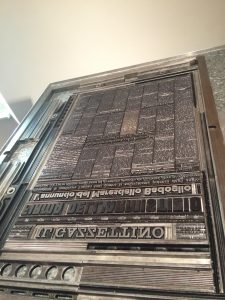
photo 1 (3) The logo of TIF using ligatures.

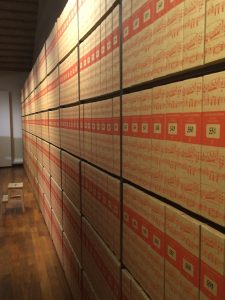
photo 2 (4) The printed sheet music cataloged.

photo 3 (1) Example printing layout for mono and line type.
Our trip to Tipoteca Italiana fondazione introduced me to a type of business I was not aware existed. Walking in, I could feel the esteem of the place and the company. With the first few showrooms alone were rich in information. Researched and tried, there was a comfort in listening to the tour because they did not leave much room for skepticism. Everything seemed so incredibly thorough in understanding the processes of type and printing, but in also the explanation of those processes.With so much knowledge, it is impossible not to feel so fortunate to listen. Even better than that, Tipoteca Italiana fondazione opens their doors to the community and those who share a common interest. I am only newly entering the world of the design and researching about different companies, but I think this is the first non-school establishment to offer lesson and classes. A company that endorses learning so much that they offer classes to public people is immensely empowering to know opportunities to learn will still exist for life after college for people. This place in ways was my own version of “The Magic School” where you learn by doing and greatly mimicked the style of learning during the trip.

Floating Piers

photo (3)

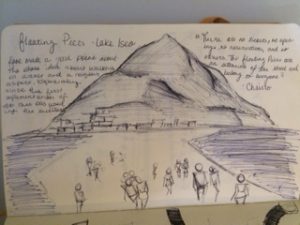
I think this trip has spawned many incredible stories that will tell late into my life, but the floating piers will forever be at the top of my list. I feel like I am going to be that grandmother with many grandchildren, crazy about design, will ask me about. It was just like Christo said, it made the glow gold with a path reaching the horizon. This exhibit gave everyday people, regardless of how much money they had (other than travel to the lake) or worldly connection, the chance to experience not only walking on water but seeing the island from a different perspective and through a different means of transportation. The day altogether was exhausting in the best way possible, but laying out on that pier made me forget every trying time. We walked away from that pier knowing what incredible opportunity we had, being in Italy, withstanding the heat and dehydration. But I think Christo had to have known the serenity that would come once we stepped on that first pier. We were rocked, like a giant cradle soothing our previous discomforts. This experience was extraordinary and I am so grateful

Carsten Höller

photo 2 (3)photo 1 (2)

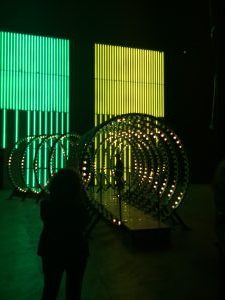
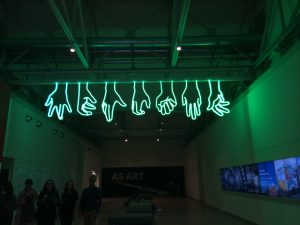
I spoke with my family the other day. They asked me what I had been up to the past couple of weeks. I gave them the ol’ family play-by-play, but once I began to describe the Triennale Exhibits we visited I did not really know where to start. All of the exhibits had their own flare to them. I think the closest thing we have to this back in Austin are the open studios in west and east Austin. When thinking about the exhibit, Holler’s work comes to mind, not because i think his work was better or more extravagant than the othe r people a part of the exhibit, but because I got really interested in the idea of experience design. Similar to the floating piers, I think that exhibit did a wonderful job of posing a question or a prompt. For the entrance, more specifically, I first went through the dark tunnel with one other person and it was a completely different experience then when I went with a group. It really did take on the feel of a carnival. It, in some aspects, felt like my own version of alice in wonderland. You could catch the flashing lights from the other side, the only thing between us and it was a black tunnel with things unknown inside. I feel like that could be a line out of one of my favorite childhood stories. These exhibitions have a way of creating memories through interaction and it is definitely something to consider when design for others.

Giovanni Lauda

photo

Our visit with Giovanni Lauda was incredible enlightening. His journey to and through Rotaliana helped demystify a little portion of design for me. Per usual, it also made me question, or at least put into perspective my journey. Although I knew for a fact he works for a company, but something about him felt independent. A type of freedom I think all designers hope to be trusted with. Besides working at a company, he also teaches at a university. His talk about going to architecture school for six years got me thinking about the “path.” The one I thought I needed to follow. Then I got to thinking that I am going to be a junior next semester. And then I got to thinking of all the topics and fields I would like to learn about since being on this study abroad. I think, as a year of new beginnings (or at least a semester of new beginnings) I would really like to get more involved with the Austin scene of all types of design, and maybe make it a class thing that all design majors could be a part of.

food-for-thought exercise

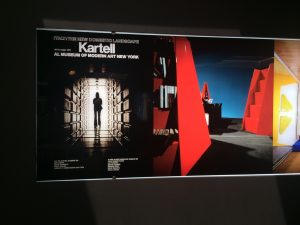
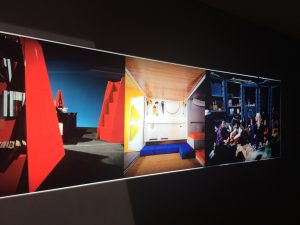
photo 1 (1) photo 2 (2)After visiting enough design oriented companies, it was fully apparent that the companies put a substantial focus on research. Especially when one of your biggest competitors is within driving distance of your main headquarters, research is one of the definite ways of having a unique product. Maybe I am naive but I think one of the most untapped markets I’ve seen this week is the need based one. I don’t want to sound unimpressed, the strides Artemide and Kartell have made to move towards the future is nothing but impressive, but I think this trip has made me aware of what type of design I would like to be a part of. I think an interesting project for both companies could be how to use their platforms to solve some of the problems of the average Italian. With most of the material research already done, I can’t image there would be a big jump from applying that information to the problems that the average italian faces. Kartell began their company trying to attack these issues but has changed its focus in its most recent years. I thought this could be a good food-for-thought exercise to see if I could find a connection between the work that companies like Kartell and Artemide are doing and problems that have not been fully addressed as expressed by the Italian people. This also makes me think about my personal projects I have either already done or are planning to do and reevaluate how much of an impact it is making on its target audience. I think this is something I will think about for a project after this study abroad is over.
 

Alessi

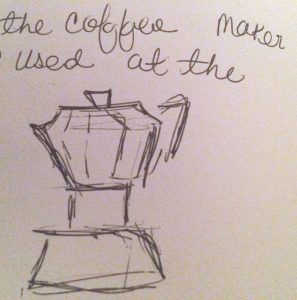
From workshop, to industry, then a design company. There is something so innately wonderful (to me) about the story of Alessi, the company and the family. Going from a workshop to an industry is already a fairytale dream, but to then go from an industry to design company, a company that values and encourages design is exciting. I don’t know much about the adult world, but what I have learned from watching my sister work for a corporate company that functions like an industry is that failure is not an option and is viewed as dead weight. What I gathered from Alessi is that innovation will inevitably bring failure, or flops as it was put, but that is completely fine for a company focused on design. Also, that success does not mean to rest on one’s laurels. Within the Alessi family, Alberto knew they could do and be something more than just the hotel and restaurant appliance people, even after having his first major contribution to the company be a flop. His confidence to fund himself when no one else would because he believed in his own with is admirable at the least. Now I am not naive enough to think that everyone who works hard and takes risk will end up like the Alessi family but I do believe that this type of dedication to your craft will generate opportunities that will allow you to achieve goals that exceeded your former expectations. Sketch - Alessi

I think what I will best remember Alessi for during my stay in Italy is the Moka!

Castiglioni

Towards the end of this week, I felt like I went to heaven. Don’t get me wrong, I have loved everything up until now but the joy others get from standing in beautiful cathedrals I get from seeing the evolution of a soap dispenser (I know, kind of weird). I was so intrigued by the Castiglioni family and the idea the form follows function. But Achille Castiglioni’s approach to ambiguous objects was, for a lack of better words, totally awesome! It also acted as a reminder that innovation and productivity can be fun and a little ridiculous. Not only that but work does not have to be behind a desk 24/7. Castiglioni went out to random places, observed forms, evaluated its purpose, and then said to hell with that I have another idea. And although Castiglioni did not care about the aesthetic of the final form as much, there is something very cyclical about finding objects that have a definite form and function, or so the creator must have thought, and giving it a new function with a slightly altered form. Similar to the class conversation about what is a chair and the predetermined expectations when using the word “chair,” this constant redefining of objects is one of the most creative things I have ever heard of.

Making Sense of Rationalism

Me, being a very visual person, I was almost intimidated by the reading about Rationalism. I kept rereading the lines trying to make sense of the words. But now, having seen examples in person, the text no longer are just words on a page but a word puzzle that, in my opinion, is a good representation to describe the movement. In Italian Rationalism, Rationalism was described as a double paradox. The first being summed up in a phrased mentioned in the book, “new archaic age,” and the second being a building’s form “both timeless and universal, at the same time creates a specific response to a particular place.”  Keeping in mind that the text mentioned that there is not a clear explanation of Rationalism, this post is an attempt to deconstruct the paradoxes and to find my own definition.

Starting with the second paradox, “a building’s form ‘both timeless and universal, at the same time creates a specific response to a particular place,’” my interpretation of this is functionalism. A great example is Adalberto Libera’s elementary school he designed. His basis of design was fulfilling the needs of the school and recreating the city wall that once existed. Other than the interior layout design to maximize space, light, and communication efficiency, there literally would be no explanation for the design of the exterior of this same building if it would have been moved to some other location. Continuing with this line of thinking, the timelessness would be the reinvention of the city wall. The only connection I can think of to the “universal” mentioned is the similarity to the modern movement that was growing in popularity not only within other nations but also overall shown in the coming century. Once again, in response to creating a specific response to a particular place, the objective of this building was heavily influenced by its location (also a modern movement concept of creating dialogue with a space). Even with the same goal in mind, this school would most definitely have looked different if the location of the school had been changed.

Now for the first paradox,“new archaic age,” I do believe this goal may have been one of the reasons the movement did not do too well. The book describes this as “primitive values [being] heralded by the modern machine civilization.” Favoring neoclassicism and roman styles, rationalism wanted to revamp a style whose values include organic shapes and realism with a modern (avant-garde, I might add) style that values geometric, rigid, and abstract forms. Ambition for modern times, but probably too out there for the 20’s. Terragni’s Novocomum is a prime example of the disconnect between the two styles. As mentioned on our tour, the building was not received well and many had to fight for its survival. Undeniably a beautiful design, the best metaphor I can think of to use as a personal layman’s reference is that  it is like writing an amazing paper about the wrong topic.

As a general conclusion for the two paradoxes, a small excerpt from Italian Rationalism best describes not only the architecture but the movement.

“The architecture enters the town as if ‘entering a foreign land’; and yet it does enter, at the cost of expressing a sort of amazement at its own presence.”