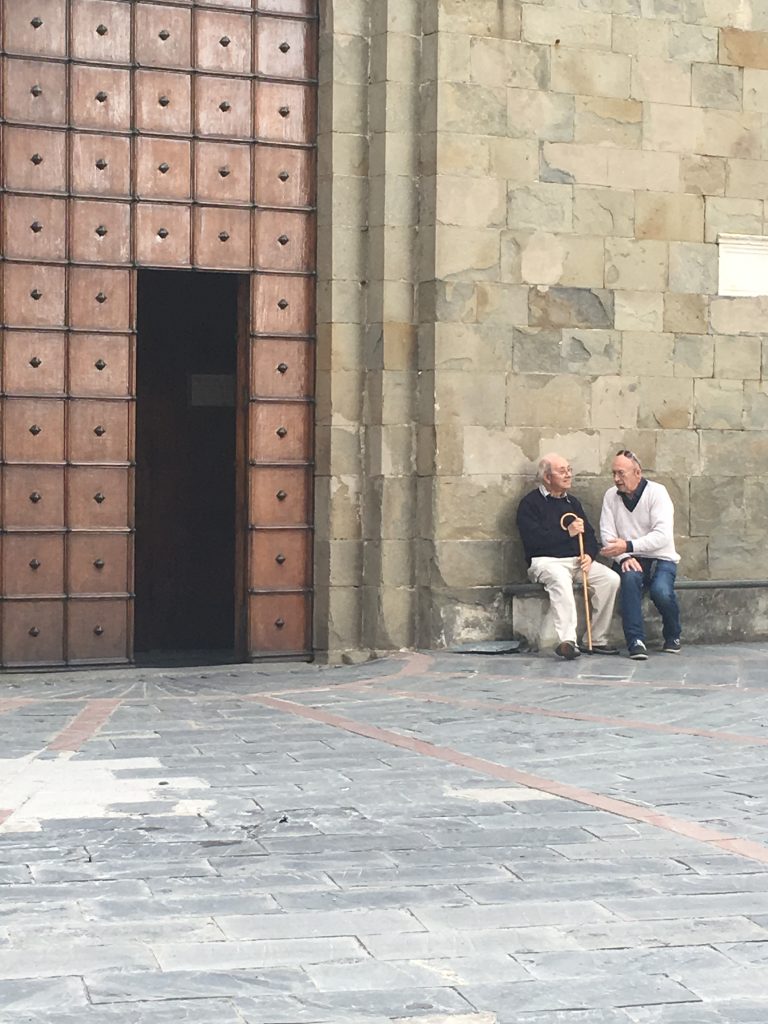
 Cinque Terre Day Trip was a heavy influence on my decision to focus on vegetation in urban areas and developments within the city. Overall Milan has been very groomed and the plants and trees are contained with much maintenance. In Cinque Terre, many of the plants just grow wildly and they take over the area they are growing in. Personally I stayed in Manarola, and noticed there was a large population of elderly people, so one thought was that the flowers and plants were not as contained because it would be harder to control plants at such a steep level for older generations of people. Another spot in Manarola, was the cemetery had crazy amount of pink flower bush, which I’m pretty sure was Bourgenvilla. I liked how the flowers took over the cemetery with new life, in comparison to other cemeteries that have dead flowers sadly sitting on top a tombstone. Manarola was where I noticed the most plant life because it was more quiet. While traveling to Monterosso I’m sure I missed lots of vegetation but the crazy amount of tourists walking within area was very overwhelming and it made enjoying the area around very difficult. Cinque Terre had beautiful plant life, despite the overwhelming amount of tourists. I hope to be able to hike the whole thing If I ever get the opportunity to go back.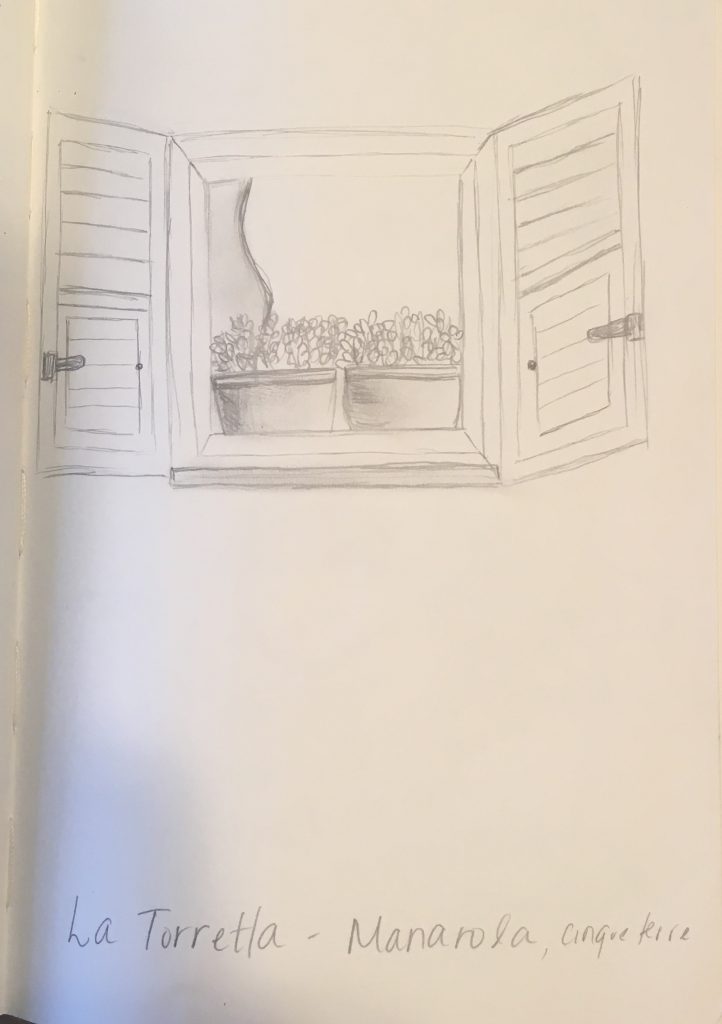
Category: Weekly posts_2016
Milan – Sketchbook
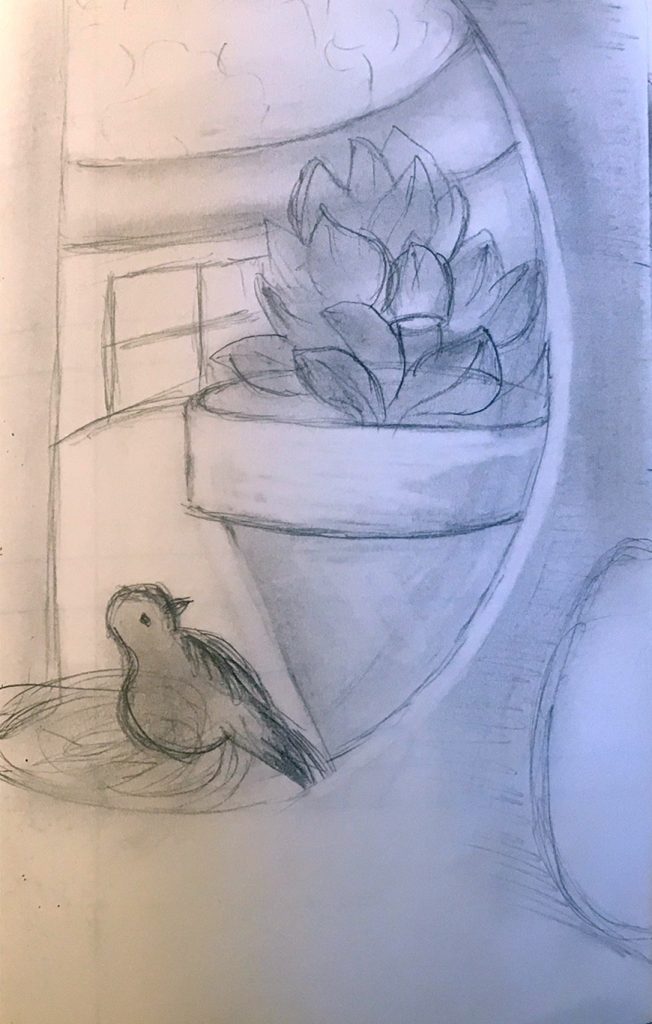
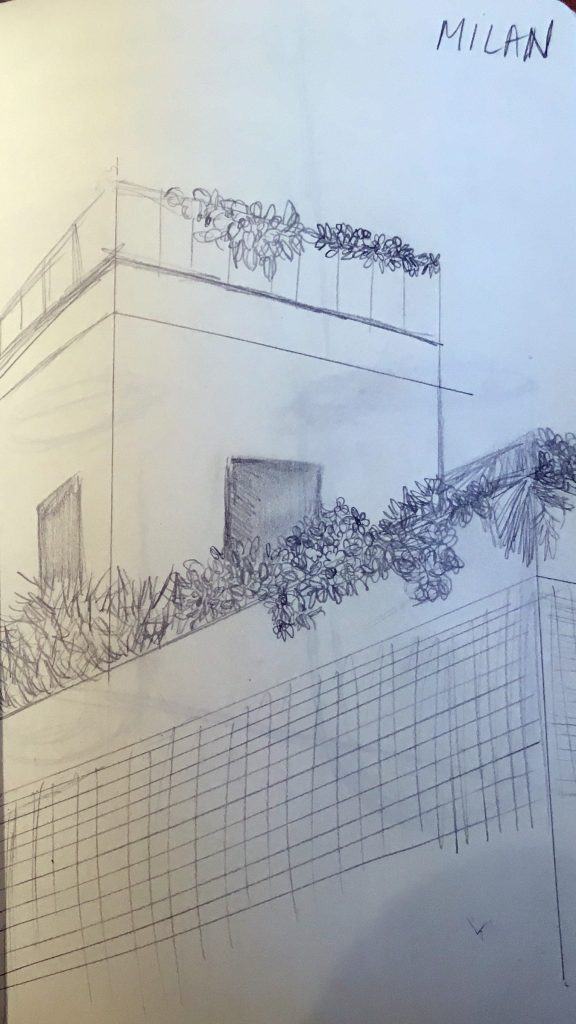
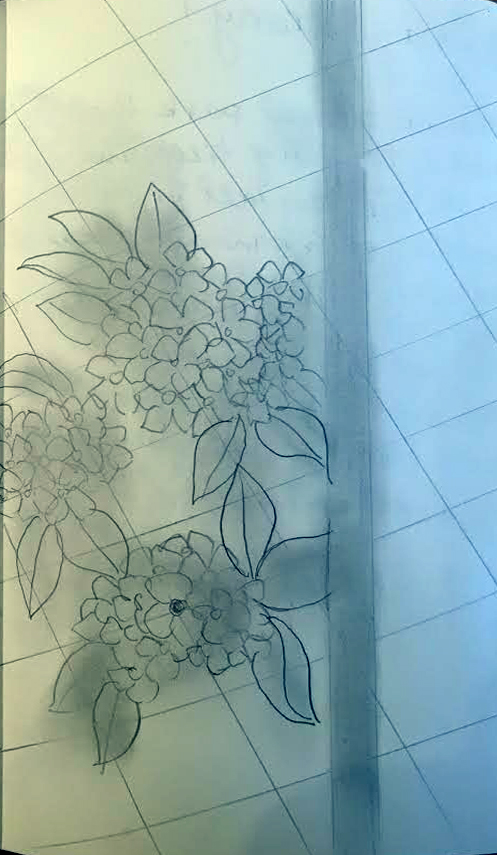
Milan is filled with hidden gardens, whether they are in the courtyards of buildings or if you look up to the rooftops. I was amazed at how there is so much vegetation in such an urban city, and wanted to explore the different ways urban plant life flourishes compare to many of the most populated cities. A key factor I am sure is the climate and fertile soil within Italy, but I hope there is a way to spread this idea of continuing to have plant life as populations continue to grow in urban cities. At the Exhibit at the triennale Milano of Women Italian Designers, towards the end of the exhibit had petite circular windows that I noticed many people just walked by. Once you look through the windows there was a larger than life flowerpot, and a huge bird in a bird nest. This was a true exaggeration of how hidden and quaint so much of the vegetation is within Milan. The next buildings such as the Bosco Verticale (Vertical Forest) and CityLife by Hadid are great examples of how we can have Vegetation flourish and have sustainable residential buildings and continue to help urban biodiversity grown.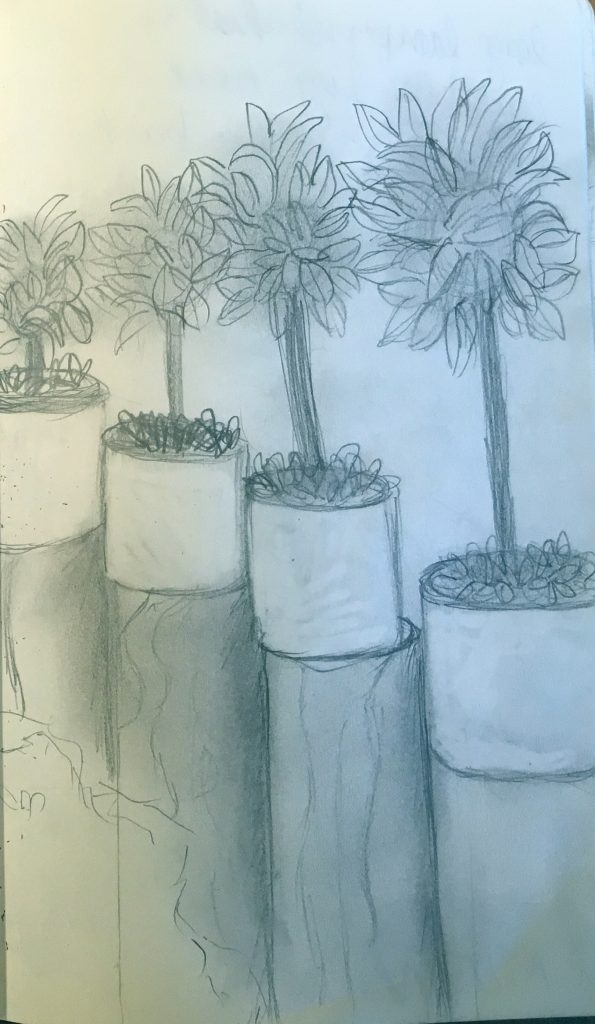
Sketchbook-week 4
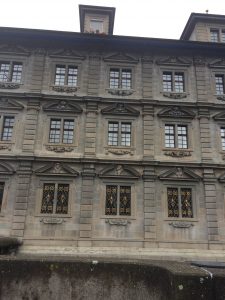
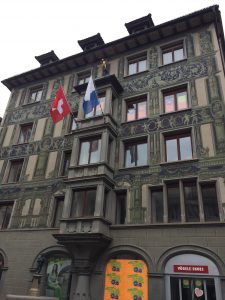
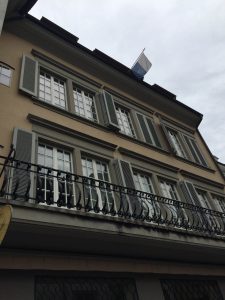
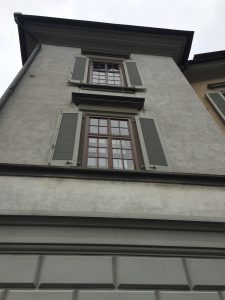
When I visited Switzerland this past weekend, I was able to perceive a different side of architecture that was very different from what I have seen in urban cities. Though there were some historic ornamented buildings, what I mostly saw were buildings that were very simple yet colorful. Unlike Milan or other Italian cities that I have seen so far, there were fewer balconies to be seen. In one building, I even saw a single balcony that was wide enough to cover up to six windows. Usually, what I have seen is a balcony for a single window so this building was interesting to come across. Additionally, I even came across a building that reminded me of Milan with its intricate paintings on wall against a subtle tan color of the building. However, instead of seeing carved marble of columns, the painting on the wall depicted them. Also, the windows in the middle were added on top of balcony to enclose the space from outside. Though I did some Romanesque style in old district of Zurich, I was able to find mostly modernistic style buildings that were colorful from outside with the most simplistic windows.
in review
My experience in Italy has been absolutely transformative. My expectations were thoroughly exceeded and as a result my mind has been expanded in ways I never could have imagined prior to departure. I can’t help but start my reflection with design. It was so eye-opening to see how much design is revered in Milan. From the Triennale exhibits to street fashion, you can truly see how design infiltrates the city. Not only is it beautiful, but also conceptual and critical. I can see how our culture back home could greatly benefit from this type of “problem-solving” thinking.
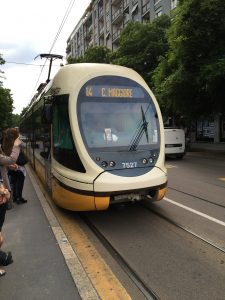
Another aspect of Milan that blew me away and was nothing like I had ever experienced back home was the public transportation. I’m fairly used to trains and subways from growing up in New York but Milan was something else. The metro was so clean, timely, and easy to navigate. Even above ground the options were endless – trams, busses, and streetcars were all readily available to get anyone where they need to go. Outside of the city was where I was really impressed. The trains that travel between Italian cities were fast, but also comfortable. I found myself disappointed at how short a train ride was because I was happy to just sketch and look out the window.
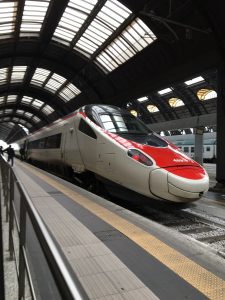
Interestingly enough, I found that I really felt myself grow the most when I was alone. Being comfortable with getting lost and finding my own way was very important to me. Its scary to separate from the group in a foreign country where I don’t speak the language but when I did and everything was fine, that’s when I grew confidence in myself. Sometimes the experiences that are only yours are the ones that are most memorable. I really do feel as if I could conquer any sort of travel on my own back in the States.

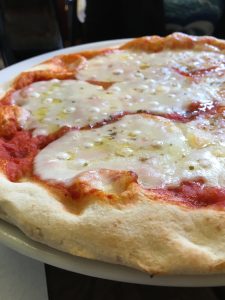
No post about Italy is complete without speaking of food. Not only was the food I ate the best I’ve had in my life, but the experience of eating the food was also new to me. I remember our CA Anna took us out to her favorite restaurant the first week we were in Milan. Towards the end of dessert I checked the time and it was nearly half after midnight. I was so surprised that we spent nearly 4 hours just sitting, eating, and chatting. It was at this moment I realized that meals are an important time to relax and connect with the people around you.
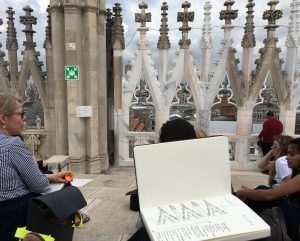
The last point I want to talk about is my realization of the importance of sketching. My time in Italy was made so much more meaningful through sketching the things that resonated with me. I have challenged myself to leave a sketchbook in my purse from now on so I will always have it wherever I go to jot down memorable words or images. I think it will make me a better designer and creator.
florence : week 5
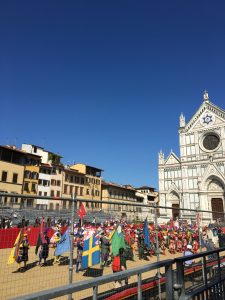
Florence was one of my favorite parts of my trip to Italy. Since there is so much to do there, our days were certainly packed. Upon arrival, we walked around our neighborhood which was not hard to figure out that it was the fashion district. The cobblestone roads and fancy window displays were an interesting juxtaposition and perfect home base for our time in Florence. Almost as soon as we put our bags down, we headed to the leather market to hopefully pick up some more bags. I was first struck by the quantity of vendors at Piazza San Lorenzo, and then by the quality of the leather goods they were selling. It was fun to haggle and all in all it was a successful trip for all of us who treated ourselves to a new leather bag. The next day was what we were really excited for, a tour of the Uffizi and Accademia Galleries. We hopped out of bed for our 8am tour and as soon as we could blink we were standing in front of world-famous sculpture, “David”. This was truly one of my highlights of the trip. This magnetism of this sculpture simply has to be experienced. Next stop was the considerably more crowded Uffizi where we saw “The Birth of Venus” and “La Primavera”, two more stunning glimpses of art history. On our way back from the tours, we meandered off of our path and got a bit lost. We knew that we were lost because we approached a big set of bleachers that we were certain we had never seen before. Our curiosity kicked in and we walked closer to see what was going on. Seeing no barriers, we meandered onto the bleachers and sat down in the front row. About ten minutes later horses and men in costumes flooded the Piazza and that’s when we realized it was some sort of jousting game. It was so cool to see this event in such a historical place because it seemed so authentic, like going back in time.
treviso : week 5
I’m glad that we got to spend our final days in Europe traveling to Treviso. I think some of us were skeptical to be away from Milan in our final moments but the things we saw in Treviso made the four hour bus ride totally worth it. First, we went to Tipoteca Italiana which is a type museum. Our class had had some experience with letterpressing so this place was particularly fascinating. We wandered through there spotless museum and saw the origins of print come to life. Letterpresses, type cases, and important documents lined every wall. Our tour guide emphasized that Tipoteca is “a museum that leaves”, meaning that they want everyone to touch it, interact with it, and be able to take home a piece of it. This led to our next exercise. They were kind enough to let us design and print our own poster, but first we had to come to a consensus as a group about what exactly it would look like. This was a pretty long process. We decided to highlight our program name in Italian (Design in Contesto) with the names of all the designers we learned about scattered behind it. Although it took a long time to get everything right on our end, the poster turned out beautiful!
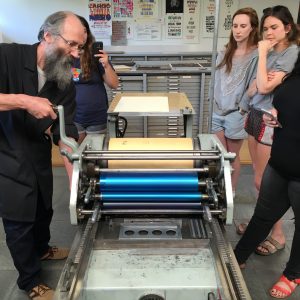
Next stop was Fabrica, a communication research center, which to me was almost like a monastery for designers. As our guide toured us aroudn their top-notch facilities, we got a glimpse of the students who work there and learned about how we could apply to be a part of it. Basically, you can apply to study there for a whole year for free, but you have to be selected from a competitive group and then undergo a two week testing period before you are officially accepted. It sounded like a fantastic opportunity and great challenge. Before heading off to the design department, we got to see some of their work, the majority of which was incredibly gripping communication designs that took the form of posters, videos, or sculptures. We met the director of design who explained to us the importance of having people from many different cultural backgrounds at Fabrica. He then showed us a few campaigns that they worked on that were incredibly clever. Our tour guide then showed us the library that many of us never wanted to leave. We could have spent hours or even days scoping out the design books in their tiny but amazing library.
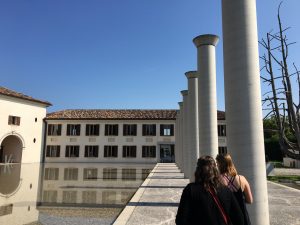
rome : week 4
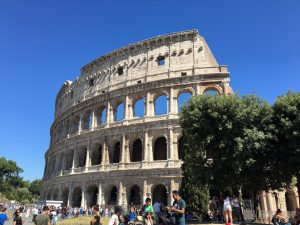
This past weekend, many of us had the chance to travel to Rome to see the sites. I was particularly excited for this weekend because I turned 21 on Saturday! When we arrived, we realized that our Airbnb was very close to the Colosseum so we couldn’t resist starting out with the major monuments. The Colosseum turned out to be one of my favorite spots in all of Italy. For some reason it was easy to imagine all that had happened there over so many years. The Colosseum had been the site of gruesome acts but also triumphant victories. We were all very impressed with this world wonder. We pushed through the heat and headed off to see the Pantheon, Trevi Fountain, Spanish Steps, and Piazza Navona. Getting lost in the streets became one of our favorite pastimes because we would all of a sudden stumble upon these mega-famous ancient artifacts. The next day we saw the Pope at the Vatican. This was such an experience because he gave a sermon outside his window that just reverberated throughout the whole piazza. It was interesting to see thousands of people just silence themselves. We should have planned this day a little better because we neglected to think that the Vatican Museum would be closed on Sunday, but it was. So, no Sistine Chapel for us. Instead, we headed over to the Complesso Del Vittoriano museum to see a Mucha exhibition. The exhibition was a fabulous overveiw of the evolution of his work over the years. Next door, we also stumbled across a Barbie exhibit which turned out to be my favorite. They had just about every single Barbie doll ever made and chronicled her (very tall, thin, and blonde) past. It was interesting to see how long it took Mattel to make her look like a realistic woman. All in all, Rome truly met my highest expectations.

Brion-Vega Cemetery
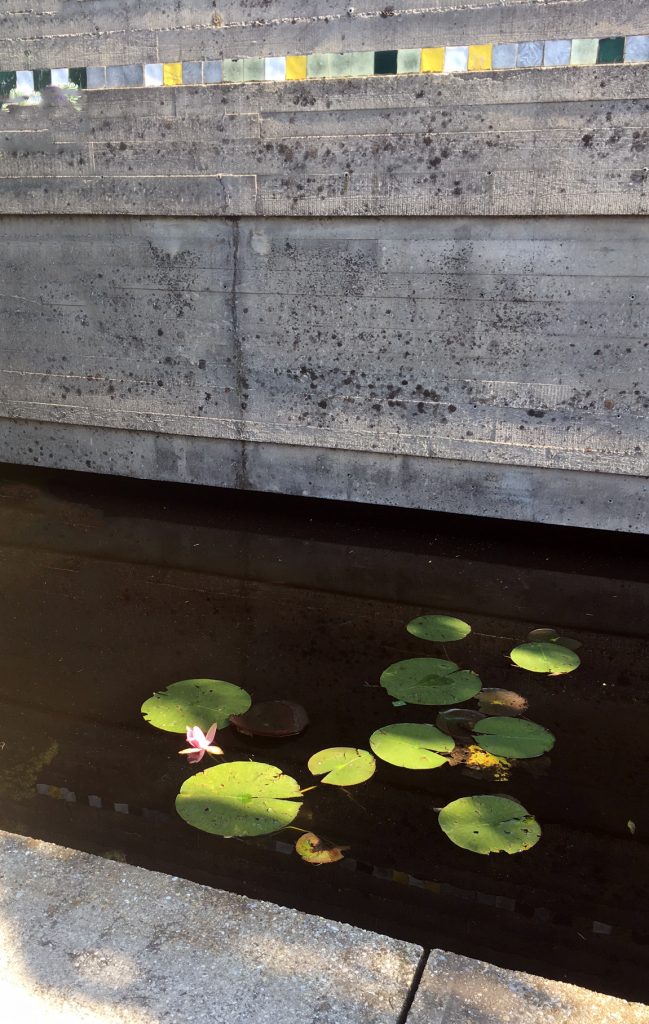
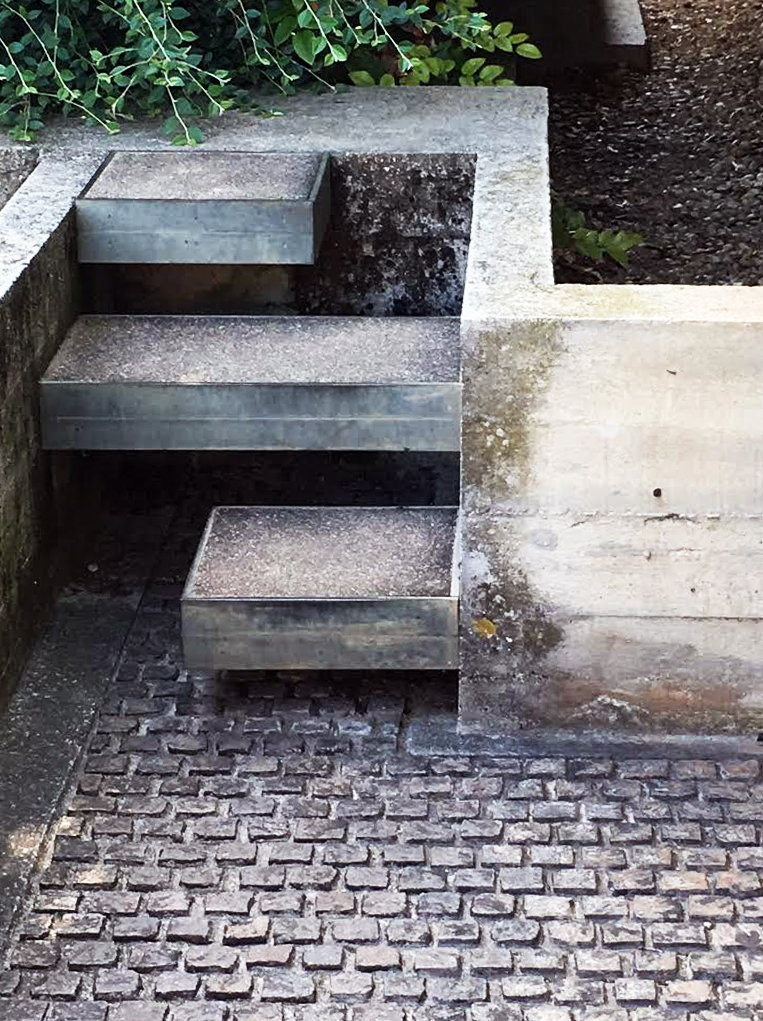
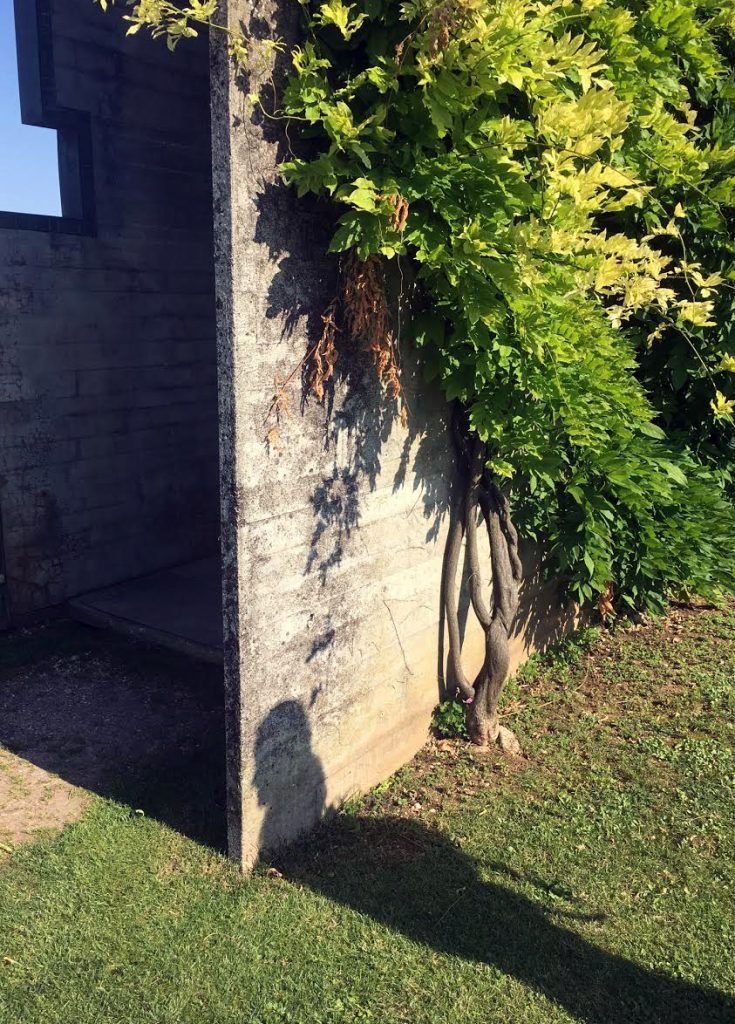

Visiting the Brion Cemetery and the cemetery in Milan, has made me think and reflect more on death. While first looking at Brion Cemetery, I noticed that there was no iconography or overwhelming amount of religious symbols, even within the chapel. I was curious to see the religious beliefs of Scarpa, and I fount this quote he said, “I would like to explain the Tomba Brion…I consider this work, if you permit me, to be rather good and which will get better over time. I have tried to put some poetic imagination into it, though not in order to create poetic architecture but to make a certain kind of architecture that could emanate a sense of formal poetry….The place for the dead is a garden….I wanted to show some ways in which you could approach death in a social and civic way; and further what meaning there was in death, in the ephemerality of life—other than these shoe-boxes.” This so far has been the closest person that I agree about life after life. Personally I have been raised Catholic, and Catholic funerals are very heavy, and create this uneasy feeling and confusion. I feel with Scarpa, his post modern aesthetic compliments the meaning of death. In our reading written by Kenneth Frampton, Frampton claims “Scarpa sought a transcultural, ecumenical expression that would transcend the Christian preoccupation with guilt and redemption. The idea of death as a joyous reunion, indissolubly linked to the erotic, is subtle confirmed in this instance by Scarpa’s cunning use of Chinese character Double happiness, a character traditionally employed on the occasion of a wedding.” One thing I was struggling with was the meaning of the water. At first I thought the water and the path walking on water, was similar to being close to death, and that we are always close to death, we can always fall. Frampton states that the water symbolizes both regeneration and death. After I read more into depth after reading and seeing in person, I thought the water lily garden was a way for the water to symbolize that water contributes and creates life and does not always only associate with death. Frampton summarizes Scarpa, “Throughout his work, the join is treated as a kind of tectonic condensation, as an intersection embodying the whole in the part, irrespective of whether the connection is question is an articulation or bearing or even an altogether larger linking component such as a stair or a bridge.” Scarpa pays attention to very small details that help the viewer of his work understand the message and meaning he is portraying in his work.
studio FM : week 4
Our visit to Studio FM was hands-down the highlight of the week. As we approached the loft studio in it’s hip Chinatown neighborhood, I wondered how this graphic design studio would compare with others studios I have visited. This past semester, I had the opportunity to travel to New York and Chicago on a travel initiative grant to visit design studios all over the two cities. Many of them gave a brief tour of the studio, an explanation of their mission statement, and a glimpse at their company portfolio. I found that the FM tour was very similar. The variety of clients that they have is what struck me though.
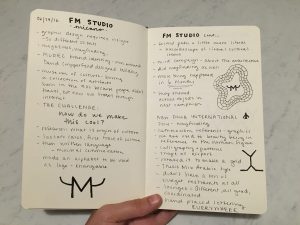
The first project they showed us was the branding for the Mudec Museum of Cultures. The designer who spoke to us was very animated and honest and explained to us that it was a challenge to make this “boring” museum seem “cool”. As Longhorns, we found it interesting that their main branding concept had to do with horns because horns represent ancient culture in many ways. Their solution was to put “horns” on an M and manipulate that logo to fit with their many advertising campaigns.
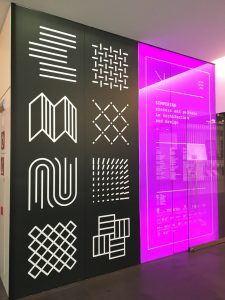
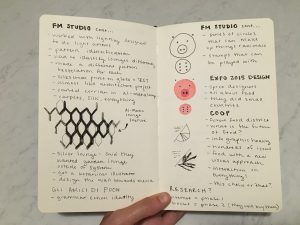
Perhaps the most impressive project that they showed us was the branding for the New Doha International Airport. They explained that this project has been a long and drawn out one, but also one filled with much creativity and budget leeway. They started simple with the creation of the logo. They very cleverly decided to take the shape of the airport and then make a grid out of it through tessellation. Everything in the entire airport fit within this grid, which blew my mind. Not only did FM design the logo for the airport, but also the wayfinding and lounge interiors. This was an involved process that required lots of tests and lots of money.
A fun project that we ended with was their branding for the Gli Amici Di Pooh (Friends of Pooh) elementary school. This childish and playful branding juxtaposed with the previous stylish, sleek, and upscale branding of the airport. They came up with ways to engage the children through their branding with animal stamps that can be mixed and matched based on color and shape. As a designer, this kind of interaction seems to be what everyone strives for.
Carlo Scarpa and the Cemetery
Interior of Brion Cemetery, spacious and calming
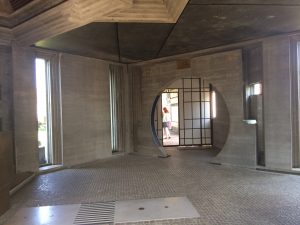
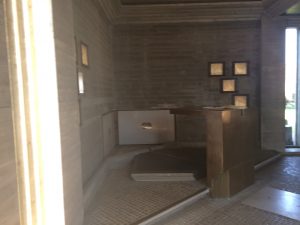
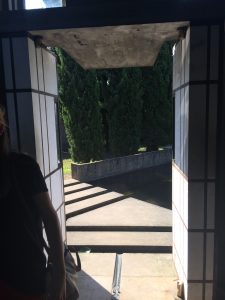
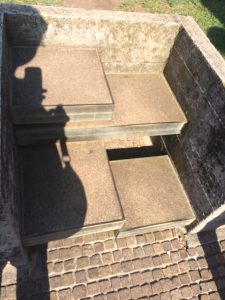
In the preface of sort for the reading about Carlo Scarpa, an excerpt from an Italian philosopher was paraphrased. Gianni Vattimo discussed the commonalities of philosophy and architecture, establishing that at the core of both fields is edification. He then mentioned how the term is defined by “two principal meanings – to build and to be morally uplifting.” In context to Carlo Scarpa, specifically the Brion Cemetery, this seems ideal for approaching an architectural job for a cemetery. I found one thing I thought interesting and worth mentioning. While watching a lecture given by Scottish architect (Richard Murphy) about Carlo Scarpa, I learned that not only was Carlo Scarpa a well known exhibition designer, but was not technically an architect as defined by one who went to school with a focus on architecture. All these three things explain well the context of the Brion Cemetery. I learned that at the time Carlo Scarpa was working as an exhibition designer, Italy was changing its focus from presenting the exhibition, and its content, as a worldwind show and more so on creating this one-on-one connection or dialog between the viewer and the work. This, plus Carlo Scarpa’s interest in Japanese styles, heightened the moral uplifting part of edification as described by Vattimo in respect to the cemetery. There was a calmness created by the Japanese style that fit well with the surround area of the cemetery. I believe that the high contrast between the individual styles within and outside the cemetery mimics meditation in the sense of escaping the body and surrounding area to reflect and reach a more spiritual place. Scarpa’s understanding of how to design in a way that creates a close and individual connection is what, I think, makes this cemetery so successful in providing a beautiful design that does not take away from the objective of the project. Speaking personally, I think that one of my favorite things about the cemetery is there covered infrastructure. With something like a cemetery in the sun, there is a good possibility that visitors will get emotionally drained and physically drained. The open space, that is also darker and cooler than any other place within the cemetery was brilliant structural layout that gives the visitor a place to reflect and regain that balance. Having to walk back through an area that has live vegetation and fish swimming before exiting is a wonderful way to create that balance of living and dead that I think many cemeteries are missing. Although when we went upkeep of the ponds and lakes was not prevalent, I looked up pictures of the area when it was kept up and it confirmed everything I imagined it to be. It looked like an ideal place to visit and connect with loved ones who have passed.