Living With Relics-Milan

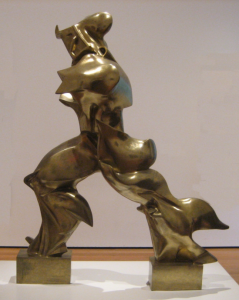
During our first day of orientation in Milan walking tour of the city’s fashion district, IES Abroad Director, Roberto Andreoni, mentioned the strange juxtaposition of the city’s residential and urban architecture: old and awe-inspiring buildings stand squeezed next to mundane and “ugly” new constructions. His statement reminded me of the Futurist Manifesto and their goal to diverge from antiquity and tradition, embrace the change that came along with industrialization.

Roberto Andreoni also mentioned that most of these newer buildings were constructed to replace the old structures that were destroyed during the bombing of Milan in World War II. Instead of imitating older styles of architecture the municipal government used its limited resources and loan money to reconstruct the city from rubble.  They used what was left over to construct a newer city instead of leaving all traces of it behind, quite the opposite of what the Futurists would have liked.

This trope of old blending with new, and not in a clean and uniform way, is a rather pervasive theme in the parts of Italy I have visited thus far. Bellagio, Verona, and Milan are full to bursting with old architecture, landmarks, and monuments that stand in close proximity or even crammed together, sharing walls, so that no single structure can be taken in without comparing and contrasting it with buildings in the vicinity. Buildings like the Duomo or the arena in Verona, I would have expected to view then in their untainted glory, standing tall and magnificent, calling upon the memory and artistry of architects and artists who lived eons ago.

Instead the Duomo exists alongside an upscale mall, above an efficient subway system and in a piazza teeming with tourists.  Even the view from the top doesn’t remain uninterrupted. The spires topped with detailed sculptures stand out against a background of blue or cloudy sky (depending on the rather flaky weather) and the industrial grey of urban construction. This doesn’t really devalue or corrupt the glory of the Duomo as much as its existence is recontextualized.
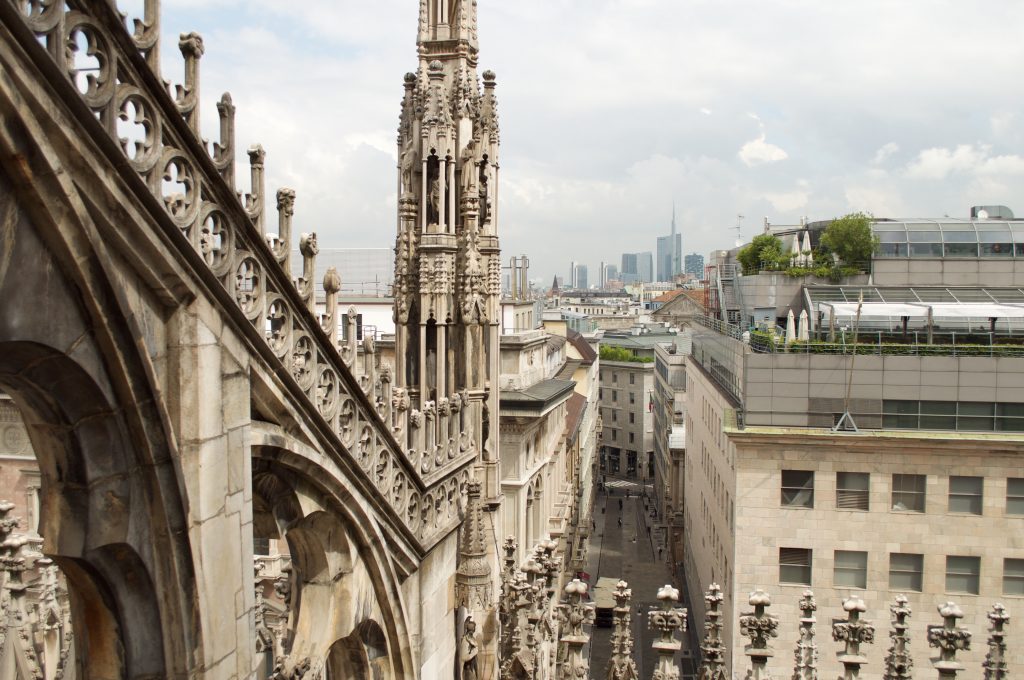
The Duomo

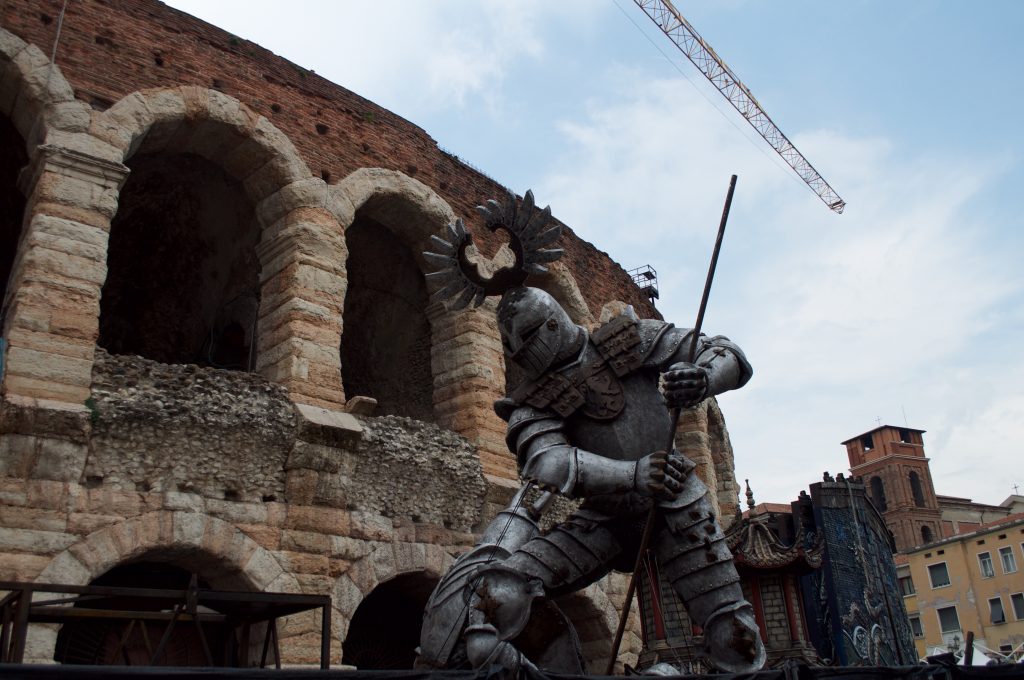
Similarly with the Arena in Verona, it was quite a task to find a view of any one side of the exterior without including at least a sliver of modern technology. The Arena was dwarfed, in my opinion, by the fleet of Vespas, performance stage metalwork, barrier gates, construction cranes, and oddly a float of a medieval knight. Admittedly there was no time to sit and ponder about the fact that it actually exists today even though it was constructed during the Roman Empire OH MY GOD because of the time crunch on our day trip.
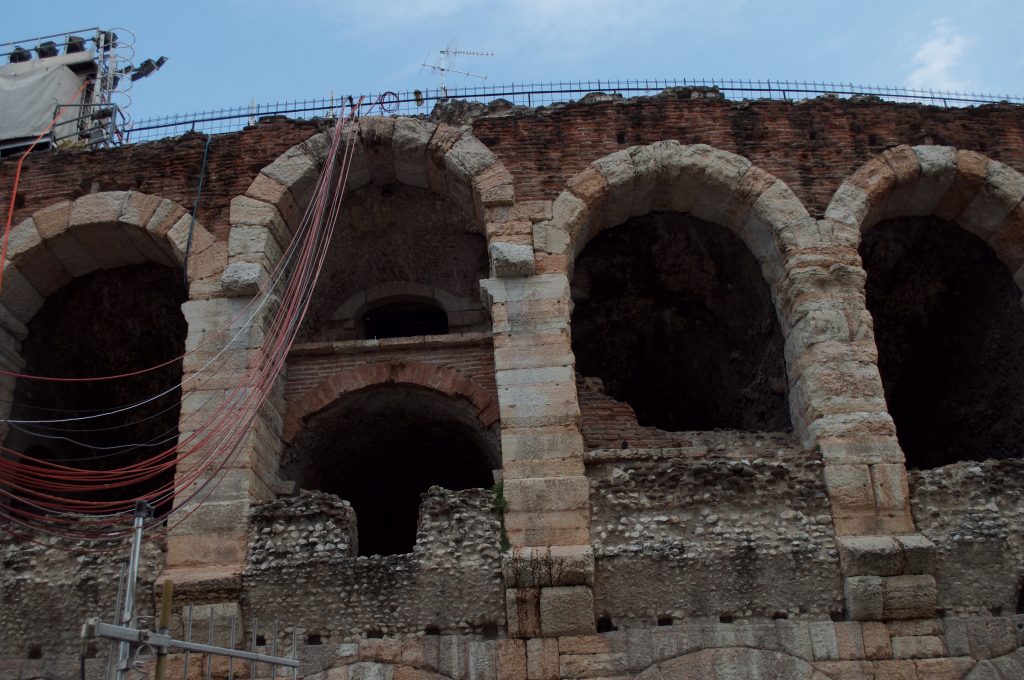
 The Arena in Verona

Medieval Knight in Verona

There is such a huge difference in the way important monument structures are treated in Italy versus the States. Italy has made history part of life, carrying it forward with progress. America sets it aside in a museum, to be observed, used as inspiration, never to be mixed with modern life.

~Saniya
Culture Shock is Real

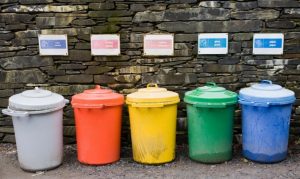
ItalianRecycling

Culture shock is a real thing and was definitely experienced within days of arriving in Milano. Not knowing Italian was challenge number one, however, the lifestyle itself has been an adjustment. Coming from Austin, Texas, the city life of Milano did not, at first, seem as if it would much more complicated to adjust to. Boy, was I wrong. Recycling is taken to a whole new level in Milan versus the often notoriously ‘tree hugger’ environment of Austin. As if the three separate trash bins in the apartment were not already intimidating enough, there is also another bin found under the sink or on the balcony for compost! I love that recycling is much more strictly enforced here. Although intimidating at first, I believe that it can truly make a difference as long as it is being enforced. Ironically enough, the use of plastic bottles is out of control though. Water filtering is obviously not as big of a deal here since every restaurant will serve bottled water over tap water and there are not really any refill stations. Whereas Americans see water as something to be provided, Italians see it as another commodity to be purchased.


Another change from Austin to Milano has been the transportation. Although Austin is decent to be able to travel by foot or bike, the automotive transportation is completely different. It may be that we are limited to not being able to drive while we are here, but I believe that even if we were provided that means of personal transportation, it would be meaningless. Milan is much more easily navigated by bus or metro and is more conveniently designed. Austin is thankfully equipped with a public transportation system that most American cities are lacking, however, the convenience and ease of use are far from that I have experienced in Milano. Austin is much more driven by the personal vehicle, much like the majority of America, but Milano is in favor of the pedestrian, biker, and user of public transport.


The change is lifestyles has definitely been culture shock, however, it has been a refreshing change from the typical American lifestyle. Adapting to the ways of strict recycling has become easier and seems more rewarding and motivational to enforce back home. Navigating transportation has been exciting, although occasionally stressful, and rewarding. Finding new places and learning to get around this new place that we will call home for the month is incredible. And while the amount of walking may be absurd when looking at the number of steps or the total distance traveled, it is never noticed at the moment due to the wonderful experience that is surrounding our every move. This is only the beginning, but I am already sad about having to leave so soon. Tomorrow begins the second week of adventures- here we go!

transport with style

Prior to my arrival to Milan, I was unsure what to expect in terms of design. Our pre-departure reading- “Made in Italy: Rethinking a Century of Italian Design”- discusses in the introduction the idea that Italian design has become a “victim of its own celebrity”. The star power of Italian design gave me a preconception of what that really meant- flashy images of Fiats and daring furniture coming to mind without any real context.

Through this course, “Design in Context” my goal was to find that meaning.

Of the topics the book states Italy is known for- cars, coffee, and fashion- I immediately became fascinated by the first. Cars.

I chose the theme of “transportation” for my sketch book after a day of exploration across the city and a full camera reel of nothing but scooters, cars, and trains. The variety of means that the Milanese turn to for transportation is something I am excited to document.

The number of scooters and small cars parked in the streets was certainly a pleasant surprise to me. Already I am seeing the incorporation of these mass-produced, stylish products that revolutionized urban transportation by means of accessibility. As the book noted, this was driven by the “increasing desire and need for individual, private transport” post-World War II. The varied pace of the city echoes this, with the public transport system thriving alongside the more independent mode of transportation found in the Fiat and Vespa. I think that it showcases the presence of both a very controlled and more open society within Italy’s past.

I look forward to sharing some of my sketches on this topic in future blog posts. Until then!

ciao

-autumn

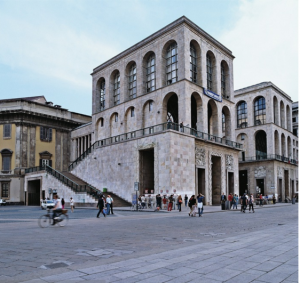
Triennale: John Thackara

What a great first day. We saw John Thackara present to a full house at the Triennale di Milano this evening. Amongst other things he talked about how designers can instigate change in social, environmental and economic systems. Some references:

http://www.doorsofperception.com/

http://www.sla.dk/en/

http://www.ecoschools.global/

https://laruchequiditoui.fr/fr

http://foodshedguide.org/foodshed

http://www.fibershed.com/

http://p2pfoundation.net/

http://ecosystemsknowledge.net/

Thanks to Angelica Sibrian for the introduction and to Ilaria Muzzi for taking the photo.

John Thackara

http://www.triennale.org/en/evento/meet-the-media-guru-future-ways-of-living/