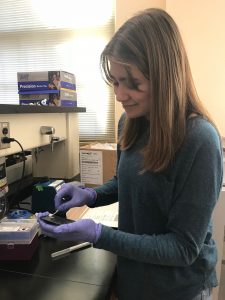
DIY Diagnostics is a stream filled with constant support from your peers, mentors, and educators. It is a place where you can make mistakes and be able to learn and grow from them, all while teaching you the essential skills you need to become a successful scientist and researcher. Personally, I chose DIY Diagnostics because of the diagnostic potential each of the ongoing projects held. The ability to be able to put your research toward helping design and create a diagnostic tool that is simple enough to use and that is able to improve lives is an incredible experience in itself. Additionally, I joined DIY due to the sheer variety of research fields I was going to be exposed to. I was beyond excited to refine my knowledge of biology and chemistry by applying it to ongoing research projects such as analyzing the contamination in Waller Creek, and using LAMP reactions to detect certain sequences within the DNA of our saliva.
Honestly, being thrown into a working research laboratory without prior knowledge or experience can be intimidating and scary. But the unique thing about this whole experience of FRI and being in DIY Diagnostics is that you and everyone else are all on the same page. The opportunity to be able to grow and learn together, as a team throughout the entire semester, is something that you won’t get too often.
Being a part of the DIY Diagnostics research community has been such a rewarding experience, giving me necessary skills that I can not only apply to my future scientific research, but also skills that I can use in life outside of college. Specifically, I have learned and mastered skills in many aspects of chemistry, biology, computational biology, and computer science. More generally, it has given me given me the skill sets to be able to actively and effectively work in teams, how to critically think, and how to overcome problems in an efficient manner.
Leave a Reply