Category: 2017

  • Unique Research Experience!

    Unique Research Experience!

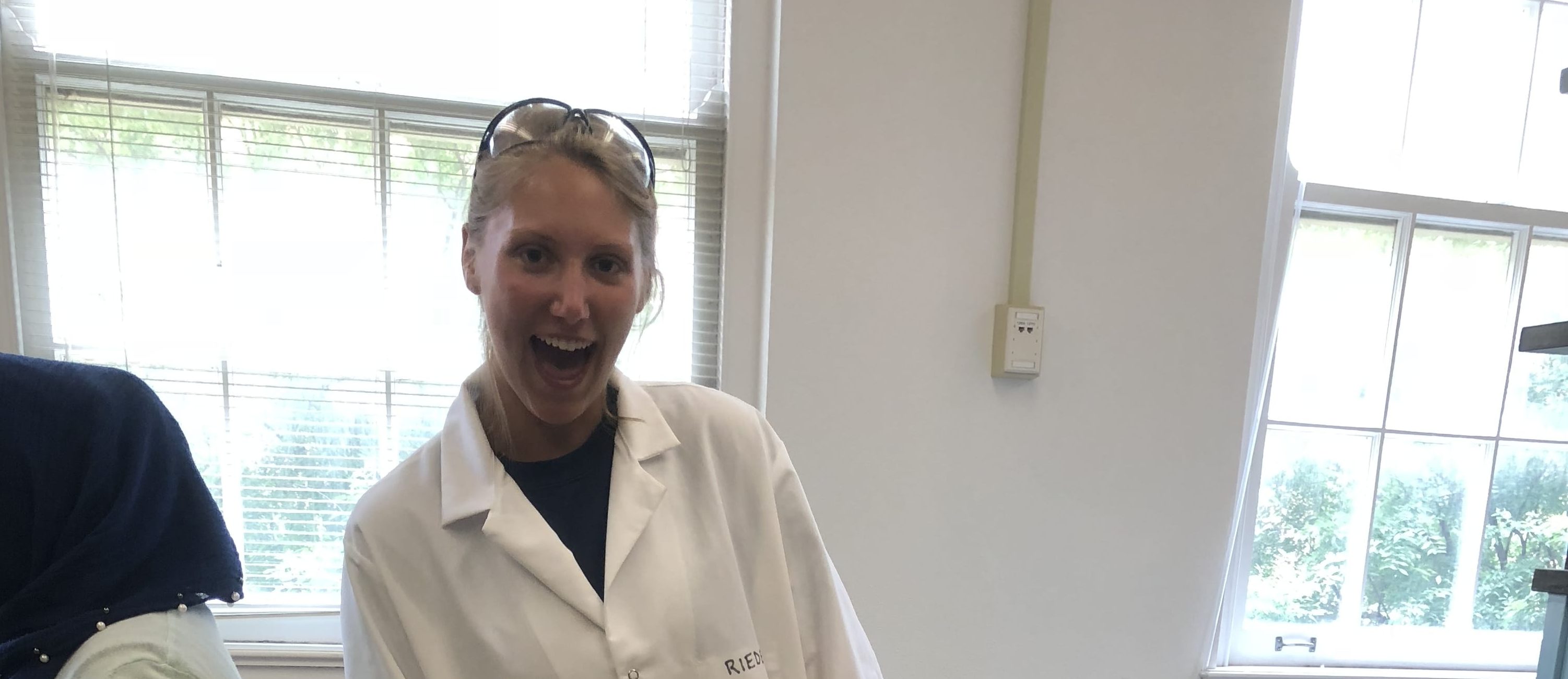
    Hey guys! My name is Sydney and I am a sophomore studying neuroscience. I picked DIY Diagnostics because my FIG professor recommended Dr. Riedel for being very open to letting students pursue their own interests, I knew that the lab is related to healthcare in some aspects, and it is interdisciplinary with biology, chemistry, and computer science. These points couldn’t describe the stream more perfectly. To give some context to my experience I want to explain the general lifecycle of being in FRI; In the spring you are placed in a lab and your research is driven by assignments designed to teach you various lab processes. In our lab, we learned qPCR, 3D printing, and even a bit of coding. We cultured samples of Waller Creek to detect a pollution source coming out of a pipe, and from that data alerted UHS and the city about a real public health problem. After your first semester you have the option to apply for a paid summer fellowship, which gives you a head start on the more independent project that you wouldn’t start working on until the fall of your sophomore year otherwise. For my project I chose to use wax-printing and a method of agglutination with CRP antibodies on paper-based diagnostics to detect a sample’s quantity of target protein by measuring the sample’s lateral flow distance, specifically looking at an inflammatory biomarker highly associated with heart failure called C-reactive protein. I had no idea what any of this meant when I first started, but that uncertainty is the most important part of FRI.

    During my fellowship with the lab this summer I learned all about the past relevant research, potential importance, and mechanisms of what I was working with, and as time went on became more confident with what I could do. It gets frustrating at times because working on a project without knowing what the outcome will be is intimidating, and on top of that you aren’t always sure what you’re looking for. This, though, is what pushed me to become a real researcher, and it will be what pushes you. Sometimes the most important thing you can do is to keep chugging along. It’s also the most rewarding thing ever when you realize you’ve become an expert at something! You may not have a Ph.D. yet, but you get to know your project inside and out, and that’s a truly valuable thing. Having the training to do something at a wet bench on your own or being able to control your computer instead of letting it control you are skills not found in many people our age, and if you market those skills right they can get you somewhere. Because of what I learned in DIY, I was able to pitch myself and my skills to a biotech company in Boston that is taking me on as their first intern this summer. People appreciate experience, so my best advice is to not take for granted what you have done.

    What you do at UT matters. You have experiences that set you apart that make your story interesting and unique to you. FRI is an opportunity unique to UT, and you’re already forming the right habits by taking advantage of it. This lab is one of my experiences that has taken me very far, made me a better problem solver, and a better scientist overall. I highly recommend coming by during the open house sessions to see what we’re all about- you won’t regret it!

  • Best of Luck, Cristian A. Cruz

    As a Public Health and Human Biology major, I am interested in studying infections diseases specially those transmitted by vectors. During the application process to UT, I read about how undergraduate students were developing do-it-yourself diagnostics for mosquitoes in the Freshman Research Initiative. After reading the article, I decided to apply to the FRI-DIY Diagnostics stream and was fortunately admitted. This fall 2018 semester I ambition to continue exploring the field of vector diagnostics with success by working on a device that can automatically count mosquitoes by listening for wing characteristics such as frequency. It is important to mention that I didn’t always have this ambition or confidence, like many of my fellow classmates I felt that I lacked the knowledge necessary to be a competent researcher. Being part of this research community gave me a sense of success because unlike other students, I was able to take a hands-on approach to what we learned in course lectures, and the stream itself provides the students with a variety of new skills that a regular student can only wish to have. To be honest, I didn’t find research interesting at first especially because it seemed too complicated, but Dr. Riedel and the mentors help any student make a smooth transition into the world of science. Dr. Riedel is truly an enthusiastic research educator, you can see it in his expression when you meet to discuss research projects, and as students, nothing makes us more motivated than having those who we look up to encourage us. This stream has definitely impacted the opinion I had about research, it has made me consider and search for medical school programs that place emphasis on research. The stream will help you create a strong research foundation that can be used for other undergraduate research opportunities, and in my opinion compared to other streams, DIY diagnostics offers more diversity in their skill developments such as learning to program mobile apps.

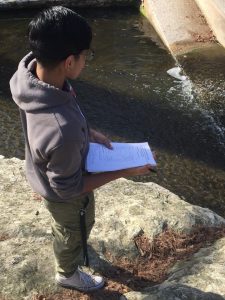
    Something particularly fun that happened during the semester was when I plunged off into E Coli. Infested Waller Creek, I had to walk home soaking wet (Just kidding!). The whole experience itself is very enjoyable, you meet many new people who are just as eager to learn and who want to make the best out of this opportunity. Now for my favorite quote with a twist: remember not everyone can become a great scientist, but a great scientist can come from anywhere.

    Best of Luck,

    Cristian A. Cruz

  • Enthusiasm and Community!

    Coming into college, I always knew that I wanted to be a part of something greater than myself. After learning about the Freshman Research Initiative during a University tour, I was hooked on the idea of undergraduate research, and wanted to challenge myself in the hope that I would not only become a better student, but also benefit lives around me through community service and hands on learning in a comfortable environment. I decided to apply for FRI, and ended up changing my life in a way that I never expected. My first semester consisted of a UGS class and intro to research assigned lab time. It was a long semester watching micropipetting tutorials, and learning about famous scientists, but I could not be more grateful for the experiences that I had, eventually landing a spot on the DIY Diagnostics research team.

    As the semester came to an end, I was set on joining DIY Diagnostics. The research team seemed enthusiastic about their work, and the sense of community was screaming my name! At first, I was overwhelmed by the fact that I was just a young college student who didn’t really know the first thing about research. I asked myself “where would I start? Or what did I plan on accomplishing?” Looking back now, I can guarantee that everyone was feeling the same way. I found myself feeling unsure in my decision to join FRI, and most of all, I was insecure in he idea that my peers were better trained than I was.

    As spring approached, and my research team was in full swing, I was developing new research skills and growing in confidence through weekly skill developments and meetings. These meeting consisted of a range of topics. From the logistics of MTEC plates, to presenting data from our Waller Creek project at a scientific fair, to understanding complicated computer software programs, I found myself engaged and empowered in the fact that science, and especially the DIY Diagnostics stream, were working towards a greater good. On top of this, the weekly wet- lab assignments were tedious and often times difficult, but our handpicked team of lab mentors was there to help through it all. Not only did I learn how to take water samples and analyze contamination levels at local sites on campus, but i also learned how to code my very own diagnostic app, and create a 3d masterpiece key chain with the 3D printer. DIY Diagnostics allowed for me to express my creativity and personal interests in a way that I had never experienced.

    My favorite part of DIY diagnostics thus far was learning how to code. At the time, this was a very stressful task for me as I had no prior experience in HTML and Javascript (coding languages). Although this was a setback, my fellow researchers in DIY were very supportive and encouraging, and I eventually decided to base my last semester project on a diagnostic app and an image analysis program, to decipher between potentially cancerous and benign moles. The first year of college on such a large campus can be scary, but staying humble in the fact that DIY Diagnostics was always there for me, and others just made the transition that much easier.

  • Not Just Books and Computers

    I chose the DIY Diagnostics team because I knew that it would have me working in the realm of the medical field. I knew that working in this stream would help open my eyes to the world of medical research, and to become inspired to create simple, at-home diagnostic tests for people to use.

    I am extremely excited to see my current project come to life. This project is a continuation of a previous idea, which is to create a test to determine whether an athlete is doping (using testosterone) to better their performance.

    Programming an app was pretty difficult at first. The minute details that go into an app can become frustrating, but the experience of working with app creation was able to push my knowledge of technology even further than it was before.

    A very fun moment while working in the stream was when we started to use the 3D printers. Seeing something you created on your laptop come out and become something you can hold is a very good feeling.

    At first, I didn’t know how I would feel about doing research. There is a stigma and idea that you will just be stuck behind books and a computer for hours on end, but that is not the case at all. Doing field research is a huge component in this stream. Seeing real life samples and test results brought forward a new idea of how exactly a research stream at UT works.

    This stream has taught me how to incorporate your favorite hobbies into your research, making the environment of the research lab much more enjoyable than you thought.


  • Self-Discovery

    When I was originally looking at the different FRI streams as a freshman, I didn’t really have a particular area of research that I felt very passionately about, but I did have some interest in the areas of biological and medical research. Coming into FRI, I also didn’t have any prior research experience, so I was looking for a FRI stream that would be a good fit for my academic interests while also allowing to me gain a broad range of skills and experiences. When I first heard about the DIY Diagnostics stream, it seemed to have many of the qualities I was looking for in a FRI stream. The main reason I chose the DIY Diagnostics stream was that it seemed to offer a very holistic experience in research. It allows students to learn not only wet lab techniques but also coding skills as well, and this was a skill I really wanted to get some exposure to. Also, the people I met who were already part of the stream all seemed like really nice people, and they reassured me that prior research and coding experience was not required to do well in the stream. The structure of the lab also seemed a little more relaxed and flexible than some other streams, which I liked.

    Through my time in the DIY Diagnostics stream, I have gained some useful skills and experiences. Learning how to code was quite a struggle for me, and I still have a lot to learn. However, I definitely know more than I did when I started, and I feel that I have the foundation I need to keep learning on my own. I have also learned how to use many different types of laboratory equipment and proper laboratory techniques. In addition to the personal skills I have developed, I have also had the opportunity to be exposed to some really cool projects in the DIY Diagnostics Lab. One that I have personally worked on is the UV Wearable Project, where we have been creating a UV Wearable that can calculate total UV exposure that a person receives over time. Another really interesting current project is the Parkinson’s Keystroke Analysis Project, which is using analytics of typing to diagnose the progression of Parkinson’s Disease.

    Besides just gaining research experience, I feel that being a part of the DIY Diagnostics stream has been very beneficial to my overall success so far at UT. Mostly, this has been because of the awesome team of people I have met through DIY. From the very beginning, group work was encouraged, and since a lot of time is spent in lab, there was a lot of bonding time. Working together with my peers in the DIY Diagnostics lab made me understand how much of a collaborative effort science and research truly is. This lesson extended past just working in the lab. It also made me realize how beneficial collaboration can be in studying for other classes as well.  I have made many good friendships through my participation in the DIY Diagnostics stream. It has provided a good network of people for things such as studying, scheduling advise, and general moral support!

    While I have learned a lot of useful skills in the DIY Diagnostics stream, I also learned one really important thing about myself: research is not something that I want to do with my life. I went into FRI not really expecting to love research, but I did go in with an open mind. I have learned a lot and had some really great experiences, but I personally do not like doing research that much. It can be an incredibly frustrating and long process, and more often than not, things don’t work out the way you expect them to. Although I have found that research is not really my “thing”, I am very glad that I had the opportunity to participate in the DIY Diagnostics Stream. I learned a lot not only about science and research but about myself as well.

    -Meghana

  • This Lab is at the Forefront of the DIY revolution

    Many students perceive research as an interesting yet frustrating task that has little relevance to their life in the future. Although very frustrating at times, research in any scenario teaches valuable skills that are useful in one’s future aspirations regardless of the chosen career path. I had experience with some wet lab research in high school, but I wanted to get more research experience before deciding whether or not research was a path I wanted to pursue. While many students take large introductory lab courses their first year of college, I was able to delve into research at the DIY Diagnostics lab as a part of the Freshman Research Initiative.

    When picking streams, DIY Diagnostics appealed the most to me. This lab is at the forefront of the do-it-yourself health and environmental diagnostics revolution. Before this stream, I never really thought about non-treatment targeted research. However, I really enjoyed learning about the diagnostic side of science and the variety of options it opens up. I also appreciated the variety of projects and the independence that DIY Diagnostics allowed: there are projects ranging from identifying the contaminant species in Waller Creek and creating Zika diagnostics to creating electronic wearables to detect UV and air quality. With this variety, I figured there was something for everyone and I was not disappointed.

    I thoroughly enjoyed my spring semester in this lab as I learned not only many wet lab techniques such as extracting DNA, counting bacterial colonies, performing a qPCR and a pH-LAMP procedure just to name a few, but also other skills like basic programming, how to think like a researcher, and communicating scientific ideas effectively. Going in, I thought I would not like the coding aspect of the lab very much but it ended up peaking my interest the most. As part of the FRI summer fellowship, I worked on creating a UV sentinel device that tracks UV exposure amount as one goes about their daily activities not only to prevent exposure to excessive UV radiation and the associated effects such as sunburns, melanomas, and cataracts, but also to provide a way of measurement so individuals do not risk vitamin D insufficiency from not enough sunlight. Throughout this process, I was able to make meaningful connections both with professionals in the field and within the DIY community, learn invaluable wet lab technical skills and programming skills, and gained important critical thinking and presentation skills. I am so glad that I took a leap of faith and tried something completely different from the career path I saw myself on because it allowed me to develop skills that I never would have otherwise.


  • Diagnostic App for Depression

    FRI allows freshmen CNS students to participate in a research lab with the help of mentors and a research educator. There is a wide array of streams available to choose from which teach specialized skills in chemistry, biology, computer science, etc. As a college freshman, I didn’t know what research entailed or about the diversity that existed within the field. I knew that I wanted to work in a lab that focused on health initiatives through an interdisciplinary approach. DIY was just what I was looking for as it aims to create easy-to-use and accessible diagnostic tools for clinical and environmental health purposes.

    My first semester was learning lab techniques such as micropipetting, water processing, DNA extractions, 3D printing, and even introduction to coding. Although it prepared me for working in a research lab, I was not fully sure if I wanted to continue working in the stream. This fall semester we had the opportunity to work on our independent projects and that’s when I knew I had made the correct choice. I saw the diversity of projects flourish from my fellow peers in the lab.

    There is a group working on detecting various bio markers in Waller Creek for contamination, another one developing an app that analyzes digit ration, and even a group developing LAMP primers for the detection of a p53 mutation to diagnose cancer. I personally had the chance to develop a bilingual app to serve as a depression diagnostic tool for Latino communities. Addressing health inequities is a topic near and dear to my heart and Dr. Riedel encouraged me to pursue what I wanted to work in. This semester, I continued working on a project created by a previous student. Originally the app focused on diagnostic the mental illness of depression. I had the opportunity to make it my own by changing my focus audience to be Latinos in the US. The app now uses a different diagnostic test and is in two languages.

    Through this chaotic mess of a place we call lab and late nights, we have formed friendships between all the current members. For me, coming to lab has become something I look forward to during the day. It is also a place where I feel comfortable seeking the help of others and ‘failing’ when I’m working on my project. You will have the support of your fellow peers, mentors, and Dr. Riedel along the way. Participating in DIY has allowed me to immerse myself in the field of research and learn about the varying fields that it consists of. I used to picture a crazy person in the lab blowing up experiments, but research encompasses SO much more than that. I hope you can give DIY a chance and learn to enjoy it as much as I did.

  • Surge of Confidence

    My DIY Diagnostics experience was a little different than most. I was introduced to the DIY stream in the early summer of 2017 through the ARI (Advanced Research Initiative). I chose this stream, as I felt it would give me the freedom to learn how to solve real-world issues in my own way.It was a bit intimidating to be immediately thrown into a well-established lab and even more so when I was given my very own research project. However, Timothy E. Riedel helped tremendously in guiding me through this experience.

    The project I began working on was designing a mosquito listening device that could identify mosquitoes by species and. count, which would ultimately help determine if mosquitoes in a given area were a threat to public health and comfort. Through the DIY stream and the help of mentors and Dr. Riedel, I was able to learn a new coding software and design a component to perform as such. Half way through my summer, I met my partner in this project, Viren, who perfected and ultimately designed the best working device.

    Going into the fall semester, I was able to use Viren’s device to gather data with individually caught mosquitoes as well as mosquitoes in a particular environment. I later analyzed spectrograms of these recordings, created sound profiles for individual runs, and noted specific characteristics of the spectrogram trends. This would help identify specific species in the future.

    Ultimately, the DIY Diagnostics stream gave me the surge of confidence I needed in research. I am more confident and capable of designing experiments, troubleshooting, and finding solutions. I feel that I am more equipped in solving problems and grasping onto abstract ideas for future improvement. Not only did I see improvement in myself, but I was also able to be inspired, motivated, and supported by my peers designing their own experiments in the DIY stream.


  • Learned that Research is not Suited for Me

    After touring many labs last fall trying to pick a stream, I finally decided to tour the DIY Diagnostic lab. I had heard a lot about it and was eager to learn more after being introduced to the stream during the picnic. As I went through the tour, the mentors were very friendly and answered questions very honestly. The projects seemed very interesting as they ranged from diagnostics for zika virus to melanomas. What appealed to me most about the stream was the freedom that was present in the individual project and the fact that the stream would teach and incorporate coding.

    In the spring, we mostly worked on wet lab techniques, including how to micropipette and utilize instruments such as the Qubit and nanophotometer, among others. I enjoyed the fact that everything we did in the spring was not just about teaching us lab techniques, but also about us being able to contribute relevant data to the ongoing Waller Creek project. The skill developments ranged from basic skills such as micropipetting to skills such as using the 3D printer. I strongly felt that I was able to learn from both the skill developments and the mistakes I made on them to create a truly enriching experience for me. My favorite skill developments would have to be the coding ones. Through my experience in this stream, I was able to discover my affinity for coding. I didn’t think that it would be something I would enjoy doing more than wet lab, but I really enjoyed creating the apps and discovered a new interest of mine.

    In the fall, I decided to pursue the route of working on a diagnostic application. I wanted to do something that was a medical diagnostic. Inspired by my shadowing experiences at a pediatrician’s office, I decided to work on an app that would diagnose diseases caused by rashes similar in appearance. With my lab partner, we were able to develop the project to be a survey application that would ask the patient questions about the unique accompanying symptoms of the rash. Generally, I feel like the fall semester was harder as it was more representative of a true research experience. There were many reroutes that needed to be done with the project and it was harder to independently establish a direction with the project.

    After going through the entire experience, I have learned a lot of essential skills, however, I also learned that research is not well suited for me. Being an extremely organized and goal-oriented person, it was hard for me to establish a proper direction and then deal with it having to be changed or rerouted. As such, the independent project was difficult for me to do. Despite not being committed to the idea of research, I am glad that I was able to come to this realization in the manner I did. DIY not only helped me discover my true interests, but it also helped me uncover new interests such as coding. I am confident that I will use these valuable skills in another field and I am glad I was able to be apart of such a great stream!


  • “Unconventional”

    When tasked with selecting an FRI stream I felt very conflicted because lab science had never been a place of comfort for me. My relationship with my identity as a science student was on uneven ground, and I felt out of place among the hoards of Pre Med students who were all certain that they just adored science. DIY caught my eye because it felt like an escape from that culture, and it felt in line with the unconventional. By coming together to create products for general societal wellness it felt like I was working on public health issues, yet by integrating app development and molecular bio-science the stream had a feeling of organized incoherence that made me feel at home. While the learning curve was steep and I felt out of place to start the semester, the community of our DIY cohort was friendly and connected in a way that made my insecurities insignificant, though ever present. As the weeks went on I felt my self more connected with the idea of working in the lab and creating something new, which is why when the time came for class registrations I came back to DIY for a second semester despite it providing none of the requirements for my degree progress. While the first semester of DIY was an important and necessary period of growth, where I struggled through key experiences such as aliquoting, diluting, – and to my greatest chagrin- coding, the second semester of DIY is what made the experience so valuable. The ability to have free reign on a research project was an experience that I likely will not emulate again and by working through the highs and lows of creating novel scientific research that only my team and I had the knowledge of, I expanded my horizons to places I did not think I cared to see just a few short months prior. While our project did not culminate to the results we would have liked to see at the speed we would have wanted them, the opportunity to have created something that did not exist elsewhere in the world changed the way I felt about science. I still don’t feel comfortable calling myself a scientist, and I can definitively say that I do not expect my career path to ever be traditionally scientific in nature, yet in my years beyond DIY I suspect that I’ll keep the ideas, the knowledge, the frustrations, and, most importantly, the curiosity that I gathered along the way in our little lab hidden in the walls of a building far too old yet endearingly arcane.