Author: Timothy E Riedel

  • Student Research: Savanna Wheat

    Student Research: Savanna Wheat

    The DIY Diagnostics stream is an amazing opportunity for freshmen. When I attended the FRI open houses, DIY’s was definitely a stand out. I was told about the freedom students would have to conduct their own research. Because the stream was still fairly new, there would be no predetermined paths students would have to follow (after learning basic laboratory techniques). While the work would be rigorous, the aura of the stream would be relaxed, creating an ideal learning environment. As a sophomore starting my second semester in the DIY Diagnostics stream, I can attest that all of the claims are true. In the DIY stream you aren’t given your options and told to find a place to fit in. Instead, you choose the research you want to do and the research educator finds a way to make that fit within the parameters of the stream.

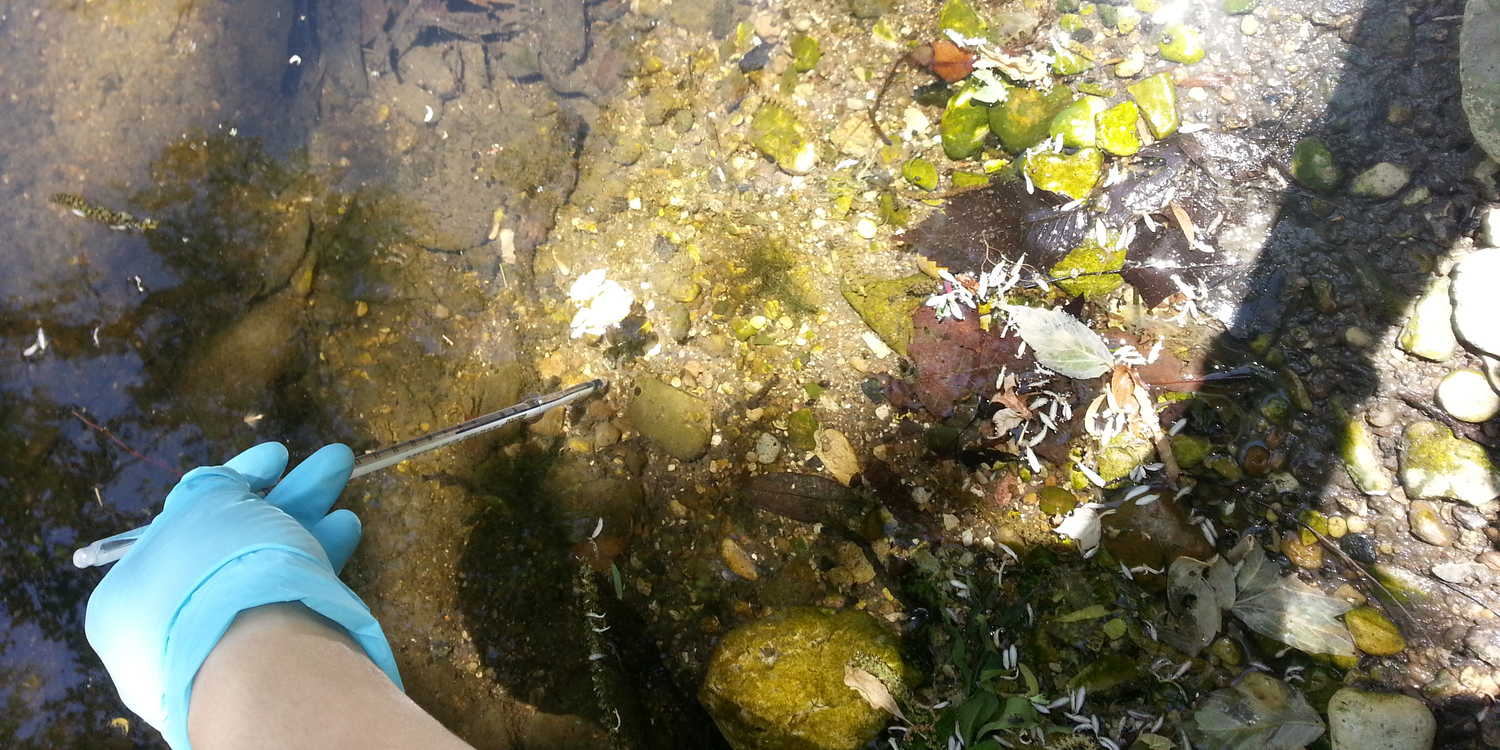
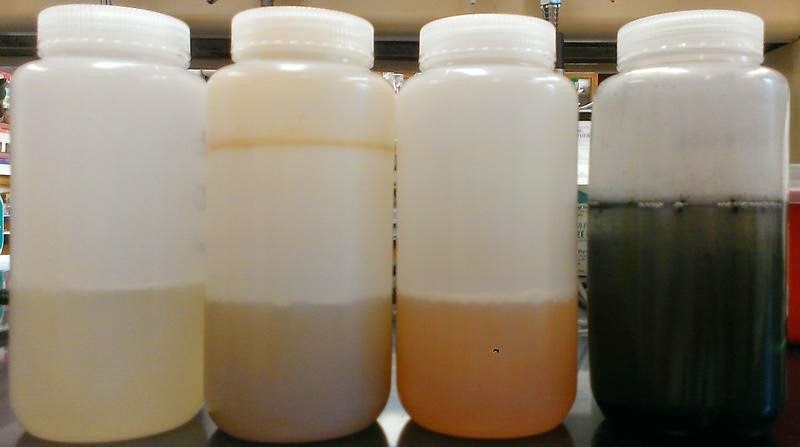
    My peers are working on some amazing projects in our lab. One student is working on a diagnostic to test for dehydration. Other students are working on a project to connect the DNA is our saliva to our behavior and habits. Some are even creating apps to test for a variety of things, including cancer! I’m currently working on finding a way to recycle the water byproduct of hydraulic fracturing. A picture of the water my partner and I have been working with is below.

    The current process of fracking is extremely wasteful. Most of the water used is stored away because it’s hard to determine what’s in it after pumping it out of the ground. As the picture shows, the water can look (and smell) really questionable, so it generally isn’t used to frack a second time. As a student in the DIY Diagnostics stream I was awarded a fellowship to work in the lab during the summer to work on the fracking project. Not many freshmen get the opportunity to receive payment for doing their own research. This is just one of the many benefits of being part of a group as unique and exciting as the DIY Diagnostics stream.
  • Student Researcher: Kathryn Thackrey

    Student Researcher: Kathryn Thackrey

    1. Why did you pick the DIY Diagnostics stream?

        With DIY it was easy to see how my work would make a direct impact on the health and wellbeing of others. My ultimate goal in any pursuit is leave the world better than I found it, and I think that this stream as obvious and exciting humanitarian leanings.

    2. What diagnostic ideas are you most excited about?

    Well, I work on an individual project, but one of the coolest things about the DIY stream is that it revolves around the concept of analyzing saliva to see what it can tell us about the state of an individual’s health, and then connecting that information to a phone or computer to get immediate, integrated results. We’ve already started this by making apps and collecting bacterial RNA data through the Oral Microbiome project, and so I’m excited to see what happens in the next couple of years.

    3. How do you explain what you are doing to your parents or someone who’s never heard of the FRI.

    I’m basically testing resistivity in solutions meant to mimick the salt concentrations found in the average person’s saliva, which will hopefully be able to tell me whether a subject is dehydrated or not. This is because as a person loses more and more of their water weight (body mass in water), the proportion of other stuff in bodily fluids goes up. Knowing this, we can test how much salt is in a solution by running an electric current through a sample and seeing how much of that current is lost (resistance). So, the less resistance there is, the more dehydrated you are. 

    4. Why do you love science? Do you consider yourself a scientist/researcher?

    I admire science and scientists because absolutely every aspect of the natural world is considered fascinating and beautiful. Nothing is shunned or taken for granted and everything is important. I think that’s a great way not only to work, but also to look at the world.

    5. How has being a part of the research community helped you succeed at UT in general?

    Doing research with people at my own age and level has both helped me to find a place where I belong on this big campus, but also has shown me that everyone needs help in one way or another. One of the bravest things you can do is ask for help.

    6. How was your experience learning to program mobile apps?

    It was interesting to see how much complex and precise work goes into even the simplest web documents. It makes you appreciate more intricate computer interfaces.

    7. Can you share a big “aha” moment you have had in the stream?

    I never really had a moment; for me it was like an accumulation of work that showed me that if you try really hard and design your experiments well, good data will come from your labours. 

    8. Has anything particularly fun or funny happened to you in the stream?

    Over the summer a group of researchers went paddleboarding as a send-off for one of us. It was a ton of fun and I’m proud to say that I jumped in and then fell in later.

    9. Where do you see diagnostics in 20 years and how do you fit in the picture?

      In 20 years I would expect a functioning, marketable dehydration diagnostic that incorporates electronics and can be inserted directly into the mouth. By this time it could feasably used for sports teams, adult care facilities, and youth groups from classrooms to extracurriculars to ensure health.  

  • Contact Us!

    Contact Us!

    If you have any questions about what the stream is about or how to join, don’t hesitate to contact:

    Dr. Tim Riedel

    triedel@utexas.edu
    Research Educator
    Office in Painter Hall
    PAI 2.08C
    (512) 232-8346 office

  • Dr. Tim Riedel

    Dr. Tim Riedel

    Research Educator, DIY Diganostics

    I have a diverse background in developing detection platforms.  This includes working with classical optical detectors, two-component signal transduction pathways, fluorescent protein expression, respirometers, and most recently quantitative PCR.  I’m excited to join the FRI and look forward to seeing what the students develop.

  • Dr. Andy Ellington

    Dr. Andy Ellington

    Biochemistry and Molecular Biology Professor

    Website: ellingtonlab.org 

    The Ellington Lab is a biotechnology lab that engineers nucleic acids and proteins for biomedical and other applications. Nucleic acid biosensors (aptamers, ribozymes) and nucleic acid circuits (DNA computers) are being harnessed to diagnostic applications, especially for point-of-care diagnostics in resource-poor settings and for facile tumor detection.

  • Research

    Research

    The DIY lab works on both lab-wide and individual research projects.