Category: Featured

  • “The amazing thing about this research stream is the flexibility and endless possibilities.”

    I joined the DIY Diagnostics stream of FRI in the spring of 2019 without many expectations for what I would undergo. I was intrigued by the idea of getting to work and develop with diagnostic technology, but I had little to no research experience prior to joining the stream. Throughout the first semester, I learned so much about different general laboratory and research skills as well as amazing diagnostic tools like lamp and PCR. I learned how to culture bacteria, extract DNA, and use fluorescence to quantify microorganisms. Some side advice for you, do not touch the Waller Creek water! My eyes were opened to the dedication and years of research that goes into making easy, inexpensive, and effective diagnostic tools. Beyond specific skills, I also learned what it meant to conduct real research. I was very uncomfortable and anxious with the idea of not getting the ‘right’ answer in the lab. Through my time in DIY, I learned that the process of research is long and tedious and can often lead to no answer, let alone the ‘correct’ answer. However, I started to appreciate the process of exploration and grew to enjoy research. I know that I would never have had the confidence to trust myself and simply research without expectations if I had not had the supportive environment created by Dr. Riedel, the mentors, and the other students in DIY.

    I am now in my second semester in DIY and have the opportunity to create my own diagnostic tool! I have decided to explore computer science and develop an application that can diagnose if a college student is sleep deprived. The amazing thing about this research stream is the flexibility and endless possibilities of research available to you. We are able to let our curiosities and ambitions drive our research which makes going into lab so much more enjoyable. I have no doubt that the skills I learned in lab and my mindset as a researcher will continue to help me in the future.
  • Another Home

    Another Home


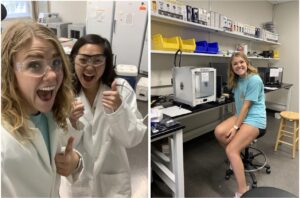
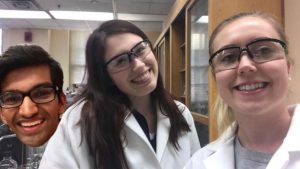
    Through the DIY Stream, I met Emily. Emily has since then become a study buddy and life-long friend. DIY Diagnostics has given me so much more than a lab credit.


    My freshmen year at UT was a rough adjustment to college life. I had originally come from a high school where my graduating class was 43 students. Entering UT, especially the College of Natural Sciences, I felt like a small fish in a giant ocean of college students. When I visited the different research labs before deciding on a stream, I chose DIY as my first choice to visit. Upon entering the open house, the first words Dr. Tim Riedel said to us was, “I hope this lab is a home to you. Yes, you’ll be doing research… but I hope this lab will be another home for you to come to.” I instantly fell in love with the thought of a home-away from home on campus. This FRI Stream gave me the opportunity to conduct research that many others wouldn’t be able to till grad school AND I was able to have a community on campus.

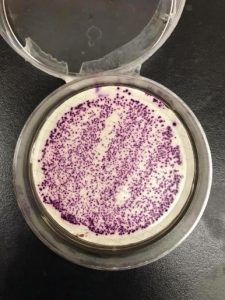
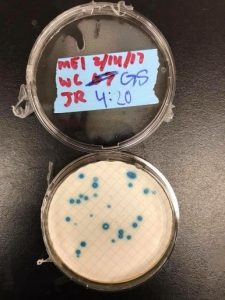
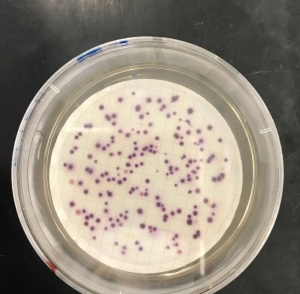
    These two photos are pictures of the techniques to plate E. Coli collected from Waller Creek. This was the first time that research I conducted actually went to a project that is proposed to fix a problem in real-life!

    Now the FRI, it’s pretty unique in itself. When I first applied for the Freshmen Research Initiative, I had no idea what this organization actually was. Long story short, the FRI is the ability to conduct actual research as an undergraduate while getting lab credit for the research I am conducting. The DIY Diagnostics stream is exactly what you think, “Do-It-Yourself Diagnostics”! My mentors described our research with the example of a pregnancy test. You are “diagnosing” yourself with a tool created with research! The first semester in DIY Diagnostics or the FRI is mostly a semester that allows students to learn researching techniques and develop a taste for research. Coming from a small school, this semester was crucial for me to learn information about lab techniques, rules, and knowledge. Your second semester (the one I am currently in) is when the fun begins!

    The second semester of participating in the Freshmen Research Initiative- DIY Diagnostics Stream is where you conduct your own research to ultimately create a DIY Diagnostic tool! Personally, I had a tough time deciding which diagnostic idea I wanted to join. I thought the DIY Zika test was super cool… but so was the Parkinson’s keystroke project, UV Wearable, and many others! I decided that the Parkinson’s keystroke project was one that I felt I could make a difference in. I am super excited for what this semester holds for the Parkinson’s Keystroke Research!

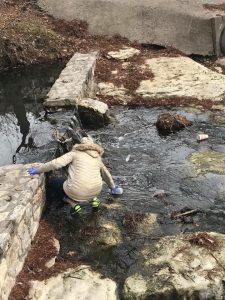
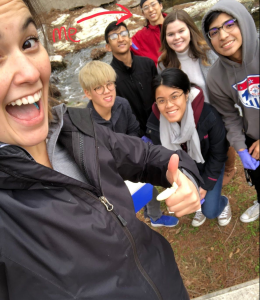
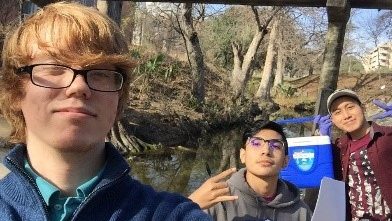
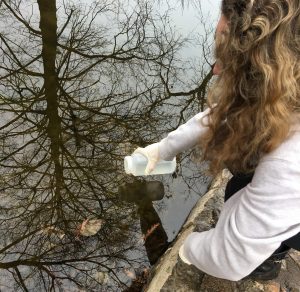
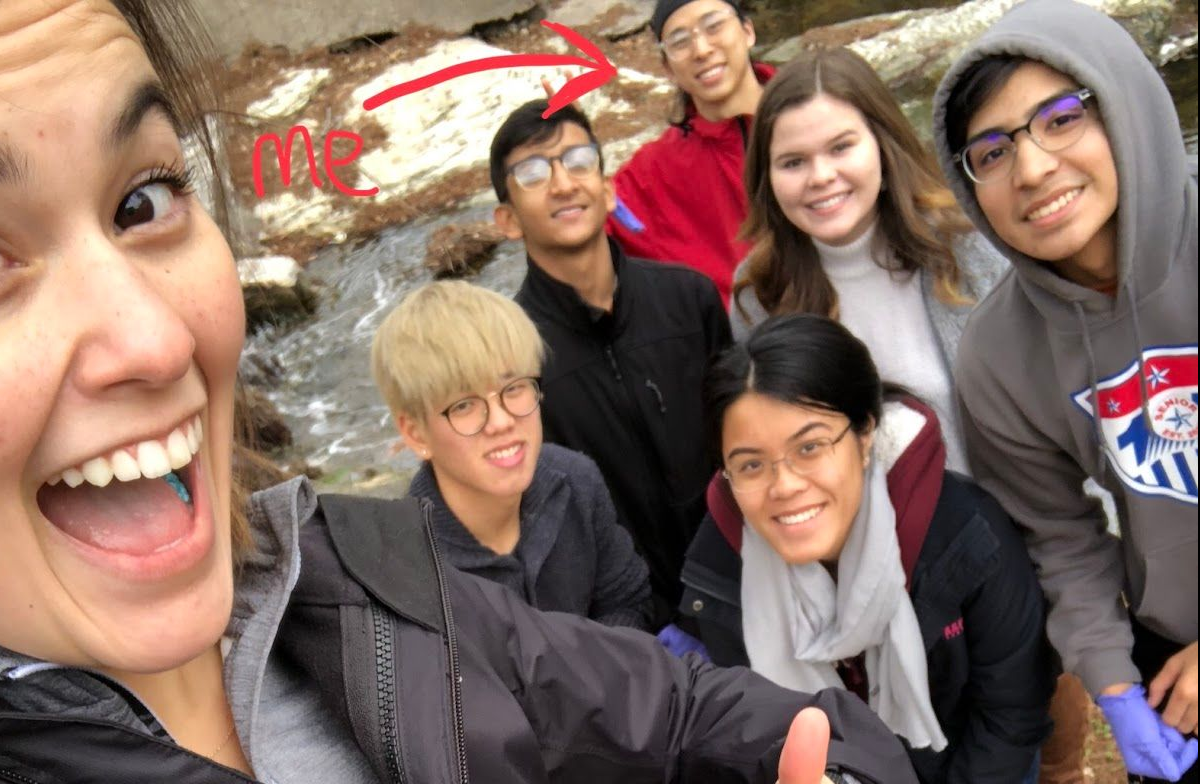
    Here I am collecting water out of Waller Creek that was used to get the samples pictured above.

    Joining the DIY Diagnostics research team, I found a community and a home. What is super neat about joining an FRI stream, is that all the members in your stream are most likely taking the same or similar classes as you are. By meeting my fellow researchers, I met study buddies and friends. The FRI helped me succeed not only in research, but in my classes. Before joining DIY Diagnostics, I wasn’t sure if I would enjoy research or conducting experiments in a lab. But once you contribute to a research project that ACTUALLY contributes to solving a real-life problem, it excites you in a way you have never felt before! So I leave you with this advice… join the FRI, join DIY Diagnostics, find your lab coat and find your home.

  • Real Research as a Freshman!

    When I chose to sign up for DIY Diagnostics, the reason that I chose it over other FRI streams was because I was really interested in being able to develop my own diagnostic tool. As a premed student, I was really interested in the applications of diagnostics for my future in the health professions. One thing that really interested me about DIY was the work that past years in the stream had done on Waller Creek–I thought it was really cool that we as students could go out and do work on the creek that would actually help to determine the levels of contamination in the creek.
    Something that really intimidated me about the stream was the coding portion–developing apps throughout the semester. I was nervous going into it because I have exactly 0 prior coding experience, and it’s an intimidating thing to go through for the first time, especially since some of my fellow stream members already had some experience with coding. I definitely learned a lot through all the app assignments, and there was a lot of trial and error before I got each app to do what I wanted it to do, but the whole process was a really great learning experience. Plus, despite the struggle it took to get my apps to work, the sense of accomplishment I felt when I actually did get them to work was honestly unparalleled. I’d advise any prospective DIY students to not let the coding aspect of the stream intimidate you. Despite not having any experience prior to joining the stream, I was able to learn a lot about coding. Though a frustrating process, it really is a great way to learn a new skill.

    Something that I really enjoyed in the DIY stream was the skill development that we did with 3D printing. It was honestly so cool to me that we were able to use 3D printers in the lab–especially because 3D printers are such a great tool to be able to do diagnostic research. I ended up printing a pendant with a trident on it for my little sister–and she was over the moon when I told her about the 3D printing process and how I got to do that in my research lab. The number of  “Oh my gosh, this is SO COOL!”s that I got from her was honestly really encouraging a good reality check for me–the stuff we were doing in lab really was cool

    The stream definitely changed the way I thought about research as a whole. Especially as a freshman, I had definitely fallen victim to the mentality that real research was something that only people with PhD’s or a lot of training were qualified to do. But once we got the results back from our Waller Creek skill development and we found out that we had identified a major source of contamination for the creek, I realized that what we were doing in the stream actually was real research. We, as tiny little freshman with very few skills outside of what we learned in DIY, were able to use those skills and knowledge and produce data through experimentation that actually led to a difference. I think that was honestly one of the coolest moments, for both me as a student in DIY, as well as just a student in general–knowing that something I had done, even without a PhD or significant training, had had an impact, was a surreal moment. My experience in DIY has taught me a lot about research, both in skills and the mentality that I have about it, and I think it’s a great opportunity for anyone looking to get into research.

  • Growth as a Student and as a Person

      As a freshman, I could not wait to get to Austin- I would leave my small East Coast town to make new friends and study at one of the nation’s best universities. Even though I looked forward to new faces and studies, I still felt uneasy about the high school- college transition, and this started before stepping foot on campus. I was worried about the workload and the rigorous coursework I would face the next four years and wondered how I would do it. This is when I decided to sign up for FRI. I wanted to take initiative in my learning and get involved with an organization that would make the big university environment feel smaller.
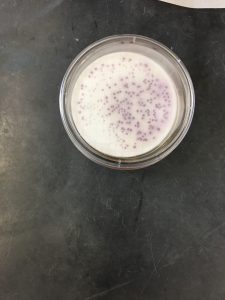
    Pictures from the Waller Creek experiment from Spring ‘18.

    When FRI started in the spring semester, the DIY lab took every new student under its wing to make sure we would succeed in the lab. In the DIY lab, we learned extensive notebook keeping, which became a habit that helped me organize my notes for my other classes. Another thing I am grateful about the DIY community is that all of the students are more than willing to take a break from their projects to help troubleshoot the work of their classmates. Since I had never worked in a lab before, my lab mates were patient and helpful in teaching me the techniques I would need. This is the strength of our community and I think I can honestly speak for my labmates when I say, we look forward to coming into the lab every week.

    One of the best things about DIY is that we are able to make our own schedule for lab hours. Like adding a class, the extra hours challenges your time management skills, but you quickly get a hang of things. This is especially true during weeks that I had an exam because I was able to skip an hour of lab that week and make it up the following week without falling behind.

    Pictures from the Waller Creek experiment from Spring ‘18.

    Although flexible lab time makes DIY easier, I struggled when it came to our coding projects. In the beginning, I dreaded the coding assignment as soon as I received the notification from Canvas. It took a lot of Codecademy practice and outside readings to get my projects to work properly. I remember sitting in the PCL when the final coding assignment was posted and I thought, “Well, better start before I have to focus on finals.” I knew this project was going to take quite a few hours but when I finished it that same night, I could not believe it. I was shocked that everything came together so smoothly. Coding was never a language I wanted to learn nor did I think I would ever effectively grasp, but there I was. I may not have loved coding websites, but they were definitely worth the time.

    I looked forward to picking up a student’s research project that could truly make an impact in the world. This was important to me in choosing a stream because I wanted to make a difference in the community. In one of the projects we did first semester, we tested the water in Waller Creek and found that the bacteria in it proved to be a health risk and submitted our results to the City of Austin. This truly gave me a sense of accomplishment.

    Whether my confidence was bolstered from the support of the DIY Diagnostics community or the experience I gained as the semester progressed, I am positive that this stream has made me grow both as a student and a person. I joined FRI because I wanted to be apart of a group, learn, and impact the community and DIY has done just that.

  • Awesome Experience with Research!

    Awesome Experience with Research!

    Hello prospective FRI members and UT students, my name is Chad and I am a
    sophomore in the DIY Diagnostics FRI stream. I’ve been a part of this stream for a semester and some change and have really enjoyed my time in the stream. This stream, like many other FRI streams, teaches you plenty of lab skills such as pipetting, analyzing your data, how to conduct proper research, etc. What sets our stream apart however is the community within the lab. Since starting my time here in DIY, I’ve made plenty of friends that I continue to talk to even outside of lab.

    One of the coolest parts of DIY to me is that our lab consists of a diverse amount of students. Yes, we have our pre-health students, our bio majors like many other labs; however, our lab has a large focus on computer science which allows you to interact with many peers who may have valuable experience to share and may teach you skills you may not have learned otherwise. I can proudly say I came into DIY with 0 coding knowledge and have since learned and expanded my repertoire of computer science knowledge. We also work with 3D printing which you don’t get exposure to in a normal everyday lab. I’m a pre-dental student and DIY fits really well into any pre-health schedule thanks to the nature of what we research in our lab. The lab is built upon easy diagnostics that you can try to do at home so we are always dealing with common illnesses and bacteria that you may end up working with in a pre-health profession.


    Another unsung skill that DIY helps you develop is time management. The lab is a
    on-your-own schedule attendance, so you come in when you can to work on your lab hours. This helped me out in my overall experience as a UT student as it helped me learn to organize my projects and prioritize my time spent on certain tasks. Time management is a skill that I feel like many people underestimate and DIY has helped me apply this skill to the rest of my life as well! It can be daunting to worry about lab hours on top of classes, but the flexible schedule allows you to work when you have time. Time-management in lab also teaches you to prioritize certain tasks and keeps you on track of your projects both in and out of lab.

    Remove featured image


    While we do have your expected lab activities like culturing bacteria as seen below, we
    also do a lot of other cool things in lab like 3D printing and studying our environment here on the
    UT campus! DIY gives a good mix of traditional lab work with other cool opportunities to learn
    some skills that may be outside your comfort zone. I hope you all take a look through what DIY
    has to offer and consider our lab as your next community to join here on the 40 acres! I will
    confidently say that joining DIY will give you an awesome experience with research and checks
    off some lab credits you may be wanting anyways!


  • Using Computer Science to Impact People’s Lives

    Using Computer Science to Impact People’s Lives

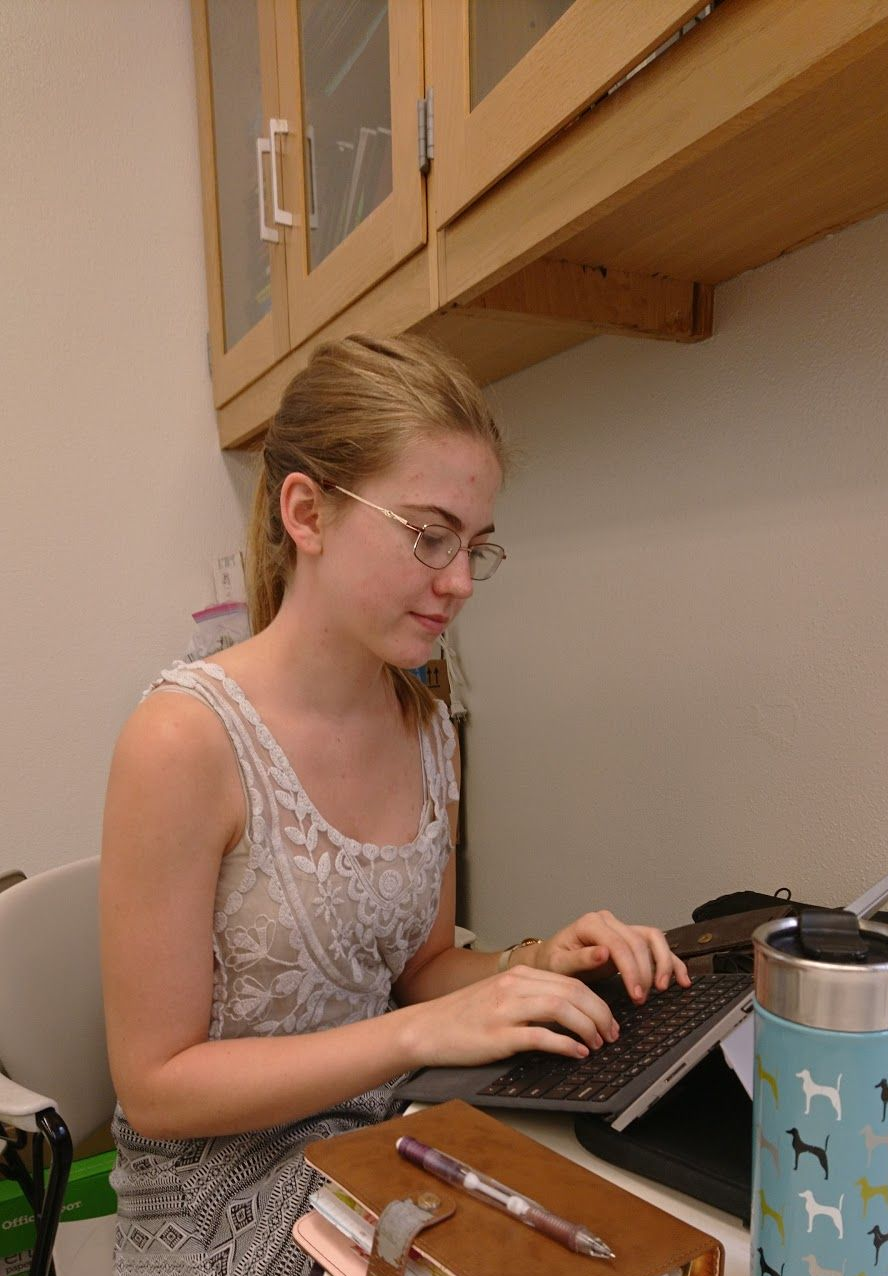
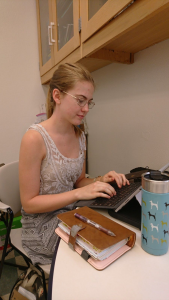
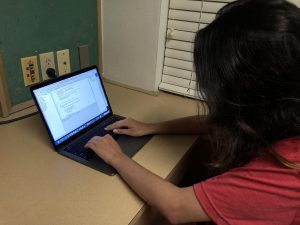
    me, working on an amazing project. Or possibly just pretending to type, there’d be no way of knowing

    As a computer science student, I have faced constant pressure to find my next internship or career opportunity. Almost every day there is a company tabling in the GDC lobby or hosting a recruitment event somewhere. Computer Science majors are often in a world of their own, away from the rest of CNS, where they are encouraged to pursue an internship at one of the “Big 4” and to focus their studies on perfecting their programming skills. We often lose sight of how computer science can be used alongside other natural sciences to directly impact the most basic parts of people’s lives, including their health. I started in FRI in the Computational Intelligence and Design stream. In my first semester, I met many interesting and passionate people. That class was almost entirely computer science majors, and I was excited to talk about hill-climbing algorithms, neural networks, and how these could be used to train computers to make decisions. We had a lot of knowledge and projects, and our mentors were kind and knowledgeable and helped us make it through. At the end of the semester, I teamed up with some friends I made in that class to create an algorithm that makes predictions about emergency response calls. Although our results were not great, I learned a lot doing that project, and I was excited to
    continue in FRI my sophomore year. When I found out the stream was discontinued, I knew immediately which stream I wanted to join: Quantum Computing, the cutting edge of computer science research! We were also told we could join DIY Diagnostics, but I blew that off. Biology was far from my favorite science, and the thought of it brought back memories of staying up all night trying to complete a Science Fair project. On one of the last days of the semester, Dr. Riedel came to speak to our class and tell us
    why we should transfer into DIY Diagnostics next semester. I sat in the front row and prepared to let my eyes glaze over
    while I smiled politely. Strangely, though, I found I was actually interested in what he was saying. His passion about
    diagnostics was obvious, and I realized that the machine learning skills I had learned could actually make a big difference
    in their research. There was also a certain appeal to being one of the most experienced programmers in the stream by
    default.
    After meeting with a DIY mentor, I decided to switch into DIY Diagnostics. It is definitely intimidating to be conducting
    research in a field I know so little about, but I know my peers will be able to help me with my weaknesses, and vice versa.
    This semester I hope I can contribute to the lab community and learn more about the fields of science that I have been less
    than enthusiastic about in the past. I am planning to work on a project that uses typing patterns, such as how fast someone
    types or how often they make mistakes, to detect Parkinson’s disease, a neurological condition that affects motor skills.
    I’m looking forward to the challenges ahead and the friends who will help me along the way.

  • New Experiences and Diverse Exposure

    New Experiences and Diverse Exposure

    I don’t know what I want to do with my life; I’ve always been that type of person. So when it came to picking a research stream for the Freshman Research Initiative, I was totally lost. What if I picked a stream and then ended up hating what I did? What if it was boring or too hard? There was everything from fish behavior to quantum computing, but those were too specific for me it felt like I could never truly find something I would want to do. That’s until I saw DIY Diagnostics. Intrigued by the name, I did further research on the internet and saw that DIY Diagnostics that was simply a stream based around creating cheap, at-home tests for anything from the environment to diseases. It was the only stream that I saw that focused on chemistry, biology, and computer science at the same time. Intrigued, I decided to go to the FRI Open House event and check out the DIY Diagnostics booth, and oh man was I impressed. There’s something unexplainably charismatic about Dr. Riedel, the stream research educator, waving a pregnancy test around and talking about it being an end goal for the stream that just gets me hooked on the idea of self-diagnostics. From that day on, I knew that DIY Diagnostics was where I wanted to be. I really thought I would be doing something biology related when I joined FRI. Instead, my project is entirely electronics and coding based, and I LOVE IT! I had never coding or put electronics together before I came to DIY Diagnostics, but being exposed to so many different things in such a diverse stream helps you really figure out what you want to do. I’ve done everything from water quality analysis, to web app coding in this stream, and I’ve loved every moment of it.

  • Favorite College Memories!

    Working at Waller Creek!

    Hey there, and welcome to FRI! If you are wondering which research stream to choose from (there’s so many intriguing ones, for sure), then you’ve come to the right place. Let me explain why DIY Diagnostics is, arguably, the best research lab!

    Coming into DIY second semester of freshman year, I really only knew the basics of performing research. I didn’t have thorough knowledge of techniques like pipetting, plating, and using specialized lab equipment. Quite honestly, working in a college lab intimidated me. But with the help of the kindest, most enthusiastic mentors and a very supportive RE (Dr. Riedel or Tim), I started to feel more confident about conducting research. The Skill Developments that we worked on help review and hone the necessary scientific skills for success. I am so glad that I joined DIY – one of the best decisions I have made so far in college.

    One of the great things about the DIY stream is the breadth of research assignments that we work on. From collecting and measuring bacteria levels in water samples from Waller Creek to coding image analysis apps to 3D printing novel objects, we learn so many relevant skills. We are not simply a scientific lab, but a computer science one as well.

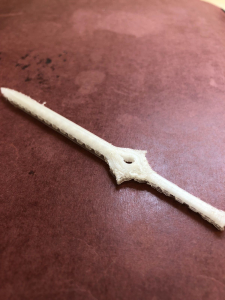
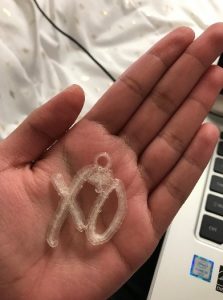
    My 3D printed charm!

    Some of my favorite college memories come from lab, simply because you get so close with each of your fellow lab partners after spending numerous hours every week together. A few memories that especially stand out to me include trekking down to Waller Creek the day after heavy rains (very messy, to say the least), or when we were using the 3D printer to print whatever plastic object we desired (I printed the XO charm seen below).

    Overall, being in DIY Diagnostics has taught me so much about research, preparing me not only for future labs but for success in all my courses (especially in terms of time management). No matter what stream you choose, you will greatly benefit, but DIY is honestly the best. DIY – it’s do or die!


  • I Hate Mosquitoes

    Me reading up on neural networks to build the algorithm to distinguish the difference between mosquitoes and other insects noises

    DIY Diagnostics is a great FRI for a hands-on experience in creating and building your own experiment as well as making new friends. The stream is exciting and very self-driven, you are given freedom and the independence to conduct research at your own pace, with mentors and Dr. Riedel available to help if needed. You will definitely learn many things, both about research and cooperating with others. Some students have their works published, and many students enjoy it so much that they continue to work on their projects throughout their years at UT or become a mentor to help incoming freshman.

    The diagnostic I am working on is identifying mosquitoes through their wingbeat frequency and using this to build a device that can count the density of mosquitoes in an area. I’m from Houston, where there are a humongous number of mosquitoes in the humid summers, so the project resonated with me since I hate mosquitoes. The end goal of the project will be to be + Add New Category able to build these devices cheaply and identify the places with large concentrations of mosquitoes and stop them from breeding. Many of the diagnostics have real-world applications, and the satisfaction from completing your project and creating something useful is a feeling that all DIY Diagnostics students understand.

    If you are on the fence about being in DIY Diagnostics, you should give it a try! It’s a stream that requires a lot of work because you are conducting real research and gathering useful data, but it’s so much fun and everybody enjoys it. In addition, the stream opens many doors for students professionally, with visits to research centers and contacts with professionals, so I would highly recommend it.

  • Switched to DIY, No Regrets!

    Hi and welcome to UT! I hope that you’ve been enjoying your freshman year so far! It’s definitely both an exciting and stressful time; finding activities and organizations that help you navigate the college process is critical, and FRI is a great start.

    I initially started with the Freshman Research Initiative with placement in the Artificial Intelligence and 3D Printing stream. As a computer science major, I felt obligated to place the aforementioned and Autonomous Robotics streams as my first choices, without really considering or looking at much else. While I learned quite a bit about AI, from neural network organization to genetic algorithms, I didn’t spend much time doing the assignments outside of my dorm or the PCL. There wasn’t necessarily a requirement to physically be in lab when everything could be done individually from a computer.

    Thus, when the stream shut down at the end of last spring, I began looking for other FRI streams that had more of a “wet lab” approach but still let me improve upon my programming skills. DIY Diagnostics felt like a good fit. Since I’ve begun this semester, I’ve already met plenty of other students who are all actively working on such unique projects. I’ve heard of ideas that range from collecting and categorizing water samples at Waller Creek to creating sensors that detect bends in order to better diagnose disorders like scoliosis. The project I was particularly drawn to was one the lab has been building upon-mapping the typing patterns of Parkinson’s patients.

    Over the past few years, different members of the lab have mapped the typing patterns of patients with Parkinson’s from varying periods in their diagnosis. Using this data, they’ve been able to derive that patients change their typing patterns and reaction times when they begin to develop symptoms of the disorder, such as a tremor. By collecting more data, an algorithm that utilizes reaction times from mapped typing can be created to diagnose Parkinson’s effectively and early on. Additionally, mapping one’s typing can be done to find other trends as well. Past projects done in the lab with type mapping have been able to determine trends in sleep deprivation, caffeine usage, and if someone is coding or not. Although I am definitely leaning towards studying Parkinson’s patients, the diversity of projects that all hinge on keyboard mapping was something that got me incredibly excited and drew me into the project.

    Additionally, one of my favorite parts about the DIY Diagnostics stream is the community fostered. Having transferred in, I felt a little lost at first. However, everyone-the professor, students, and mentors-are eager to help and make sure everyone is able to find footing when it comes to joining a project. There’s always plenty of support, whether it be having small group meetings, having huddle meetings, or having student mentors always available during lab hours. Even the Parkinson’s project I recently joined has group meetings every week just to ensure that everyone stays on track and is working progressively.

    Ultimately, FRI has been an incredibly rewarding experience for me. Research can be tough; sometimes, it might feel like you’re stuck in repetition or not going anywhere, but it’s important to persist and seek help or mentorship. It definitely takes a moment to get acclimated to the lab environment; FRI has always been a course that differs so greatly from everything else that I’ve taken during my time here at UT Austin. But, as long as you put in the effort, DIY Diagnostics is most definitely a stream that will give you the tools you need to succeed.