• Skip to primary navigation
  • Skip to main content
  • Skip to primary sidebar
UT Shield
The University of Texas at Austin
  • Home
  • Research
  • Publications
  • People
  • Join the lab!
  • Teaching

Lead Story

June 17, 2025, Filed Under: Lead Story

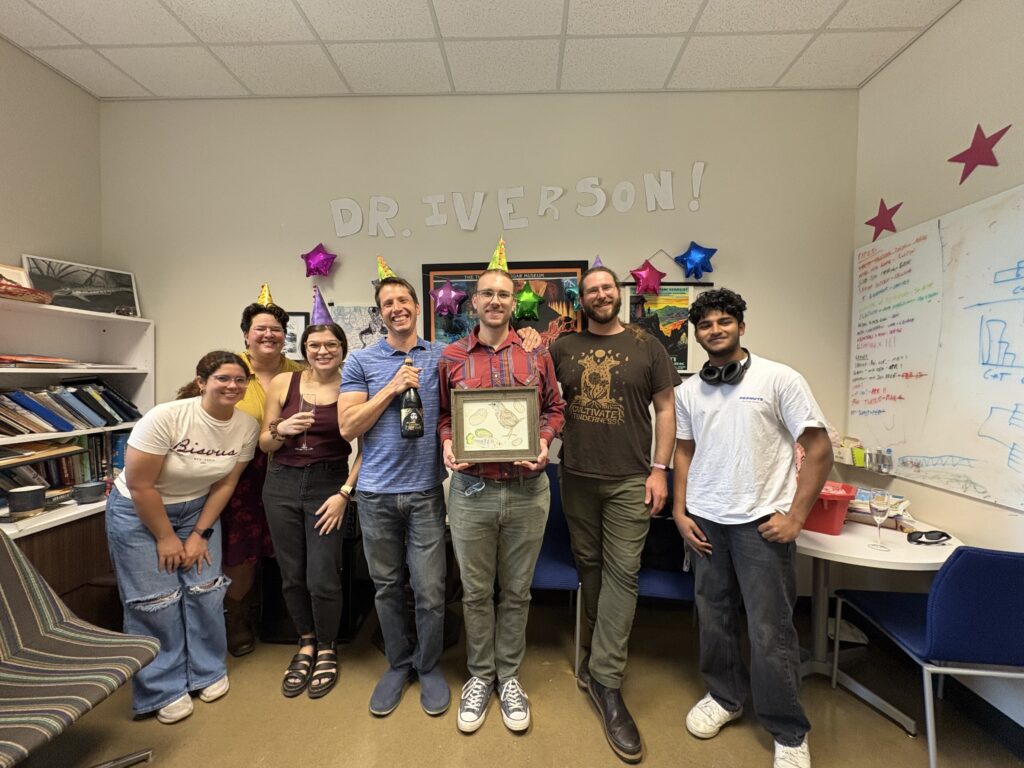
Congrats to newly minted Dr. Erik Iverson!

A huge congratulations to Erik Iverson, who successfully defended his PhD dissertation last week. Erik was the first PhD student to join the lab and is also the first one to successfully defend. He has been incredibly productive during his time in the lab, authoring over a dozen publications, receiving multiple grants/fellowships, and mentoring a score of successful undergraduates. I am so proud of him!!!

Erik’s dissertation is titled “Implications of mitochondrial genetics and physiology for biogeography and conservation” and focuses on how processes in the mitochondria influence environmental adaptation, speciation, and responses to a changing world. His four main chapters include:

*An analysis of whether mtDNA has undergone adaptive changes in high elevation animals – published in Molecular Biology and Evolution

*A perspective piece on using mitochondrial replacement techniques and gene-editing technology in order to “pre-adapt” animals to climate change – published in Evolutionary Applications

*An experiment in natural populations of swordtail fishes with known mitonuclear incompatibilities that asks how fishes with different genetic backgrounds respond to changes in temperature – publication is in prep

*A field experiment on tapaculos birds in the Andes that demonstrates how mitochondrial and whole-organism physiology changes across species that replace each other with elevation – publication is in prep

Artwork by Laura Grossett commemorating Erik’s study systems and focus on mitochondria.

Although I could go on and on about Erik, I’ll just end by mentioning how independent he’s been throughout his dissertation. He’s done projects in three new experimental systems (tapaculos, swordtail fishes, and tit mice), got funds to largely support his entire dissertation, and brought several undergrads into the field with him for a crazy-hard amount of fieldwork.

He’ll be acting as a field instructor for Wildlands Studies over the next year before moving onto a postdoc and hopefully starting his own lab eventually.
June 2, 2025, Filed Under: Lead Story

Hot off the press: hot shrimp, cold shrimp

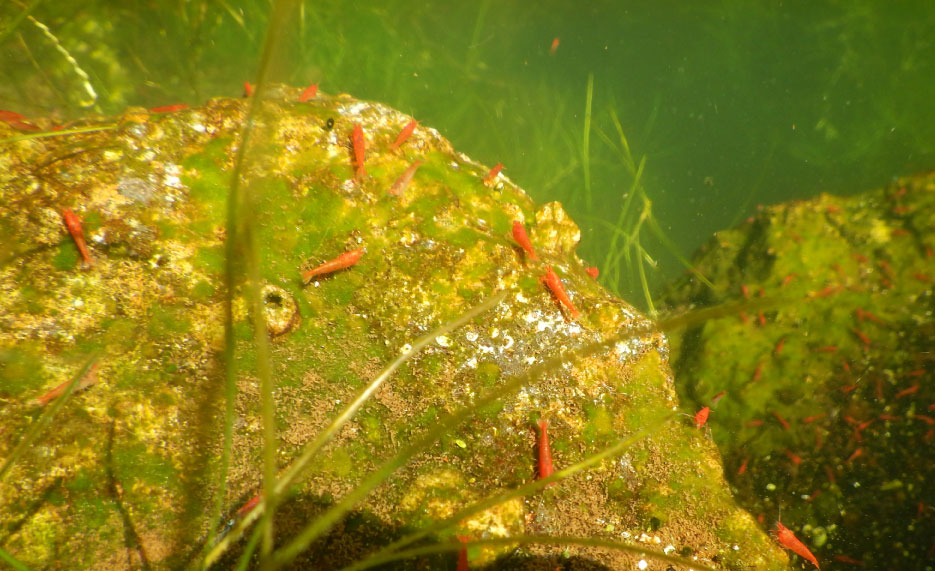
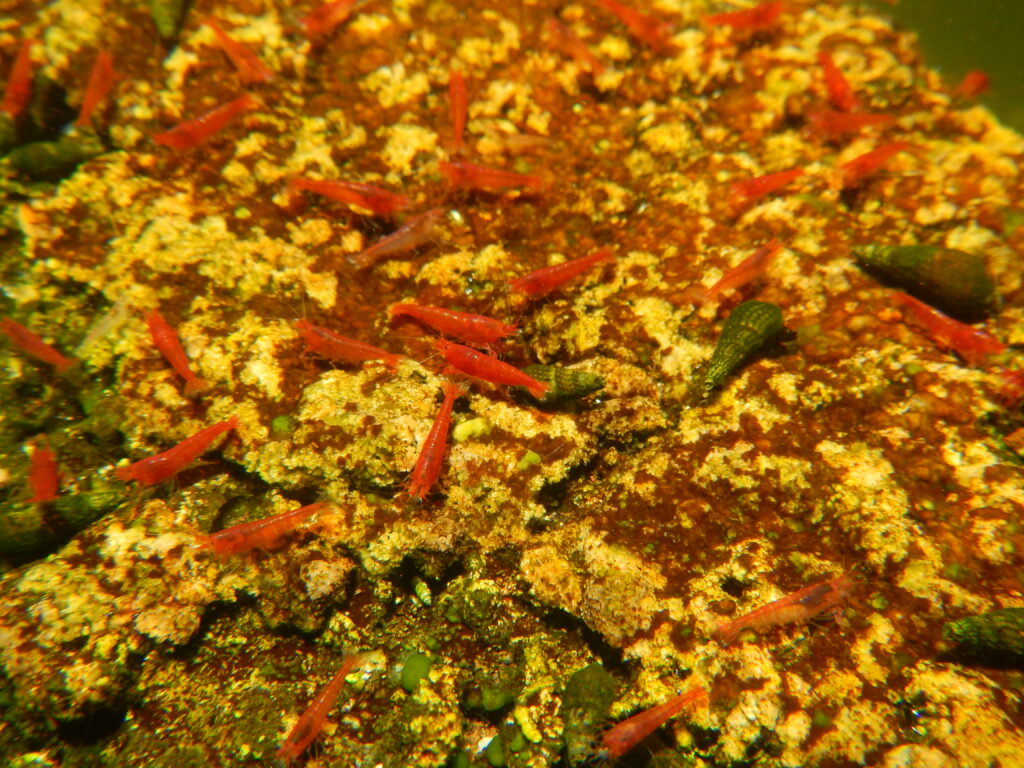
Our new paper describing thermal biology of Halocaridina rubra, a small shrimp endemic to anchialine habitats of Hawaii, is now available online @ Journal of Thermal Biology.

In this work, led by PhD student Mariangel Correa-Orellana, we examined how different populations/genetic lineages of H. rubra (known in Hawaii as opae ula) respond to changes in temperature. We were especially focused on populations from new habitats created during 2018 lava flows that continue to experience high temperatures due to geothermal activity.

Here’s 5 cool things we found:

  1. Critical thermal limits, the upper and lower temperatures at which shrimp can continue to function, seem to be mainly determined by the temperatures shrimp are acclimated to. In other words, if they are kept at higher temps, they can tolerate higher temps. Genetics might play influence this a little, but it mostly seems to be nurture, not nature. Here’s Fig. 2 from the paper showing some data:

2. Even though the shrimp from the new, hot habitats are living at high temps (e.g., ~40 C), they can’t tolerate much higher temps. They are basically living at their maximum limit. We also never see shrimp in habitats that are much hotter than the maximum limits we measured, so we think these limits are ecologically important.

3. We also measured metabolic rates of shrimps from across the islands at room temperature. We found there was significant variability among genetic lineages, suggesting their might be a genetic component for baseline metabolic rates in this species. Here’s our data:

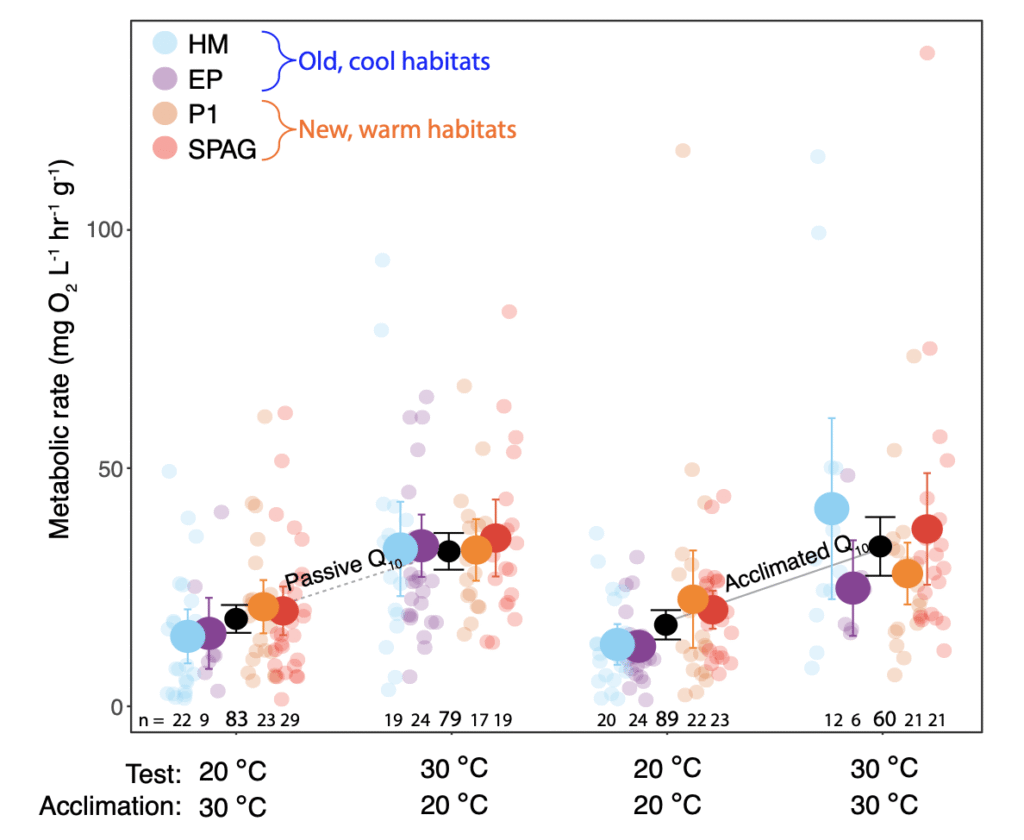
4. We also measured metabolic rates of different lineages that were acclimated to either a relatively warm or cool temperature. Importantly, we tested the shrimp from the different acclimation temperatures at either the cool or warm temp, so we could determine whether test or acclimation temperature was driving variation in metabolic rates. We found that metabolic rates in opae ula are almost entirely determined by test, not acclimation temperature. In other words, metabolic rates scale really fast with temperature and do not rebound if the animal is allowed to acclimate to that temperature (at least for 4 weeks). We call this a “no acclimation” response, which is fairly common across ectothermic animals, but not as common as a “partial acclimation” response where rates rebound somewhat with acclimation. Here’s the relevant figure:

5. If you look closely at the above figure, there’s no much difference among the different genetic lineages (HM, EP, P1, and SPAG) as to how their metabolic rates change with temperature. Our hypothesis was that shrimp from the new, warm habitats would show a stronger warm acclimation response – in other words their rates would not be as affected by warm temperatures as those from the old, cool habitats. But, this wasn’t really what we saw. Instead, we saw that rates were determined mostly by test temperature in all populations – none of them really showed much acclimation response.

Check out the paper if you want to learn more!

May 30, 2025, Filed Under: Lead Story

Congrats to Mariangel, PhD candidate!

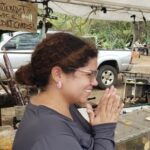
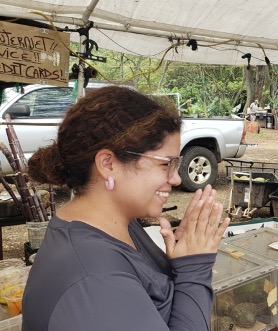
Mariangel (middle) scouts out some anchialine habitats on Hawaii with Troy Sakihara and Kendra Zwonitzer.

Congrats to Mariangel Correa-Orellana, a second year PhD student in our EEB program, for passing her qualifying exams and advancing to becoming a PhD candidate! Mariangel’s dissertation focuses on microbial ecology of anchialine habitats in Hawaii. She’s interested in what these microbes are doing and will be applying metagenomics to ask what metabolic functions different members of these communities are performing, as well as whether these functions are different across different habitat types (for example, habitats with a distinct orange crust community vs. those with mud substrates or green algal mats). She’s also interested in animal-microbe interactions in these habitats and will be taking a deep dive into the gut microbiomes of the main shrimp species that is endemic to these habitats (opae ula, Halocaridina rubra).

Mariangel is excited to get some fresh cut coconut on Maui

We’re all interested to see how her work turns out over the next few years!

March 31, 2025, Filed Under: Lead Story

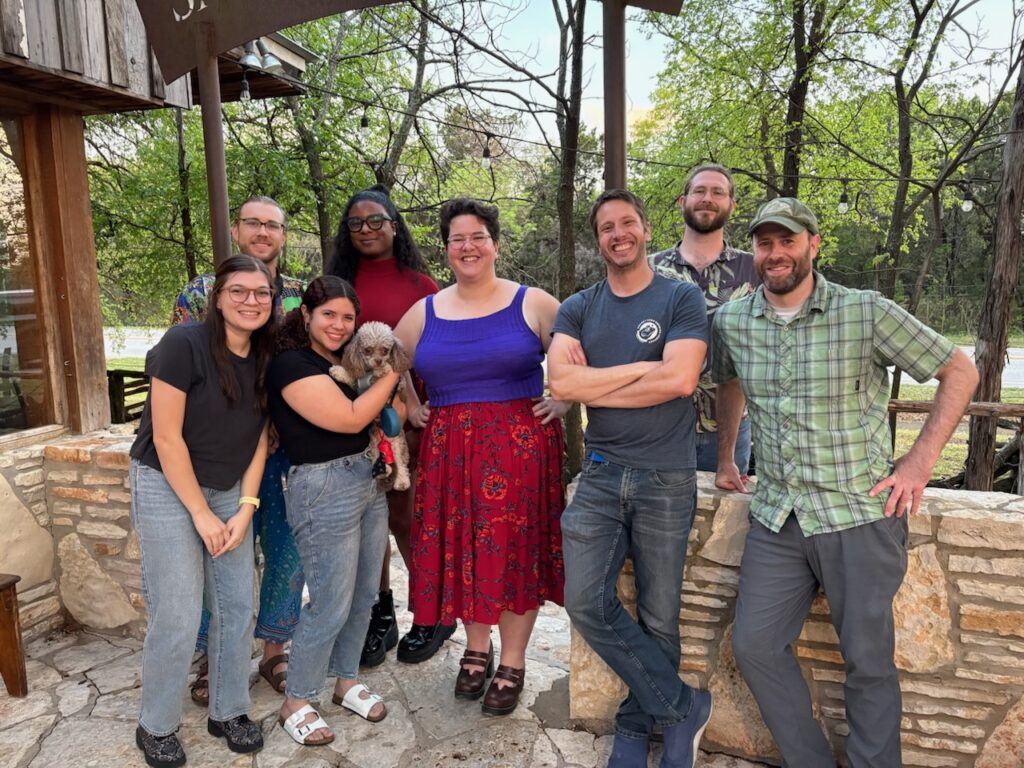
Lab BBQ with Dan

We had a great time hosting my postdoc adviser Dan Sloan for a lab BBQ outing in the Texas Hill country! Dan was in town to celebrate his postdoc adviser, Nancy Moran, and Howard Ochman, along with ~50 other of their lab alumni. It was great catching up and seeing some academic relatives.

December 20, 2024, Filed Under: Lead Story

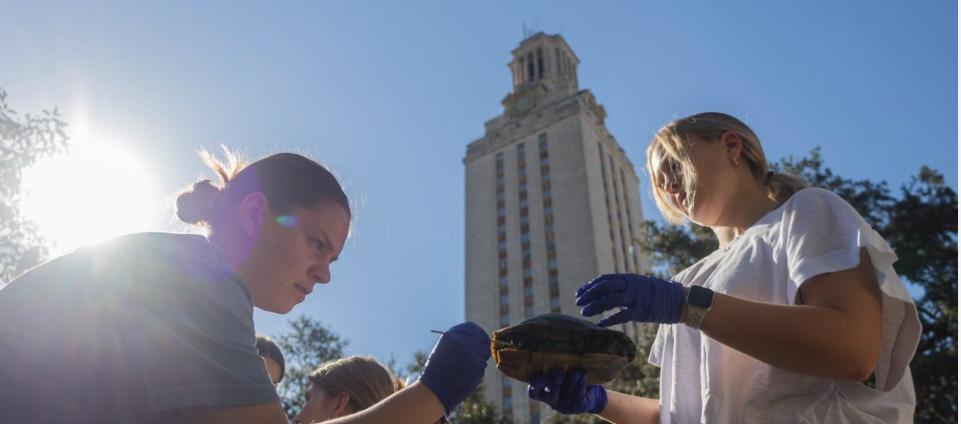
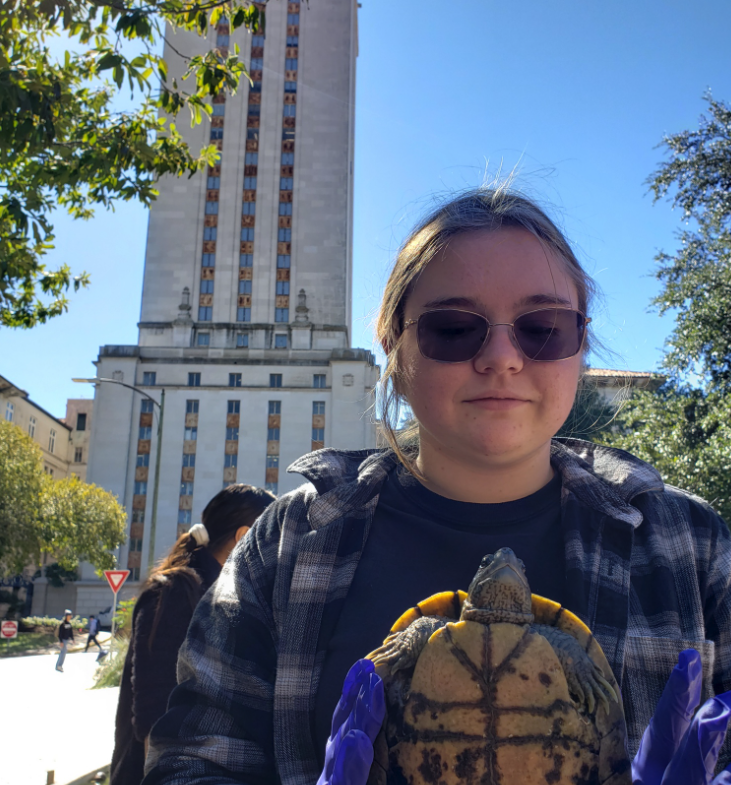
UT Turtle Pond Research

Photo by Seojin Yoon

Our lab is leading a big effort to get undergrads involved in biodiversity research by transforming the UT turtle pond into a living lab. We’ve involved around 100 students so far!

Last year, students sampled turtles (mostly red-eared sliders) in urban ponds across Austin to ask whether microbiomes were different in turtles from different ponds, or if different body parts of the turtles had different microbial communities.

This year, we’re focusing on the UT turtles, examining microbiomes in the same individuals across seasons and asking whether individuals have specific microbiomes. The turtles were also moved off campus for a short time while the UT ponds were being repaired, so we can ask whether an environmental disturbance caused changes in microbial communities.

Here’s a story from KUT highlighting the turtles’ moving adventure, and another story on our work.

Ani Kuzmina, one of our undergrad team leaders, with a turtle at the UT turtle pond.

Next year the project will continue in the broad sense, but students will be working with a different PI to address a different question at the ponds.

Almost anyone can get involved in this work! Just email Justin to get started.

December 18, 2024, Filed Under: Lead Story

Welcome to the Havird Lab!

Welcome to the lab! We’re in the Integrative Biology Department @ The University of Texas. We study evolution, ecology, and physiology and most of our projects have something to do with mitochondria. Click around to learn more and reach out if you have any questions.

  • « Go to Previous Page
  • Page 1
  • Page 2

Primary Sidebar

"Mitonuclear Reckoning" by Megan Parker
Work by Trenton Jung, commemorating Ryan Weaver's study systems.
Artwork by Laura Grossett commemorating Erik Iverson's work on mitochondrial processes in tapaculos and swordtails
Art by Tamara Clark highlighting Chase Smith's work on mitochondria and bivalves
Artwork by Laura Grossett commemorating Kendra Zwonitzer's work on mitochondrial mutations in plants and nematodes
Artwork by Isiah Berry celebrating Jess Sterling's work on mitochondria and aging
Artwork Laura Grossett commemorating Ummat Somjee's work on coreids.

UT Home | Emergency Information | Site Policies | Web Accessibility | Web Privacy | Adobe Reader

© The University of Texas at Austin 2026