Author Archives: Wayne Schiess

About Wayne Schiess

Wayne Schiess teaches basic legal writing at the University of Texas School of Law and also focuses on legal drafting, persuasion, and plain English. He is a frequent CLE and seminar speaker on those subjects and has written dozens of articles on practical legal-writing skills, plus four books. He graduated from Cornell Law School, practiced law for three years at the Texas firm of Baker Botts, and in 1992 joined the faculty at Texas. In 2012 and 2015, he was named the law school's legal-writing teacher of the year. In 2011, the Texas Pattern Jury Charges Plain Language Project, for which he was the drafting consultant, was named a finalist for a ClearMark Award by the Center for Plain Language. In 2009, five of his short articles were featured in the Scribes Journal of Legal Writing "Best of" series. In 2007, this legal-writing blog (LEGIBLE) was selected for the ABA Journal Blawg 100: "The best Websites by lawyers for lawyers."

Visuals in Briefs, part 1

Visuals can be valuable tools for persuasion in briefs.

Legal writers should use visuals as persuasive tools in their documents, and it’s already happening: In my survey of 133 lawyers, 70% said they frequently or sometimes use visuals in briefs. The survey targeted writers of persuasive documents at an initial-dispute stage: trials, administrative hearings, arbitrations, and others.

This article displays a simple pie chart showing the answers to survey question 2: “In writing briefs or other persuasive documents, do you ever use visuals: graphics, images, charts, tables, illustrations, and so on?

In part one of this series, I’ll discuss the recommendations in favor of visuals from experts and practicing lawyers.

As the survey results show, many legal writers are already using visuals in briefs. That only makes sense because those who research and write about using visuals have been recommending the practice for several years. Here are two experienced practitioners in 2019:

  • “Using images in briefs can be an effective tool for both catching and keeping the attention of a ‘wired’ judge or clerk and for increasing the persuasive force of your legal argument.”[1]

Here’s a 25-year in-house lawyer, writing in 2013:

  • “Well-crafted images—charts, diagrams, photographs—can make your briefs more interesting and persuasive ….”[2]

No, the written word isn’t dead, said two legal-writing professors in 2015, but “[a]s legal writing moves toward a more digital medium, it is time for lawyers to incorporate visual persuasion into their documents.… [Visuals users] are advancing legal writing in a positive direction.”[3]

My survey produced some supporting recommendations as well. In responding, writers could choose from a list of the potential benefits of visuals, and here are the top three responses:

  1. Sometimes visuals can convey concepts that text cannot;
  2. Sometimes using visuals is easier than describing something in the text; and
  3. Visuals add persuasive force to the document.

Survey respondents could also add comments, and there were several strong endorsements:

  • “Using graphics, charts, etc. can be very helpful to a brief and the judge’s understanding of the issues.”
  • “I use tables and charts as often as it makes sense. When I was clerking, I found graphics in briefs to be generally helpful. One table compared specific allegations in the complaint with what the plaintiff had ultimately presented on that point after discovery. The discrepancies were already glaring, but the table really nailed it.”
  • “I use tables and charts when they help organize the information: with multiple parties and I’m trying to display the differing facts about each one, in discovery disputes—breaking down the disputed-information categories, for financial information, and in timelines.”
  • “In a case with multiple claims and multiple defendants, I created a table in which each row was a specific claim against a specific defendant. In the columns, I briefly explained why that claim failed and cited a key case.”

To these endorsements we can add the obvious point that lawyers have used visuals for live trials and hearings for many years. It’s taken for granted that photos, maps, charts, and other visuals have a strong persuasive impact on judges and juries. So it’s not surprising that the same is true for briefs.

Yet 30% of my survey respondents said that they rarely or never use graphics in briefs. Why not? I’ll address that in the next part of this series.

_____

[1] Emily Hamm Huseth & Michael F. Rafferty, A Picture Can Save a Thousand Words: The Case for Using Images in Appellate Briefs, For the Defense 22, 23 (Feb. 2019).

[2] Adam L. Rosman, Visualizing the Law: Using Charts, Diagrams, and Other Images to Improve Legal Briefs, 63 J. Leg. Educ. 70, 70 (Aug. 2013).

[3] Steve Johansen & Ruth Anne Robbins, Art-iculating the Analysis: Systemizing the Decision to Use Visuals as Legal Reasoning, 20 J. of the Leg. Writing Inst. 57, 59, 60 (2015).

Leave Behind These Words and Phrases


Here are nine legal words and phrases we can do without.

My books: Legal Writing Nerd: Be One, Plain Legal Writing: Do It

This post is part of my effort to pull legal vocabulary into 2020. We certainly don’t need to sound as though we’re writing in 1908, let alone 1708. So here are a few legal words and phrases we can leave behind.

comes now

A lawyer once asked me to settle a debate at the office: “If there’s one plaintiff, it’s ‘COMES NOW Rodney Jackson, …’ But if there are two plaintiffs, shouldn’t it be ‘COME NOW Rodney and Melinda Jackson, …’?” Of course, I replied that the correct answer was to stop beginning pleadings with this archaic phrase. And drop the ALL-CAPS.

Yet more than a dozen lawyers have told me over the years that they choose to retain comes now in court filings. Why? The convention is so deeply entrenched, they say, that omitting comes now could make them look like novices—like lawyers who don’t know how things are done. I grant the concern but it saddens me a bit.

hereinabove, hereinafter

Almost all the here– words should go (herein, hereto, hereby, etc.) but these two are the most annoying. They’re old, they’re often vague, and they’re multi-syllabic. The legal-word expert Adam Freedman says that they arose from “experimentation. Lawyers and other literate folk enjoyed nothing better … than inventing new words by putting together two or more old ones.”[1] Sometimes you can just omit them, sometimes you can use above and below, and sometimes you can specify what you’re referring to and where to find it.

inter alia

Latin phrases that aren’t terms of art, as this one isn’t, ought to be dropped: vel non, sub judice, sua sponte, and others. Use an everyday-English equivalent: and others, among others, or among other things.

instant case

I still remember the sad look on a third-year student’s face when I suggested that he use this case, the current case, the Jackson case, or even here in place of the instant case. “But the instant case sounds so … legal,” he said. All right. It’s often important for a novice to “sound legal.” But an experienced lawyer can abandon archaic language.

trix suffix words: administratrix, executrix, prosecutrix, testatrix

In 1992, a legal-language expert named David Mellinkoff said these forms were “dying.”[2] We can no longer wait around. Kill them off now. They’re sexist, archaic, and hard to pronounce.

in witness whereof

Harmless—but go ahead and delete this phrase from your form document.

wherefore, premises considered

Standard—but what does it mean? If it means “In light of everything just stated …” why not use “Therefore …”?

know all men by these presents

I’ll let someone else handle this one: Anyone who uses this phrase is an “unregenerate dinosaur” according to legal-drafting expert Ken Adams.[3]

witnesseth

This word has no place in modern legal drafting. If you prepare transactional documents, and you’re afraid to take it out, be brave. And look it up: you don’t have to take my word for it. Bryan Garner calls it an “antiquated relic.”[4]

For further guidance on outdated and useless legal words, see

  • Kenneth A. Adams, A Manual of Style for Contract Drafting
  • Adam Freedman, The Party of the First Part: The Curious World of Legalese
  • Bryan A. Garner, Garner’s Dictionary of Legal Usage
  • David Mellinkoff, Mellinkoff’s Dictionary of American Legal Usage
My books: Legal Writing Nerd: Be One, Plain Legal Writing: Do It

_____

[1] Adam Freedman, The Party of the First Part: The Curious World of Legalese 25 (2007).

[2] David Mellinkoff, Mellinkoff’s Dictionary of American Legal Usage 600 (1992).

[3] Kenneth A. Adams, Know All Men By These Presents, Adams on Contract Drafting, https://www.adamsdrafting.com/​know-all-men-by-these-presents/

[4] Witnesseth, Black’s Law Dictionary 1839 (10th ed. 2014)

Lawyer, justify yourself

Some lawyers feel strongly about text justification. Here’s some background and recommendations.

My books: Legal Writing Nerd: Be One, Plain Legal Writing: Do It

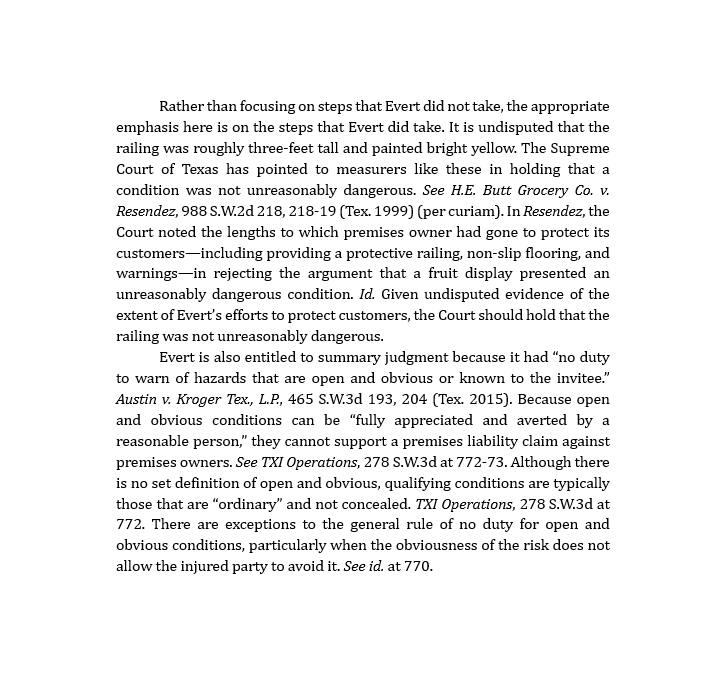
For legal documents, some lawyers prefer left-justified text, also called “left-aligned” text. Left-justified text creates what’s called a ragged right margin. It looks like this:

Left-justified, ragged right.

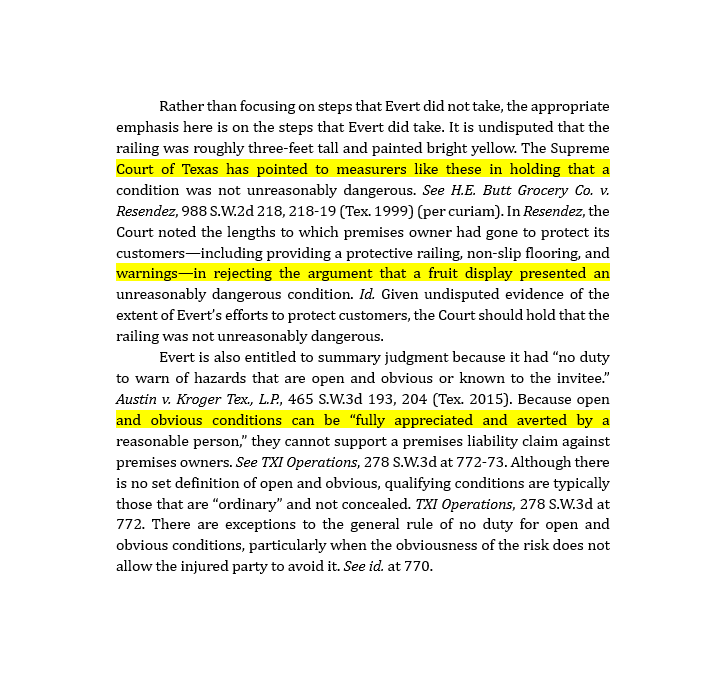
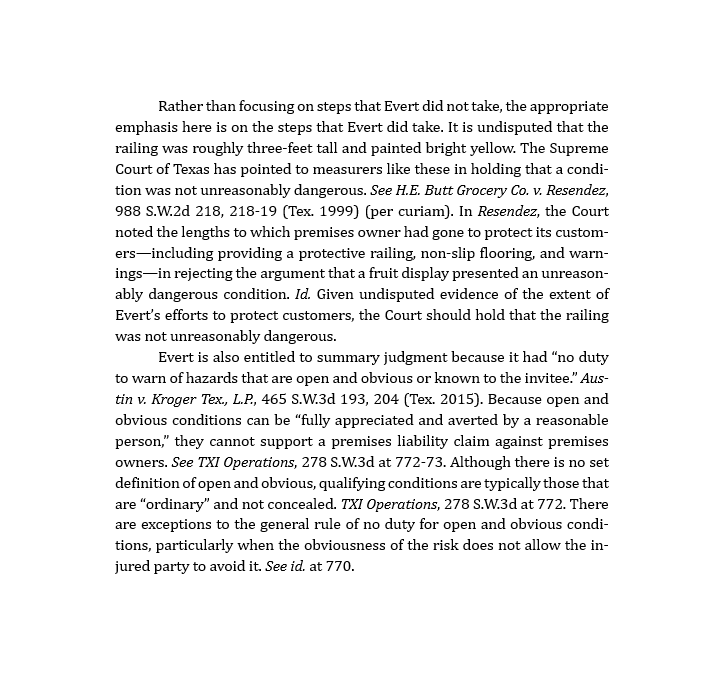
Some legal writers prefer fully justified text. Fully justified text creates clean vertical margins on the left and right, and it’s standard in most books, magazines, and professional publications. It looks like this:

Fully justified.

Which is better? The question sparks passionate debates.

In favor of left-justified text

Left-justified text looks less formal and “relaxes the page,” according to the legal-typography expert Matthew Butterick. In addition, many legal documents are left-justified, including most contracts, briefs, letters, and nearly all email messages. So left-justification has tradition and history on its side.

In addition, there’s some data suggesting that you can read left-justified text faster than fully justified text. Fully justified text sometimes exhibits “gappiness” because it adds white space that can slow down reading. Look at the highlighted sentences in the next example. See the slightly bigger spaces between words?

Fully justified, highlighting gappiness.

Granted, the difference in reading speed is tiny—fractions of a second—but there you go.

In favor of fully justified text

Fully justified text tends to feel more formal and serious, and that’s one reason professionally printed documents are often fully justified. For example, most books use fully justified text. Formality and seriousness are right for many legal documents, and the clean vertical margins appeal to some legal writers.

And fully justified text is modern: left-justified text is, after all, a vestige of the typewriter, so why not take advantage of the full justification available in word processing?

My recommendations

  1. Left-justified text with a ragged right margin is appropriate for legal documents—subject, of course, to the preferences of your readers and supervisors.
  2. Fully justified text is also appropriate for legal documents—subject, of course, to the preferences of your readers and supervisors.
  3. To reduce gappiness and speed-up reading for fully justified text, turn on hyphenation. The word processor will hyphenate a few multi-syllable words at the right margin.

With hyphenation turned on, the gaps and white spaces disappear. It looks like this:

Hyphenation is appropriate for legal documents. In fact, I’d bet most nonlegal text you read in print is fully justified with hyphenation.

My books: Legal Writing Nerd: Be One, Plain Legal Writing: Do It


Placement matters: Fixing 4 missed chances for persuasion

Here are 4 missed opportunities for persuasion that I see in persuasive legal writing. In each situation, the substance is strong, but the placement isn’t. Because I’m focusing on placement—the location of key content within a paragraph—I’ve used nonsense text so you won’t be distracted or bored reading long paragraphs. Just focus on the green, highlighted text.

1. Missed chance: Relegating a forceful concept from a case to an explanatory parenthetical buried in mid-paragraph.

In pretium lorem sed elit rutrum maximus. Nullam venenatis semper est, et luctus est aliquam at. Vestibulum tempor vitae neque et volutpat. Maecenas commodo laoreet nulla vel porta. Fusce iaculis tortor ut pulvinar eleifend. Ut auctor risus a vehicula efficitur. Flake v. Adams, 123 S.W.3d 456, 458 (Tex. 2011) (recognizing equitable adoption as valid in Texas). In gravida, turpis et ornare gravida, orci quam vulputate urna, id tincidunt lectus ex pulvinar dolor. Proin ac tortor sapien. Sed maximus in sapien quis dignissim. Cras ut leo sed odio maximus euismod ac sed erat.

1a. Why not state the forceful concept in the first sentence and then cite the case, omitting the explanatory parenthetical? (Assuming the concept is actually forceful and important—not merely background.)

 The Texas Supreme Court recognizes that equitable adoption is valid in Texas. Flake v. Adams, 123 S.W.3d 456, 458 (Tex. 2011). In pretium lorem sed elit rutrum maximus. Nullam venenatis semper est, et luctus est aliquam at. Vestibulum tempor vitae neque et volutpat. Maecenas commodo laoreet nulla vel porta. Fusce iaculis tortor ut pulvinar eleifend. Ut auctor risus a vehicula efficitur. In gravida, turpis et ornare gravida, orci quam vulputate urna, id tincidunt lectus ex pulvinar dolor. Proin ac tortor sapien. Sed maximus in sapien quis dignissim. Cras ut leo sed odio maximus euismod ac sed erat.

2. Missed chance: Relegating a forceful quotation from a case to an explanatory parenthetical.

In pretium lorem sed elit rutrum maximus. Nullam venenatis semper est, et luctus est aliquam at. Vestibulum tempor vitae neque et volutpat. Maecenas commodo laoreet nulla vel porta. Fusce iaculis tortor ut pulvinar eleifend. Ut auctor risus a vehicula efficitur. Flake v. Adams., 123 S.W.3d 456, 458 (Tex. 2011) (“Equitably adopted children have the same inheritance rights as biological children.”) In gravida, turpis et ornare gravida, orci quam vulputate urna, id tincidunt lectus ex pulvinar dolor. Proin ac tortor sapien. Sed maximus in sapien quis dignissim. Cras ut leo sed odio maximus euismod ac sed erat.

2a. Why not state the forceful quotation in the first sentence and then cite the case, omitting the explanatory parenthetical? (Assuming the quotation is actually forceful and important—not merely background. And if it’s merely background, why quote it?)

 The Texas Supreme Court acknowledges that “[e]quitably adopted children have the same inheritance rights as biological children.” Flake v. Adams, 123 S.W.3d 456, 458 (Tex. 2011).  In pretium lorem sed elit rutrum maximus. Nullam venenatis semper est, et luctus est aliquam at. Vestibulum tempor vitae neque et volutpat. Maecenas commodo laoreet nulla vel porta. Fusce iaculis tortor ut pulvinar eleifend. Ut auctor risus a vehicula efficitur. In gravida, turpis et ornare gravida, orci quam vulputate urna, id tincidunt lectus ex pulvinar dolor. Proin ac tortor sapien. Sed maximus in sapien quis dignissim. Cras ut leo sed odio maximus euismod ac sed erat.

3. Missed chance: Constructing a descriptive, explanatory paragraph that builds to a concluding statement of a legal doctrine or concept.

In pretium lorem sed elit rutrum maximus. Nullam venenatis semper est, et luctus est aliquam atus. Gomez v. Gomez, 234 S.W.3d 567, 570 (Tex. 2012). Vestibulum tempor vitae neque et volutpat. Maecenas commodo laoreet nulla vel porta. Fusce iaculis tortor ut pulvinar eleifend. Flake v. Adams, 123 S.W.3d 456, 458 (Tex. 2011). Ut auctor risus a vehicula efficitur. In gravida, turpis et ornare gravida, orci quam vulputate urna, id tincidunt lectus ex pulvinar dolor. Proin ac tortor sapien. Sed maximus in sapien quis dignissim. Bradley v. Kang, 343 S.W.3d 282, 289 (Tex. 2013). Cras ut leo sed odio maximus euismod ac sed erat. Consequently, Texas common law recognizes promise and performance as the elements of equitable adoption.

3a. Why not begin the paragraph with the statement, describe and explain, and then reiterate the doctrine or concept at the end?

 Texas common law recognizes promise and performance as the elements of equitable adoption. In pretium lorem sed elit rutrum maximus. Nullam venenatis semper est, et luctus est aliquam atus. Gomez v. Gomez, 234 S.W.3d 567, 570 (Tex. 2012). Vestibulum tempor vitae neque et volutpat. Maecenas commodo laoreet nulla vel porta. Fusce iaculis tortor ut pulvinar eleifend. Flake v. Adams, 123 S.W.3d 456, 458 (Tex. 2011). Ut auctor risus a vehicula efficitur. In gravida, turpis et ornare gravida, orci quam vulputate urna, id tincidunt lectus ex pulvinar dolor. Proin ac tortor sapien. Sed maximus in sapien quis dignissim. Bradley v. Kang, 343 S.W.3d 282, 289 (Tex. 2013). Cras ut leo sed odio maximus euismod ac sed erat, thus supporting promise and performance as the elements of equitable adoption.

4. Missed chance: Building an argument with legal analysis and concluding the paragraph with the key assertion.

In pretium lorem sed elit rutrum maximus. Nullam venenatis semper est, et luctus est aliquam at. Vestibulum tempor vitae neque et volutpat. Maecenas commodo laoreet nulla vel porta. Fusce iaculis tortor ut pulvinar eleifend. Ut auctor risus a vehicula efficitur. Flake v. Adams, 123 S.W.3d 456, 458 (Tex. 2011). In gravida, turpis et ornare gravida, orci quam vulputate urna, id tincidunt lectus ex pulvinar dolor. Maecenas vel eros quis sem porta pellentesque eget quis neque. Phasellus pretium eros ac vestibulum tincidunt. Pellentesque non dui maximus tortor tristique tempor vel sollicitudin leo. Proin ac tortor sapien. Sed maximus in sapien quis dignissim. Cras ut leo sed odio maximus euismod ac sed erat. Therefore, Chris Jaramillo should be awarded an equal share of the estate of Ron Jaramillo.

4a. Why not begin the paragraph with the key assertion, use legal analysis to support that position, and then reiterate the assertion at the end?

 Chris Jaramillo should receive an equal share of the estate of Ron Jaramillo. In pretium lorem sed elit rutrum maximus. Nullam venenatis semper est, et luctus est aliquam at. Vestibulum tempor vitae neque et volutpat. Maecenas commodo laoreet nulla vel porta. Fusce iaculis tortor ut pulvinar eleifend. Ut auctor risus a vehicula efficitur. Flake v. Adams, 123 S.W.3d 456, 458 (Tex. 2011). In gravida, turpis et ornare gravida, orci quam vulputate urna, id tincidunt lectus ex pulvinar dolor. Maecenas vel eros quis sem porta pellentesque eget quis neque. Phasellus pretium eros ac vestibulum tincidunt. Pellentesque non dui maximus tortor tristique tempor vel sollicitudin leo. Proin ac tortor sapien. Sed maximus in sapien quis dignissim. Cras ut leo sed odio maximus euismod ac sed erat, confirming that Chris Jaramillo should be awarded an equal share of Ron Jaramillo’s estate.


Over-simplified writing advice, 4

Part 4 of 4

My books: Legal Writing Nerd: Be One, Plain Legal Writing: Do It

I recently heard a speaker criticize the following advice as “oversimplified”:

“Write short sentences.”

The speaker characterized it as “common writing advice.” I think this supposedly common advice is a straw target—a target that legal-writing teachers and experts don’t actually advise and that the speaker set up to be easily knocked down. Here’s my own take.

The best advice is to aim for an average sentence length in the low 20s. Here’s what experts say about average sentence length in legal writing:

  • below 25—Richard Wydick in Plain English for Lawyers
  • about 22—Anne Enquist & Laurel Curie Oates in Just Writing: Grammar, Punctuation, and Style for the Legal Writer
  • about 20—Bryan A. Garner in Legal Writing in Plain English

That’s average. Some sentences would be longer, some shorter. I haven’t found any experts advising a maximum sentence length, but for me, it’s 45 words. Anything longer risks losing the reader.

Other than that, the experts recommend varying your sentence length:

  • You want some longer sentences and some shorter ones.1
  • Varying your sentence lengths is generally a good idea.2
  • Keep the sentences shorter to create a sense of movement and make them easy to read, but vary length to avoid monotony.3

The occasional very short sentence (3 to 7 words) stands out and creates emphasis. The occasional long sentence—probably in a strict, parallel, three-part series—is memorable.

That’s the real advice. No one actually says “Write short sentences” without further clarification or explanation.

My books: Legal Writing Nerd: Be One, Plain Legal Writing: Do It

_____

1. Bryan A. Garner, LawProse Lesson #269: Average sentence length.

2. Joseph Regalia, The Art of Legal Writing: The Sentence, Appellate Advocacy Blog (May 19, 2018).

3. Ellie Margolis, 10 top tips for legal writing, Before the Bar (Nov. 7, 2019).