
An Interview with Jorge Cañizares-Esguerra and Adrian Masters
A BIG FUSS IS UNDER WAY over a book about paperwork. Early readers of the volume by historians Jorge Cañizares-Esguerra and Adrian Masters have called the work “a bomb that is waiting to go off in our field” and “a true paradigm shift. . . . The gauntlet is thrown down not only to scholars of Latin America but to all who study tyranny, democracy, and the early modern world.”*
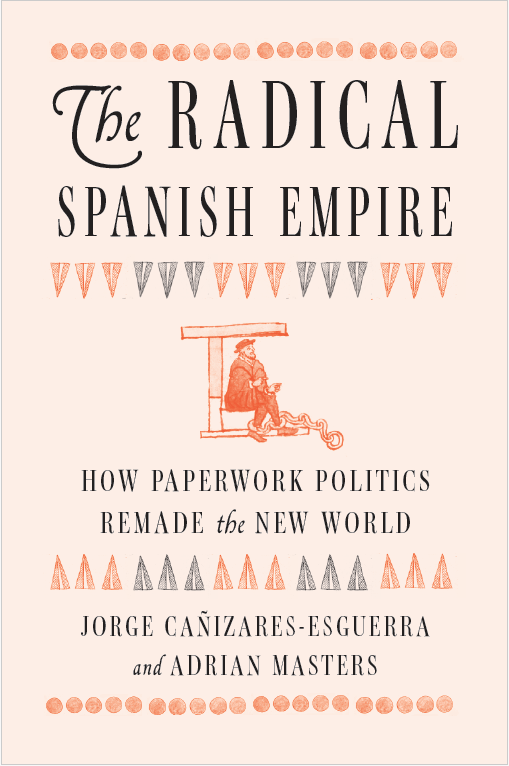
The book in question is titled The Radical Spanish Empire: How Paperwork Politics Remade the New World (Harvard, 2026). In an interview with Portal editor Susanna Sharpe, co-authors Cañizares-Esguerra (Department of History, UT Austin) and Masters (Trier University, Germany) answer questions about their book, its intriguing title, and why many believe it is turning historiography of the colonial Spanish empire on its head.
I’m curious about how you came to frame this inquiry. Was the question of “paperwork” an interest that spurred your research, or were you wanting to pursue a particular line of interrogation that led you to focus the book on paperwork?
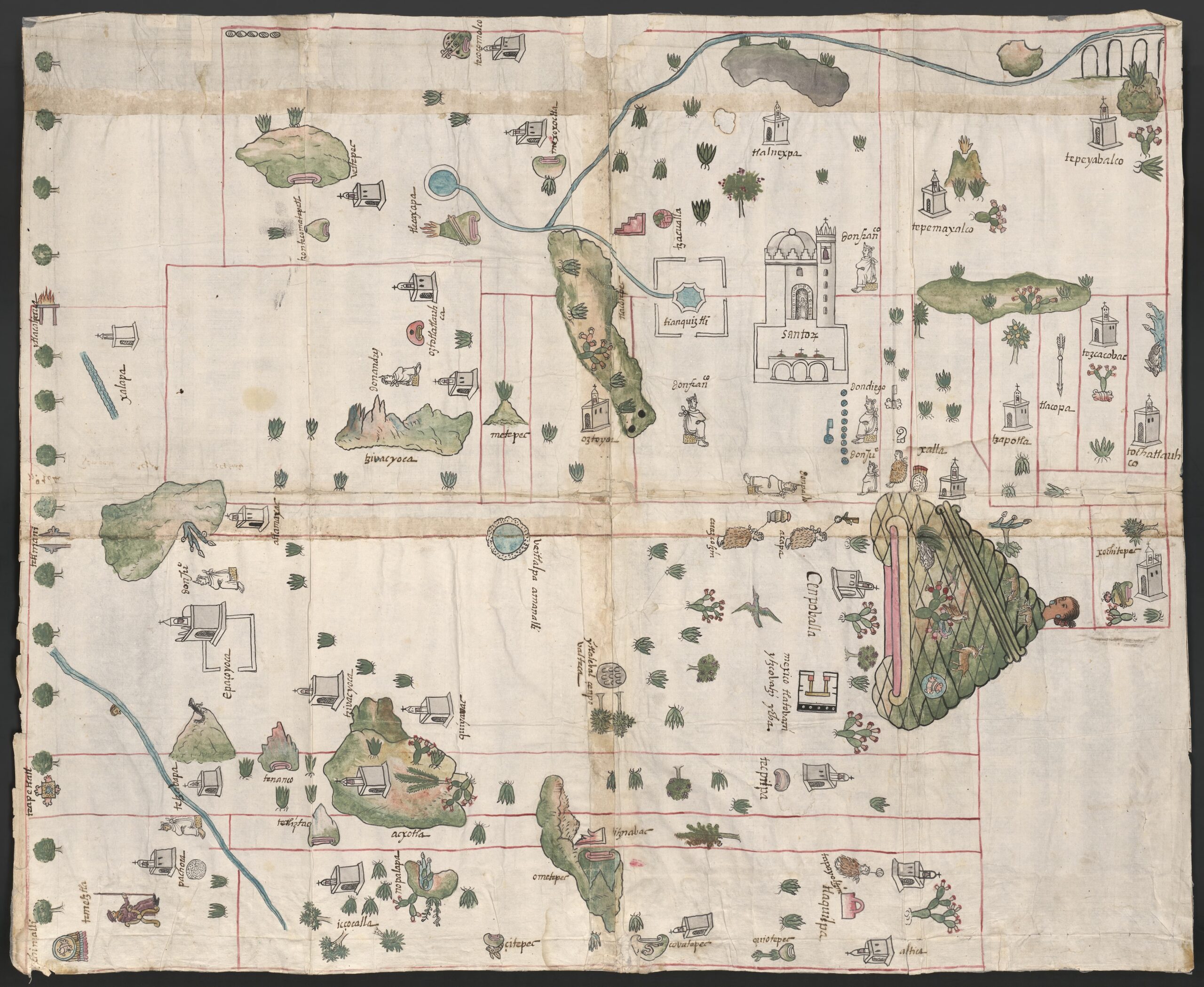
ADRIAN MASTERS: A bit of both! Jorge and I were skeptical of the predominant account (even today) of the Spanish conquests. To make a long story short, traditional versions posit three conquests in a row. First, a tiny group of conquistadors miraculously conquer millions of stunned Natives. Then, an equally tiny group of friars convert millions of Natives. Finally, the Crown imposes its own direct authority, “conquering” the New World, which was by then ravaged by violence and disease. Yet, despite this violence and disease, there were still at least 30 Indians to every one Spaniard in the sixteenth century. We refused to surrender to fantasy accounts about tiny groups of Europeans achieving the unthinkable; we needed a new history with Indigenous protagonists at the center.
We were also already very interested in paperwork. I had published We, the King (Cambridge, 2023), which dealt specifically with how vassals successfully proposed (and even phrased) royal legislation. This grew out of my dissertation while Jorge was my adviser. He had been encouraging me think more broadly about how the Spanish empire worked, not just in terms of vassal–Crown communication, but at all levels (towns, viceroys, the Church, and so forth). His prompt led us to write this book.
The second big thing we do is put paperwork at the center of the armed conquests, conversions, and the rise of royal power. Everybody knows that Columbus, Cortés, and Pizarro conquered the New World; a smaller group of experts knows that all three of them, and many other leading conquerors, wound up in jail and/or lost their seigneurial domains by the 1560s. What only a handful of scholars have reflected upon is that these downfalls took place thanks to conquistadors’ commoner and elite rivals, specifically through their aggressive use of petitioning, litigation, and auditing. We set out to tell an even broader story of the 1500s in which this phenomenon of once-powerful figures losing their might actually is a pattern.
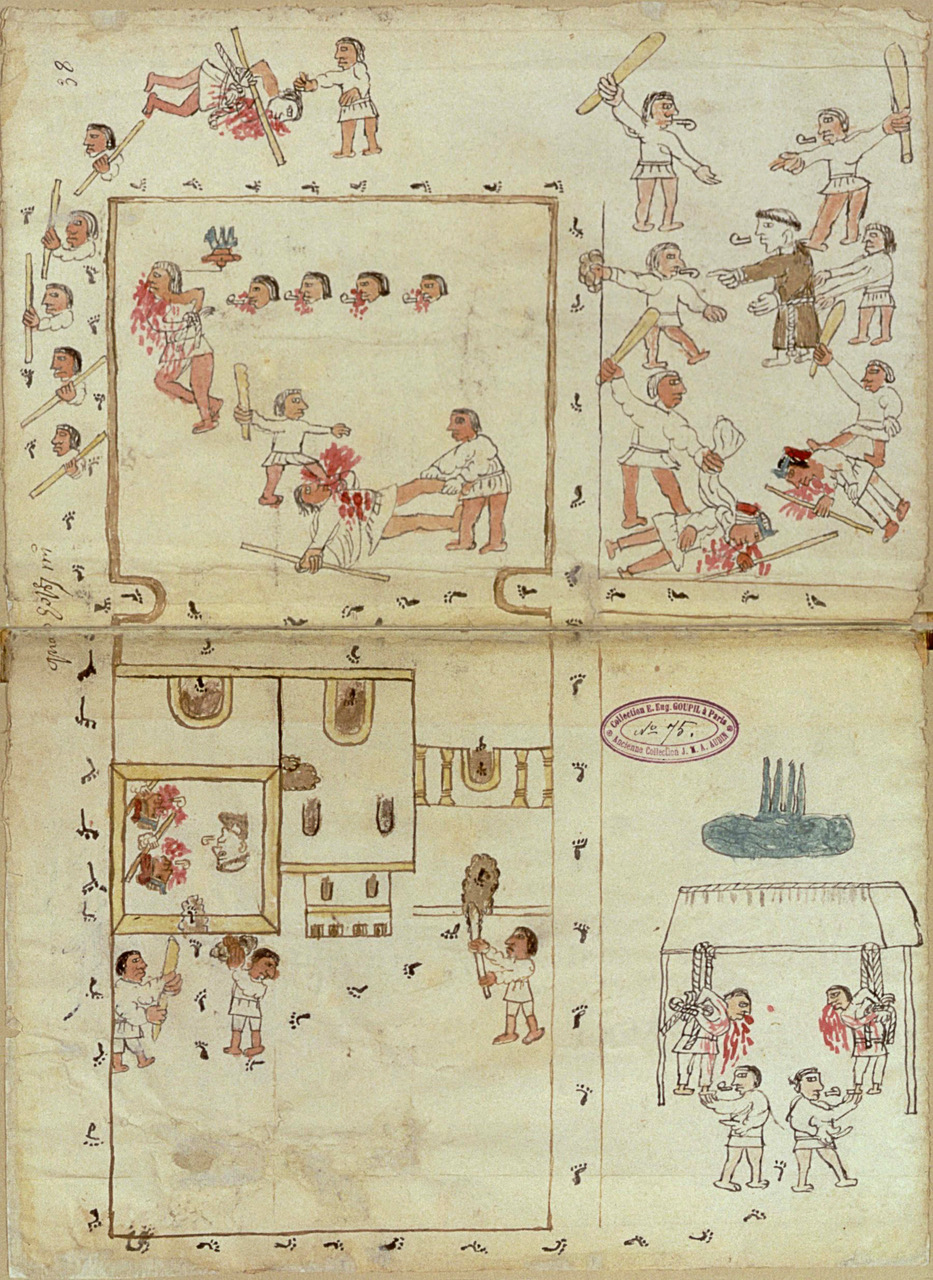
The third element is that we underscore the bottom-up nature of paperwork. Vassals demanded justice, reform, and rewards. Women, Indigenous lords, and Native commoners participated by the hundreds of thousands. By adding these ingredients—especially paperwork and the bottom-up agendas of countless vassals—we see a whole new history of the conquests and especially what happens next with the powerful. For instance, we focus in one important passage on how, when Cortés murders his wife, Catalina Suárez Marcayda, in 1522, her chambermaids Juana López, Ana Rodríguez, Violante Rodríguez, María de Vera, and María Hernández provide essential depositions testifying that he had strangled her. He accused them of being low-born commoners, but the Crown listened to them anyway; Cortés soon lost his governorship of Mexico and left for Spain to defend himself in court.
JORGE CAÑIZARES-ESGUERRA: We begin with an observation: From the start, the Crown sought that the Indies should become a multitude of delegated seigneurial estates, that is, feudal enclaves in the charge of contractor-conquistadors. This is how Columbus, Cortés, Pizarro, and every other founding conquistador established lordships through conquest. Dozens of these commoner entrepreneurs swept through the New World, from Greenland to Patagonia, in some seventy years. Yet within a decade, each one of these seigneurial estates had collapsed via popular paper-riots. Every conquistador lost everything: status and political power. Why?
We maintain that the vassal–king political dialogue was vast. When the first wave of seigneurial-feudal conquistadors led to a new cadre of lords who were deeply familiar with paperwork, the monarchy did its best to delegate power to alliances of friars and new Native lords, who, unlike the conquistadors they replaced, sought to create unaccountable republics—black holes where little in the way of bottom-up paper communication ever came out. But these friar-led theocratic republics collapsed, too. Anti-tyrannical political mobilization permeated the discourse of all sorts of actors, particularly Indigenous commoners. Ideas on anti-tyranny then were as complex and rich as those on democracy are today.
Historians have been trained to assume that the Spanish empire had an “absolute” monarch who meddled, top-down, even in such details as the length of Purépecha skirts. This is clearly a joke. But the joke is on us. Because this progressive narrative of politics has paradoxically silenced a history of political radicalism and bottom-up political “democratic” participation that continues to inform Indigenous history on our continent to this day.

What was your level of familiarity, collectively or individually, with the primary sources and archives you consulted when you decided to write this book?
CAÑIZARES-ESGUERRA: We have been familiar with these documents for decades. But we did not have the conceptual tools to deal with them. I personally began to understand the meaning of this documentation as Adrian began to show up in my office beginning in 2013 to tell me that royal decrees were often verbatim copies of bottom-up petitions. (This was the subject of his dissertation and of his recent book, We, the King.)
MASTERS: Jorge and I started our journeys as historians, curiously, from rather opposite ends. My specialization was the social history of sixteenth-century paperwork; Jorge began with the history of ideas in the Enlightenment. We each had our respective strengths. But ultimately Jorge didn’t think we should just borrow a bit from one another. He said, “Want to write a book with me?” That was in 2013. Since then, we’ve been pushing, pushing, pushing the limits of what this book says and does. It wasn’t enough to look at certain types of petitions to the king. Jorge insisted, “Let’s look at all of them!” We laid out a typology of pretty much every type of document one could produce, and asked: Are these bottom-up? Can ordinary people shape them? The answers kept coming back as “yes.”
What can you share about your writing process as co-authors and how your roles were divided?
MASTERS: We had lots of ideas and needed a blueprint, a grid plan for what we were reclaiming. We already had a sense that there were traditional narratives standing in our way; we realized we had to directly oppose them. Slowly, we turned the swamp into something to stand on. And once the land was dry, we started to build the argument upwards—adding complexity, nuance, clarity. At every step, we did this together. It was hard work, but Jorge and I were always on the same page, singing the same song as we shoveled away. We never argued or clashed; the topic was challenging but the collaboration was a breeze.
CAÑIZARES-ESGUERRA: I have long co-written publications and essays with colleagues, but particularly with my own graduate students. The Radical Spanish Empire, however, is a different creature altogether. It has taken many years of almost daily conversations. Adrian was the one pushing me constantly to see things in the documents I simply could not. I often needed weeks of convincing to begin to understand. I am older and my conceptual prisons are much stronger; it has taken large TNT charges to blast them. Adrian has been the engineer setting up the charges in the buildings of my imagination. I am deeply thankful to him for his patience and stubborn persistence: He convinced me that it could be done, no matter how many plagues came our way. ✹
Note
Phrases in quotations, as well as the term “myth-busting” in the title, are from blurbs written by S. Elizabeth Penry, Martin Austin Nesvig, and Felipe Fernández-Armesto, respectively.