
By ADELA PINEDA FRANCO
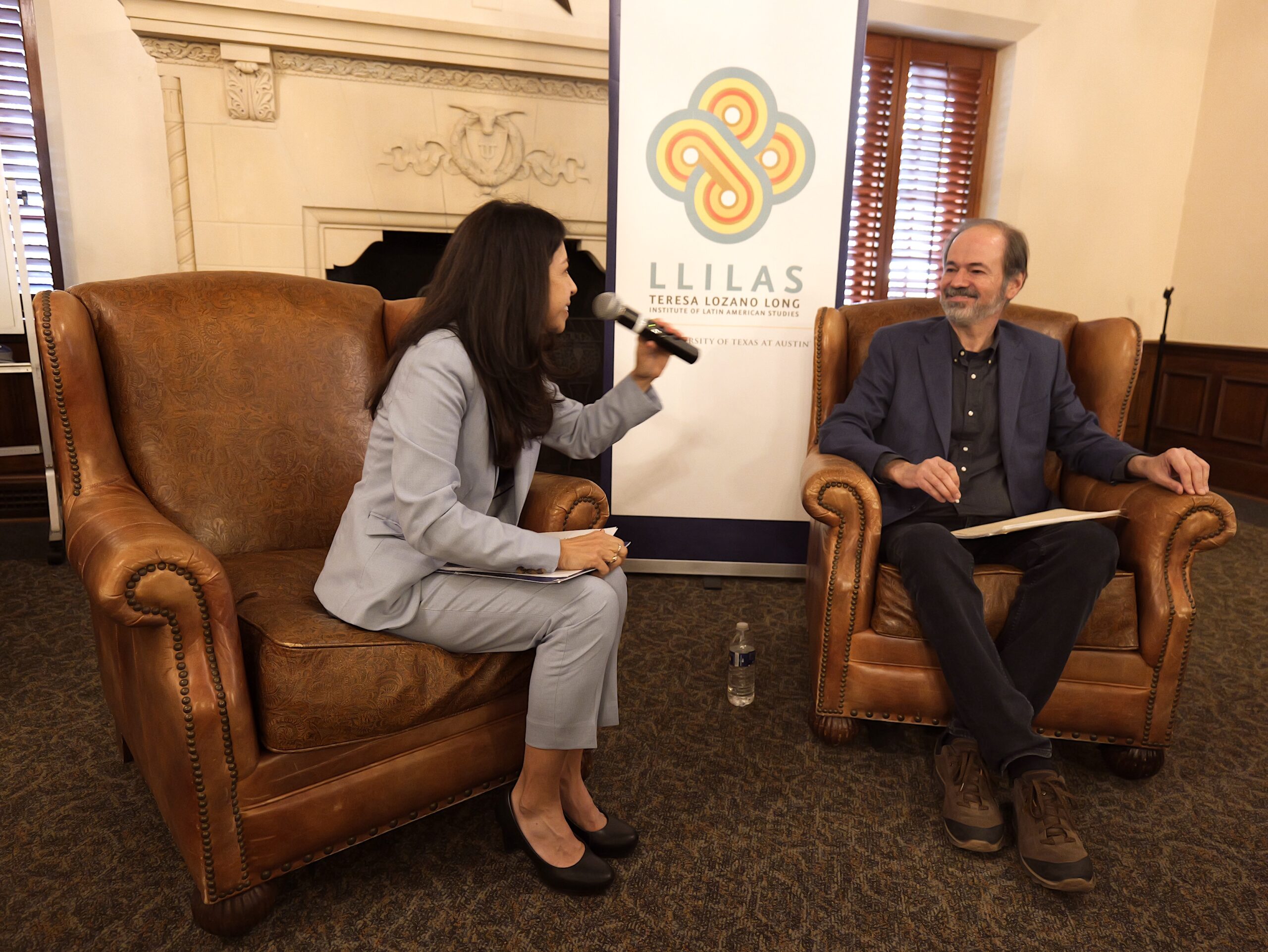
IN SPRING 2026, the Austin Lecture on Contemporary Mexico, a signature event of the LLILAS Mexico Center, led by Dr. Celeste González de Bustamante, featured Mexican writer Juan Villoro, who addressed a topic of undeniable urgency: the role of culture in the age of artificial intelligence.
I would like to expand on the scope of that talk by drawing on my reading of the book Villoro devoted to the subject, and from which the ideas presented in Austin originated: No soy un robot. La lectura y la sociedad digital (Anagrama, 2024). The book is structured in two distinct sections. While the first part addresses the radical transformation of what we consider reality in the virtual age, the second dwells on the practice of reading, an age-old technology that survives and transforms itself in a time of rapid technological change.
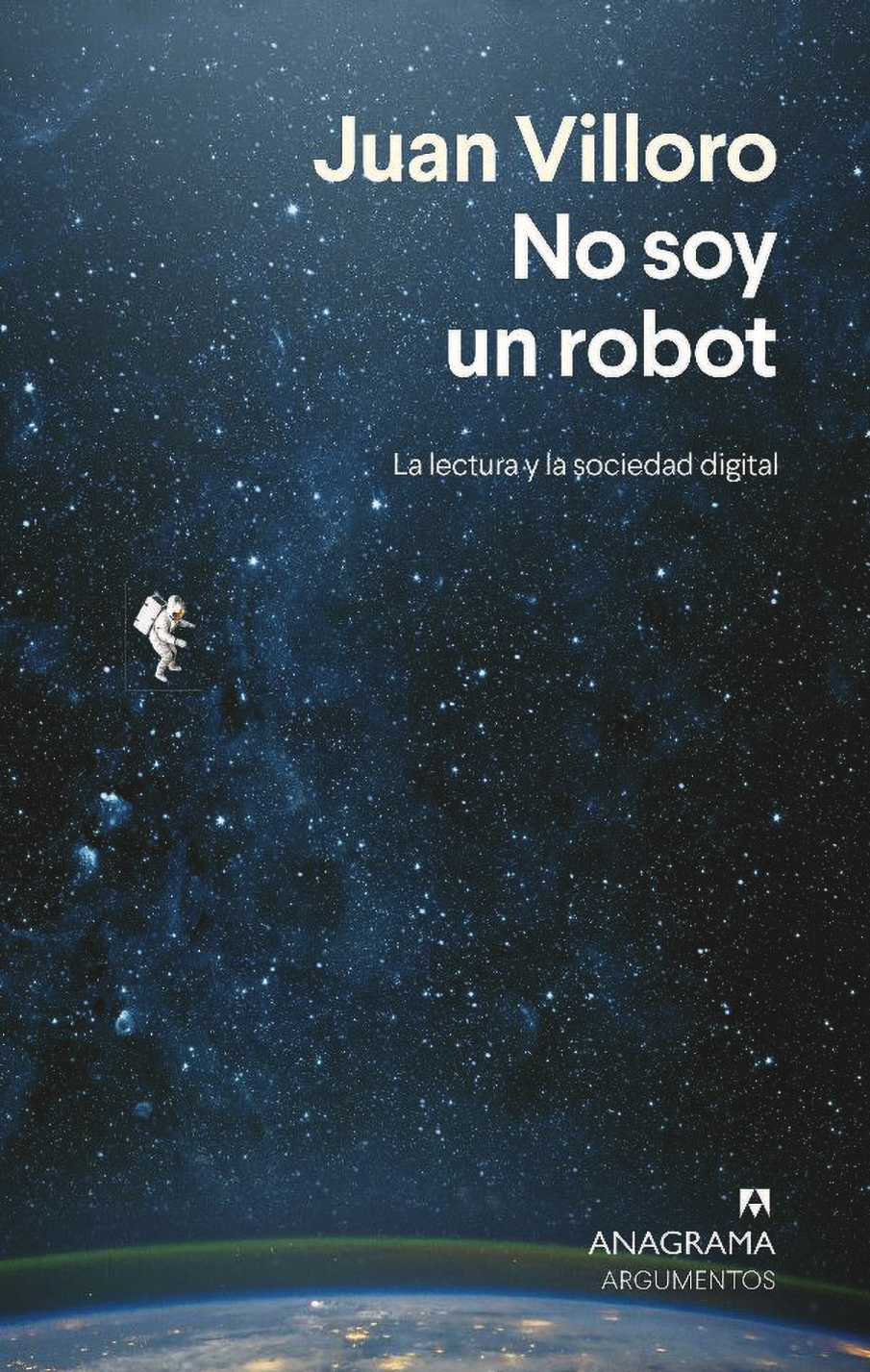
Drawing on a tapestry of ideas, theories, and voices from fields as diverse as sociology, philosophy, media theory, literature, and journalism, Villoro takes up a recurring concern: What is the meaning of reality in an era in which alienation is no longer the sole domain of political authoritarianism but also the realm of the consumer society, a society that has turned the capacity for discernment into the Instagram-like operation of “like-or-dislike”?
Weaving together observations from thinkers as varied as Guy Debord, Marshall McLuhan, Richard Sennett, Susan Sontag, Naomi Klein, and Byung-Chul Han, Villoro critiques the diminishment of political engagement, coopted by “branding”—a palliative of consumption that lets us believe we are doing our part for the world without ever quite knowing whether we are. If reality TV has turned intimacy into spectacle, stripping it of its secrets and uncertainties, media’s information overload has transformed reality into a phantasmatic experience, something Walter Benjamin observed in the soldiers of the First World War, who returned from the battlefield silenced, without the ability to tell stories. Ultimately, every good story is built on the exchange of shared experience, yet experience becomes untransmissible in the context of modern warfare.
In his book, Villoro does not claim the authority of a cybernetics specialist to explain how artificial intelligence works, nor does he deny the great advantages that this technology has brought to society. His ideas come from his perspective as a writer who reflects on the book as a cognitive technology, from its origins to the present day. His careful assessment of the limits of new media’s emancipatory and democratizing potential comes from his interest in reading, as understood in its earlier sense: a vehicle to engage affectively and critically with reality. From this perspective, literature appears in this book as an exemplary reading activity. As a social endeavor, the writing and reading of literary texts has been questioned for its exclusiveness, since access to literary pleasure has traditionally depended on a formal education that not everyone has had the chance to acquire. However, in today’s context, where we tend to read in a fragmentary way, with the sole desire to consume data we will later forget, literary reading can lead to a less instrumentalized alternative: the possibility of reconnecting with life in community.
Paraphrasing Villoro’s original Spanish: “There are no individual literatures, not only because every piece of writing comes from the age-old labors of language, tradition, and an inevitable relationship with other writings, but, above all, because the text is completed, corrected, deciphered, improved, or interpreted through reading.” One important aspect worth reflecting on is the transformation of the space that, for years, defined the intimate relationship between a book and its reader: a space in which the solitude of reading found fertile ground for interpretation. While access to the e-book has made possible the expansion of that old elitism of the lettered few, the e-book, Villoro argues, has become gossipy: a convenient vehicle for informing others of our emotional and intellectual preferences and, ultimately, our consumption habits.
Another risk pointed out by Villoro is the literal way in which internet users relate to reality via the screen. That obsession with the supposed authenticity of the image reproduced through digital media has caused us to forget that life in society also depends on our ability to appreciate what is conjectural. Alonso Quijano, better known as Don Quixote, misreads reality through his uncritical interpretation of chivalric novels, and his life turns tragicomic as a result. We, as readers of Don Quixote, know how to discern the character’s misjudgments. That doesn’t preclude us from developing a deep affinity with him, and from discerning something less apparent: Cervantes’s skill in using a deluded character to unveil the hypocrisy of the world his novel depicts.
In reading, it is possible to tie up loose ends, weave stories together and give them meaning, speculate, and allow ourselves room for interpretation and for the creative act of imagination. For Villoro, the meaning of a text is ultimately decided by the reader, and our humanity lies in our capacity to continue reading critically. ✹
Adela Pineda Franco is director of the Teresa Lozano Long Institute of Latin American Studies and Joe R. and Teresa Lozano Long Endowed Professor of Latin American Literary and Cultural Studies (Department of Spanish and Portuguese) at UT Austin.