
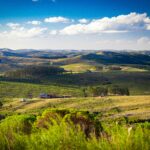
By Annalee Jeffress, S25 Environmental Clinic Student As our climate continues to warm and the threats of climate change expand, addressing humanity’s carbon footprint is an increasingly urgent issue. Meaningful solutions to such an issue necessarily involve renewable energy. Some countries that immediately come to mind regarding green energy might… read more
What's New in Environmental Law
Recognition of Indigenous Rights is Environmental Protection
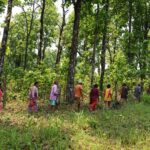
By Srivatsan Senthilkumar, S25 Environmental Clinic Student Indigenous Peoples, while being significantly impacted by climate change and environmental harms, also play a critical role in environmental protection. Indigenous groups suffer disproportionately from biological diversity loss and environmental degradation, as many members engage in subsistence lifestyles and maintain spiritual and cultural… read more
Environmental Justice and the Green Amendment

By Alice Min, S25 Environmental Clinic Student For 32 years, John Hickey worked at the Saint-Gobain Performance Plastics factory in Hoosick Falls, New York. He died soon after his retirement at age 68 due to a sudden and aggressive kidney cancer. In 2014, his son Michael Hickey, suspicious of the… read more
Texas Invests in its Public Lands
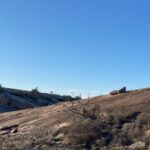
By Amberlynn Beck, S25 Environmental Clinic Student Texas is making significant strides in expanding public lands with the recent purchase of over 2,000 acres in Burnet County, for a new state park, and more than 3,000 acres to expand Enchanted Rock Natural Area in Llano County in January 2025.[1] These… read more
Carbon Trading System
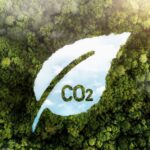
By Carol Wan, S25 Environmental Clinic Student Carbon dioxide (CO2) emissions have long been known to be a significant contributor to global warming due to its greenhouse gas properties. Greenhouse gases trap infrared heat in Earth’s atmosphere, causing the Earth’s temperature to rise. Ever since the modern recording of atmospheric… read more
Replicating Reef Resilience

By Beatrice Anderson, S25 Environmental Clinic Student Global Coral Reef Systems and Climate Change Aptly nicknamed the “rainforests of the sea”, coral reefs are home to an astonishing 25% of all marine life, despite covering less than 1% of the ocean floor. Coral reefs are an essential part of marine… read more
Buffalo and Food Sovereignty on the American Plains

By Amelia Thayer, S25 Environmental Clinic Student INTRODUCTION Long before European contact, Native American tribes relied on the buffalo[1] for a significant portion of their food, clothing, and tools. The bond between the Lakota Nation and Tataŋka (the buffalo) is sacred. Buffalo have cared for the Lakota people for millennia,… read more
Carbon Credits Don’t Always Reflect Emissions Results

By Luey Garcia, F24 Environmental Clinic student Carbon credits, sometimes referred to as “nature-based solutions,” follow a straightforward concept: companies that emit pollutants pay to develop projects that mitigate those emissions, usually measured in tons of carbon dioxide. This aims to advance the “Just Transition” by helping companies either meet… read more
Energy Inequity: How Energy Insecurity Challenges a Just Transition
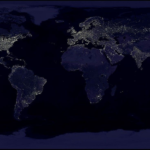
A view of nighttime lights from NASA/NOAA. https://science.nasa.gov/resource/earth-atnight/ By Chloe Fisher, F24 Environmental Clinic Student With fossil fuel emissions driving climate change and the effects of climate change becoming reality, rather than conjecture, reducing our global carbon footprint is more important than ever for the health of our planet and… read more
Why Do Big Chemical Lawsuits Happen in the First Place?

Kazue Asano / Flickr By Moosa Zaidi, S23 Environmental Clinic Student The recent $11 billion settlement in a suit against Monsanto over the herbicide Roundup might lead some to think we are winning the battle on regulating harmful chemicals in the environment, but in reality we are still losing the war.… read more