Category Archives: All

Seafood during pregnancy

Image result for seafood

Image from TripAdvisor

Andrea Hernandez

You might have heard warnings that pregnant women ought to avoid eating seafood because it can harm the development of the baby. Uncooked seafood is unsafe because there is a risk of ingesting contaminated foods with coliform bacteria, toxoplasmosis and salmonella. This is also true for uncooked poultry and other meats. Raw seafood can have specific types of parasites. Cooked seafood during pregnancy can be beneficial for fetal development.

Seafood like shrimp and salmon are generally safe and beneficial to eat as long as they are properly cooked. It is beneficial to eat fish because it is a great source of protein, iron and zinc. These nutrients are necessary for a baby’s growth and development. Seafood is also rich in omega-3 DHA which is needed for brain and eye development. 

However, high mercury content in seafood like shark and swordfish are harmful at high levels. High concentrations of mercury can cause brain damage, hearing and vision problems to the baby.

Next time someone you know is told to avoid seafood during pregnancy, you can specify to avoid uncooked foods and high mercury seafood!

https://www.aboutseafood.com/eating-seafood-while-pregnant-guide/

https://www.mayoclinic.org/healthy-lifestyle/pregnancy-week-by-week/in-depth/pregnancy-and-fish/art-20044185

https://americanpregnancy.org/pregnancy-health/foods-to-avoid-during-pregnancy/
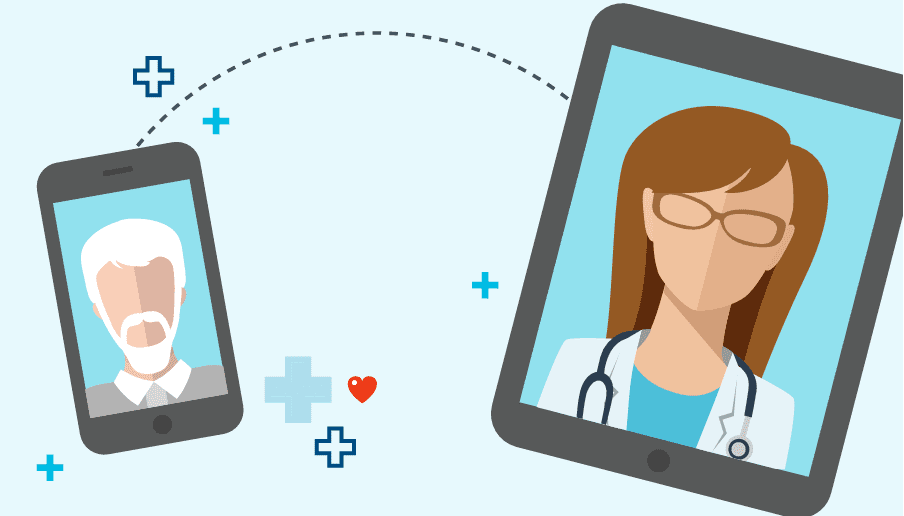
 

Virtual Care

Image result for telemedicine

Image from PYA

Andrea Hernandez

In the past few years, there has been a rise in telehealth, video visits with a remote clinician in particular. The use of virtual care is dependent on a person’s comfort meeting with their primary-care-provided (PCP) or a different provider via phone or video. Virtual care is an attractive option because it is more convenient and less costly than an in-person visit.

Some people are more open to telemedicine than others. A U.S nationwide survey conducted in 2015 found that respondents were more willing to see their own PCP via telemedicine, less willing to use telemedicine to see a different provider from the same healthcare organization, and least willing to use telemedicine to see a different provider from a different healthcare organization.  

A study among patients with acute respiratory infection found that a telehealth visit was less expensive than an in-person visit, but increased collective health care spending because of convenience. Patients were more likely to initiate follow-up virtual visits if they had lingering questions about their diagnostic or symptoms. It seems like effective virtual care should aim to put people at ease.  

Although virtual care is convenient and less costly, people of limited means may be less able to afford the technology (smart phone and data) needed to access virtual care. Further steps are needed to improve accessibility for people of limited means, in order to provide a wider range of people the option to decide what type of health care visit they want. 

https://accessmedicine.mhmedical.com/content.aspx?bookid=2217&sectionid=187795446#1153060791

https://jamanetwork.com/journals/jama/article-abstract/2740743

https://www.healthaffairs.org/doi/abs/10.1377/hlthaff.2016.1130

https://www.healthaffairs.org/doi/full/10.1377/hlthaff.2013.0989

https://bmchealthservres.biomedcentral.com/articles/10.1186/s12913-017-2744-8


Is patient satisfaction lower without in person visits?

Image result for telemedicine

Image from Health eCareers

Shreya Thiagarajan

Can people get health advice via a video chat?  It’s certainly more convenient. There is increasing utilization of these so-called “virtual care” evaluations.  What might be missed compared to an in person visit? Will it be more or less satisfying for patients?

One study found that over two thirds of patients surveyed in an American Well survey reported satisfaction with a video visit — compared to one third that preferred office visits — and that most dissatisfaction stemmed from a technical issue with the video software that, if solved, led to positive reviews. One possible explanation for increased satisfaction from video visits is that it cuts down on transportation costs. The telemedicine system has been especially effective in the rural Appalachian region where many patients suffering from cardiovascular disease can now easily access a healthcare professional remotely rather than having to drive several hours to the closest health center. Additionally, remote consultations also allow increased patient independence and engagement, that is, they are more likely to participate in maintaining their own health to avoid in-person visits.

Post operative patients also benefit from telemedicine as an extended hospital stay may contribute to an increased risk of getting hospital-acquired infections. Instead, when they are sent home after a surgery, they are monitored by sensors that report patient vitals and other measures to health professionals remotely so they are still able to access help if something goes wrong. Telemedicine is still developing as a technology and may not serve as a complete replacement for office visits, but rather as a supplement to in-person consultations. However trends indicate that telemedicine is increasing in popularity across the country and chances are, you or someone you know may soon become familiar with telehealth. 

https://patientengagementhit.com/news/patient-satisfaction-of-telehealth-hinges-on-convenience-quality

https://www.americanwell.com/telehealth-patient-satisfaction-survey-shows-acceptance-virtual-care/

https://mhealthintelligence.com/news/primary-care-telemedicine-produces-high-patient-satisfaction

https://www.sciencedaily.com/releases/2019/01/190102112900.htm

https://healthtechmagazine.net/article/2018/06/how-telemedicine-helps-healthcare-organizations-improve-patient-engagement-and-satisfaction-perfcon