Category Archives: All

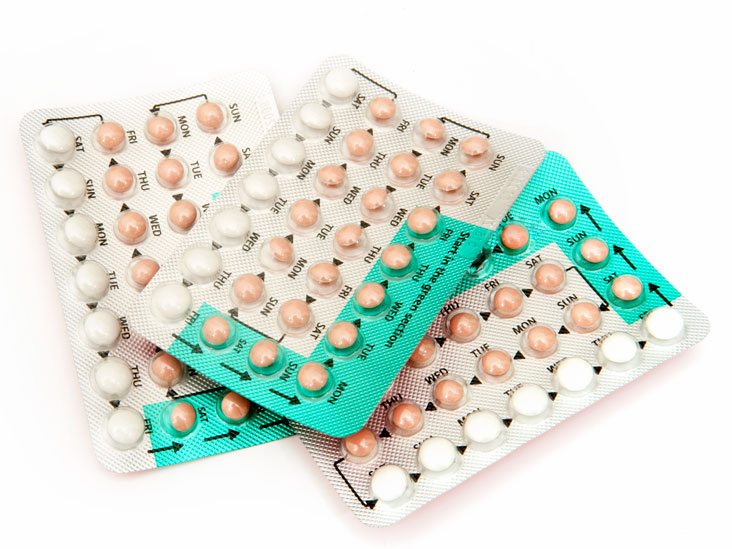
Is it okay to delay your period with birth control pills?

Image result for birth control pills

Image from Healthline

Isabel Draper

The first oral contraceptive pill was approved by the FDA in 1960. Packs of pills with equal amounts of estrogen and progesterone (combined birth control pills) have a week of sugar pills.  Taking the placebo pills induces a period. Health authorities and doctors have traditionally advised women that they should take this week of sugar pills and have normal periods for their reproductive and overall health. The thought was that having a period regularly would reassure women that everything was normal as well as imitate the rhythm method (thereby making birth control more acceptable to the pope).

Women that wanted to have fewer periods started skipping these placebo pills and taking  the active pills from the next pack of pills. This practice is a form of menstrual suppression which is the adjustment of the menstrual cycle using hormonal contraceptives. Skipping placebo pills or ‘stacking packs’ is one of several way that women can suppress their periods.  The uterine lining is maintained when periods are skipped and breakthrough bleeding may occur as some of the lining sheds. Other potential side effects of taking the combined pill continuously or ‘stacking packs’ may include nausea or diarrhea. The chances of successfully suppressing one’s period without breakthrough bleeding or other side effects depends on both the method used and the patient.

When attempting to decide between continuous cycle pills, 28-day birth control pills, or another form of birth control for menstrual suppression,  women should consult their physician or nurse practitioner in order to create a birth control plan tailored to their needs.

https://www.familyplanning.org.nz/news/2015/taking-your-pill-continuously

https://www.nhs.uk/common-health-questions/travel-health/how-can-i-delay-my-period/

https://www.cosmopolitan.com/uk/body/health/news/a49222/effects-body-double-back-pill-skip-period/

https://www.cdc.gov/reproductivehealth/contraception/mmwr/spr/combined.html#missed

https://www.glamour.com/story/birth-control-pill-designed-to-please-the-pope

https://www.npr.org/sections/health-shots/2016/05/23/478562615/do-women-need-periods

Catching a cold from the rain

Image result for umbrella in rain

Source: Pinterest

Shreya Thiagarajan

Remember when mom warned you not to go out in the rain or you’d catch a cold? Most of us probably grabbed a raincoat before leaving, but did you ever wonder whether it was actually true? It’s difficult to sort out in regions (like most of the US) where the rainy season corresponds with cold and flu season.   

A cold is caused by a virus, which not influenced by rain. However, certain cold viruses (e.g. Rhinovirus) spread more easily in the winter because they function better at low temperatures. Cold weather correlates with colds but rain cannot cause you to catch a cold.

To limit your chance of catching a cold, wash your hands or sanitize them after touching things that others with a virus may have touched.  To limit spreading the cold, wear a mask, sterilize your hands, cough into your elbow, and–if possible–don’t go to work or try to work at home when you have a cold.

https://www.webmd.com/cold-and-flu/qa/can-being-cold-or-wet-cause-you-to-get-sick

https://www.healthline.com/health/does-cold-weather-xmake-you-sick#culprits

https://www.nytimes.com/2018/02/23/well/can-being-cold-make-you-sick.html

https://biology.stackexchange.com/questions/64684/why-does-the-rain-increase-our-chances-of-catching-a-cold

https://www.livestrong.com/article/496499-can-running-in-the-rain-make-you-sick/


Swallowing Gum

Image result for swallowing gum

Source: Geek

Nicole Kell

Many of us have heard that if you swallow chewing gum, it takes your body seven years to digest. Is this actually true? Do we all have pieces of gum sitting in our digestive tract for years and years?

The human digestive system can break down, utilize, and/or dispose of almost everything we consume. Technically chewing gum will not break down entirely because the synthetic portion is not digestible. However, the digestive system will eventually identify gum as nutritionally useless, move it along through normal intestinal activity, and expel it from the body. Chewing gum usually stays in your body for less than a week.

It is harmless to swallow an occasional piece of gum, but if a remarkable amount of gum is repeatedly swallowed then it can potentially lead to a bowel obstruction. Swallowing gum also poses a very slight choking hazard.

Even though gum does not stay in the human body for seven years after being swallowed, it might be wise to refrain from swallowing your gum to avoid a potentially sticky situation.

http://tristanmed.com/blog/entry/the-truth-about-swallowing-gum

https://www.mayoclinic.org/digestive-system/expert-answers/faq-20058446

https://kidshealth.org/HospitalSantJoandeDeu/en/kids/swallowed-gum.html