Category Archives: All

Does listening to music improve cognition?


IMG via billboard.com 

Whether you’re at the grocery store, work, or in the classroom, you are guaranteed to see people wearing headphones or earbuds. With listening made easier than ever by mobile devices, we can be exposed to music at all times. However, is this beneficial to our concentration and productivity? You might hear that music can improve cognition and memory. Let’s think twice about how music impacts our cognition. What is the evidence that listening to music improves memory and cognition? 

The evidence is mostly circumstantial and non-experimental.  For instance, a 2007 study evaluated brain responses to musical symphonies in 18 people and found that listening to classical music stimulated parts of the brain related to working memory (1).  

A study of 65 adults with an average age of 69 demonstrated that adults who listened to classical music during a vocabulary test and a semantic memory test had faster processing speeds than adults who listened to no music or to white noise (2).   

A 2019 study of 18 participants found music activated reward centers of the brain as measured by fMRI.  

On the other hand, experimental studies do not support the idea that music improves cognition. One study randomized 86 university students to read some learning material with or without background music and found no improvement in recall or comprehension (3).  Another study divided students into no music, simple music, or complex music groups and completed cognitive tasks categorized as easy and hard. The researchers found that the effectiveness depended on the participants’ need for external stimulation while completing tasks. Participants not desiring external stimulation performed better in the no music group. So the association with music may be specific to individual preferences.  

With the available evidence, it’s not clear that listening to music improves cognition and it may vary. If listening to music works for you, science does not provide compelling reasons to stop. And there is also no reason to pick it up if that’s not your habit.  

References 

  1. Sridharan, Devarajan et al. “Neural dynamics of event segmentation in music: converging evidence for dissociable ventral and dorsal networks.” Neuron vol. 55,3 (2007): 521-32. doi:10.1016/j.neuron.2007.07.003 
  1. Bottiroli, Sara et al. “The cognitive effects of listening to background music on older adults: processing speed improves with upbeat music, while memory seems to benefit from both upbeat and downbeat music.” Frontiers in aging neuroscience vol. 6 284. 15 Oct. 2014, doi:10.3389/fnagi.2014.00284 
  1. Gold, Benjamin P et al. “Musical reward prediction errors engage the nucleus accumbens and motivate learning.” Proceedings of the National Academy of Sciences of the United States of America vol. 116,8 (2019): 3310-3315. doi:10.1073/pnas.1809855116 
  1. Gonzalez, Manuel F, and John R Aiello. “More than meets the ear: Investigating how music affects cognitive task performance.” Journal of experimental psychology. Applied vol. 25,3 (2019): 431-444. doi:10.1037/xap0000202 


Is carbonated water as healthy as regular water?


Is carbonated water as good for you as regular water? - National |  Globalnews.ca

IMG via Global News 

Some say that carbonation in water may limit hydration, reduce gastrointestinal symptoms, and increase satiety. But let’s think twice about those claims.   

Regarding hydration, a randomized trial found no difference in urine volume after consumption of still water compared to sparkling water (1).  

Regarding gastrointestinal health, a small (21 subjects) double-blind randomized trial found fewer symptoms of indigestion with carbonated water compared to tap water (2). Another double-blind study of 40 elderly people found fewer symptoms of constipation among people who consumed carbonated water compared to those who drank still water (3). One question about both of these studies is how blinding was accomplished, since subjects can sense carbonation. The small number of study subjects decreases confidence in each experiment.  

It is also speculated that carbonated water can improve satiety, or sense of fullness. Two very small uncontrolled studies reported that people felt satiated after drinking carbonated water (4,5). But that might be the case for still water as well. There is also no good evidence that sparkling water can cause gas and bloating (6) and no evidence that it erodes tooth enamel, even though these symptoms have been reported anecdotally (7).  

While experimental evidence from randomized controlled trials is required to determine the relative health benefits of still and sparkling water, it is a good option for hydration, particularly compared to sugary drinks.  

References:

  1. Maughan RJ, Watson P, Cordery PA, et al. A randomized trial to assess the potential of different beverages to affect hydration status: development of a beverage hydration index. Am J Clin Nutr. 2016;103(3):717-723. doi:10.3945/ajcn.115.114769 
  2. Cuomo R, Grasso R, Sarnelli G, et al. Effects of carbonated water on functional dyspepsia and constipation. Eur J Gastroenterol Hepatol. 2002;14(9):991-999. doi:10.1097/00042737-200209000-00010 
  3. Mun JH, Jun SS. J Korean Acad Nurs. 2011;41(2):269-275. doi:10.4040/jkan.2011.41.2.269 
  4. Suzuki M, Mura E, Taniguchi A, Moritani T, Nagai N. Oral Carbonation Attenuates Feeling of Hunger and Gastric Myoelectrical Activity in Young Women. J Nutr Sci Vitaminol (Tokyo). 2017;63(3):186-192. doi:10.3177/jnsv.63.186 
  5. Wakisaka S, Nagai H, Mura E, Matsumoto T, Moritani T, Nagai N. The effects of carbonated water upon gastric and cardiac activities and fullness in healthy young women. J Nutr Sci Vitaminol (Tokyo). 2012;58(5):333-338. doi:10.3177/jnsv.58.333 
  6. Welstead L, Schuchmann C. Is sparkling water good for you? What about hard water? University of Chicago Medicine. 10 May 2023. 
  7. Parry J, Shaw L, Arnaud MJ, Smith AJ. Investigation of mineral waters and soft drinks in relation to dental erosion. J Oral Rehabil. 2001;28(8):766-772. doi:10.1046/j.1365-2842.2001.00795.x 
  8. https://globalnews.ca/news/4286475/is-carbonated-water-good-for-you/


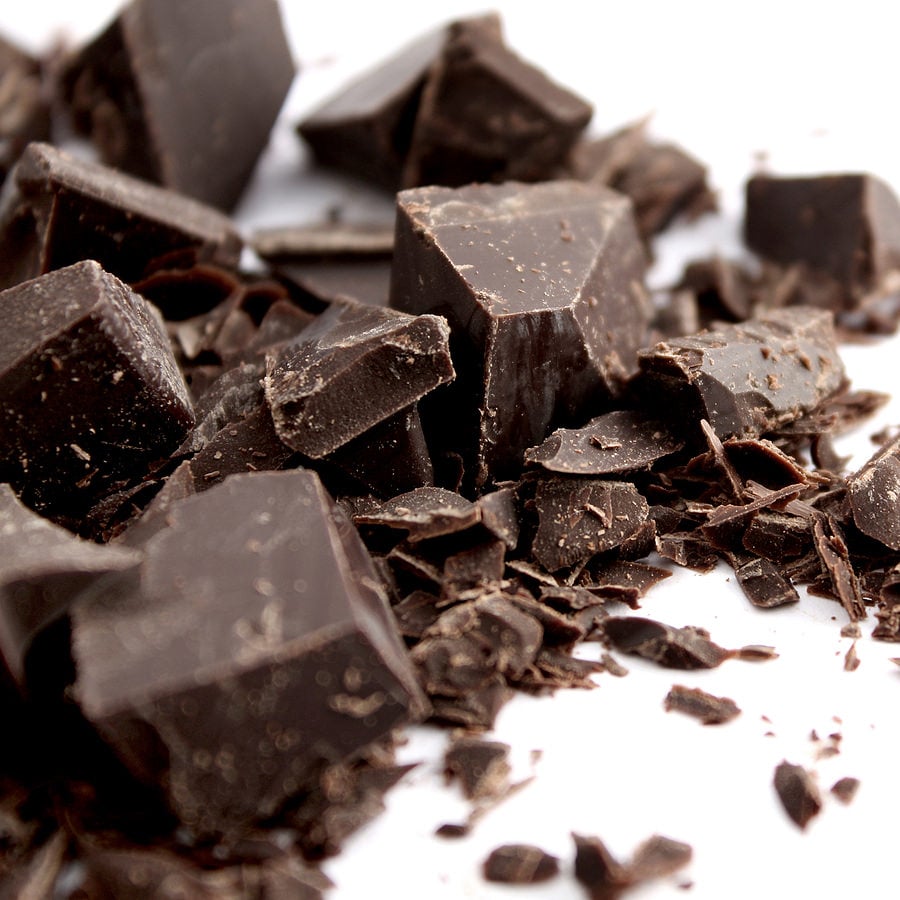
Is Dark Chocolate Good for You?

bigstock-Delicious-dark-chocolate-bar-i-15054239

IMG via Moorings Park Communities 

Sweets are tasty, but refined sugar shouldn’t comprise a large part of our diet. Dark chocolate is promoted as a sweet with relative health benefits. Let’s think twice: what’s the evidence that dark chocolate is good for you? 

One of the potential benefits of dark chocolate is its relatively high content of antioxidants. Antioxidants can neutralize the free radicals (molecules that can damage cells) produced during natural metabolic processes, or when we are exposed to smoke, radiation, or other carcinogens (1). It is proposed that ingesting antioxidants can help protect against cardiovascular disease and cognitive decline (2,3).  

The idea that flavanols, the antioxidant agents in dark chocolate, reduce rates of cognitive decline has no support from adequately controlled and randomized experiments (4). The quality of the evidence used to support the claim that flavanols delay cognitive decline is low, such as uncontrolled cohort studies. For example, a study of just 17 participants claimed flavanols increase blood flow to the brain (an indirect outcome) (5).  

A large randomized trial with no placebo arm studied antioxidant supplementation beginning in 1998 and found that cognitive function was perhaps marginally improved over an 18-year period (6). But a placebo-controlled trial found that antioxidant-containing supplements did not protect against dementia (7). As is often the case, better quality evidence often contradicts the findings of less rigorous studies.   

Another claim for antioxidants is that they protect against cardiovascular disease. However, several large studies have shown no difference in cardiovascular outcomes between people taking antioxidant supplements and those taking placebos (8,9). After a careful look, it is questionable whether dark chocolate provides protection against cognitive decline or cardiovascular disease. However, that’s not to say it isn’t still a satisfying sweet! 

References:

  1. Lobo V, Patil A, Phatak A, Chandra N. Free radicals, antioxidants and functional foods: Impact on human health. Pharmacogn Rev. 2010;4(8):118-126. doi:10.4103/0973-7847.70902 
  2. A flavanol-rich diet may increase brain function. Harvard Health Publishing and Harvard Medical School. March 1, 2021. Accessed July 15, 2023. https://www.health.harvard.edu/mind-and-mood/a-flavanol-rich-diet-may-increase-brain-function 
  3. Lobo V, Patil A, Phatak A, Chandra N. Free radicals, antioxidants and functional foods: Impact on human health. Pharmacogn Rev. 2010;4(8):118-126. doi:10.4103/0973-7847.70902 
  4. A flavanol-rich diet may increase brain function. Harvard Health Publishing and Harvard Medical School. March 1, 2021. Accessed July 15, 2023. https://www.health.harvard.edu/mind-and-mood/a-flavanol-rich-diet-may-increase-brain-function 
  5. Ullah A, Munir S, Badshah SL, et al. Important Flavonoids and Their Role as a Therapeutic Agent. Molecules. 2020;25(22):5243. Published 2020 Nov 11. doi:10.3390/molecules25225243 
  6. Panche AN, Diwan AD, Chandra SR. Flavonoids: an overview. J Nutr Sci. 2016;5:e47. Published 2016 Dec 29. doi:10.1017/jns.2016.41 
  7. Gratton, G., Weaver, S.R., Burley, C.V. et al. Dietary flavanols improve cerebral cortical oxygenation and cognition in healthy adults. Sci Rep 10, 19409 (2020). https://doi.org/10.1038/s41598-020-76160-9 
  8. Grodstein F, Kang JH, Glynn RJ, Cook NR, Gaziano JM. A Randomized Trial of Beta Carotene Supplementation and Cognitive Function in Men: The Physicians’ Health Study II. Arch Intern Med. 2007;167(20):2184–2190. doi:10.1001/archinte.167.20.2184 
  9. Kryscio RJ, Abner EL, Caban-Holt A, et al. Association of Antioxidant Supplement Use and Dementia in the Prevention of Alzheimer’s Disease by Vitamin E and Selenium Trial (PREADViSE). JAMA Neurol. 2017;74(5):567–573. doi:10.1001/jamaneurol.2016.5778 
  10. Hennekens C., et al. Lack of Effect of Long-Term Supplementation with Beta Carotene on the Incidence of Malignant Neoplasms and Cardiovascular Disease. New England Journal of Medicine. 1996; 334:1145-1149. DOI: 10.1056/NEJM199605023341801 
  11. Lee I, Cook NR, Gaziano JM, et al. Vitamin E in the Primary Prevention of Cardiovascular Disease and Cancer: The Women’s Health Study: A Randomized Controlled Trial. JAMA. 2005;294(1):56–65. doi:10.1001/jama.294.1.56 
  12. https://www.mooringspark.org/news/the-health-benefits-of-dark-chocolate