Is Dark Chocolate Good for You?

bigstock-Delicious-dark-chocolate-bar-i-15054239

IMG via Moorings Park Communities 

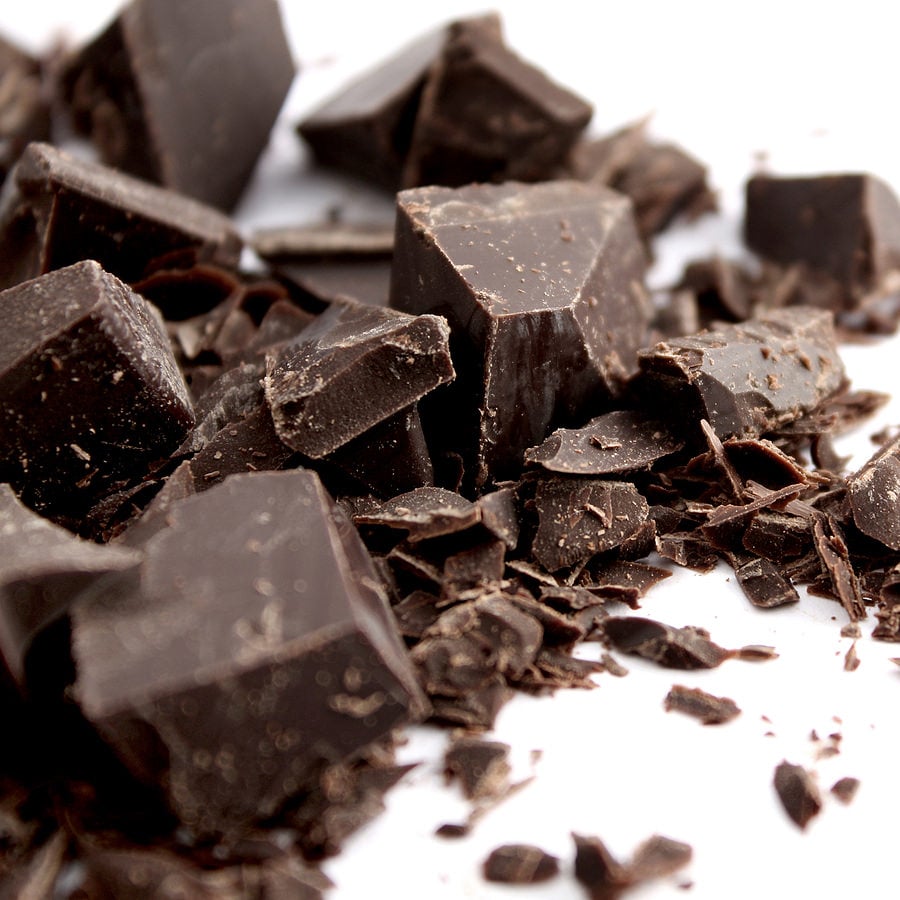
Sweets are tasty, but refined sugar shouldn’t comprise a large part of our diet. Dark chocolate is promoted as a sweet with relative health benefits. Let’s think twice: what’s the evidence that dark chocolate is good for you? 

One of the potential benefits of dark chocolate is its relatively high content of antioxidants. Antioxidants can neutralize the free radicals (molecules that can damage cells) produced during natural metabolic processes, or when we are exposed to smoke, radiation, or other carcinogens (1). It is proposed that ingesting antioxidants can help protect against cardiovascular disease and cognitive decline (2,3).  

The idea that flavanols, the antioxidant agents in dark chocolate, reduce rates of cognitive decline has no support from adequately controlled and randomized experiments (4). The quality of the evidence used to support the claim that flavanols delay cognitive decline is low, such as uncontrolled cohort studies. For example, a study of just 17 participants claimed flavanols increase blood flow to the brain (an indirect outcome) (5).  

A large randomized trial with no placebo arm studied antioxidant supplementation beginning in 1998 and found that cognitive function was perhaps marginally improved over an 18-year period (6). But a placebo-controlled trial found that antioxidant-containing supplements did not protect against dementia (7). As is often the case, better quality evidence often contradicts the findings of less rigorous studies.   

Another claim for antioxidants is that they protect against cardiovascular disease. However, several large studies have shown no difference in cardiovascular outcomes between people taking antioxidant supplements and those taking placebos (8,9). After a careful look, it is questionable whether dark chocolate provides protection against cognitive decline or cardiovascular disease. However, that’s not to say it isn’t still a satisfying sweet! 

References:

  1. Lobo V, Patil A, Phatak A, Chandra N. Free radicals, antioxidants and functional foods: Impact on human health. Pharmacogn Rev. 2010;4(8):118-126. doi:10.4103/0973-7847.70902 
  2. A flavanol-rich diet may increase brain function. Harvard Health Publishing and Harvard Medical School. March 1, 2021. Accessed July 15, 2023. https://www.health.harvard.edu/mind-and-mood/a-flavanol-rich-diet-may-increase-brain-function 
  3. Lobo V, Patil A, Phatak A, Chandra N. Free radicals, antioxidants and functional foods: Impact on human health. Pharmacogn Rev. 2010;4(8):118-126. doi:10.4103/0973-7847.70902 
  4. A flavanol-rich diet may increase brain function. Harvard Health Publishing and Harvard Medical School. March 1, 2021. Accessed July 15, 2023. https://www.health.harvard.edu/mind-and-mood/a-flavanol-rich-diet-may-increase-brain-function 
  5. Ullah A, Munir S, Badshah SL, et al. Important Flavonoids and Their Role as a Therapeutic Agent. Molecules. 2020;25(22):5243. Published 2020 Nov 11. doi:10.3390/molecules25225243 
  6. Panche AN, Diwan AD, Chandra SR. Flavonoids: an overview. J Nutr Sci. 2016;5:e47. Published 2016 Dec 29. doi:10.1017/jns.2016.41 
  7. Gratton, G., Weaver, S.R., Burley, C.V. et al. Dietary flavanols improve cerebral cortical oxygenation and cognition in healthy adults. Sci Rep 10, 19409 (2020). https://doi.org/10.1038/s41598-020-76160-9 
  8. Grodstein F, Kang JH, Glynn RJ, Cook NR, Gaziano JM. A Randomized Trial of Beta Carotene Supplementation and Cognitive Function in Men: The Physicians’ Health Study II. Arch Intern Med. 2007;167(20):2184–2190. doi:10.1001/archinte.167.20.2184 
  9. Kryscio RJ, Abner EL, Caban-Holt A, et al. Association of Antioxidant Supplement Use and Dementia in the Prevention of Alzheimer’s Disease by Vitamin E and Selenium Trial (PREADViSE). JAMA Neurol. 2017;74(5):567–573. doi:10.1001/jamaneurol.2016.5778 
  10. Hennekens C., et al. Lack of Effect of Long-Term Supplementation with Beta Carotene on the Incidence of Malignant Neoplasms and Cardiovascular Disease. New England Journal of Medicine. 1996; 334:1145-1149. DOI: 10.1056/NEJM199605023341801 
  11. Lee I, Cook NR, Gaziano JM, et al. Vitamin E in the Primary Prevention of Cardiovascular Disease and Cancer: The Women’s Health Study: A Randomized Controlled Trial. JAMA. 2005;294(1):56–65. doi:10.1001/jama.294.1.56 
  12. https://www.mooringspark.org/news/the-health-benefits-of-dark-chocolate
Does birth control cause infertility?

Birth Control

IMG via MedlinePlus

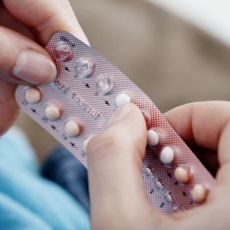
Women take birth control for a multitude of reasons, from preventing pregnancy to regulating the menstrual cycle and reducing acne. Taken correctly, the pill can prevent 99% of pregnancies. This has made birth control a staple for generations of women. However, some women may wonder, What happens if I stop taking the pill? One misconception about the pill is that taken for years, it can reduce the ability to have children. The possibility of future infertility would deter many women from considering birth control pills. So, let’s think twice about it.  

The combination pill works by supplying two hormones, estrogen and progesterone, that work together to stop the ovaries from releasing an egg each month during menstruation. Other pills provide only progesterone; progestin-only pills prevent pregnancy primarily by thickening the cervical mucus. When you stop taking the pill, the hormones it supplies leave your system in a matter of days, and your body reverts to its natural cycle. Additionally, your body begins to produce estrogen and progesterone again. Therefore, barring underlying health issues, women can become pregnant right away after stopping the pill. 

There are several reasons behind the misconception that birth control causes infertility. One is that taking birth control can conceal symptoms of conditions associated with infertility, such as endometriosis, PCOS, and uterine fibroids. Birth control is sometimes used to manage these conditions, so stopping birth control might mistakenly associated with infertility. Another reason for this misconception might be that historically, the side effects of the pill were not well-researched or disclosed to users, so it was not clear whether infertility was a risk. Women often felt dismissed by clinicians and pharmaceutical companies when they experienced side effects of the pill, even for conditions as serious as blood clots and strokes. In the 1960s, despite reports of deaths related to the pill, the FDA maintained that the pill was safe. Additionally, drug companies failed to inform healthcare providers of the pill’s more severe side effects. Since then, the dosage of hormones provided by the pill was adjusted to improve its safety, but mistrust of the pill persists and worries about infertility have continued to the present day.  

However, there is good evidence that birth control users need not worry about their fertility. A 2018 review of twenty-two birth control studies including over 14,000 women showed that 83% of women became pregnant within 12 months of discontinuing contraception. Furthermore, a 2013 study of 3,727 women found that although birth control use was associated with a short delay before conception, overall fertility was not impacted. Additionally, longer-term use of the pill was associated with higher fertility compared to short-term use (less than 2 years). Therefore, even long-term users of the pill should not be concerned. Overall, the evidence suggests that worries about infertility should not stop women from taking the pill.  

Links:

https://my.clevelandclinic.org/health/drugs/3977-birth-control-the-pill#:~:text=Birth%20control%20pills%20are%20a,improve%20acne%20and%20treat%20endometriosis. 

https://my.clevelandclinic.org/health/drugs/3977-birth-control-the-pill 

https://health.clevelandclinic.org/can-birth-control-make-you-infertile/ 

https://www.ncbi.nlm.nih.gov/pmc/articles/PMC6055351/ 

https://www.mayoclinic.org/healthy-lifestyle/birth-control/in-depth/birth-control-pill/art-20045136#:~:text=The%20pill%20prevents%20your%20body,you%20stop%20taking%20the%20pill. 

https://www.mayoclinic.org/healthy-lifestyle/birth-control/in-depth/best-birth-control-pill/art-20044807#:~:text=How%20do%20the%20different%20birth,sperm%20from%20joining%20the%20egg. 

https://health.clevelandclinic.org/6-things-that-can-happen-when-you-stop-taking-the-pill/ 

https://cham.org/HealthwiseArticle.aspx?id=te8132#:~:text=You%20can%20get%20pregnant%20right,months%20after%20stopping%20the%20pill. 

https://www.healthline.com/health/birth-control/can-birth-control-cause-infertility#misconceptions 

https://www.acog.org/womens-health/faqs/progestin-only-hormonal-birth-control-pill-and-injection#:~:text=It%20stops%20ovulation.,uterus%20and%20fertilize%20an%20egg. 

https://www.sciencedirect.com/science/article/pii/S0277953621005797#bib115 

https://medlineplus.gov/birthcontrol.html

Is crossing your eyes harmful?

Young man rubbing eyes holding glassesImage by SG SHOT via Shutterstock

Children may do goofy things like crossing their eyes to get a rise out of peers and family members. You may have heard the warning that crossing your eyes for an extended period could lead to them staying in that position forever. But is crossing your eyes actually harmful? 

Six muscles move your eyes. Contraction of these muscles moves your eyes up, down, and side to side. Using these muscles to cross your eyes is a form of exercise and is not harmful. The experience of fatigue and perhaps headache might be interpreted by the human mind as indications of harm.  Perhaps that’s what gave rise to the myth that crossing your eyes is harmful.  

Once you uncross your eyes and give them time to rest, they will feel normal as the fatigue resolves. So, the next time you see a kid crossing their eyes for some laughs, there is no need to worry.    

https://www.vmrinstitute.com/if-you-cross-your-eyes-theyll-stay-that-way-and-4-other-myths-about-eye-health/ 

https://www.optometristsclinic.com/b/is-crossing-your-eyes-harmful#:~:text=While%20this%20may%20cause%20adults,t%20have%20any%20lasting%20effect.