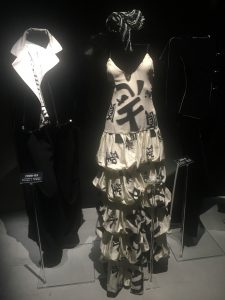
What I truly loved about visiting the Armani and Gucci museums was the inside information that was provided to us on how these incredible gowns and clothes are manufactured. However, something that I found particularly interesting about both these Italian mega-chains was their constant insistence and assurance that both fashion brands are manufactured through “wholesome” means. Why this can definitely be said about Gucci in terms of their ability to produce clothes entirely within the Italy, it seems slightly strange that through their parent company – which falls under the same roof as Stella McCartney as well as a multitude of other notable fashion brands – they show an intense statistic of outsourcing in terms of producing these garments. For example, It was mentioned during the presentation given to us in Gucci that many garments are sent or produced within India for embroidery work or to China and other Asian countries for silk. This definitely opens up a questionable narrative about how and under what circumstances these garments are produced in. Without a doubt, Gucci creates remarkable pieces of clothing that easily fall under the category of art. But it is always vital to remember that although something as mega as Gucci is easily viewed as impenetrable, it is necessary to critique any areas of production that seem questionable.
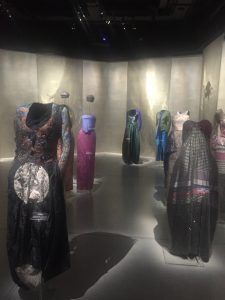
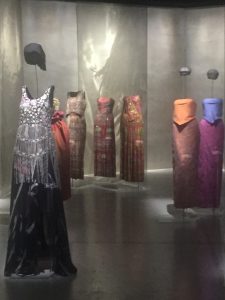
On a similar note, Armani museum also brought up a few questions about the visual and creative influence in a variety of pieces within their collection. This was more specifically concentrated within the “Orient” section in the museum. It was stated that Armani was influenced through a variety of Eastern cultures that are clearly seen through a quite a few pieces in his collection. However, at times I felt that this was perhaps a understatement in respect to what was actually being displayed. For example, there were two particular dresses that were essentially Sarees being relabeled as an “Armani Piece”. I’m not an expert on the subject of appropriation, but viewing these gowns did make me slightly uncomfortable (As well as the Indian Sitar music being constantly played in the background). In fact, they would probably me more accurately described as Sarees within an Italian twist. However, I do not know the exact details and background behind the creation of these garments, so it would be virtually impossible to see the Armani team’s thought process while creating these specific pieces. Overall, it was an absolute pleasure to be able to see all of these stunning gowns being celebrated through their display in the Armani Museum.