Week 1- first few days in Milan

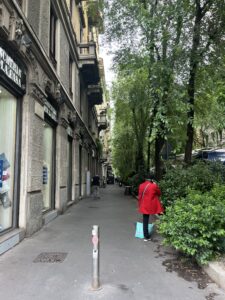
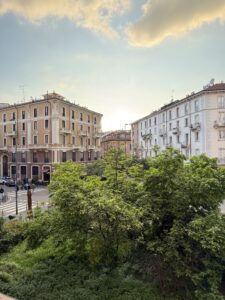
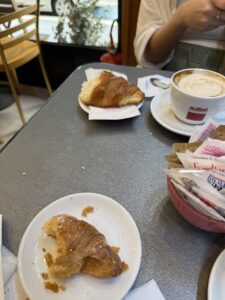
These past few days marked my first time in Milan, and Europe in general. It has been really wonderful to experience the daily life that I have previously only read about or seen on tv- morning meals of coffee and croissants, cobblestone roads intertwining through beautifully detailed architecture, and an abundance of the world’s largest designer brands headquartered around me. I absolutely love getting immersed in a country where the main language isn’t English, and trying to slowly build Italian language into my daily interactions. It’s also great to be here with a group from UT because we can bond over similar experiences and we’re all figuring out the process of traveling/living here together.

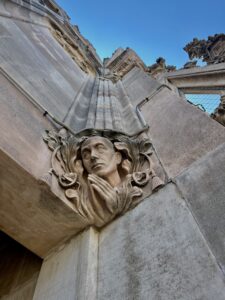
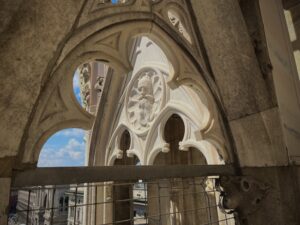
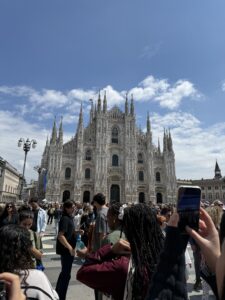
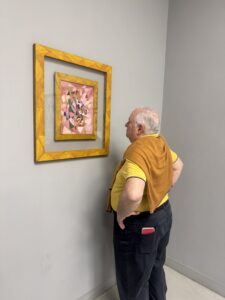
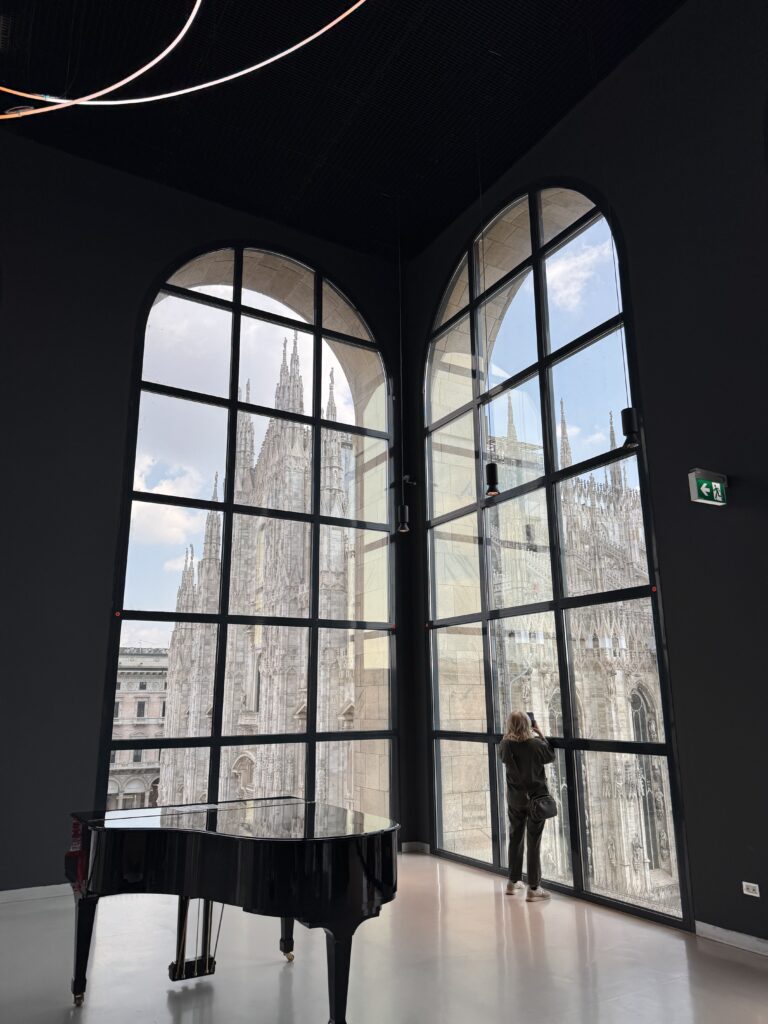
My first impression of Milan was that it was a city lying at the contrast of old and new- the two big sites we visited this past weekend were the Duomo and the Museo del Novecento, and I remember being shocked they were right next to each other; a Gothic medieval church from the 14th century and a modern museum dedicated to contemporary art. After that experience, I’ve started seeing this juxtaposition all around the city: Milan celebrates Italy’s vibrant history while pushing forward into the future of design. I’m excited for everything we’re going to see this upcoming week!

Museo del Novecento windows looking out into the Duomo

Week 1: Grandiose First Impressions | Ava Shea Feinstein 2025

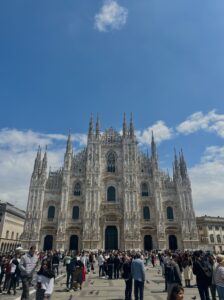
Milan is BEAUTIFUL! As soon as we got off the train from the airport my jaw dropped: the grandiose architecture, the greenery on every building, the COLORS. I think the vibrancy and architectural diversity is what truly blew me away. I can confidently say that I was not ready for the Duomo. Walking up those stairs from the metro with the light beaming in, and seeing that massive, incredibly intricate building; I don’t think I will ever forget that. The closer you got, the more astounding it became. The level of detail wasn’t (and still isn’t) comprehensible. Even as we are just beginning to explore the city, I can tell there are going to be so many amazing things to see and learn. I am beyond excited to explore!

Week 1

This week has been busy since landing in Milano. Once I landed, after a less-than-restful 8-hour flight from JFK, I was immediately greeted by Emma. From there, we met another group of girls and traveled by train to Milan. The train was clean and easy, much different from many public transportation systems in the United States. The neighborhood in which the hotel was in was one that I appreciated. It seemed like a family-oriented, quiet, and beautiful community that was filled with mostly natives. Upon arrival, we saw a huge outdoor market with fresh food, bread, and various vintage clothing. Later, I explored the local cafes where I had a coffee and sat outside. Into the evening, I enjoyed some dinner while sitting outside at a local pizza restaurant known well in the area. My introduction to classic Milanese living was a clear depiction of the value of taking life slow and enjoying socializing.

Mapping the City: Bosco Verticale to Federazione del Fasci Milanesi

By: Ava Feinstein, Sophie Leung-Lieu, Samantha de Lemos, and Camila Mascorro

Preliminary Research

BUILDING 1: Bosco Verticale

By: Boeri Studios

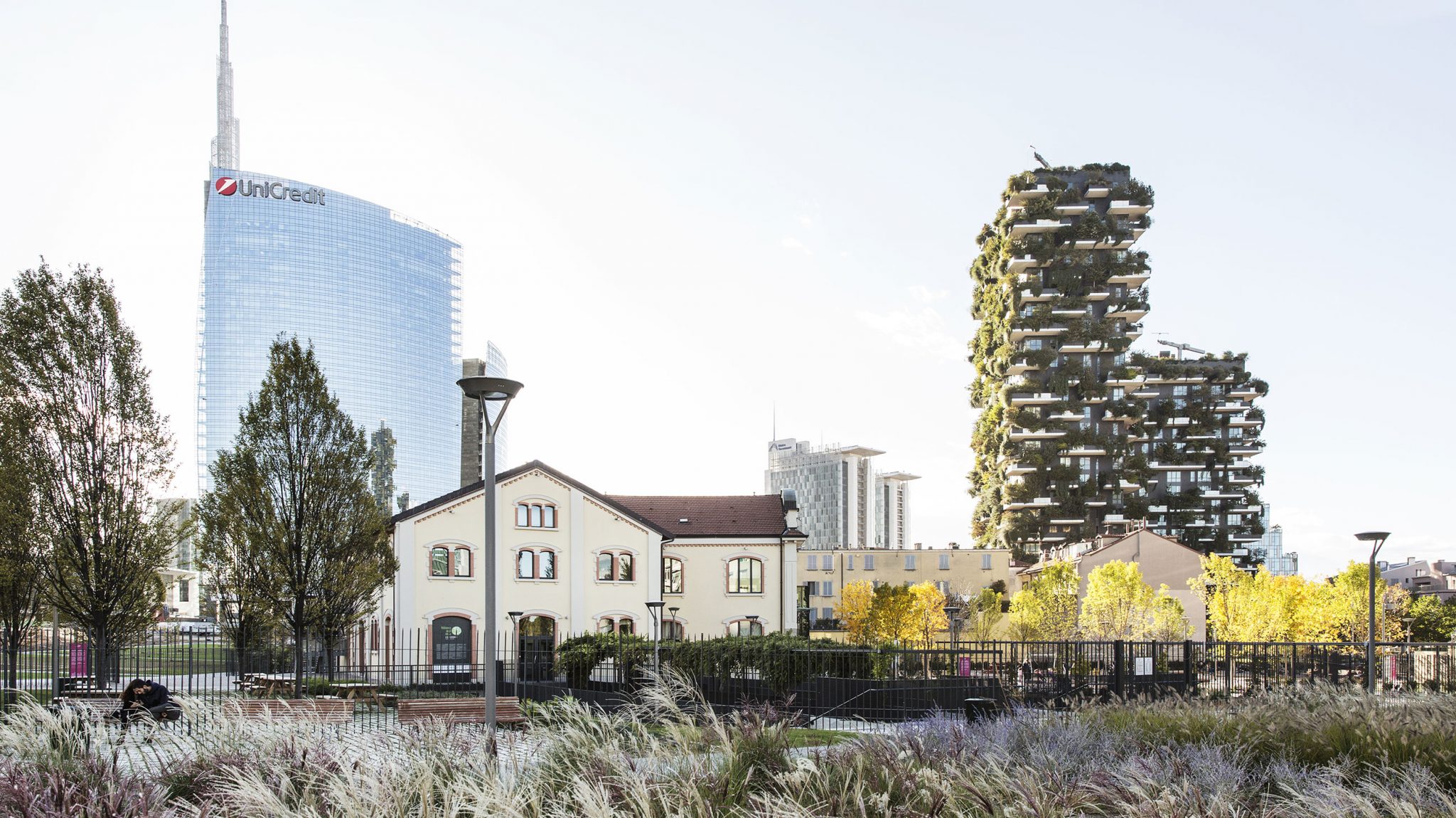
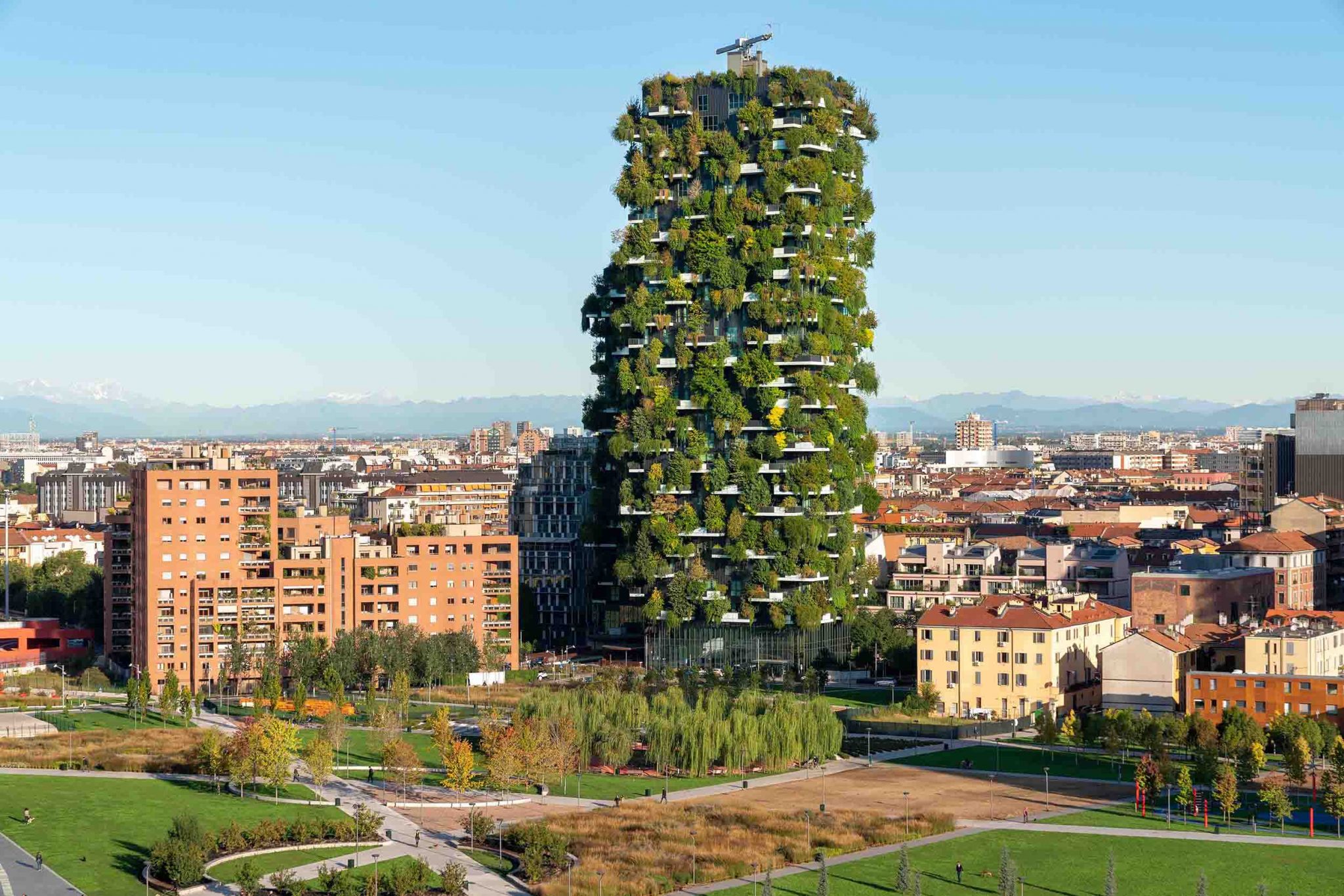
Pictured are the two towers that are Bosco Verticale in the Porta Nuova district of Milano.  This image faces the south side of the tower which is primarily planted with evergreen species to withstand the exposure to the south sun.

By: Boeri Studios

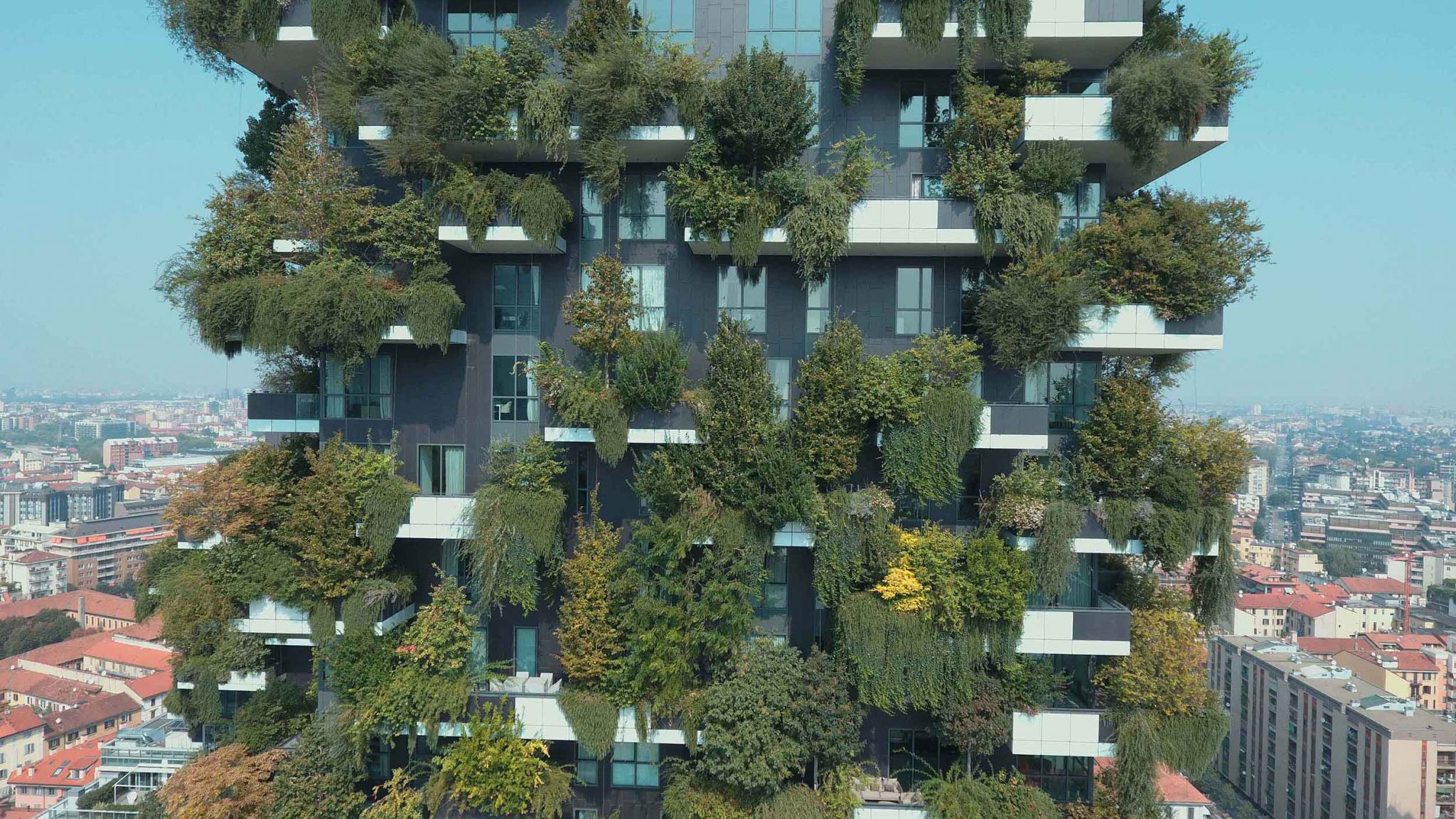
Depicted above is a close up picture, highlighting the staggered formation of the balconies. You are able to see the varying degrees of space necessary for each species of tree to grow into its full canopy.

By: Boeri Studios

Depicted above is a close up picture, highlighting the staggered formation of the balconies. You are able to see the varying degrees of space necessary for each species of tree to grow into its full canopy.

By: Boeri Studios

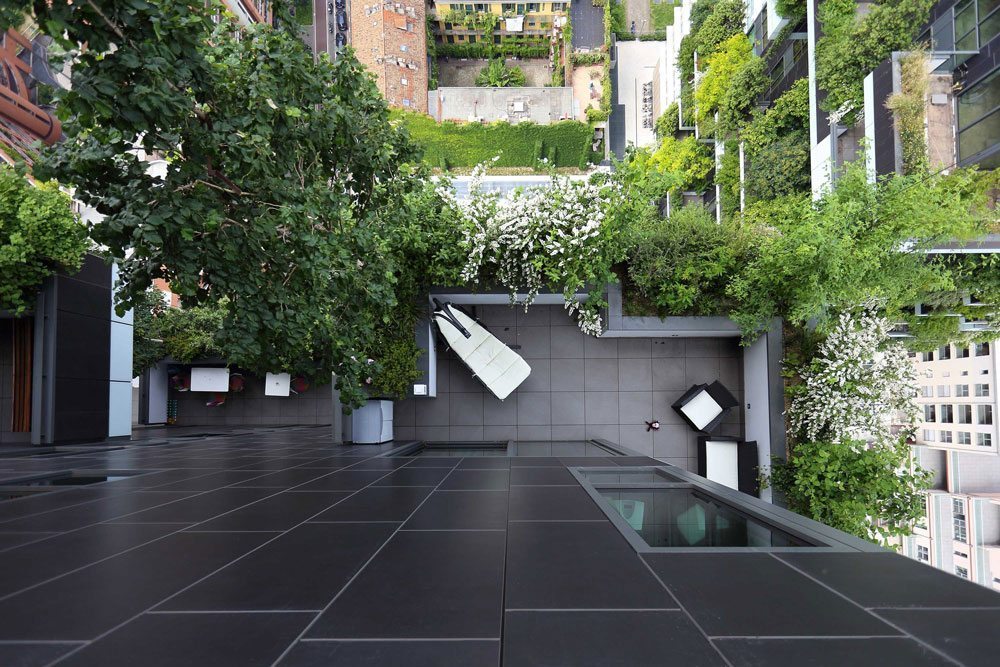
This top view of one of the balconies demonstrates both the height allowed for full canopy development, as well as the bespoke nature of each of the balconies. 

Observations

The Bosco Verticale, otherwise known as the ‘vertical forest’, is a residential tower in Milan’s central Porta Nuova district. The structure consists of two towers, 110 and 76 meters high, and hosts over 20,000 trees and shrubs on its walls. Of this greenery are hundreds of different plant species, distributed according to the sun exposure on the facade.

The vertical forest was designed by Boeri Studio, with architects Stefano Boeri, Gianandrea Barreca, and Giovanni La Varra. The purpose of the building was to contribute to Milan’s efforts of environmental regeneration to densify nature within the city. The vegetation covering the surface of the structure is equivalent to 75,000 square meters of greenery. Because of this, the Bosco Verticale minimizes the city’s carbon footprint, optimizes water management, and contributes to the improvement of the overall quality of life in Milan. The ecosystem allows sunlight to be ‘filtered’ through the building and helps regulate the humidity level and surface temperatures by up to 30 degrees on the Bosco Veticale. This also reduces the energy requirement for air-conditioning inside the residence.

The building walls include overhanging balconies that are staggered, jutting out by about three meters. This design choice was defined to allow for the growth of tree canopies up to three stories high, as the building was created to better condition the predicted plant structures. Apartment complexes on the inside of the building are created with flexible floor plans to accommodate the plants surrounding them. Additionally, the elevators and stairs were placed on the perimeter of the building, as opposed to a traditional placement in the center of the tower.

While the plants are considered a common asset to all tenants in the building, a team of professional gardeners maintains the greenery by climbing the towers with ropes twice a year. It would be interesting to learn more about how residents experience this green space in daily life and whether the concept has influenced other cities to build similar towers. It would also be interesting to explore how sustainable and cost-effective it has proven over time, especially in terms of maintenance and long-term environmental impact.

BUILDING 2: Federazione del Fasci Milanesi

Casa del Fascio della Federazione Provinciale in piazza San Sepolcro, Piero Portaluppi, Milan, 1935-40
By: Adam Nathanial Furman design

Post-war image of the Federazione del Fasci Milanesi, now repurposed as a State Police Commissioner Center, preserving its layered architectural legacy.

By: www.artefascista.it

Looking up at the towering façade of Palazzo Castani, the stark verticality and rigid symmetry reflects the authoritarian power structures of the fascist era.

Sede della federazione dei fasci milanesi
By: www.artefascista.it

Historic image of Palazzo Castani at Piazza San Sepolcro, the birthplace of the Fasci di Combattimento, where Mussolini launched the fascist movement in 1919.

By: Fondazione Piero Portaluppi

A view of the Bramante courtyard’s loggias, reopened and reconfigured by Portaluppi with classical columns to emphasize order and heritage.

Observations

The Federazione del Fasci Milanesi, also known as Palazzo Castani, is a historical landmark that represents a history with the fascist regime. Located at State Police | Commissioner Center, Piazza S. Sepolcro, 9, 20123 MI, Italy, this building has lived through many different phases of historical lives. Through the work of architect Piero Portaluppi, who designed many of Milan’s most coveted architectural masterpieces, the Federazione del Fasci Milanesi was a display of the history that went on within its walls.Portaluppi was a more abstract architect than most absolutists but maintained elements of the fascist style through his use of symmetry, grand proportions, and monumental forms.

The structure originally dated back to the 15th century under the original ownership of the Castani family, which gave it the name “Palazzo Castani.” It underwent significant transformations throughout the centuries, including an extensive Baroque renovation in the 17th century that added dramatic spatial elements while retaining its Renaissance roots. In the 20th century, Palazzo Castani became a landmark after housing the National Fascist Party led by Benito Mussolini. He used what is now known as the Federazione del Fasci Milanesi as a base for early political activities.

On March 23, 1919, Mussolini gathered around 120 supporters in a hall at Piazza San Sepolcro, this exact location, to officially launch the Fasci di Combattimento, marking the beginning of the fascist movement. The most impactful speech for the Italian fascio was delivered at a building adjacent to Palazzo Castani, linking the address to the origins of Italian Fascism. This era became known as Sansepolcrismo. Between 1935 and 1940, Portaluppi remodeled the building, adding a monumental façade and making architectural interventions that emphasized order and power. One of his key contributions was reopening the loggias on the first floor of the Bramante courtyard, previously walled up, and reconfiguring them with classical columns and spatial symmetry. After World War II, the Federazione del Fasci Milanesi was reimagined and repurposed as the State Police | Commissioner Center, transforming its identity while preserving the telling history of its architectural past.


Citations

Bosco Verticale

“Vertical Forest: Milan.” Stefano Boeri Architetti, 30 Apr. 2025, www.stefanoboeriarchitetti.net/en/project/vertical-forest/.

Visser, M. “The Geography of Vertical Forests: Exploring the Green City.” Utrecht University Student Theses Repository Home, 1 Jan. 1970, studenttheses.uu.nl/handle/20.500.12932/35208.


Federazione del Fasci Milanesi

Studio. (2023, February 1). Piero Portaluppi, dall’italia del ventennio alla milano di instagram. Rivista Studio. https://www.rivistastudio.com/piero-portaluppi-milano/ https://www.rivistastudio.com/piero-portaluppi-milano/ 

Wikimedia Foundation. (2023, December 28). Palazzo castani. Wikipedia. https://en.wikipedia.org/wiki/Palazzo_Castani https://it.wikipedia.org/wiki/Palazzo_Castani 

Wikimedia Foundation. (2024, December 27). Piero Portaluppi. Wikipedia. https://it.wikipedia.org/wiki/Piero_Portaluppi https://en.wikipedia.org/wiki/Piero_Portaluppi 

Arte  Italiana  Del, www.artefascista.it/milano__CdF__primigenia__arte__italiana__del.htm. Accessed 12 May 2025 https://www.artefascista.it/milano__CdF__primigenia__arte__italiana__del.htm

Cadorna Station to Palazzo Castiglioni, Austin Component

Cadorna Station to Palazzo Castiglioni, Austin Component

Cadorna Station. Piazza Cadorna railway station, architect Gae Aulenti.

Cardona Station is a gem within the Ferrovie Nord Milano System. The station is one of Milan’s central railways and is located in Piazzale Luigi Cadorna and serves both regional and suburban train lines. Although the station has existed since the 19th century, its most distinguished moment was its redesign by renowned architect Gae Aulenti. It was initially known as Piazza Castello in the 1800s and served as a single-floor, small structure before further development in 1885 to accommodate increased passenger traffic. The original building was tragically burned down in 1943, much like the rest of the city. The structure that stands today was completed in 1955 through the work of Aulenti.

Aulenti’s modern redesign of the building favored the movement of pedestrian behavior and acts as an underground travel rail hub in one of Milan’s main squares. Some key renovations include the added canopies and shelters, which were supported by the eye-catching red columns, to add shelter for pedestrians and to reference the design of 19th-century train stations. In addition, the layout was redesigned to improve foot traffic within the station and incorporate new modes of transportation within the station, which included the metro lines M1 and M2, tram and bus routes, as well as the express railway line.

The functional nature of the project is contrasted with a colorful structure, named Needle, Thread, and Knot, which stands at the centre of the space, designed by Claes Oldenburg and Coosje Van Bruggen. The structure symbolizes Milan’s fashion industry and industrial innovations.

Aulenti was coined as “The Grand Dame of Italian architecture” for her trailblazing methods, which prioritized the arts as a whole and not just a hyper focus on architecture. She was one of the first women to gain prominence in the architecture sphere, rising to national and international recognition. 

Image 1: Cadorna Station in its modern-day context

Image 2: The station before its redesign by Aulenti


Image 3: Highlighting the flow of pedestrian traffic with a covered walkway and bold red columns

Image 4: The playful and symbolic sculpture (Needle, Thread, and Knot)  in front of the structure


Palazzo Castiglioni. Corso 47 Venzia (near Giardini Pubblici), architect Giuseppe Sommaruga

Palazzo Castiglioni is located at Corso Venezia 47 in Milan. It is a widely recognized architectural piece by Giuseppe Sommaruga and is thought of as the artistic manifesto of Milanese Liberty. The palace was constructed between 1901 and 1904 for Ermenegildo Castiglioni, a wealthy merchant. It was built in the Italian Art Nouveau style and intended to be a fusion of modernity and artistic innovation in the heart of Milan.

Giuseppe Sommaruga and his client, Castiglioni, traveled to England and France for references and were inspired by Hector Guimard, an Art Nouveau architect from France.

The building is set forth with a rustic stone base at the front and is juxtaposed with ornate details inspired by designs from the 18th century; the combination of natural and classical elements creates a distinct and striking exterior. The building’s innovation in its original design was met with critique and controversy from the public due to the nude statues that graced the main entrance. They had been placed to symbolize peace and industry, but were instead deemed scandalous, leading to their removal and replacement in the Romeo Faccanoni villa.

During World War II, the building suffered from damage and, unfortunately, lost its original furnishings as American forces occupied it. In 1957, the building was placed under the protection of the Italian Ministry of Cultural Heritage, protecting its cultural relevance. Years later, it was sold to the Traders’ Union of Milan and has since been adapted to be used as a practical office space. While some interior spaces were altered, key exterior elements remain intact, including the coveted facade, staircase, and select rooms. Today, the building is celebrated as a landmark for Milanese innovation and art nouveau style and stands on its own as Sommaruga’s innovative approach to architecture. Its unique design is continually used as inspiration for others and represents a significant period of transition from Milan’s traditional architecture.


Image 1: The front facade of Palazzo Castilogni, in modern times, still holds the majority of its original integrity in design

Image 2: The still-intact grand staircase graces the interior of the space


Image 3: The original front side of the building with the controversial statues framing the main doors

Image 4: The back facade faces the internal garden and has a more intimate feel, but it retains the elegance of the whole building.


Citations: 

Cadorna Station:

“Gae Aulenti: the works of the grande dame of architecture.” We Build Value, October 29, 2020. https://www.webuildvalue.com/en/infrastructure-news/gae-aulenti-works.html.

Sullivan, Mary Ann. “Piazzale and Stazione Cadorna.” Bluffton University. Accessed May 6, 2025. https://homepages.bluffton.edu/~sullivanm/italy/milan/cadorna/aulenti.html.

Castiglioni, Piero. “Cadorna Railway Station.” Studio Piero Castiglioni. Accessed May 6,, 2025. https://pierocastiglioni.com/en/architecture/buildings/cadorna-railway-station/#Cadorna%20Railway%20Station-2.

Museo Virtuale Ferrovie Nord. “Milano Cadorna.” Accessed May 6, 2025. https://museo.ferrovienord.it/en/header/notable-stations/milano-cadorna/.

Elkann, Alain. “Gae Aulenti.” Alain Elkann Interviews. May 28, 2016. https://www.alainelkanninterviews.com/gae-aulenti/.


Palazzo Castiglioni:

GAG Società Benefit https://www.gag.it/. “Palazzo Castiglioni Milan Italy  – Cariboni Group.” Cariboni Group, www.caribonigroup.com/en/projects/palazzo-castiglioni-milan-italy.


Pavia, Codex. “Casa Castiglioni” LombardyCultural Heritage, 2016, www.lombardiabeniculturali.it/architetture/schede/LMD80-00196/.

Zacevini, Gianni. “Palazzo Castiglioni: Il Simbolo Del Liberty Milanese – Divina Milano.” Divina Milano, 25 Oct. 2024, www.divinamilano.it/palazzo-castiglioni-il-simbolo-del-liberty-milanese.
Samantha de Lemos~A 48-hour travel day, Switzerland to Milan

My journey on this study abroad started off mundane, just as I would hope a travel day to be. It took a turn, however, in my sleep.

My first flight of three legs went smoothly, taking me from Austin to Washington D.C. in a flight accompanied by a kind grandma and a three year old kicking me in the back as I slept. I made my connecting flight to my second leg, Zürich, Switzerland, with no issues and even got a bagel on the way! I thought it would be smart to take a Benadryl to fall asleep for my first ever overnight flight, so when I got to my seat I  took my medicine and hit the hay. When I woke up an hour later, we were still on the ground (which meant that my connecting flight the next morning would possibly leave without me). I asked a flight attendant, but she said all was well…all was not well. When we landed, my third leg connecting me to Milan had already taken off and I was rebooked for a 1pm flight while my original flight was at 9am. I knew this would cut things close given that we were supposed to be in Milan at 10:30am, or at the UNA Hotel by then. I contacted IES abroad and got in contact to a wonderful lady while stranded in Switzerland, but it was a struggle because the second I landed in Europe I realized the international plan I had set up for cellular data was not working. Connected to the Zürich airport wifi for its four hour allotted time, I contacted my parents frantically trying to figure out how to solve this massive issue. When the four hours of free wifi ended, I was MIA. In this time of franticness I met my first Bulgarian friend while awaiting our delayed flight to Milan and we shared our hatred for delayed flights and our love of Switzerland. After being two more hours delayed, our plane finally arrived and we flew off to Milan.

Looking back I am grateful for my stressed arrival in to Milan and the misshapen journey I was forced to take to get there. I discovered the glory of Swiss chocolate (which is my newfound obsession), I met a wonderful friend from Bulgaria of all places, I was exposed to people who spoke German, Italian, English and French which inspired me to learn multiple languages, and made me self aware of my dependency on cellular data among other things I usually take for granted. Once in Milan I saw the oh so beautiful Duomo and fell in love with a city so marvelous I can’t imagine ever leaving.


Tourist time in Milan


The museum today was wonderful, and the different types of art it had were completely different, which, in my opinion, allows every person to connect with one and gives room for people who have different tastes to like something.

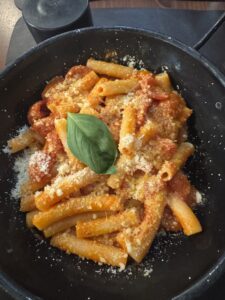
This first week has been great. I arrived a day early and was able to explore Chinatown a little. It was interesting, not my favorite area, but I got to have my first pasta at mama_eat, which was really good. Later that day was my fiesta time at the duomo on the trip. It was not super crowded, and the weather was really nice.

The past couple of days have been very fast-paced, making me see and experience very different parts of Milan. My step count has been like 20,000, and I love it so much because I know I am walking around, and I believe it is the best way to get to know a city.

Week 1 (2025): Close Looking in Milan – Danielle

Arriving in Milan was very busy and hectic, from when I landed at the airport to arriving at the student apartments today. There were many suitcases and bags to move, along with many places and people to take in, so I was glad to have some quieter time to myself during our tour of the Duomo and the Museo del Novecento.

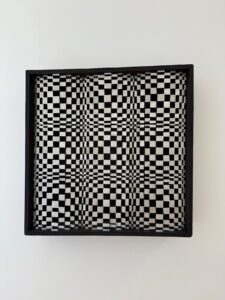
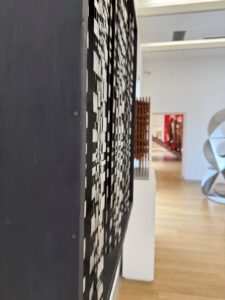
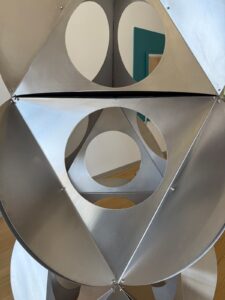
One common thread that I observed between these two locations was the importance of close-looking. Often, the most interesting marble details that I noticed at the Duomo were elements that I missed upon first or second glance. That same principle was true for one of my favorite pieces at the Museo del Novecento, Oggetto ottico dinamico n°1 by Dadamaino. If I had not taken the time to closely observe it, I would have never noticed that this visual effect is produced by hanging columns of metal squares!

Oggetto ottico dinamico n°1 as it appears from the front.
Oggetto ottico dinamico n°1 as it appears from the side.

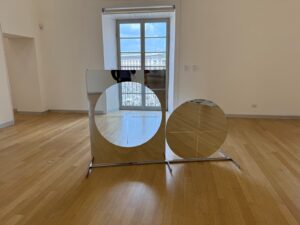
And some other geometric shapes that inspired me!
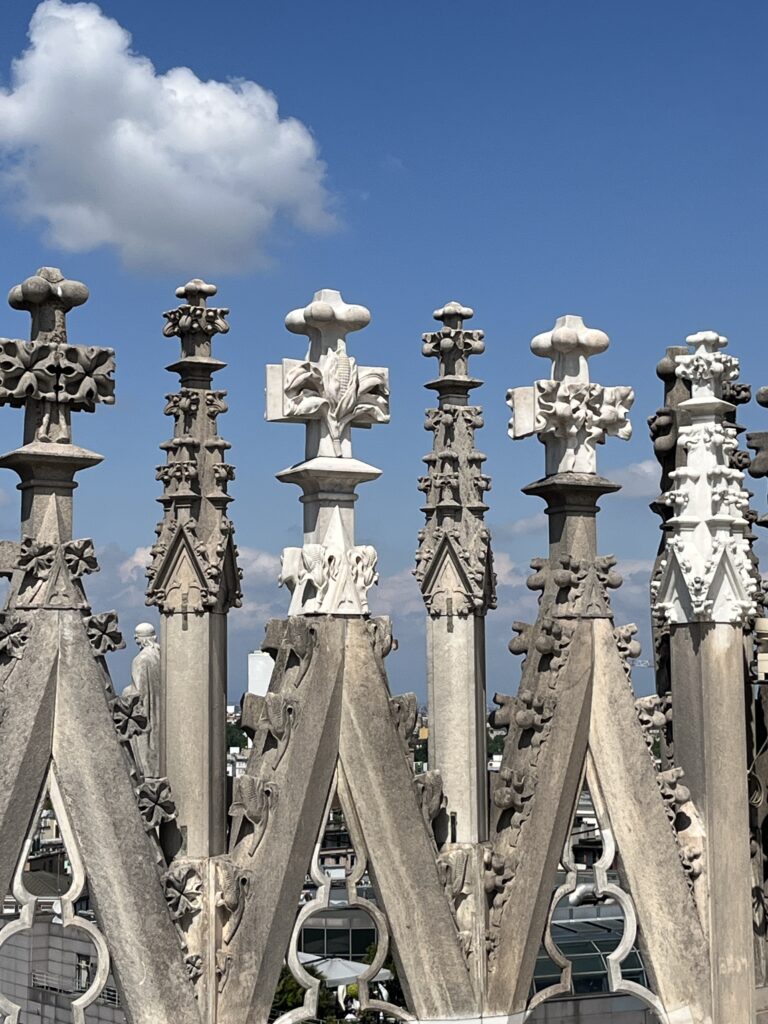
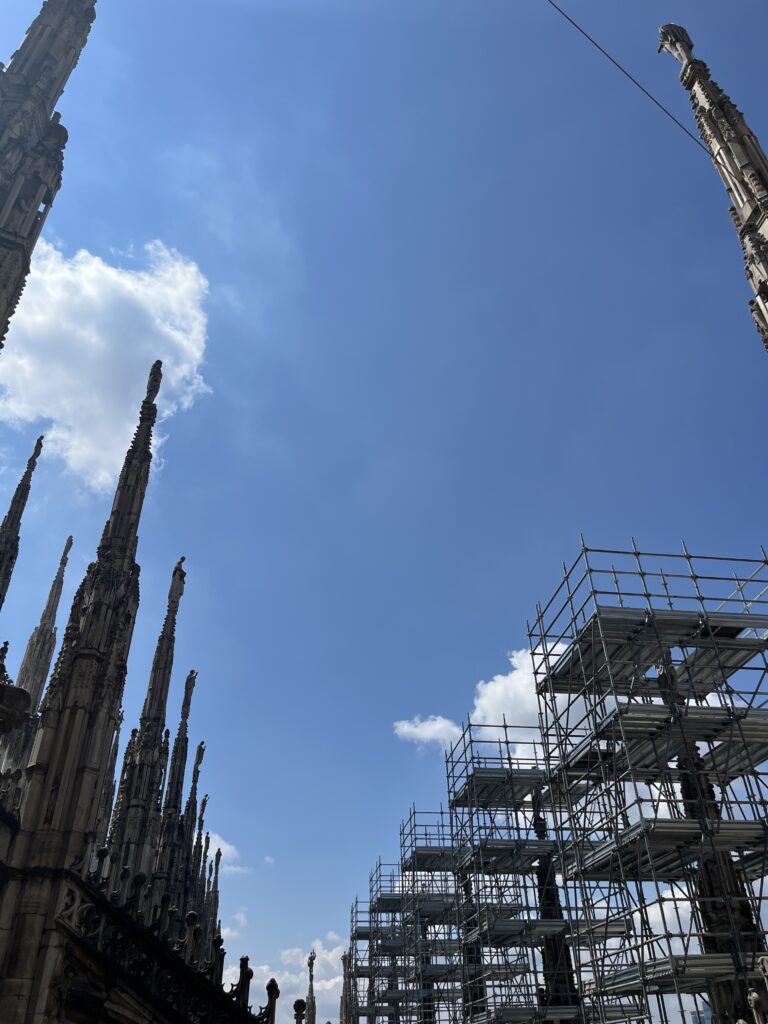
Week 1: Studying the New and the Old

Ciao! This first week in Milano has been nothing short of eventful, exhausting, exciting, rewarding, scary, and fascinating all at once. It was definitely very nerve-racking at first the thought of living in a different country for a few weeks, especially as I have never lived anywhere outside of Austin, having been born and raised there and then going on to attend UT. This has been a very big jump for me so far, but little by little I’ve gotten accustomed to the city while finding things that both it and Austin share, as well as new things that are different from back home and have surprised me. It’s definitely stood out to me how the new and old are blended together throughout the city, something so evident that it was pointed out to us during our tour of the Duomo. Back home in Austin I’ve definitely studied juxtaposition of older buildings or architectural styles with new, modern buildings in areas downtown or even on/close to campus, but here even in one building the new and old can come together to create something entirely new. This especially stood out to me with the different shades of marble in sections that have been replaced with replicas of the original carvings and sculptures and how despite their visual differences, they work in harmony to portray the history of this building while adding new stories at the same time.

Week 1: A Day With No Sleep (Angel)

My overnight flight landed in Milan at about 6:30 in the morning and my inability to get any sleep on the way meant that I’d have to power through my first day in Milan without having slept since Thursday night.

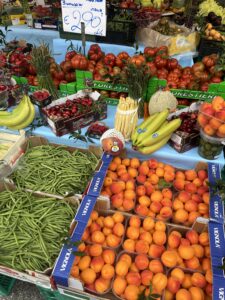
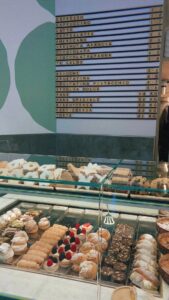
I had the benefit of navigating to the hotel with a few other girls in the program, making the experience much less stressful. Upon arriving, we explored the nearby area, getting an authentic view of Milan. We came across a massive open market. The fruit looked so much more vibrant and delicious than fruit back home. There were also sellers for cheese, meat, nuts, bread, clothes, shoes, jewelry, and anything else you could think of. It was cool to see how the community used their space, which was the street, to create opportunities for mutually beneficial interactions with one another.

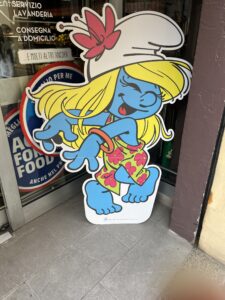
Some other notable mentions of our exploration of the area include a fully gluten-free cafe (which was delicious and I’m not even gluten-free) and a Smurfs-themed grocery store.

When I had aching legs and no energy, I pushed through to fully immerse myself into Milan and connect with new friends. I realized that sleep will always be there but moments like these are limited and fleeting, so we must take advantage of them.