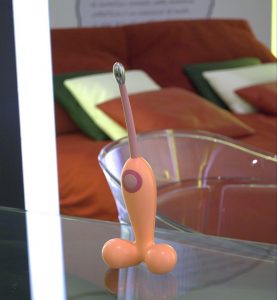
Tipoteca and Treviso

Our final days of our trip were not spent crying in our rooms or walking the streets of Milan with melancholy; instead we boarded a bus bright and early on Tuesday morning at promptly 6:30am.

Our first stop of the day was a 3 hour drive to a letter press factory, “Tipoteca”. We were given a tour of the museum and factory, where our guide told us about the history and importance of letter pressing.
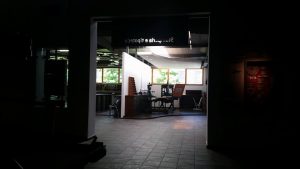
13533070_1721436868109445_9127050870070881157_n
Tipoteca

Then we were given the chance to make our own poster; we collaborated to create a single poster we’d all get a copy of. We finally agreed on the poster pictured below:

Afterwards, we had lunch just across the street where they served us so much food. We were served about 2-3 different appetizers, a first and second course, and finally dessert with coffee.

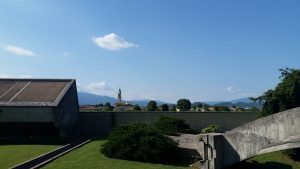
Then we boarded the bus yet again for our last stop of the day: Scarpa’s cemetery.
13439014_1721436931442772_4276371165485958487_n
View of the city beyond from inside the cemetery

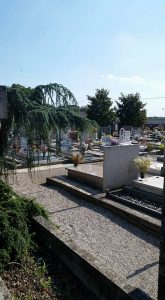
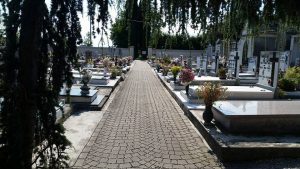
We saw beautiful pieces of architectural beauty, and the quiet solace that is a cemetery. We didn’t stay very long, but it was pleasant to just wander through the graves, read the names, and imagine the lives of the people who had once been.
13521835_1721436944776104_7196662946006687086_n
Scarpa’s Cemetary

Some graves were of children, many of old couples, and families comprised the lot of Scarpa’s cemetery. The beautiful layout made it less creepy and more poetic; it didn’t feel like a cemetery where loved ones were simply laid to rest, this was a place to honour those who had so grievously passed.
13537549_1721437014776097_7145349787810217500_n

After we wandered for a little while, we boarded the bus for the last time that day to head to the hotel. Broken into rooms of two people each, we had a chance to freshen up before attempting to find our way around Treviso.

A small group of us ate dinner in an alley at a quaint pizzeria before wandering off to find gelato – one of the last times we would be able to eat gelato in Italy, actually.

As we walked and talked, we were all acutely aware that our time was running out fast, but no one wanted to acknowledge it. Instead we focused on each other and the few things we had left to do.

The next morning we rose early to eat breakfast downstairs before heading out to our last stop of our trip: Fabrica.

Fabrica is a communication research centre based in Treviso, Italy. It is an integral part of the Benetton Group established in 1994 from a vision of Luciano Benetton; Fabrica offers young people from around the world a one-year scholarship, accommodation, and a round-trip ticket to Italy for aspiring students under the age of 25.

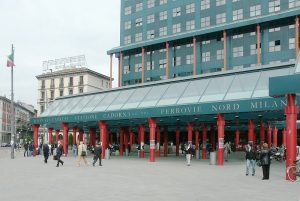
We were given a detailed tour of the studios and all of the works they have produced recently. As we neared the end of our tour, we thanked our guide, leaving once again to head home to Milan.

The two day trip was exhilarating and exhausting both mentally and physically, but it was a terrific way to end our visit.
In Reflection

Spending a month in Milan, Italy gave me a new perspective on my life, especially my life here in the States.

Transportation was a large portion of the culture, since it got you to work or to the grocery store, many Milanese (including ourselves) relied heavily on properly working transportation systems. After only living in Italy for a week, the metro quickly become one of our favorite modes of transport. It was easy to use thanks to our metro cards, convenient due to the many stops and stations, and fast moving. Not to mention, it is a fairly inexpensive way to travel the city much like the bus and tram.

Cadorna Station: hub of traffic


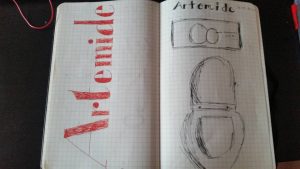
Not only was the transportation a major part of this trip, but our restroom experience was important to note since they varied so frequently from location to location. My focus for my journaling, for instance, was the toilet handles, because they were all so drastically different in Italy, and they were even more unique than the ones we see in the States. In Italy, there are button flushers both on the toilet itself or on the wall above it, handles that you manually turn in order to start and stop a flush, and floor flushing mechanisms just to name a few.

13435585_1716198285299970_4502388786072671196_n
Page from sketchbook; focus: toilet flushing mechanisms

We went to a few Triennale events, which allowed us to experience the works of Italian artists up close and personal.

Exhibition #2
Exhibition #2

Each event was a different expression, a different voice of Italy. It was incredible being able to experience such impressive works, while also being able to live in the city these artists were describing or at least attempting to convey through their works.

"Welcome"
“Welcome”

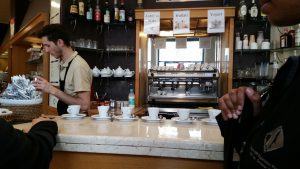
Also, their coffee (caffé) is, simply put, espresso and it cost a mere 1 euro, whereas in the States, we pay $5 for a cup of watered down coffee. Not only was their food and coffee better, fresher, and more rich, but it was cheaper. Albeit not everyone, especially in areas of high tourist traffic, but the wholesome foods we ate were usually cheaper than their American counterparts.

First cup of coffee in Milan

During the week, we would visit a multitude of studios, museums, and exhibitions; throughout our time in Milan, we saw dozens of them, and a few of my favorites consisted of those that portrayed the mood and culture of Italy such as the fashion and appliance museums/studios/factories.

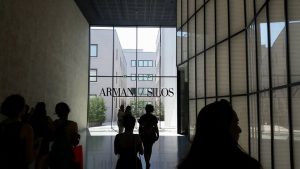
For instance, one of the best exhibits we visited was the Armani/Silos museum about 15-20 minutes away from our apartments.

Armani/Silos Entrance

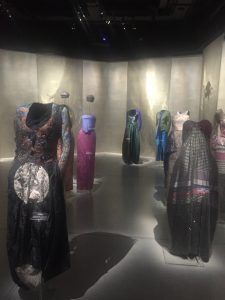
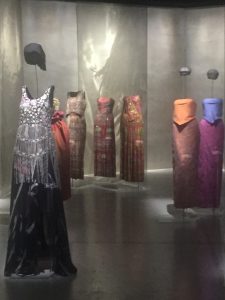
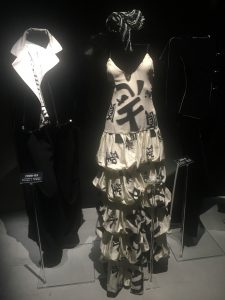
The works we saw there were delicate, intricate, and stunning; we were able to walk through the progression of works from the birth of Armani to his most recent works. The character of each style was absolutely unique and told the story of Italians and their worldly counterparts (including but not limited to Asian and Indian influenced pieces).

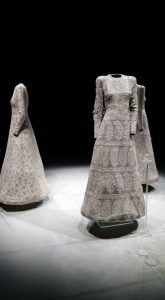
Intricate dresses showcased in Armani


Although our time in Milan has come to an end, I will always carry the things I have learned with me. Not only has it given me a new perspective on life in general, but it has made me acutely aware of my surroundings and home culture; Italy, however, will always be considered my second home.

Why did you have to say ‘Goodbye’?

13533181_1721436761442789_1214987468204878949_n

Goodbyes are always more poetic in books and movies than in real life. Because in real life, they’re emotional and downright painful.

That night, everyone came in their best outfits and high spirits. We greet at the door, talk for a moment, then are seated amongst our new and old friends. Everyone skirts around the reason we’re gathered in the first place; we make small talk and focus on the various wines and dishes they bring us rather than discuss the fast approaching end.

As the night continues, there’s an air of urgency as everyone tries to get out as many thoughts and conversations and last remarks as humanly possible before the final course is served. As dessert is passed around, there’s a more hushed tone to our group; we still converse, but it’s not nearly as rushed now, we revel in the company of one another. Everyone knows what’s to come, but no one wants to admit that it’s time.

As the final drinks are had and the last of the dishes are cleared,  we are left with the stark realization that this is indeed the end of our time together. The month came and went so quickly, it feels like we just got off the train that morning.

We look around, smiles everywhere; we embrace, exchange gifts, and get in any last minute words before we stumble off into the night – our final night in Italy. For some of us this is the end of our time there, for some it’s only a stop along the way of another great adventure; regardless of what comes next, we will all hopefully look fondly back on this month and remember every wonderful, sometimes sweaty moments together knowing we were having the time of our lives.

Armani/Silos

13507195_1719306864989112_4212759126717370576_n


When you hear of Armani, one pictures a powerhouse of fashion and design; walking in though, you can feel the power and energy of the company within the first few seconds of being there. Founded by Giorgio Armani, the company designs, manufactures, distributes and retails haute couture, ready-to-wear, leather goods, shoes, watches, jewelry, accessories, eyewear, cosmetics and home interiors.

We were given a tour around the building, and we were shown all of the works throughout the seasons that the company has gone through. Intricate and innovative patterns and styles greeted you at every turn, and you never knew what to expect next. It created this illusion of mystery of pieces that have long since been tucked away, only accessible through the archives or your grandmother’s closet.

My favorite pieces were the ones that were influenced from various areas around the globe; I also really enjoyed talking with the girls as we imagined the models who had the honor of wearing such pieces.

IMG_8838

Each piece more unique than the last.

IMG_8845

The way Armani designs pushes the envelope. He doesn’t like the social constraints or the unspoken rules of fashion; he enjoys making his own rules or simply not listening to the ones in place. It’s quite possibly the main reason he rose so quickly in the industry.

IMG_8871

Pictured below is one of my favorite layouts. The three gorgeous, white dresses with a spotlight that illuminated the intricate details of each one individually was an awe-inspiring moment.

13508965_1719306788322453_4420639995760769416_n

As we turned the corner, we were provided with a new take or new season or new color scheme, and each piece was better than the last, and I look forward to seeing what Armani does next.

Laggo Maggiore: Anna Style

Here we have CAs that are native to Italy, speak the language, and are here to help us with any questions or needs we may have. Anna is my CA, and she is only a year older than me, at 19 that makes her one of the youngest among us. It’s been great having someone closer to my age always around to talk to and to ask questions, since everyone else here is already about 20 and older, and they all know what they’re doing.

This last weekend, I decided to stay home and enjoy Milan. I went out for drinks with some friends, met some new people, and simply enjoyed sleeping in and catching up on OITNB (amirite, ladies?).

Now Anna had to go home to visit a doctor on Monday, but she wanted to invite some of us to go with her to meet her family and get a chance to experience a bit of her hometown. Sadly, I was one of the only ones who answered her, but Noor was home with nothing better to do so she tagged along as well. It was refreshing to have such a small, intimate group. We joked, talked about music, and enjoyed each others company without the stress of school or worrying about 15+ other people.

When we arrived, her younger sister and father were waiting outside the station, and they walked us over to their home – a mere 5 minute walk. Her parents were lovely, and despite not speaking any English, they were so warm and welcoming.

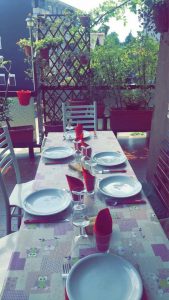
As her father poured us some wine, Anna’s mother began setting the table. Now, her mother made us all homemade recipes using ingredients fresh from Anna’s grandfather’s garden.

13528834_1719915604928238_4251941257535372177_n

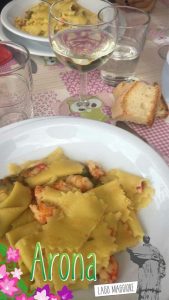
She made a pasta recipe with fish and zucchini and handmade pasta that Anna’s father and sister had made.

13537558_1719915624928236_5577161423276670505_n

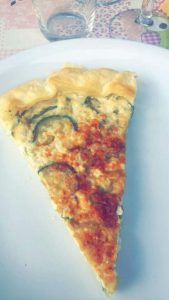
Then we had a zucchini and ricotta cheese “pie” with pan-seared eggplant (all of the vegetables were fresh from the garden).

13516467_1719915588261573_1301092101632392685_n

Then they brought out a simple salad: just some lettuce and olive oil and vinegar; a nice reprieve after the delicious pasta and pie.

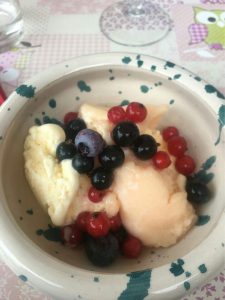
Lastly, they served us homemade melon and yogurt gelato with fresh berries picked from – you guessed it – the magical garden. It was hands down the best Italian food I’ve had this entire trip, and I think it was due to the fact that you could taste all of the love used to make it.

13557959_1719915641594901_6741358700099781529_n

**Food pictures courtesy of Noor.

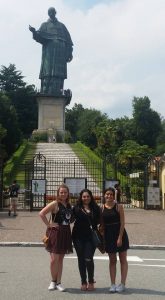
After lunch, we cleaned up and headed out to the second tallest statue in the world (only second to our Statue of Liberty back home), the San Carlone:


13524358_1719912018261930_5658267568562123230_n

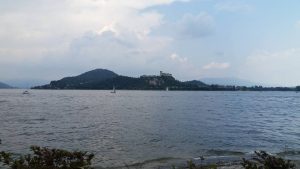
Her father bought us tickets to be able to climb atop the terrace part for a better view and some photos. (Side note: Anna is terrified of heights, so we didn’t want to go much further.) The view was spectacular, you could see Laggo Maggiore in full view even the castle across the water was clearly visible.

13567110_1719911951595270_325892660786333075_n

Once we got down, her father drove us down to the lake and dropped us off where we said our goodbyes. Anna stayed with us since we still had a few hours left; she took us down to the water then around the shops.

13524501_1719911994928599_5475948017416808060_n


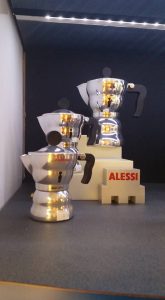
Inside one of the shops, they had an Alessi display. Moka machines, wine bottle openers, even the little knick knacks they had at the Alessi Factory, so I bought an Alessi Moka coffee maker for back home pictured below.

Alessi Moka
Alessi Moka

We didn’t spend very long there since our train left at 5:30, but it was such a wonderful time. Meeting Anna’s family and getting to spend quality time with her and Noor while seeing such a beautiful city was a nice, relaxing way to spend my last Sunday in Italy.

For now, Ciao bellas!

Architecture As Art

The exhibition is a project of the XXI International Exhibition Triennale Milano 2016, hosted by Pirelli HangarBicocca. It’s about 30-45 minutes away from our apartments here in Milan if you take the metro and walk a little ways.

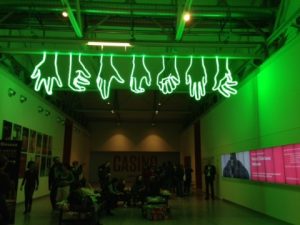
When you walk in, you’re immediately greeted by a large, neon-green sign that says “Welcome” (pictured below), and just beyond the sign was the second exhibit we visited.

"Welcome"
“Welcome”

First, however, we went to a cirque-styled Triennale exhibition where we flew (well, it was more of a glide), were blinded by lights, thrown into complete darkness, and went through many optical illusions. We had to wear green wristbands in order to fly, and the second I was strapped in I was ready to go. They only let us “fly” around about 4 times, but it was well worth it. It goes almost painfully slow, but it makes you observe your surroundings,  the other objects in the room, and the people down below.

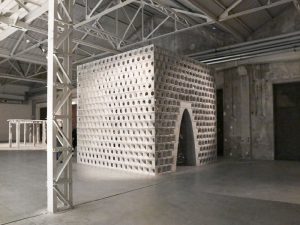
The second exhibition is titled “Architecture is Art”.

Exhibition #2
Exhibition #2

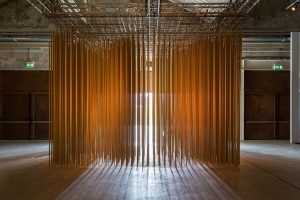
We were deafened by hanging, ringing poles as we walked in. Then we sat on top of garbage like the trash we are. It was less interactive, but the pieces were still incredible to walk through and experience, including the piece pictured below:

9432354_architecture-as-art-at-the-xxi-triennale_td181ffb2

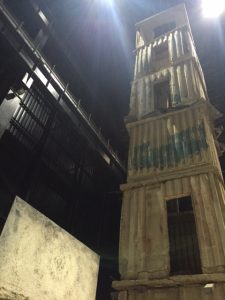
Lastly, we went around the building (took a little while to find it) to get to another exhibition that’s a permanent piece. It consisted of 7 towers and a few canvas pieces, and the massive towers were made of lead and concrete and various objects. The tone completely shifted inside the room: it became ominous and almost suppressing.

IMG_0642

Beautiful yet forbidding.


Sketchbook Update!

Now that we are about half way through our trip, my sketchbook is nearly halfway used. When I started sketching, I was terrified. I’m not an art/design major, nor do I have any background in art, so I was nervous that not only would I not enjoy it but that I’d be terrible at it.

However, I have grown to love my sketchbook; I make notes in there, sketch my daily life, and attempt to keep up with the assignment. Now when I don’t sketch or journal, I don’t feel right. Using my journal as my creative outlet has become very therapeutic, and I couldn’t imagine not having it.

13435585_1716198285299970_4502388786072671196_n
Artemide’s flushing mechanism
13450270_1716198301966635_9162381105455337234_n
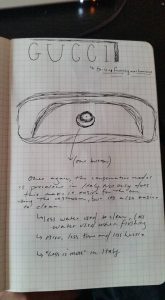
Gucci’s flushing mechanism


My focus for my journal is the flushing mechanisms in Europe (Italy, primarily, but also Scotland), and I wanted to compare them to the ones we have back home in the States in the attempt to figure out why they are so distinctly different.

Thus far, Europeans tend to favor the single button flusher or the two-buttoned one, because they want to conserve water and reduce waste as much as possible. The two-buttoned restrooms are especially conservation centered: the large button used for waste and the smaller one for water conservation.

Toilets
Toilettes (toilets) in Italy are very different from those we’ve experienced in The United States.

In America, however, the handle flush is widely used except in a few upscale locations such as big corporations or more environmentally conscious areas (i.e. Austin, TX).

The concept of focusing on this was to easily compare the two ways of living; my American lifestyle never took into account the level of water consumption, because I never had to, yet here in Italy we are forced to pay for water or pay for the restroom or use toilets that are a bit foreign. It really makes you pay attention to the rest of your life.

For instance, trash is separated here in Italy between glass, plastic, paper, compost, and general trash, while in the States people may occasionally recycle or reuse, but there’s no enforcement nor incentive. I think once I’m  back home, I’ll be able to implement all of the useful, environmentally helpful things I’ve picked up here – maybe even convince others to try it as well. It would be interesting to say the least if we could implement more conservative methods both in our consumption and waste back home.

Artemide

Artemide

3 collections of Artemide:

  1. Design: Glass and Tech
  2. Architectural: Indoor and Outdoor
  3. Danese: Professional and Environmental

From the 1960s to now, Artemide has experienced drastic changes. For instance, in the beginning, the company focused on Plastic and many new materials, and they did (and still do) extensive research on the relationship between man and light. In the early stages, they were experimenting with how different designs changed how people used their products as well as how to efficiently make changes that were both aesthetic and functional. However, Artemide now focuses more on remakes and the aesthetic of their design.

One of the biggest advances of the company was through the revolutionary use of LED lights. LED lights don’t give off much light, but they gave the company the ability to add color and dimension to their previous inventions. Not only could they completely change their old products and bring forth a new model, but designers were able to create completely new products – many beyond the comprehension of those in their time. They brought in real-life applicable techniques such as the addition of joints to lamps and changing the shapes in order to cast light in a whole new way.

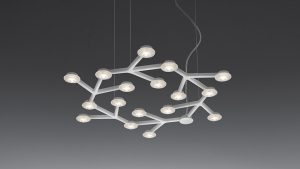
LED lights from Artemide

As of 2015, the company has begun using more glass, technology, and modern approaches to design in order to reduce their environmental impacts through their old techniques (i.e. large consumption of Plastic). Now, they try to mix tradition with innovation in order to keep their brand as familiar as possible while still making grand strides towards advancement.

Many great projects include: Li-fi and Ameluna:

“Li-fi” is the interaction between humans and light sources. By creating a dialogue between the two, data and information can be communicated between light sources; this new science is still in the process, but it opens new forms of communication as well as a more in-depth understanding of the relationship between man and their environment.

And Ameluna is a “bright future project” that continues that push for environmental awareness. Light and heat relationship brings about the technical and emotional connections humans have with their environments.

There is also the use of lights to create fonts and creative outlets through the extensive use of lights. Michele de Lucchi, for example, created the Tycho Professional of 2016, which incorporates light by creating a font and building a light-based alphabet. It goes by the acronym: LoT, Light over Time. It’s Reflective Technology that uses LED lights (both colored and not). It can be scheduled through a time sequence, and it creates light symmetry through the programming of light and appliances.

Overall, Artemide is about modernity and functionality. It was a great pleasure to explore their shop as well as their factory. It gives one a new perspective on the relationship between us (humans) and light.

Scotland Excursion

Edinburgh, Scotland. land of the kilts, bagpipes, and fine whiskey. All of which should be consumed in moderation.

day 1:

We arrived around noon and decided to take a taxi to a hotel we had previously booked. we were early and decided to have lunch in the bar downstairs. that was when we realized we weren’t in milan anymore, because our waitress and hostess spoke english. not broken english either. after a few weeks of only hearing italian or english with a heavy italian accent, english (albeit with a scottish accent) was quite jarring to say the least.

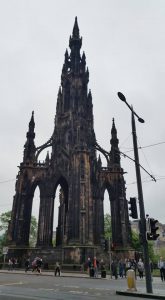
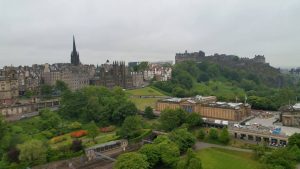
After checking in we explored the grass market – a tourist-y location. Then we paid 5 pounds for an amazing view; we climbed to the top of Sir Walter Scott’s memorial building, and we were able to see all the way to the sea.

Sir Walter Scott's' Memorial Building
Sir Walter Scott’s’ Memorial Building
13418704_1715174985402300_3900500980492552705_n
View from the very top

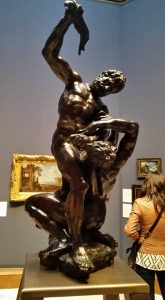
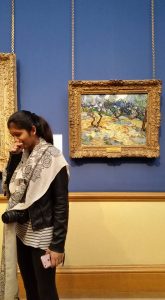
We were also able to explore the Scottish National Art Gallery that housed quite a few spectacular pieces of art shown below:

Cain and Abel Statue
Van Gogh
Van Gogh


day 2:

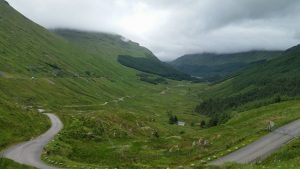
We took a bus tour that allowed us to explore 2 castles as well as the Scottish highlands. It was an extensive 10-hour, gorgeous bus ride. We stopped to eat, take photos, and generally enjoy being in Scotland, while simultaneously learning about its’ history.

Campbell's Castle
Saniya ft. Campbell’s Castle
A place called "Rest and Be Thankful"
A place called “Rest and Be Thankful”

day 3:

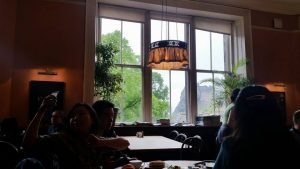
We decided to sleep in and grab a late breakfast. Where better to go than the cafe that J.K. Rowling spent hours upon hours bringing Harry Potter to life. The place is called “The Elephant House”, and they sell t-shirts that read “the birthplace of Harry Potter”.

The Elephant House - "birthplace of Harry Potter"
The Elephant House – “birthplace of Harry Potter”

Also, the bathrooms are covered in graffiti from people all over the world thanking J.K. for Harry Potter as well as making punny jokes or quoting the book itself.

The view from inside the Elephant House (you can see Edinburgh Castle just outside the window)

It truly was a magical place.

For the rest of the day we simply roamed Scotland, and we tried to take in as much as possible before departing.

Strange to think that after only 2 weeks in Milan and it already feels like home, and I genuinely was looking forward to returning after such a long and eventful weekend. I’ve missed my CA Anna and the already familiar roads and cafes. Oddly enough, I also missed the uncomfortable feeling of not completely understanding what everyone is saying 100% of the time. Being forced out of my comfort zone is what attracted me to Milan in the first place; so, although Scotland was an incredible, English-speaking country, I am quite happy to be able to drink my caffe macchiato here in Milan.

The Alessi Legacy

The Alessi Factory is owned by the Alessi family, and they create and produce household appliances and utensils. They model their work after a variety of styles, but the key components are functionality and aesthetic.

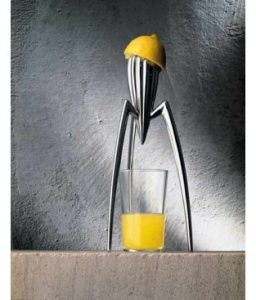
Juicy Salif Citrus Squeezer - Very controversial but also a Best Seller. Many wondered at its functionality, while confounded by its shape.
Juicy Salif Citrus Squeezer – Very controversial but also a Best Seller. Many wondered at its functionality, while confounded by its shape.

From the 1990s-onward, Alessi products have become associated with the “designer” world. That means, they take ordinary products and tools and execute them at “high design”. Such as the Juicy Salif that created much controversy. Besides its odd shape, many questioned its’ functionality – many thought it was produced more as a design object rather than a functional tool to actually be used.

The firm began as a small workshop, and it was founded in 1921 by Giovanni Alessi. The company started with wooden or metal materials for general household objects. Alessi started with producing a wide range of tableware items in nickel, chromium and silver-plated brass. Over the years they have changed the materials they use to keep the products at a high quality but within a budget-friendly range.

"Firebird" gas lighter by Guido Venturini
“Firebird” gas lighter by Guido Venturini

The company also incorporates 100+ artists with over 200+ projects constantly in progress. The projects vary from revamping the older models to creating completely unique products; each unique to the artist(s) – much like Alessi himself.