Final Blog Post Audrey Kirwin

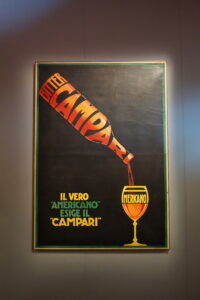
I didn’t expect the Campari Museum in Milan to leave such an impression on me but it really did. Tucked away in Sesto San Giovanni in the old Campari factory it felt more like stepping into a living piece of design history. What struck me most was how effortlessly it blended art branding and identity into something that felt cohesive and ahead of its time.

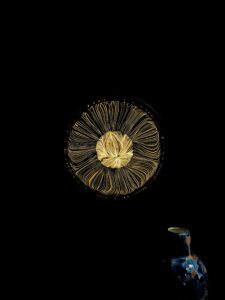
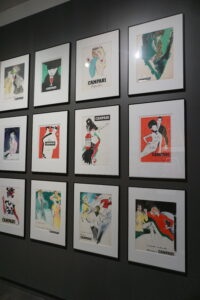
Seeing original works by artists like Fortunato Depero up close was honestly kind of surreal. His bold Futurist style still feels fresh and it made me realize how much of Campari’s identity was shaped by real artistic collaboration not just marketing. There were also pieces by Leonetto Cappiello Bruno Munari and Ugo Mochi and so many beautifully designed posters bottles and films that made it clear this was not just about selling a drink it was about creating a whole visual world.

It made me think differently about branding not as a tool to push a product but as a way to tell a story and build something lasting. I left feeling inspired not just by the art but by the intention behind it. Campari did not just make a name it made a vision and stayed true to it.

In Review: Week 4 Audrey Kirwin

Audrey Kirwin 

Professor Kate Catteral 

Design in Context 

28 May 2025 

Final Reflection 

Traveling to Milan with my class was an experience that deeply changed how I see design and how I understand myself as a creative person. Each place we visited told its own story and added a new layer to the way I think about space, beauty, and meaning. Even though we were traveling as a group, I found moments in every visit to slow down, observe, and connect with the city in my own way.

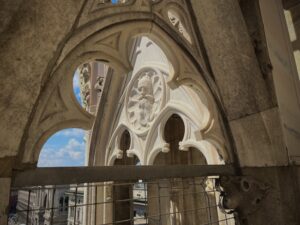
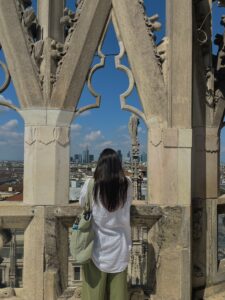
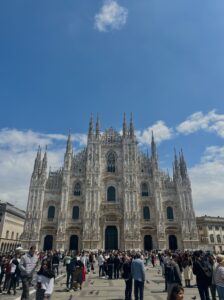
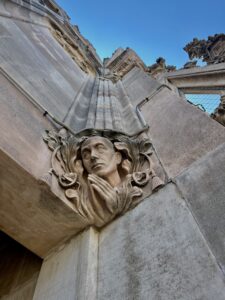
The Duomo was the first moment that really struck me. I had seen photos before, but standing in front of it made me feel something entirely different. The scale was massive, but what caught me more were the small details. Walking through the cathedral and eventually climbing to the roof gave me this quiet sense of awe. I realized that great design is not just about how something looks. It is about how it makes you feel when you stand in its presence.  

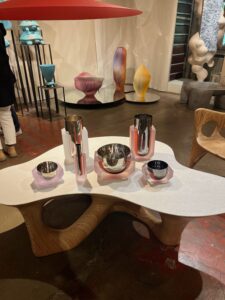
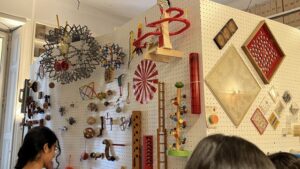
Spazio Rossana Orlandi flipped that idea on its head. It was strange and chaotic in the best way. Everywhere I looked, something unusual caught my eye. It was full of bold ideas that did not follow any rules. That space made me rethink what design can be. It does not always need to be beautiful in a traditional sense. Sometimes it is about the unexpected. Being there reminded me that creativity comes from taking risks and not being afraid of getting it wrong.

Villa Necchi Campiglio was completely different. Everything about it was calm and intentional. The rooms were designed with elegance and care, and nothing felt out of place. I was drawn to how quiet the beauty was. It did not demand attention, but it held it anyway. The experience helped me see how powerful subtlety can be in design. It taught me that restraint can sometimes create a stronger emotional response than extravagance.

The Brion Cemetery by Carlo Scarpa was one of the most moving places we visited. It was not just a space. It was a story told through stone, water, and light. Every part of it felt thoughtful. It made me think about how architecture can be a form of poetry. Even though I was there with classmates, the design created this feeling of personal reflection. It was a space that invited you to slow down and just exist within it.

Ex Macello was raw and filled with potential. It had an industrial edge and felt unfinished, but that was what made it exciting. It showed how a place can be repurposed and brought back to life without erasing its past. That idea stayed with me. It reminded me that design does not always start from scratch. Sometimes the most powerful work comes from transformation.

Every one of these places helped shape how I think about design now. They taught me to look closer, ask better questions, and notice what often goes unseen. Traveling through Milan gave me the chance to grow as a designer and also as a person. I left feeling more confident in my own perspective and more open to the possibilities that design can offer.

Assignment E: In Review (Sophie Leung-Lieu, 2025)

During my experience in this course, I gained a new understanding of the world of design. We explored a myriad of museums, galleries, and studios, each showing me how the field of design can be connected to anything- art, architecture, history, engineering, and more. 

Through galleries and studios such as the Spazio Rossana Orlandi, Achille Castiglioni’s Studio, and Villa Neche, I saw unique objects and creations that were designed for function as well as beauty. Each had different qualities that made them special, teaching us something new about their past, present, and future. I learned so much about the creativity and innovation involved with product design and saw beautiful works of art along the way.

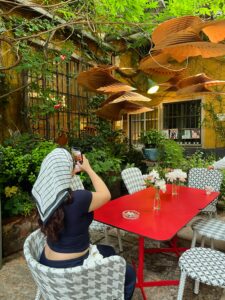
Museum and factory visits to Artemide, Campari, Armani, and Alfa Romeo highlighted the extravagance and uniqueness of Italian design. We were very lucky to go on these tours, as being able to experience each brand so closely is something we could never do otherwise. It was fascinating to also see how each big brand was incorporated into the city. For example, we saw Campari lamps hanging in a random cafe at Cadorna and recognized them from the museum. 

The Biennale in Venice and the Triennale in Milan were also some of my favorite exhibits, as they were beautiful examples of how design can be a language for the world and the problems we face. It was amazing to see how the artists used sight and sound to create an immersive experience and how no room was the same as the next. 

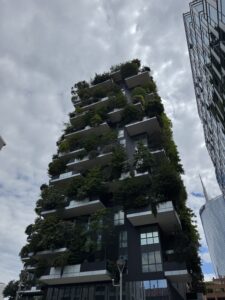
The Bosco Verticale, one of my buildings for the ‘Mapping the City’ assignment, was another one of my favorite buildings we saw this month. After I learned how it was designed to accommodate the plant structures, I decided to create my sketchbook about Milan’s greenery.  Even following the project, I noticed how many of Milan’s buildings accommodate growing plants. I had a moment of reflection when comparing these efforts to those of other countries, such as the US. I was impressed with Milan’s dedication to sustainability for the environment. 

Throughout my time on this maymester, one of my favorite highlights was learning about the people in our community. My fields of study are not related to design, so experiencing all of these places and hearing perspectives from classmates who truly understand them was truly something that enhanced my learning. From the Mapping the City project to just talking to the people around me, I feel like I have so much more knowledge in the field of design, just from socializing. I have also made wonderful friends and am so grateful to have met Professor Kate. 

On top of the educational experiences, studying abroad has been such an amazing way to see more of the world. In our free time, we traveled to Nice, Monaco, Lugano, Como, Venice, and other cities, and I have even more of Europe to see in the next couple of weeks as I make my way through Austria and Germany. Immersing myself in a new country was intimidating but rewarding, as now I can proudly navigate Milan’s public transportation system or even recommend places to go. 

To have the privilege to explore a foreign city filled with history, architecture, and design was so eye-opening. I felt challenged to learn to think like a designer, to spot the smaller details and patterns, and make connections between all the places we visited. I am motivated to become more involved with design in the future. This trip has been one of the most meaningful experiences in my life and has taught me so much about the world, its history, and the innovation behind it.
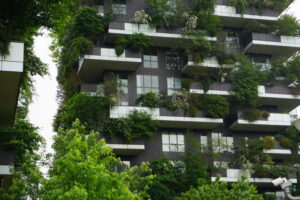
 

The Bosco Verticale on our city walk
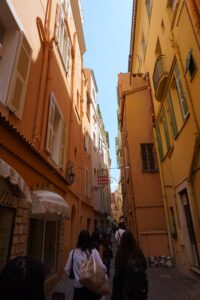
Old Town of Monte Carlo, Monaco
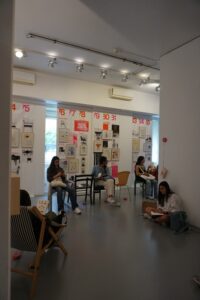
Sketching in Fondazione Vico Magistretti
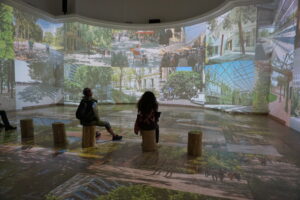
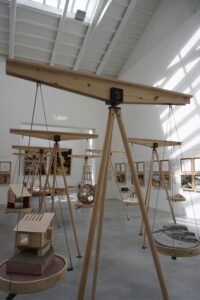
The Biennale in Venice
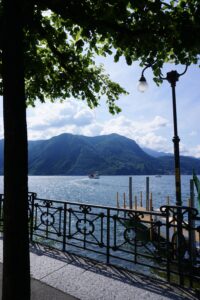
One of our weekend trips to Lugano, Switerland

In Review: A Bittersweet Farewell to the City of Design | Ava Shea Feinstein 2025

Prior to this trip, I was feeling intensely, creatively burnt out. Project after project, I wasn’t creating out of excitement but rather necessity. Now, at the end of this trip, I can say with confidence that I am brimming with excitement and inspiration for my next projects. I am physically drained but mentally rejuvenated.

The Duomo

The first experience that we had that I will never forget was the Duomo visit. Stepping out of that metro station felt like a movie reveal. The way that the light streamed down the stairs of the metro, so bright you couldn’t see anything beyond. So when I casually ascended the stairs, I was floored when my eyes adjusted. I was met with this towering, resplendent building with more detail then I could possibly begin to comprehend; completely awestruck.

Spazio Rossana Orlandi

The Spazio Rossana Orlandi visit was another experience that left butterflies in my stomach. Each room was intoxicating with the amount of beautiful designs it contained. I was floored by both the design of the exhibition spaces and with the actual pieces that each one contained. When we left, I was practically skipping. One day, I hope to buy from and exhibit in the Spazio. (This was the beginning of the end for my camera roll.)


ERROR


Week 3: Biennale (Angel)

This week (as usual), we saw so much good design. Going to Treviso and Venice was such a cool experience. I really enjoyed going to the Biennale. Going into it, I had no idea what it even was. I loved how each country had their own building to really separate themselves from the others. It was interesting to see how some of the interiors were designed completely differently than the exteriors. I loved how countries approached similar topic in different ways. Some relied heavily on sights, some utilized sounds, and some even used feelings. For example, Germany had a room that was warmer than the others to convey the impacts of global warming.

Overall, the Biennale was a pleasant surprise and I would definitely recommend it to anyone going to Venice. It was a beautiful example of how the world can be united by design.

Sophie Leung-Lieu Week 4, 2025

Today marked the bittersweet ending of our wonderful month abroad. For one of our final visits, we saw the Campari Gallery, a museum exhibition showcasing the history and art of a famous Italian liqueur company. 

One of the most interesting things we saw was the unique form of advertisement that Campari executed in the 1900s. From music and film to prints and paintings, we saw a history of interdisciplinary advertising that often challenged norms and made Campari the company it is today. One billboard we dissected was named controversial because of the details of her hair color, which ring finger had a wedding ring, etc. 

Campari also designed many different everyday objects with their branding to promote the company. There were subway handles, dog bowls, pianos, all fitting the same color scheme and logo that made Campari recognizable. 

I loved seeing all the artwork and posters made to promote Campari, as they had so many creative graphic designs that showcased a variety of fonts and themes that created a strong identity for the brand. 

Week 3 Dominik Puente 2025

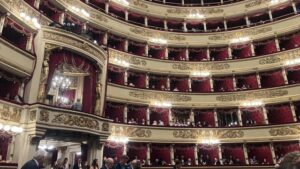
This week was really eventful. Staring off with La Scala, where we finally got to wear the outfits we had spent the entire week looking for. It was my first time experiencing an opera, and afterwards we saw the Duomo at night. Although the event itself wasn’t about design, it taught me a lot about the local culture. It was also an opportunity to reflect on the architecture and interior design and how this can influence our social interactions.

On Tuesday, Fondazione Achille Castiglioni was very inspiring. It showed how design can be fun, playful, and full of personality. It reminded me that research comes in very different shapes and forms and being there allowed me to think of my designs as a way to break through the seriousness of the world.

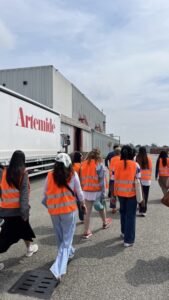
Lastly, my favorite thing this week was going to Artemide, especially when we went to the factory area. I loved seeing the full process of taking an idea and bringing it to life. We often forget how much time and effort it takes to complete this process, and we just admire the finish product, when the art of making is also a product of itself. Seeing how many different people, machines, and processes work together towards a common goal was so inspiring and meaningful that now I want to find a job there.

Everything, Everywhere, All at once!

This week was incredibly fast-paced and jam-packed, but it was also incredibly fun! Spending the week at Castilogni’s studio and an evening at La Scala could not have been more perfect. I enjoyed seeing the joy and life still honored within Castilogni’s studio even after his passing. La Scala was even more surreal than I could have imagined. Hearing beautiful music in the space was magical – my favorite part was looking around at how captivated people were by the singer’s voice, people draping themselves over the balconies, leaning closer to the stage, it was beautiful. Visiting Artemaide and Alfa Romeo on the same day was a treat! I never truly knew how much went into the production of quality things until then, and boy, is it a lengthy process, but so worth it to see how the designs on paper come to life with the help of so many different people. Alfa Romeo was a surprising favorite for me. I’ve never been super into cars, but the cars there were art within themselves, and learning their history was just the cherry on top. The trip to Tipoteca was also one of my favorites. I mean, come on, getting to letterpress a print with an old Italian man in the middle of nowhere Italy is a once-in-a-lifetime experience that I am so grateful for. I did not include any pictures from the biennale because I was so absorbed in every space I went to there that I did not take any! This exhibit was unlike anything I’ve ever seen before, and I could have stayed there the whole day. My favorite from the exhibit was the Poland exhibit because it was very literal and was focused on the safety within architecture, although it was one of the least heavy topiced pavillions I enjoyed its humor and clean but interesting display of information.
Over the weekend I visited a friend in Barcelona and visited Casa Batillo. I had studied Gaudi’s work for a few years now in my art history classes so seeing the Casa Batillo in real life was an incredible experience and it did not seem real! The detail! The artistry! Amazing! I also visited the Moca museum which housed some work by Warhol, Basquit, Herring, the list could go on. I loved getting to see some more modern art on my trip especially from more well known artists – very cool and fun that it was an unplanned experience.
I feel so lucky to be somewhere where learning and inspiration is everywhere, and I can’t wait to absorb everything everywhere within my last 2 weeks in Italy!

In Review – Assignment E – Isabelle Cloeter

The first week of our program began with an unforgettable tour of the Duomo in Milan. Seeing this breathtaking structure for the first time reshaped how I think about scale, detail, emotion, and color in architecture and design. The cathedral’s towering spires and intricate Gothic facade created an overwhelming sense of harmony and craftsmanship. As light filtered through the stained-glass windows, the sacred atmosphere of the space. This experience made me reflect on how architecture can go beyond function to create lasting emotional resonance. Standing atop the roof that day, looking out across the city I’d be calling home for the next month, was a perfect way to begin this journey.

Early in the program, our group began our “Mapping the City” assignment, which allowed us to explore Milan in a more analytical and collaborative way. Visiting our sites was a great opportunity to connect with classmates while diving deeper into the urban fabric of the city. One building that stood out was the Torre Velasca. Though it is a well-known architectural landmark, we were struck by how empty and quiet the surrounding space was. Despite thoughtful design elements, benches, walkways, and greenery, the area lacked activity. During our presentation, Professor Kate mentioned that it’s consistently quiet there. It made me wonder whether this was intentional or a missed opportunity to activate public space through design.

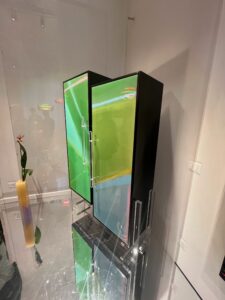
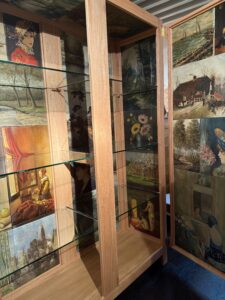
Visiting Rossana Orlandi was another highlight for me, especially from an interior design perspective. Walking through the gallery felt like stepping into a series of curated experiences. One piece that especially stood out was the painted canvas armoire, a simple wooden exterior that opened to reveal a vibrant collection of canvases, each telling a different story. This deceptive simplicity, paired with the narrative richness inside, was deeply inspiring. It brilliantly merged classical and modern aesthetics, sparking new ideas in my own approach to design.

Our day trip to Lake Como was another incredible experience. Touring the Novocomum with an architect gave us insight into its unique design. The chairs highlighted during the tour especially fascinated me. One had a curved back with only two legs and could be worn like a backpack, making it lighter and more portable. The chair next to it had a wider seat and four legs, offering a very different design approach, yet both were user-friendly and functional in their own ways. It reminded me how multiple solutions can exist within the same design problem.

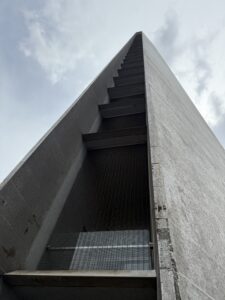
The Pirelli Tower was another structure I passed several times without ever truly seeing it, until our visit. Learning about its engineering and the thoughtful placement of the underground conference area gave me a new appreciation for the building. Its slender yet powerful silhouette has since stood out to me every time I passed the train station.

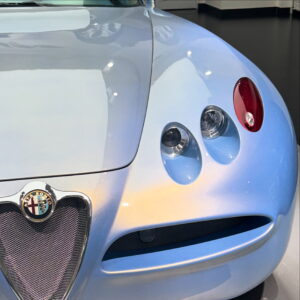
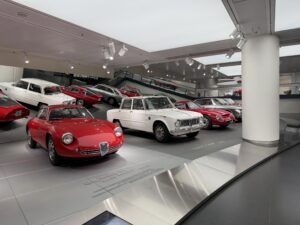
One of my favorite visits of the program was the Alfa Romeo Museum. Beyond the beauty of the cars, the design history was fascinating. I especially appreciated learning about a pastel-colored model from the early 1900s that was designed specifically for women. It had a slimmer profile and less width, details I hadn’t considered before but made so much sense once pointed out. We also learned about design failures, like a model with the engine inside the cabin, which led to toxic fumes when the windows were closed. It was a strong reminder of how critical functionality is in design.

In conclusion, it’s hard to capture everything I’ve learned in just one word or phrase. My time in Milan taught me to see design from a broader perspective, to understand how interior architecture connects with the greater world of design, and to embrace challenges, both in my work and in being far from home. I grew not only as a designer, but also as a person. I pushed myself to explore new places, connect with new people, and reflect deeply on the built environment around me.

This month will remain one of the most meaningful experiences of my life. While it came with long days and sore feet, it also gave me invaluable knowledge, inspiration, and memories. I now know that I want to continue studying and working in new environments that push me creatively and personally. Thank you, Milan, for being a home away from home. I’ll be back, hopefully sooner rather than later.

Assignment E:In Review

Civil engineers are traditionally trained to prioritize structural soundness, functionality, and cost-efficiency. These are essential elements in the field, forming the backbone of infrastructure and development. However, civil engineers often overlook the experiential and aesthetic qualities of the spaces they help create. Unlike designers, who focus on form, emotion, and user experience, engineers tend to reduce structures to technical necessities. Yet, buildings are more than beams and columns, they are spaces where people live, work, and connect. This gap between engineering practicality and design sensibility is one I’ve come to deeply recognize and aim to bridge. My time in Milan studying design opened my eyes to how engineering and design can coexist, and how thoughtful aesthetics and cultural context can elevate a project from functional to transformative.

Taking this design course helped shift my perspective on the kind of engineer I want to become. I’ve always had an appreciation for design, but I was held back by the assumption that engineers weren’t supposed to think that way, that beauty and structure had to be separate. Through this course, I realized those assumptions weren’t true. I was exposed to the minds of brilliant designers and architects, especially under the guidance of Professor Kate Catterall. Visiting the studios of visionaries like Cristiano Bottino and Giovanni Lauda revealed how design can incorporate cultural values, history, and personal stories into architecture, creating something that is both meaningful and functional. A pivotal moment for me was speaking with our guide in Como, who had an inspiring perspective on space and light. He made me see how those two elements, when used intentionally, can transform how people feel inside a structure. His insight pushed me to reflect on how engineering can also be poetic, not just practical. Encouraged by this interaction, I’ve decided to begin taking design courses next semester to further develop my creative skills and integrate them into my engineering practice.

Throughout the program, I had the chance to explore a wide range of buildings that struck a perfect balance between structure and art. Works by Carlo Scarpa, like the Brion Tomb, Negozio Olivetti, and Fondazione Querini, showed how raw materials, geometric cuts, and strategic openings can evoke depth and elegance. Scarpa’s ability to craft multiple visual perspectives from a single vantage point made me realize how thoughtful design can change how we experience space.

Bosco Verticale and the CityLife Center were also especially meaningful to me. Bosco Verticale’s integration of over 800 trees and thousands of plants into its structure is a bold example of sustainable, living architecture, a true fusion of nature and design. Meanwhile, the CityLife towers, with their sleek, leaning forms and futuristic aesthetics, challenged my previous notions of what structural design could be. Each project I encountered pushed me to think beyond my technical education and consider how structures can tell stories and inspire emotion.

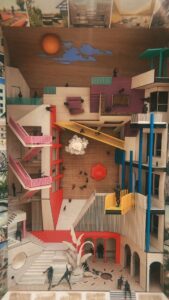
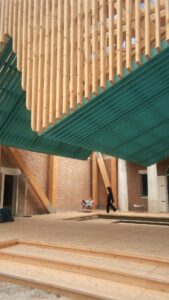
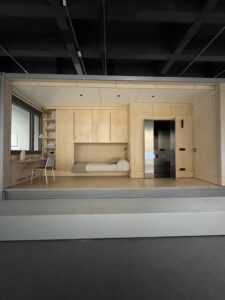
Lastly, one of the most memorable moments of the trip was the Triennale Milano International Exhibition and seeing the Essential Homes Research Project by the Norman Foster Foundation. Which presented full-scale prototypes of compact, one-bedroom homes designed for displaced communities as well as p[people in substandard living situations. These structures aim to provide dignified, affordable living spaces for individuals affected by substandard housing conditions, particularly in emergency contexts. Projects like this reminded me why I chose civil engineering in the first place: to serve people and make their lives better. They also showed me that design and functionality are not mutually exclusive; in fact, the most impactful projects are those that fuse the two.

This experience has completely reshaped how I see my career and my role as an engineer. I now understand that engineering is not just about solving problems, it’s about imagining possibilities. I want to be the kind of engineer who challenges traditional boundaries, who isn’t afraid to innovate, and who actively brings design into the conversation. Moving forward, I want to create work that is structurally sound, socially meaningful, and aesthetically inspiring. My goal is to be a forward-thinking engineer, one who builds with both precision and purpose.