Sitting in the green pastures of Villa Necchi’s garden, having just toured the restrained grandeur of its interior, and allowing both the warmth of the sun and rush of the gentle water to refresh my soul, I could not fail to realize that my sense of aesthetic beauty had finally been awakened. Though my accounting course of study had honed my ability to analyze details and their implications, it was not until this moment that I perceived I had been unintentionally training myself to think as a designer does. After every subsequent visit in Milan and the following excursions, I sensed that I was slowly being transformed to go beyond the mind I had so as to participate in the world as humans are meant to. Indeed, after three weeks of deep immersion in the fullness of Italy’s culture, my perspective on art and design has been refined; however, and much more importantly, this trip has reoriented my understanding of myself and reality. I was once blind, believing beauty was merely a matter of subjective preference, but the scales have fallen from the eyes of my soul, and I now see that it is an objective good that is indispensable for forming the human being and ordering society.
Upon my arrival, as I contemplated the myriad intricacies of this new culture, the first beauty vis-à-vis design I encountered was, unexpectedly, the beauty in the design of Italian life. Businesses open later to allow parents to walk their children to school, coffee and croissants are drunk and eaten in the café, meals are long and layered, and every interaction is infused with meaning. In a word, precisely because Italians are focused on community, contemplation, and tradition, they are experts in living fulfilling lives that are centered on those things which bear fruit in the soul. In contrast, America—unparalleled in its opportunity and abundance—is the land of individuality, efficiency, and rapid change. As I walked between Torre Branca and Torre Velasca, I saw the reconciliation between these seemingly contrasting ideas played out. Touching on both Naomi Fitzpatrick’s guest lecture and our Duomo guide’s notes, Milan is a city of layers, and its architectural wonders cannot be isolated from their historical past. Design, I learned, is a wonderful dance or dialogue between conservation and progression. Milan’s centuries of success result directly from a prudent approach of conserving what is good and lasting while simultaneously progressing where there is either room for growth or anything undesirable. Once I discerned this transcendent truth, it unlocked a new world of meaning. For instance, Fondazione Querini and Villa Necchi kept the art, furniture, and setting that had supported and sustained aristocrats and nobles. However, they each attached unique portions that provided a more profound insight into the stories they were conveying. Good design transforms its viewer, and what I experienced in Italy will not go forth in vain. Just as Milan conserves and progresses, I was moved by nearly everything I saw to progress and incorporate into my own life the slow, deliberate enjoyment of meals and communion with others. Meanwhile, the aforementioned values America holds up are also to be desired, and thus they ought to be conserved, too. The choice is not an either-or, but rather it is a both-and. As individuals, we should indeed work hard and take risks in the arena of business like Americans. Additionally, we should also take care not to ground ourselves in consumption, wealth, and fame: fleeting things which bring no true joy. Italy has found—and demonstrated to me—what the proper center of life should be: a gentle sharing life with our neighbors.
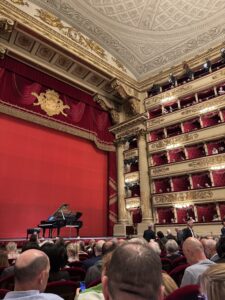
My meditation on culture was only the first step in my personal transformation abroad. Beyond creating a desire to properly order my exterior life, the designs I encountered led to an infinitely greater interior transformation. Standing before Da Vinci’s sketches at the Museum of Science and Technology, I faced another moment of clarity. The beauty that was condensed in a few deft strokes showed the relation and harmony between the parts of his machines and how they create a whole that tends towards a concrete purpose. Similar to my experience at Villa Necchi, I took this insight with me everywhere else I went. Suddenly, I began to see proportionality, balance, purpose, and relationship in every direction, and I now examined the Duomo, art in the Brera gallery, and furniture at Cassina in a way that was like feeding my soul a rich dessert. This initial insight led to the most important realization I had during my time in Italy: beauty is not subjective. Beauty is the result of the intersection of the intelligibility of a work and the work fulfilling the end it was created for; it is a relational, rational, and transcendent property of existence. If we are all honest with ourselves, we can recognize instinctually that Bach or the opera at Teatro alla Scala is more beautiful than random noise, or that Michaelangelo’s David is, objectively, more aesthetically pleasing than a child’s scribbles. If beauty were purely subjective, an instinct and shared agreement among people across time, space, and cultures that certain works of art are more beautiful than others would be inexplicable. What does explain this common recognition, though, is something deeper: beauty has structure, harmony, and purpose—and therefore an objective standard. To contrast this negatively, why was it that Fondazione Prada was the least stimulating exhibit to most students? I would argue it was because its lack of intelligibility and explanation of purpose left us unmoved; we sensed that there was no intersection between the attainment of an end and comprehensiveness. Thus, our shared sense that not all things are beautiful merely because someone calls it so points to an objectivity. When we adhere to that transcendent standard which we sense, we are free to create knowing that we are moving in the right direction.
As C.S. Lewis astutely notes, “the first demand any work of art makes upon us is surrender. Look. Listen. Receive. Get yourself out of the way.” By surrendering, I have been transformed to order my life to that which is true, good, and beautiful. Through objectively beautiful design, we can move others to surrender, thereby transforming them for the better. Therefore, it is of utmost importance to study and critique design, for the contemplation of beauty gives our souls wings to rise towards something even greater; to treat beauty as ornamental is to destroy our hope of progressing in the future.


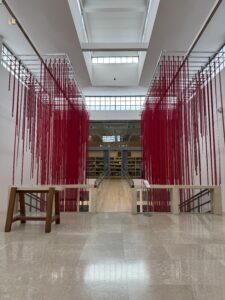

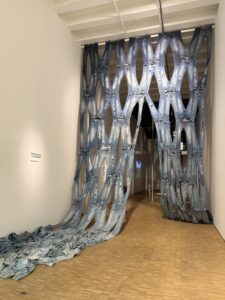

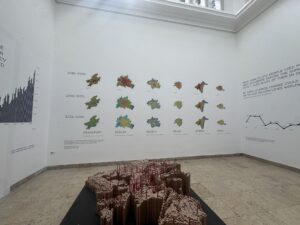 The image on the left is from May 27 in the Triennale Museum in Milan, Italy. The image on the right is from May 23rd at the Biennale Museum in Venice, Italy. I wanted to use these two images as a point of comparison into how these two museums were able to spread worldwide issues but create it into a design that invites people to read, to observe, and to spread facts. I think this was one of the major instances in which I understood all that design implies. It is not just fashion and the creation of something that serves a purpose, but it is something that can be used for absolutely everything in this case, the spreading of awareness while making it in a beautiful way that makes the visitor want to learn and to read and to take in the message. The use of fabric and embroidery to deliver a message, which was then used in a gallery/museum, is beautiful. These art pieces that are created in this manner, I believe, allow the viewer to take a picture and post it because they are appealing to the eye while serving a useful purpose.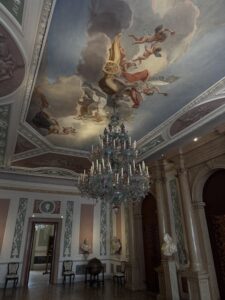
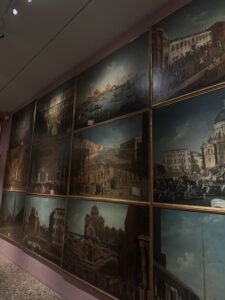


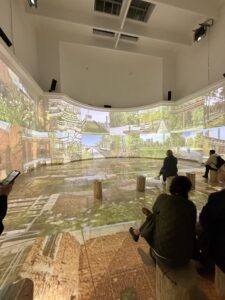
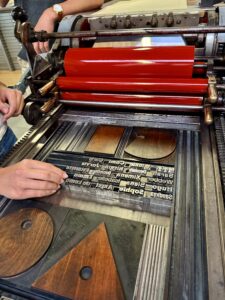


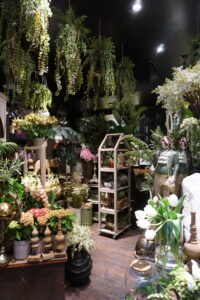

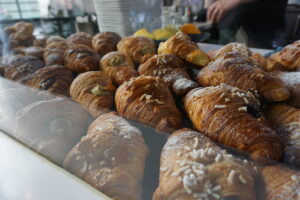


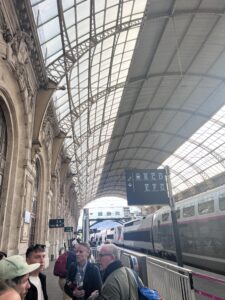
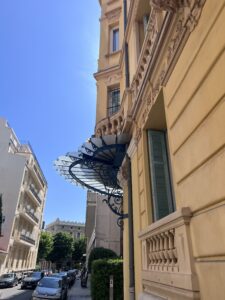


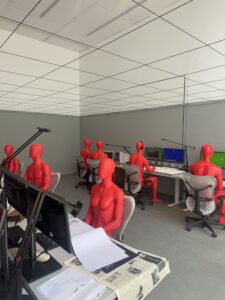
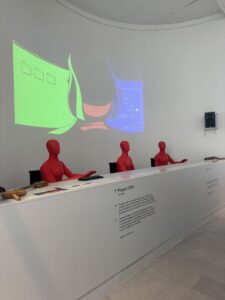 This week was very beautiful and eventful. Venice was the most beautiful place and the weather cleared out by the ens of the day. During the Biennale visit I realized how intentional all the details were. It has been my favorite place we have visited so far. My favorite places were Hungary and germany. We were able to learned about climate change through feeling it but actually seeing stats and factual information which seeing it straight up really exemplifies things. The other one really showed how architects find success outside of the architecture field. These two really brought their ideas to life and attempted to demonstrate their concepts by engaging with the viewer.